May, 2025
By: Katie Low, University of California Agriculture and Natural Resources Fire Network
The Sierra foothills are a diverse ecoregion composed of grassland, chapparal, hardwood, and conifer ecosystems.
While plants native to the Sierra Foothills have coevolved with fire, recent wildfires increasingly demonstrate behavior which exceeds the natural tolerance of these species.
Landscaping with plants adds further challenges, particularly considering how structures, defensible space, and surrounding wildland fuels interact during a wildfire.
Manzanita before (left) and after (right) regular pruning, resulting in a plant less susceptible to wildfire.
All plants, including those marketed as “firesafe” or “fire resistant” burn under the right conditions. Instead of considering how ‘safe’ a plant will be during fire, align plant characteristics with defensible space zones.
Understand how to leverage the natural characteristics of plants to apply the principle of “Right Plant, Right Place” to create robust, fire-smart landscapes.
As you start working on your fire-smart home gardens this spring, download UC Cooperative Extension’s free Fire-Smart Landscaping in the Sierra Foothills guide.
By: Jan Foster, Greater Auburn Area Fire Safe Council
The Greater Auburn Fire Safe Council is here to serve. We are volunteers who work with local fire resources and cover Bowman, the City of Auburn, Newcastle and Penryn. To contact us, please email auburnfiresafecouncil@gmail.com.
While we can’t control what our neighbors do for fire prevention, there are steps we can take to protect our own home from wildfire.
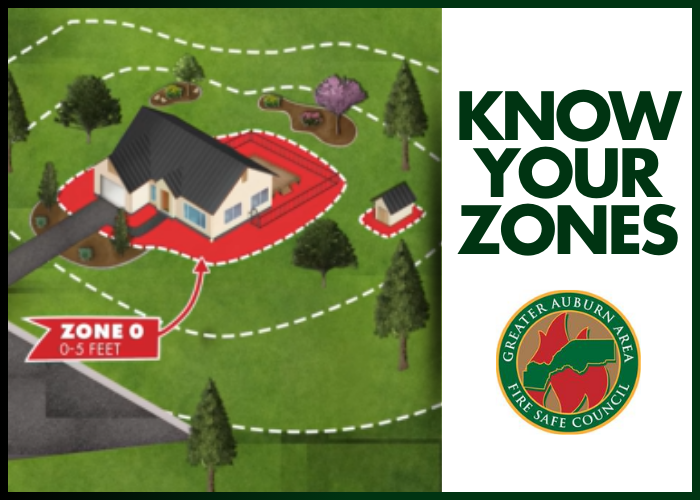
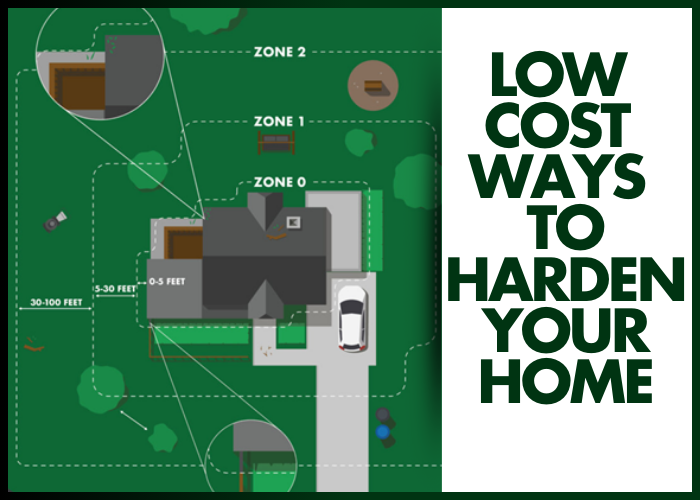
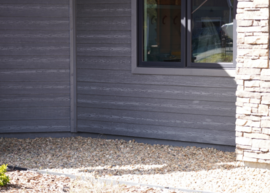
The most critical zone is from your home’s walls to 5 feet out -- the 0 - 5 foot zone.
There should be nothing at all flammable in that zone, here are steps you can take to increase your home’s safety.
- Do you have trees or shrubs touching your siding? Remove any vegetation within 5 feet.
- Do you have branches overhanging your roof? Trim them back at least 10 feet from the roof.
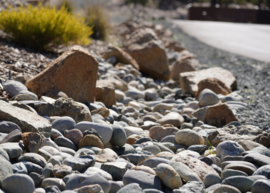
- Do you have bark mulch or wood chips next to your house? Rake them five feet away from your siding. Replace mulch with non-flammable material like rocks, gravel or leave bare dirt.
- Do you have a wooden or flammable fence or gate attached to your home? Replace it with a metal one or remove it if it is not needed. There should be no flammable fencing or gates within 5 feet of siding.
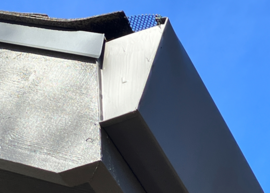
- Do your attic or crawl space vents have 1/8” screens on them to prevent embers from entering your home? They are available at hardware stores and a critical safety feature.
- Do you store flammable items under your decks or outdoor stairs? Move them to other storage areas at least 5 feet from siding.
- Do you have firewood stacked next to your house? Move it 30 feet from your home.
- Sheds or outbuildings should be a minimum of 30 feet from your home.
- Wooden decks attached to the home should have metal flashing.
There should be nothing flammable within the 0-5 Foot Zone. Whatever you implement from the list above will give your home a better chance of surviving a wildfire.
Watch for the Greater Auburn Fire Safe Council campaign coming soon with more useful tips and resources.
By: Justin Farwell, Placer Sierra Fire Safe Council
I recently attended the CAL FIRE Qualified Entities training, which provided valuable insights into home hardening and defensible space.
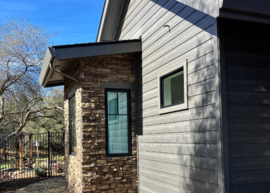
One of the key areas for homeowners to concentrate on is wildfire preparedness. By hardening your home, you can significantly reduce the risk of losing everything in a fire.
A great starting point is to follow CAL FIRE’s recommendations for retrofitting your home.
Below is an abbreviated list of cost-effective retrofits homeowners can do now to enhance their home's preparedness, to view the entire list, please visit: placer.ca.gov/Firewise
Low-Cost Ways to Harden Your Home
Block any spaces between your roof covering and sheathing with noncombustible materials (bird stops).
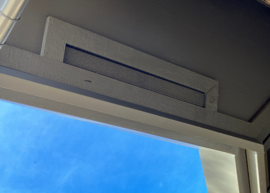
Install ember and flame-resistant vents.
Caulk and plug gaps greater than 1/8-inch around exposed rafters and blocking to prevent ember intrusion into the attic or other enclosed spaces.
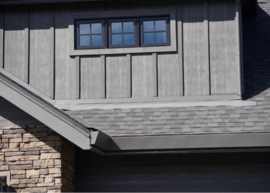
Inspect exterior siding for dry rot, gaps, cracks, and warping. Caulk or plug gaps greater than 1/8-inch in siding and replace any damaged boards, including those with dry rot.
When it’s time to replace your windows, replace them with multi-paned windows
Low-Cost Ways to Create Defensible Space
Regularly clean your roof, gutters, decks, and the base of walls to avoid the accumulation of fallen leaves, needles, and other flammable materials.
Ensure that all combustible materials are removed from underneath, on top of, or within five feet of a deck.
Replace wood mulch products within five feet of all structures with noncombustible products such as dirt, stone, or gravel.
Be sure to store combustible outdoor furnishings away from your home when not in use.
|