|
|
Californians are fed up with organized retail crime and the threat it poses to our businesses, workers, and public safety. At California DOJ, we’re fed up, too. We share your concerns and your commitment to solutions — and we’re taking action.
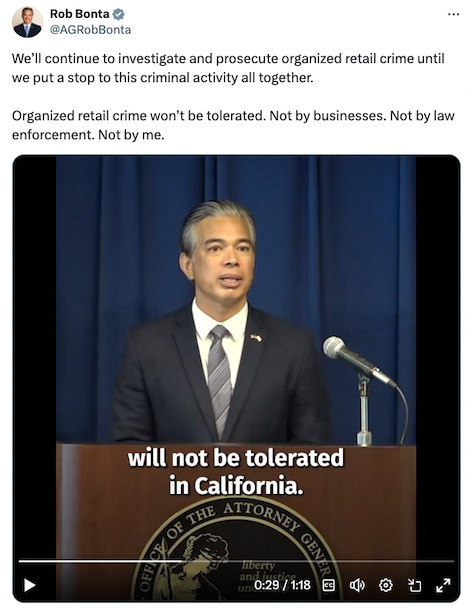
This week, my office put out a law enforcement bulletin that highlights 10 new laws in California that will sharpen our ability to combat organized retail crime and hold those responsible accountable. Our message is clear: organized retail crime won’t be tolerated — not by businesses, law enforcement, or me. We will continue to investigate and prosecute organized retail crime until we put a stop to this criminal activity all together.
In solidarity,
Rob
|
|
Continuing the Fight Against Organized Retail Crime
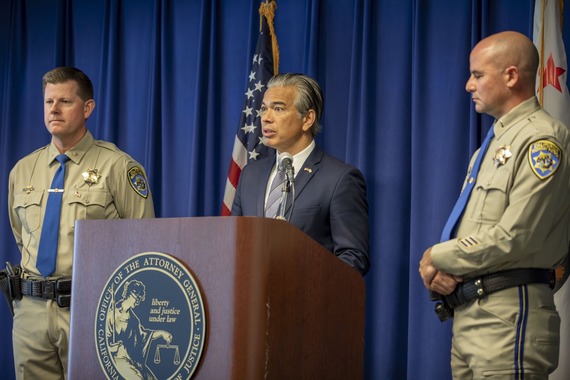 The 10 new laws summarized in the bulletin mentioned above represent a comprehensive approach to addressing criminal behavior by focusing on the aggregation of related offenses. Furthermore, the legislation enhances penalties for significant thefts, reflecting a zero-tolerance stance on property crimes that have a substantial impact on victims and communities. The new laws will soon take effect on January 1, 2025, except for Assembly Bill 1972, which took effect immediately on August 16, 2024. With DOJ’s guidance, local law enforcement agencies and departments can plan, deploy resources and staffing, work with the business community, and otherwise prepare to maximize the efficacy of this new suite of laws.
|
|
Preventing Gas Price Spikes
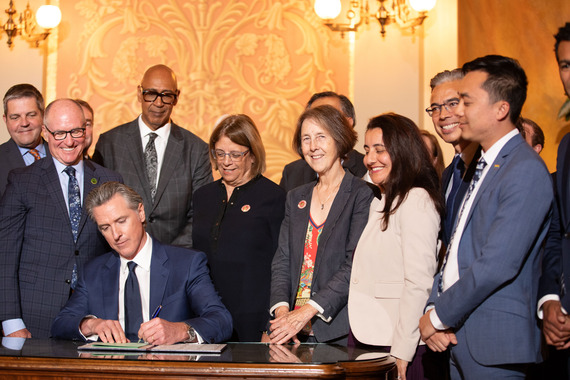 Californians have been paying too much for gas, while year after year, oil companies report record profits at their expense. Let’s be clear — the price spikes consumers see at the pump are profit spikes for big oil. Enough is enough. This week, I proudly joined Governor Gavin Newsom as he signed into law ABX2-1, which I co-sponsored and would stabilize California's oil market by ensuring refineries have adequate fuel reserves to avoid supply shortages that hike gas prices and harm consumers.
|
|
Ensuring Meta Faces Accountability for Harming Children’s Mental Health
 In addition, my office — along with a bipartisan coalition of 33 attorneys general — successfully blocked an attempt this week by Meta to dismiss our coalition’s lawsuit against the company for its part in harming children’s mental health and for allowing young children on its platforms in violation of federal law. As the home to the greatest innovators in the world and a robust technology sector, California has a particular opportunity and obligation to be a catalyst for change. Meta can and must do better.
|
|
Protecting California’s Waterways
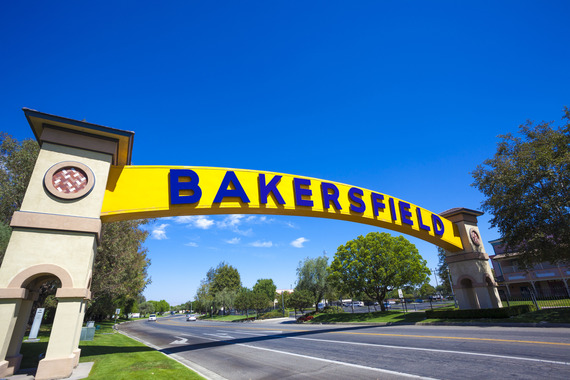 California’s waterways and ecosystems are the lifeblood of our state’s rich and diverse wildlife and natural habitats. Yet, in Bakersfield, the sudden loss of Kern River flows due to the city officials’ decisions to divert all water away from the river, is leaving behind a dry wasteland where fish are dying in droves. With an amicus brief that we filed this week, we are urging a state appellate court to allow enough water to flow in the Kern River, as required by law, to preserve ecosystems and ensure sustainability and viability of our fish populations.
|
|
Make a Difference at California DOJ
 Apply today to help DOJ protect the health, well-being, and public safety of Californians. Check out our featured jobs below and visit oag.ca.gov/careers for a full listing of available positions:
Deputy Attorney General Supervisor, Natural Resources Law
Deputy Attorney General III, Licensing
Deputy Attorney General IV, Cybercrime Unit
Deputy Attorney General III, Correctional Law Section
Deputy Attorney General IV, DMFEA Criminal Prosecutions Section
Information Technology Specialist I, Firearms Applications and Support Unit
Legislation Analyst, Bureau of Firearms
Administrative Assistant, PRD Executive Unit
Senior Performance Management Consultant, Office of Human Resources
Personnel Liaison, PRD Executive Unit
|
|
Post of the Week
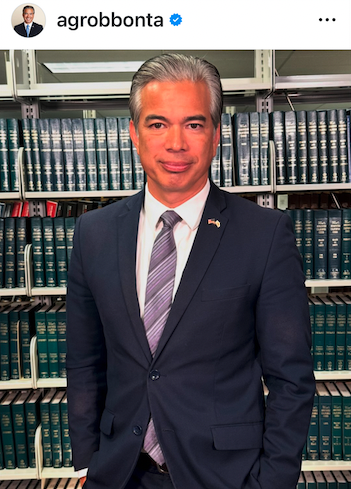
On #PurpleThursday, I wore purple to show our solidarity with survivors of domestic violence. It’s a reminder every individual deserves to feel safe, valued, and respected.
At CA DOJ, we’re committed to working towards a future where everyone can live free from fear.
|
|

Video of the Week
|
|
|
Resource Corner — Charities
 Charities represent an important economic sector in California and significantly impact the communities they serve. In July 2024, there were over 108,000 charitable organizations registered with my office's Registry of Charities and Fundraisers (Registry), which regulates charities by administering registration and reporting requirements.
Information on those registration and reporting requirements can be found by visiting our Charities website or reviewing our updated Guide for Charities, but highlights include:
- Charitable organizations, including trustees, must register with the Registry within 30 days of first receiving property (i.e., a cash donation, property donation, or other assets with financial value received for charitable purposes). The initial registration fee is $50.
- Charitable organizations are required to file the Registry’s Initial Registration Form (Form CT-1), a copy of the organization’s tax exemption application IRS Form 1023 or Form 1023-EZ (if submitted to the IRS), a copy of the organization’s IRS determination letter (if received from the IRS), and copies of the organization’s founding documents.
- In addition to the initial registration requirement, there are annual registration renewal requirements. Every charitable organization must file an Annual Registration Renewal Fee Report (Form RRF-1). This form’s filing fee depends on the organization’s gross annual revenue for the preceding year.
- Form RRF-1 must be filed within four months and fifteen days after the end of the organization’s fiscal or calendar year. This generally coincides with the organization’s reporting requirements with the IRS and the California Franchise Tax Board. If the organization obtains an extension to file with the IRS, the Registry honors that extension.
- The Registry offers webinars on registration, renewals, delinquency, and dissolution.
- The Registry maintains the Registry Search Tool for the public to research registered charitable organizations, fundraising professionals, and charitable fundraising platforms.
- Registry staff also provide information on these topics to persons seeking assistance. Visit our Contacts website to submit an inquiry to the Registry.
|
|
|
|
|