|
 Trouble viewing, view as webpage
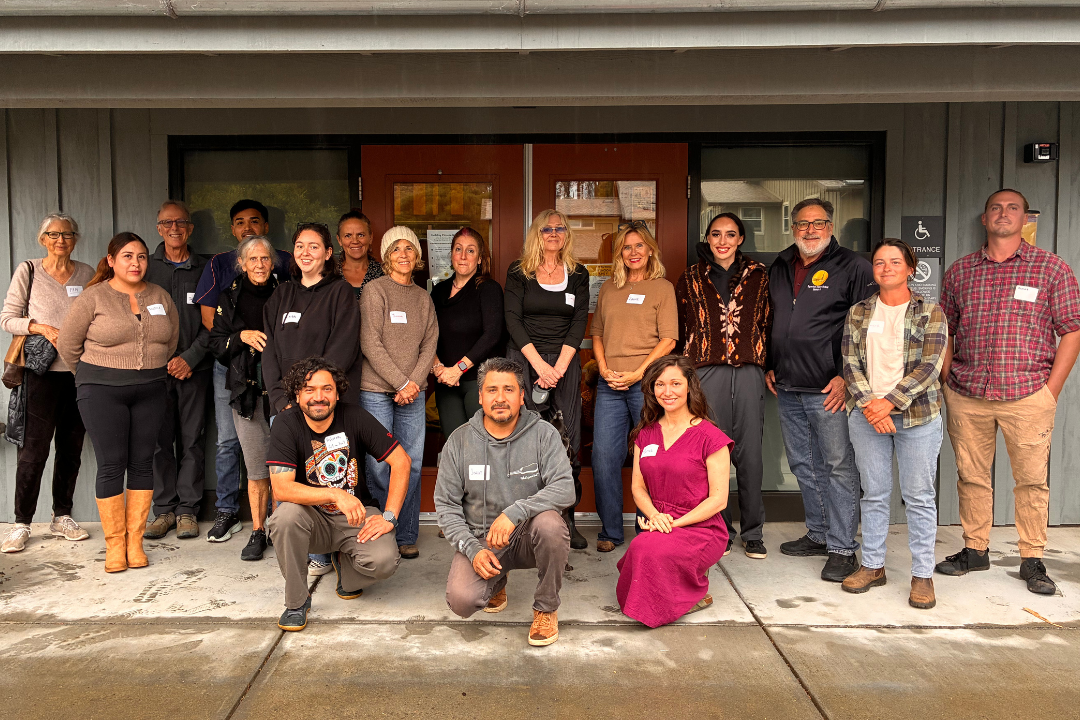 Supervisor Rodoni and the newest cohort of
Start Up West Marin Entrepreneurship Program
In this Issue:
|
|
|
Dear Friends and Neighbors,
September in Marin brings a subtle change of season. Our warm days continue, but the mornings are cooler, the light is changing, students are back in school, and fall is just around the corner. It is a season of transition and a good time to reflect on the many ways our communities continue to come together, prepare for what lies ahead, and care for one another.
August gave me many opportunities to listen and connect across District 4. At the West Marin Mesa Comunitaria, I joined approximately 50 community members to hear directly from Latino immigrant residents about their priorities and experiences. At the regional level, I participated in the sixth Belonging in the Bay convening, bringing Bay Area counties and community organizations together to strengthen coordination and support immigrant communities. Whether around a table in West Marin or with partners from across the region, these conversations help build trust and ensure government remains connected to the people we serve.
Preparing our communities for the changing seasons was also an important part of the month. I joined Lucky Drive residents to discuss last winter’s king tides and preparations for the year ahead, participated in an El Niño town hall, and continued conversations with Caltrans and local agencies regarding Lagunitas Creek (Green) Bridge replacement. Across these issues, the common theme is to plan early, listen to local knowledge, and bring residents and agencies together to develop practical solutions.
August also reminded me how closely District 4’s future is connected to our working lands, schools, environment, and local economy. I met with agricultural leaders at the Marin County Farm Bureau luncheon, attended Back to School Night at West Marin School, and met with the 24 students participating in the second cohort of Start Up West Marin. I also visited Raíces del Canal to learn about their inspiring vision for a greener Canal neighborhood through food and pollinator gardens, outdoor learning, and community-led environmental projects. These efforts show what is possible when we invest in people, partnerships, and local ideas.
This time of year provides opportunities to gather as a community. From the Nicasio Country Fair to the Dance Palace celebration, these events strengthen the relationships that make our communities more than places on a map. They are made possible by countless volunteers, local organizations, businesses, families, and neighbors who contribute their time and energy throughout the year.
As we prepare for the fall, there is much work ahead. We are preparing for winter storms and king tides, continuing public engagement on septic regulations, protecting our coast and natural resources, and supporting our schools, agricultural community, small businesses, and families.
Thank you to everyone who continues to attend meetings, ask questions, volunteer, share ideas, and participate in these important conversations. Your involvement helps us make better decisions and strengthen the connections across District 4.
I hope you enjoy these changing days of late summer and early fall, and I look forward to seeing you out in the community.
Warmly,
 Dennis Rodoni
County of Marin District 4 Supervisor
|
|
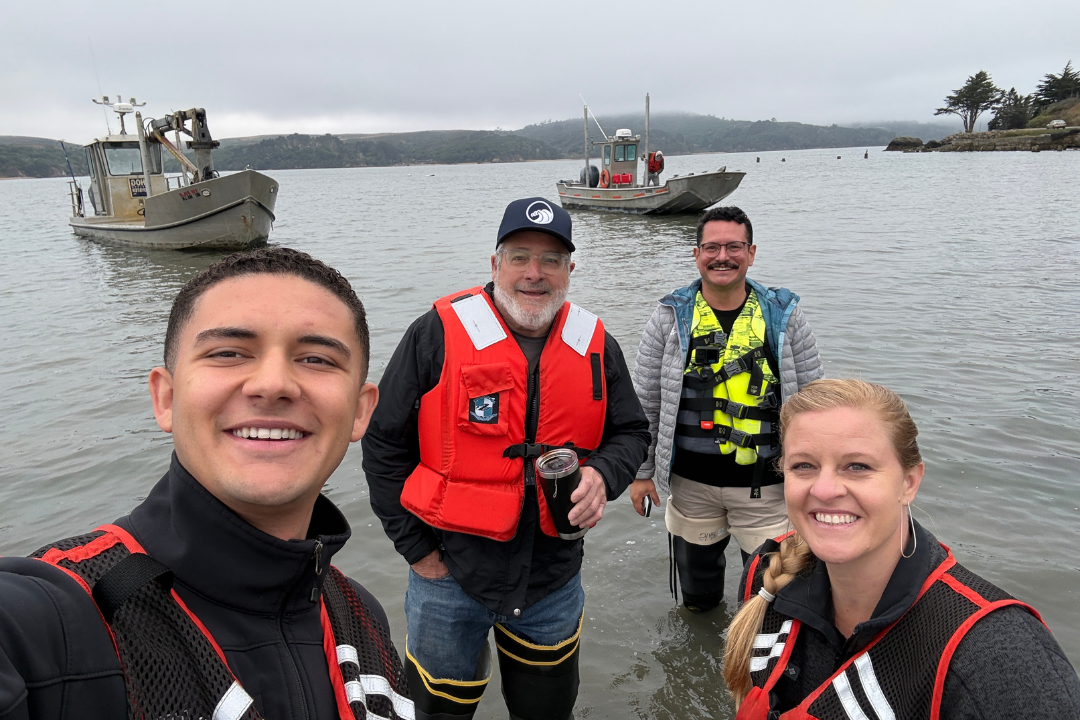 District 4 team touring Hog Island Oyster Co., left to right: Ryan Barbosa,
Supervisor Rodoni, Fernando Barreto, and Morgan Patton
I’m pleased to welcome Ryan Barbosa to our District 4 team as a part-time Board Aide. Ryan will be helping our office with administration, scheduling, communications, and community engagement, adding important capacity as we continue working across the many communities that make up District 4.
Ryan brings both local experience and a strong commitment to public service. Originally from Brazil, he has called Marin home for nearly a decade and lives right here in District 4 in Corte Madera. He will graduate from UC Berkeley with a degree in Political Science in fall 2026. Before joining our office, Ryan served as Student Body President and Student Trustee at College of Marin, interned with the Marin County Executive’s Office, supported immigrant advocacy through Canal Alliance, worked in state-level campaign management, and helped lead outreach to bring Marin’s Crisis Text Line resources to local schools. These experiences have given him a valuable perspective on local government, civic participation, and the importance of making public services accessible to everyone.
On behalf of our entire District 4 team, welcome, Ryan! I’m grateful that he has chosen to continue his public service here in Marin, and I look forward to the energy, experience, and perspective he will bring to our office. Outside of work and school, Ryan enjoys cooking, soccer, and spending time with family and friends. If you see him at an upcoming community meeting or event, please join us in giving him a warm welcome!
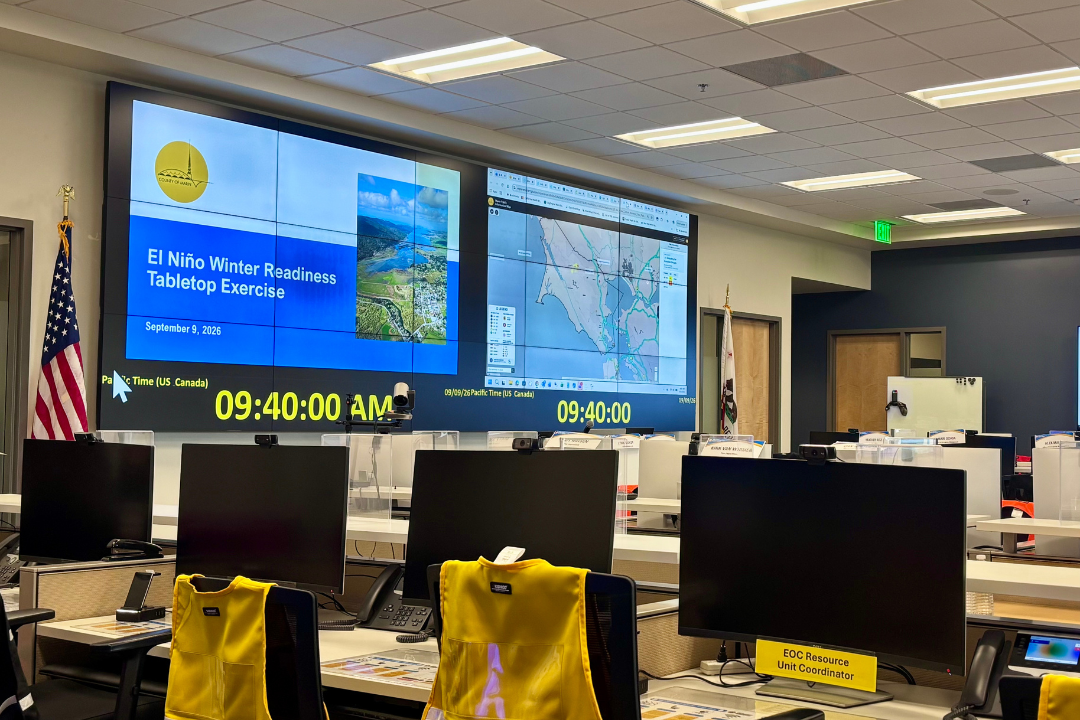
Marin County is preparing early for the 2026–27 winter season, when a strong to potentially historic El Niño is forecast to increase the likelihood of wetter and more active conditions. While seasonal forecasts cannot tell us exactly when or where storms will occur, Marin could experience back-to-back storms and atmospheric rivers, coastal and creek flooding, high surf, landslides, downed trees, power outages, and transportation disruptions. Coastal and bayside communities should also be aware of King Tide periods expected around the Thanksgiving holiday and during the week of Christmas, when elevated tides can increase flooding risks, particularly if they coincide with heavy rain or high surf.
County departments are working with cities, towns, fire and law enforcement agencies, flood control districts, utilities, transportation agencies, and community organizations to strengthen our readiness. In the meantime, our Public Works crews have inspected approximately 6,000 culverts and cleaned more than 350 culverts, storm drains, and catch basins and crews have cleared drainage channels and roadside ditches and completed vegetation management along County roads. Pump stations are receiving additional testing and maintenance, and the County has prepared approximately 73,000 sandbags, pumps, emergency repair materials, and other equipment. Teams are also training together and reviewing staffing, communications, and emergency response plans before the winter season begins.
Preparedness is a shared responsibility. Don't wait for a storm warning to get ready. Supplies and services may be in high demand once severe weather is forecast, so preparing early gives you more time and more options.
What You Can Do:
Sign up for AlertMarin. The County’s official system for location-specific emergency alerts and instructions, and make a household plan for possible flooding, power outages, and road closures.
Know Your Risk. Learn whether your home, workplace, or regular travel routes may be affected by flooding, landslides, or other hazards by accessing the hazards map in this link.
Make an Emergency Plan. Talk with the people in your household about what you will do if roads are closed, the power goes out, or you need to leave your home.
Prepare. In a flood, emergency managers may ask you to either evacuate or shelter in place, depending on the area of impact, and most importantly, what will keep you and your family safest.
Protect your Home. Have sandbags on hand before rain arrives. Keep leaves and other yard waste out of gutters and storm drains. Elevate utilities like electrical panels, heating systems, and appliances if possible. Move vehicle to higher ground if possible.Check your home’s flood risk using the Marin County Natural Hazards Map. Consider obtaining flood insurance. A standard homeowner’s insurance policy does not cover flood damage.
🔗Bookmark the Marin Office of Emergency Management Public Emergency Portal on your phone, tablet, and computer. This website will have the latest information on road closures, power outages, flooding and more
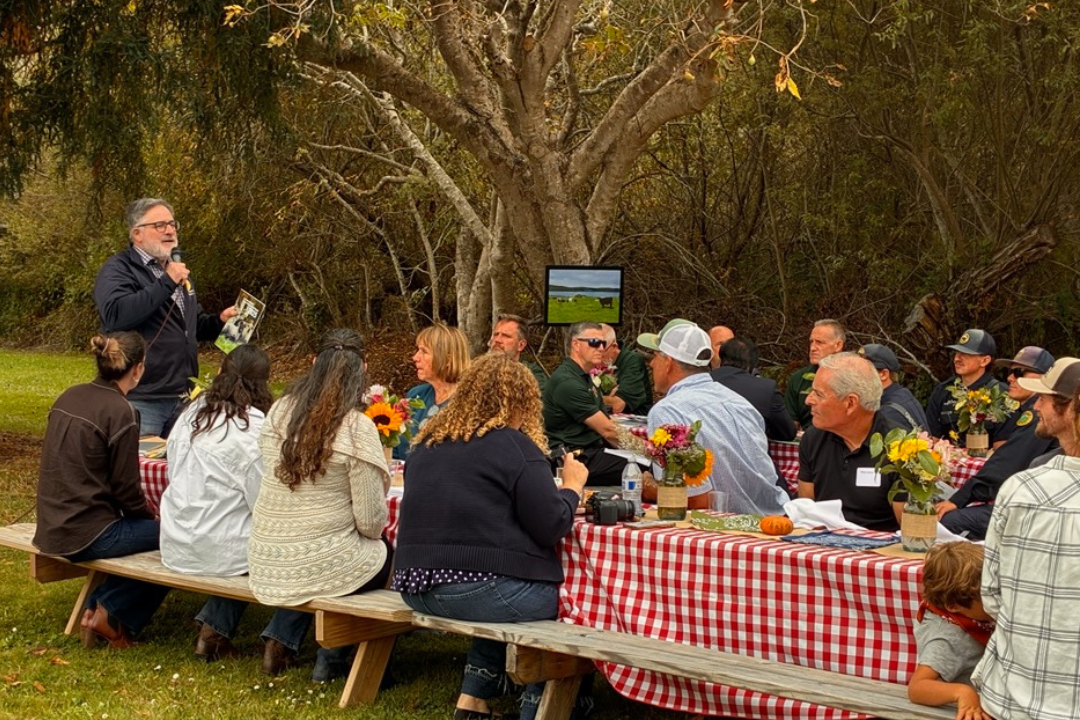
Marin County's 2025 Crop and Livestock Report highlights the value of our agricultural community, with total production reaching $94.1 million, up 12% from 2024. Livestock remained the County's largest agricultural sector, followed by livestock products, field crops, aquaculture, and fruit, vegetable, and nursery crops.
While these numbers demonstrate agriculture's importance to our local economy, they also remind us that Marin's farmers and ranchers depend on strong partnerships and continued community support. Agriculture provides local jobs and fresh food while supporting open space, wildlife habitat, healthy watersheds, carbon storage, and wildfire resilience; all while preserving a way of life that has shaped Marin for generations.
This year, the County completed its first Sheep and Wool Market and Industry Assessment, identifying opportunities to strengthen Marin's historic wool economy. The assessment points to strategies such as expanding targeted grazing for wildfire prevention, improving wool aggregation, developing specialty wool products and wool pellets, and growing regional markets.
At the heart of Marin agriculture are the farmers, ranchers, oyster growers, agricultural workers, producers, and family businesses who grow our food and steward our working lands. Supporting them takes a broad network of partners, from the Marin Agricultural Land Trust (MALT) and Marin Resource Conservation District, which support working lands and conservation, to the Agricultural Institute of Marin (AIM) and Marin County Farm Bureau, which strengthen markets and advocate for producers. Organizations and partnerships including Fibershed, the Marin Carbon Project, UC Cooperative Extension, Marin 4-H, West Marin Food Systems, ExtraFood, the Marin HEAL Collaborative, and the San Francisco-Marin Food Bank are also part of a larger network connecting agriculture with conservation, education, climate resilience, food recovery, and healthy food access. These are just some of the many organizations, agencies, businesses, and community partners helping Marin's agricultural and local food system thrive.
The future of Marin agriculture depends on all of us. Every purchase at a local farmers' market or directly from a Marin farm, ranch, dairy, or oyster grower helps sustain local producers, strengthen our economy, protect working lands, and preserve Marin's agricultural heritage. Buying local is one of the most direct ways each of us can support the people who steward these lands and produce food for our communities.
This season, support Marin agriculture by visiting a Certified Farmers' Market or using the Marin Farm Fresh guide to find local farms, ranches, dairies, oyster growers, farmstands, and other opportunities to buy directly from producers. Every local purchase is an investment in the future of Marin's farms, ranches, and working landscapes.
🔗 Read the 2025 Marin County Crop & Livestock Report

Several road projects are underway or beginning soon across West Marin, and we want to help residents plan ahead. With multiple projects happening at the same time, travelers may experience brief delays. Most work will use one-way traffic control with expected delays of about five minutes, and emergency access will be maintained throughout construction. Thank you for your patience as crews complete these important roadway maintenance and safety improvements.
Sir Francis Drake Boulevard Retaining Wall Repair: Through Early October Crews are repairing a retaining wall several hundred feet east of Platform Bridge Road. One-way traffic control is in place through the work zone, with delays of approximately five minutes.
Olema Hill Pavement Project: October through Mid-November Work along Sir Francis Drake Boulevard will include a new pavement overlay and shoulder widening in select areas. Traffic will remain open with one-way control through active construction zones and anticipated delays of about five minutes.
Nicasio Square Road Maintenance: Through September Major paving and shoulder widening work is complete, with crews now finishing shoulder backing, signage, and pavement striping. Flagger-controlled traffic will be used as needed, with delays generally five minutes or less.
Point Reyes–Petaluma Road Turn Pocket Project: September through Mid-November Construction is underway on a new turn lane at Nicasio Valley Road. Temporary traffic signals and one-way traffic control will be used through the construction zone. Drivers should generally expect delays of about five minutes, although waits may be longer during peak travel periods or while traffic-control operations are adjusted.
With several projects overlapping this fall, please allow a little extra travel time, slow down in construction zones, and follow posted signs and flagger instructions. We appreciate everyone's patience and care for road crews as this work moves forward.
🔗 Residents are encouraged to follow project updates and traffic advisories on the Marin County Department of Public Works Projects webpage

In August, I traveled to Santa Monica to represent Marin County at NOAA’s hearing on California’s Coastal Management Program, joining coastal leaders and community members from across the state to ensure Marin’s voice was part of this important federal review. NOAA sought input on issues including offshore oil production, pipeline maintenance, desalination, undersea cables, and other coastal uses that could have significant implications for California’s coastline.
Speaking on behalf of Marin County, I reaffirmed our strong support for California’s coastal protections and the longstanding federal-state partnership established under the Coastal Zone Management Act. I also raised concerns about what changes in federal priorities could mean for state and local authority to protect our coast. With approximately 110 miles of Pacific shoreline, bays, and tidal areas, Marin has a great deal at stake—from sensitive marine ecosystems and fisheries to tourism, local jobs, and the coastal communities whose lives are closely connected to these waters.
As I shared at the hearing, “Decisions affecting California’s coast must be based on sound science, existing law, and meaningful conversation with the communities that will bear the consequences.”
The County submitted formal written comments to NOAA, reinforcing our support for California’s Coastal Management Program and longstanding coastal protections. We will continue working with coastal communities and our state and regional partners to protect Marin’s coast, marine sanctuaries, and coastal economy for generations to come.
🔗 Read the Marin County Press Release to Learn More
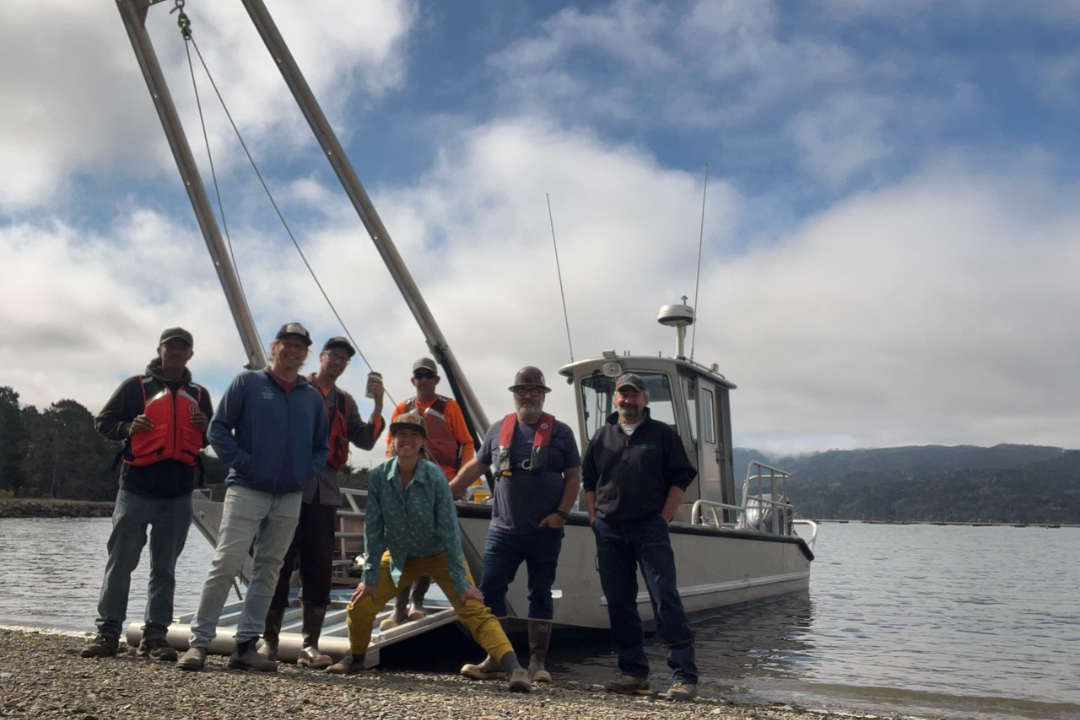
A long-awaited effort to address hundreds of submerged tires in Tomales Bay has officially moved into its next phase. My office worked with County staff, NOAA, and local partners to help identify funding and build the partnership for this project, recognizing the importance of protecting Tomales Bay's sensitive marine habitat.
The Marin Resource Conservation District (Marin RCD) received a funding award from the County of Marin to lead a feasibility study to determine the safest, least environmentally-impactful, and most effective approach for addressing the tires, which are remnants of an old breakwater that have become a long-standing environmental concern.
As part of the feasibility study, the dive assessment was completed in August 2026 by Dixon Marine Services, an Inverness-based marine contractor selected through a competitive process. Dive crews surveyed the bay to document the location, depth, condition, estimated number of tires, mapping, and a collection of submerged tire samples to be sent to a lab for analysis, which will provide important information to evaluate potential impacts to eelgrass, marine habitat, water quality, and wildlife. The study will determine whether tire removal is environmentally appropriate, identify the safest methods for accessing and removing the debris, and outline permitting needs and potential environmental and cultural impacts.
The completed assessment will guide the project's next phase. If the study concludes that removal can be accomplished without causing greater environmental harm than leaving the tires in place, NOAA's Greater Farallones National Marine Sanctuary is expected to pursue funding for permitting and implementation, with a future debris removal project currently identified in NOAA's planning forecast. This effort demonstrates the power of collaboration among many partners to protect one of Marin's most treasured natural resources for future generations.
|
|
In August, the Marin County Board of Supervisors advanced a wide range of actions focused on behavioral health, housing stability, public safety, government accountability, and community resilience. Alongside major discussions about emergency preparedness, agriculture, and infrastructure, the Board continued investing in programs that strengthen services for families, expand access to care, protect sensitive information, and support long-term community well-being.
Behavioral Health and Family Support
The Board approved several new and expanded programs to strengthen early intervention, crisis care, and family-centered behavioral health services. These included a new peer-based Family Support Services program for parents and caregivers, expanded behavioral health and early psychosis services for young adults through Side by Side, and a renewed partnership with North Marin Community Services to provide early intervention services across Marin, including West Marin. The Board also authorized participation in the State's BH-CONNECT incentive program, which could bring Marin up to $11.6 million to improve behavioral health access, coordination, data systems, and evidence-based care.
Housing Stability and Affordable Housing Preservation
The Board approved the annual Measure W Community Housing priorities, continuing support for affordable housing production, preservation, rehabilitation, temporary housing, and direct assistance for West Marin residents. Up to $100,000 remains available for emergency housing assistance such as rent, security deposits, temporary lodging, and other housing stability needs. The Board also approved a regional housing grant focused on preserving naturally occurring affordable housing and developing community land trust strategies in San Rafael, Larkspur, and Novato.
Privacy, Technology, and Government Accountability
The policy establishes clearer standards for how departments collect, use, protect, and share sensitive information, including personal, financial, health, and criminal justice data. It also requires additional review for higher-risk data-sharing arrangements and establishes follow-up audits for projects involving sensitive information. This action is an important step toward ensuring that new technology and data systems are implemented with appropriate safeguards, transparency, and public accountability.
Community Engagement and Good Governance
The Board launched a countywide effort to modernize and standardize bylaws for County boards, commissions, and committees, with the goal of improving transparency, consistency, public participation, and accountability. The Board also responded to several Civil Grand Jury reports addressing Measure A, the Civic Center, and MCE governance. Those discussions reinforced the importance of public engagement, clear oversight, and thoughtful long-term planning when considering changes to County programs and institutions.
Workforce Development and Community Partnerships
The Board renewed support for Marin 4-H and the UC Marin Master Gardener programs, which provide youth development, gardening education, wildfire preparedness, and community service opportunities. A new partnership with San Francisco State University will also create supervised training opportunities for graduate social work students in the Public Defender's Office, helping build a pipeline of professionals prepared to serve justice-involved and underserved residents. The County's continuing partnership with Conservation Corps North Bay similarly combines wildfire prevention and open-space stewardship with paid workforce training for young adults.
Public Safety and Essential Services
The Board renewed Marin's 24/7 Sexual Assault Response Team partnership, authorized an application for nearly $470,000 in victim-witness assistance funding, and approved continued early mental health treatment for individuals awaiting competency restoration. Additional actions supported Marin County Fire operations, hazardous materials coordination, and regional mutual aid readiness.
Together, these August actions reflect a continued emphasis on practical investments that improve access to services, strengthen community safety, protect privacy, support housing stability, and build a more responsive County government. They also demonstrate the importance of pairing long-term planning with direct support for residents, families, and communities across Marin.

Later this month, the Marin County Board of Supervisors is expected to consider a Microenterprise Home Kitchen Operations (MEHKO) ordinance, which would create a pathway for residents to legally prepare and sell a limited number of meals from their home kitchens. California law allows counties to establish MEHKO programs with permitting, inspection, and food-safety requirements. For aspiring entrepreneurs, this model can provide a lower-cost way to test a business idea, earn income, build experience and savings, and potentially grow into a larger food business.
The potential benefits extend beyond individual entrepreneurs. A MEHKO program could broaden access to small-business ownership for people who may not have the capital to open a restaurant or lease commercial space, while creating a pathway for informal food businesses to become permitted and regulated. Home kitchens can also serve as a starting point for entrepreneurs who may eventually move into catering, farmers markets, food trucks, shared commercial kitchens, or storefronts. In rural communities where commercial space can be limited and expensive, this type of small-scale business model could provide another avenue for economic opportunity without requiring new commercial development.
There are potential community and food-system benefits as well. Home-based food businesses can help preserve family recipes, traditional cooking, and culturally significant foods, while adding neighborhood-scale prepared food options.
If this issue is important to you; whether you are a home cook, food entrepreneur, customer, or simply interested in Marin's local economy; now is an important time to stay informed and participate.
Decisions made by the Board determine whether and how a MEHKO program would operate locally, including the rules that would apply to businesses and the safeguards for neighbors and consumers.
The Board agenda will be posted on September 23 (next week) along with the staff materials. Community participation helps the Board understand both the opportunities and concerns surrounding a new policy before making its decision.
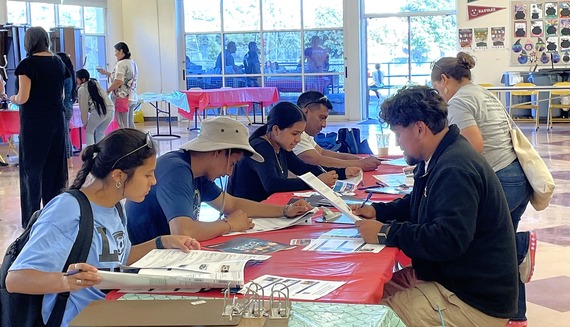
How would you invest $2.5 million to improve your community? Marin County's Participatory Budgeting (PB) program gives community members a direct role in deciding how a portion of public funding is invested. By centering community voices, particularly those that have historically been left out of decision-making, the process is designed to strengthen participation, build trust, and support more equitable community investments.
The first Participatory Budgeting cycle showed what community-driven funding can accomplish. More than 3,600 people voted on how to invest $2.5 million, selecting 24 projects across West Marin, the Canal, Marin City, Novato, and other communities. Projects supported priorities ranging from youth empowerment and mental health to transportation, arts, and culture, with individual awards ranging from $10,000 to $250,000.
Now it's time to help shape the next round. Anyone age 14 or older who lives, works, or attends school in Marin County can participate by sharing ideas for projects that could improve their community and advance equity. Ideas might address affordable housing, youth programs, transportation, mental health, arts and culture, environmental projects, or another need identified by the community. Share your idea at PB.MarinCounty.gov.
🔗 Learn more about the process, upcoming opportunities, and how to participate at pb.marincounty.org.
|
|

Coffee at the Woodacre Fire Station, September 19th
Join Marin County Fire for Coffee at the Woodacre Fire Station on Saturday, September 19, for an early look at how the future Fire Headquarters is taking shape. The project team will share updates on the evolving site layout and architectural character, discuss how community feedback is informing the design, and preview next steps.
Stop by for free coffee, meet the project team, and share your feedback as the design continues to develop.
🔗Learn more about the project and past community events
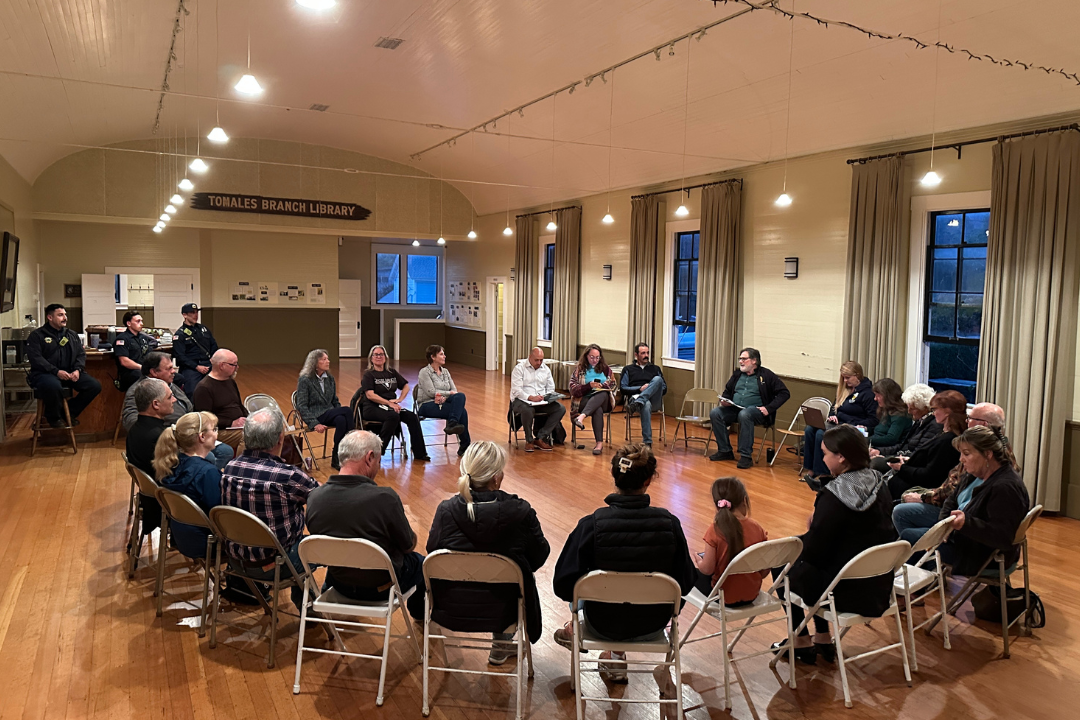 Community Conversation in Northern West Marin, September 22nd
It’s that time of year! Supervisor Dennis Rodoni’s Fall Community Conversations are returning across District 4, creating an informal and welcoming opportunity to hear County updates, ask questions, and talk directly about the issues that matter in your community.
Northern West Marin: Dillon Beach, Tomales, and Chileno Valley
September 22
6:00–8:00 PM via Zoom
🔗 RSVP
Spanish interpretation will also be available.
Topics to include El Niño and winter preparedness, local road projects, broadband, local services, and West Marin Visioning, along with plenty of time for community questions and discussion. We hope you’ll join us and bring your ideas, experiences, and local knowledge that helps inform the work of the District 4 office.
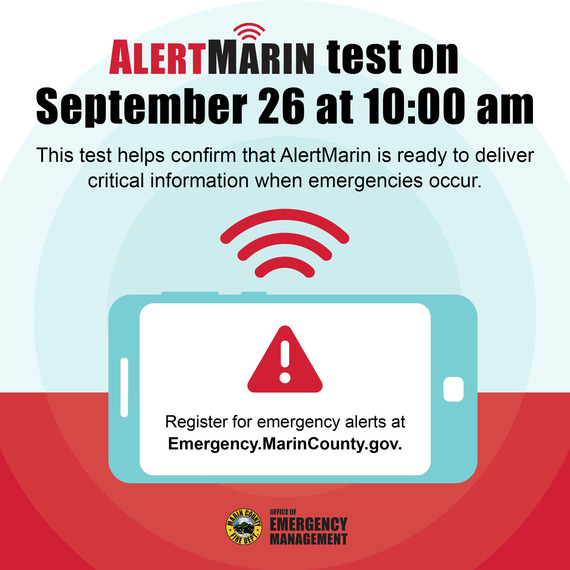
AlertMarin Countywide Test, September 26th
On Saturday, September 26 at 10:00 AM, Marin County’s Office of Emergency Management will conduct a countywide AlertMarin test. The test helps confirm that AlertMarin is ready to deliver critical information during emergencies. As we prepare for the potential impacts of El Niño, staying connected to emergency alerts is an important step in preparing for severe weather.
The test will be sent to everyone registered for AlertMarin in their preferred language and through selected contact methods, including text, phone, and email.
Before the test, log in to verify your contact information and notification preferences. You can also sign up for optional notification groups, including significant weather alerts, coastal flooding and king tides, riverine and creek flooding, prescribed burns, and significant traffic disruptions. Groups are not location-based and may include alerts from anywhere in Marin County.
|
|
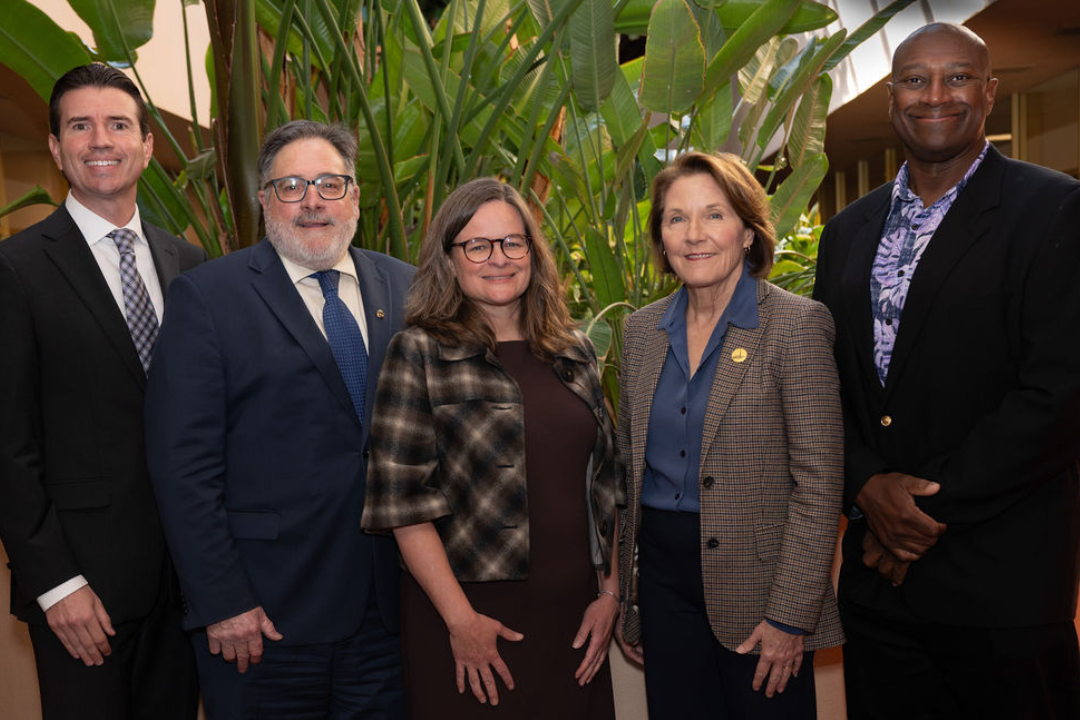
Your voice matters in shaping Marin’s future!
The 2026 Board of Supervisors Calendar is online.
Meetings generally begin at 9:00 AM. Community members are encouraged to participate in person or via Zoom. It’s a great opportunity to stay informed, share your input, and engage with local government.

Work for the County of Marin
Marin County is looking for creative, dedicated individuals committed to public service and community impact. With a wide range of job opportunities available, now is a great time to explore a career in local government. The County is an Equal Opportunity Employer and encourages applicants of all backgrounds, including people of color, women, and individuals with disabilities to apply.
🔗 Explore Job Openings
Volunteer for a Board or Commission
Marin County is seeking residents to serve on a variety of boards and commissions that help shape local policies and programs. These bodies play a vital role in ensuring transparency, community input, and effective use of public resources. If you’re passionate about local issues and want to make a difference, now is a great time to get involved.
|
|
County of Marin District 4 Team
Supervisor Rodoni, elected in 2016, and re-elected in 2020 and 2024, represents the residents of District 4 in the County of Marin. District 4 is the most geographically diverse district in the county, including coastal West Marin from
Dillon Beach to Muir Beach and Homestead Valley;
inland agricultural and rural areas of Nicasio, Chileno Valley, Hicks Valley, San Geronimo Valley, and west Novato; and bayside and urban areas of east San Rafael, San Quentin, Corte Madera, and Larkspur.
County of Marin District Map
Dennis Rodoni
District 4 Supervisor
(415) 473-7331
Email Dennis
Supervisor Rodoni is one of five elected members of the Marin County Board of Supervisors, which serves as the legislative and executive body of County government. The Board establishes County policy, adopts ordinances and the County budget, oversees County departments and services, and serves as the governing board for several special districts and public agencies. Its responsibilities include public health and safety, housing, land use, roads and infrastructure, emergency preparedness, parks and open space, libraries, and social services. Supervisors also represent their districts by helping residents navigate County services, addressing community concerns, and working with County departments and community partners on local and countywide issues.
|
|
|
As part of my goals for a more accessible and transparent government, District 4 aides are available for in-person assistance in West Marin twice weekly.
Monday, Point Reyes Station, Fernando Barreto
Friday, Point Reyes Station, Morgan Patton
Learn more on our District 4 webpage
|
|
|
|
|
|
|