|
Dear Neighbors,
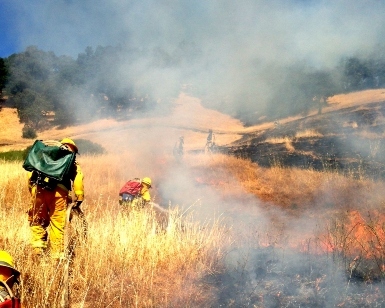
As we head into summer, May has served as an important reminder that wildfire preparedness starts long before smoke is in the air. Wildfire Preparedness Month is a good time for all of us to review evacuation plans, create defensible space, clean gutters and roofs, prepare emergency go-bags, and sign up for AlertMarin. With new proposed “Zone Zero” defensible space standards being developed by the State, wildfire resilience will continue to be an important conversation across Marin in the years ahead.
This month also included Memorial Day, an important day of reflection and remembrance for those who made the ultimate sacrifice in service to our country. I was honored to attend Marin County’s observance at the Marin Veterans’ Memorial Auditorium alongside veterans, community leaders, and residents from across the county.
There is also important work continuing across District 2. Marin County recently launched its first adaptive traffic signal pilot along Sir Francis Drake Boulevard to explore smarter ways to improve traffic flow and reduce congestion. Conversations also continue around long-term flood protection, climate resilience, and the future of the Ross Valley Flood Protection Program.
At the County level, the proposed 2026–28 Budget and Financial Plan was also released this month, with continued investments focused on core services, climate resilience, food security, nonprofit partnerships, and community infrastructure projects. Public budget hearings begin in June and residents are encouraged to stay engaged and participate in the process.
Earlier this month, I also joined community volunteers and Marin County Parks and Open Space staff at Hal Brown Park for a habitat restoration and invasive species cleanup effort. It was a great reminder that caring for our environment often starts with neighbors showing up for one another and for the places we all share.
Thank you, as always, to everyone who continues to stay engaged, volunteer, attend meetings, and help shape the future of our communities.
See you around the district.
 .
|
|
 Supervisor Brian Colbert, Patty Garbarino, Assemblyman Damon Connolly, and Novato Councilmember Kevin Jacobs
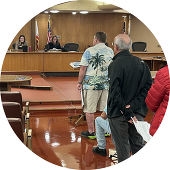
It was a meaningful day honoring our fallen service members and veterans at the Marin Veterans' Memorial Auditorium alongside Assemblymember Damon Connolly, Supervisor Eric Lucan, Novato Councilmember Kevin Jacobs, Novato School Boardmember Magali Limeta, Patty Garbarino, and Tiburon Town Councilmember Alice Fredericks. We were also joined by Sean Stephens, Marin County Veterans Service Officer, who served as Master of Ceremonies during Marin County’s Memorial Day observance.
The keynote address was delivered by Army Master Sergeant John Meholick of San Anselmo. He reflected on his service in Afghanistan and Iraq, his time working at Arlington National Cemetery, and the deeply important work he now does helping ensure missing service members are identified, honored, and ultimately brought home to their families.
It was also meaningful to recognize the legacy of Patty Garbarino’s father, Joe Garbarino, whose longtime support for veterans and remarkable collection of historic military vehicles have become part of many Memorial Day, Veterans Day, and Fourth of July commemorations across Marin County for decades.
|
|
|
Flood protection in Ross Valley has always been complicated. It sits at the intersection of aging infrastructure, climate change, environmental regulation, community expectations, and the reality that water does not care about jurisdictional boundaries. For years, local agencies have pursued ambitious flood mitigation efforts through Flood Zone 9 and the broader Ross Valley Flood Protection and Watershed Program. But after years of technical hurdles, escalating costs, regulatory challenges, and growing community frustration, many residents and leaders have called for a reset. This Marin Voice piece takes an important look at why stepping back, reassessing priorities, and rebuilding trust may ultimately create a more realistic and effective path forward for long-term flood protection in Ross Valley. Please read my most recent editorial here:
|
|
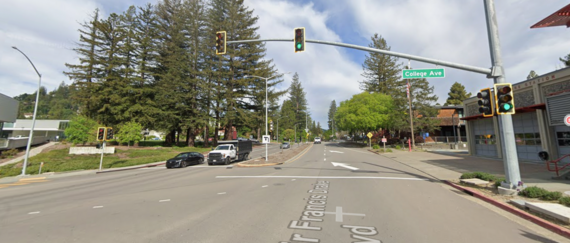 Marin County is piloting its very first adaptive traffic signal at the intersection of College Avenue and Sir Francis Drake Boulevard, marking an important step toward a more modern and responsive transportation system.
Unlike traditional traffic lights that run on fixed timing, adaptive signals use real-time traffic data to help adjust signal timing based on actual conditions on the roadway. The goal is to improve traffic flow, reduce unnecessary delays, and better respond to congestion throughout the day.
This pilot will serve as a beta project for potential future use across other parts of Marin County as we continue exploring innovative approaches to transportation, safety, and corridor management. County DPW is currently in the process of collecting data and evaluating system performance before exploring additional locations for future deployment.
As part of Supervisor Brian Colbert’s commitment to addressing mobility challenges along Sir Francis Drake Boulevard, the adaptive signal pilot represents an early step toward testing smarter, technology-driven solutions that can improve traffic operations without widening roads or dramatically changing the character of surrounding communities.
This is just one small project within a broader series of transportation and mobility improvements planned along the Sir Francis Drake Boulevard corridor. In the coming months, residents, commuters, businesses, schools, and everyday corridor users may be asked to participate in surveys or provide feedback about their experience traveling along SFD.
Community input will play an important role in helping shape future improvements, identify pain points, and prioritize solutions. Please keep an eye out for opportunities to participate. We are hopeful that residents will begin to see and feel meaningful improvements along the corridor in the near future.
|
|

The June 2 Statewide Direct Primary Election is quickly approaching, and Marin County elections officials are encouraging residents to vote early to help speed ballot processing and reporting on Election Night.
Ballots received early in the election period will be included in the first batch of Election Night results posted shortly after 8 PM on June 2. Results will continue to be updated throughout the evening as additional ballots are processed.
As of May 26, Marin County had issued 174,641 ballots, with more than 21,000 already returned. The Elections Department has also launched a new public data dashboard that allows residents to track ballot return trends by date, political party, and voting method.
Vote centers and secure ballot drop boxes remain open across Marin County for voter convenience. Marin voters should remember that this election includes two ballot cards due to the length of the ballot. Both cards should be returned together in the official return envelope provided.
Local vote center locations include:
- Kentfield: St. Sebastian’s Catholic Church
- Larkspur: Redwoods Presbyterian Church
- San Anselmo: American Legion Hall
- Fairfax: Women’s Club
Residents may vote in person, drop off completed ballots, request replacement ballots, or access voter assistance services at any vote center countywide.
Voters can also track their ballot through BallotTrax and receive notifications when their ballot is mailed, received, and counted.
For vote center locations, ballot drop box information, and election updates, visit : Marin Votes
To track your ballot, visit: Where’s My Ballot?
|
|
|
|
As many Californians have already seen from recent news coverage, wildfire season is once again upon us. Alongside ongoing local wildfire prevention efforts, the State of California is moving forward with significant new defensible space requirements known as “Zone Zero.”
Zone Zero refers to the first five feet surrounding a home or structure, sometimes called the “ember-resistant zone.” Under proposed state regulations, this immediate area would need to remain largely free of combustible materials in order to reduce the risk of homes igniting during a wildfire. Research continues to show that wind-driven embers, not walls of flame, are often what ignite homes during major wildfire events.
The draft standards could impact items such as:
- Wood fencing attached to homes
- Mulch and combustible landscaping
- Outdoor furniture and decorations
- Firewood and combustible storage near structures
- Vegetation and debris accumulation near buildings
According to recent reporting and draft guidance from the State Board of Forestry, the proposed regulations are expected to eventually apply to millions of California homeowners in high fire severity zones and could phase in over the next several years as the state finalizes implementation details.
Importantly, current discussions at the state level emphasize education, outreach, and homeowner preparation over immediate penalties or enforcement. The intent is to give residents time to understand what changes may be necessary and begin adapting properties gradually as the regulations evolve.
While the final rules are still being developed, homeowners should begin familiarizing themselves with Zone Zero requirements now and consider how future standards could impact their homes and landscaping choices. Many of the proposed changes already align with best practices recommended by wildfire experts and local fire agencies.
Residents can also now view their property-specific wildfire risk and defensible space information through Marin Wildfire’s online risk report tool:
Marin Wildfire Defensible Space Portal
To learn more about the proposed Zone Zero standards and what they may mean for homeowners, visit:
Fire Safe Marin – April 2026 Draft Zone 0 Overview
Additional reporting and background information is available from the
Los Angeles Times
|
|
|
Participatory Budgeting is returning to Marin County, giving residents another opportunity to directly help decide how $2.5 million in County funding should be spent on community and equity-focused projects.
Led by the County’s Office of Equity, the Participatory Budgeting (PB) process allows community members to submit ideas, shape project proposals, and ultimately vote on which projects receive funding. The initiative is designed to place decision-making power directly into the hands of residents, particularly those from historically marginalized communities.
This year’s process asks community members two key questions:
- How would you use $2.5 million to improve your community?
- How would you use $2.5 million to advance racial equity?
Anyone age 14 or older who lives, works, or attends school in Marin County can participate, regardless of immigration status.
Ideas can be submitted online through an easy-to-use interactive map, allowing residents to share ideas, explore community proposals, and support concepts they are passionate about. A Spanish-language version of the tool is also available to help broaden community participation and accessibility.
How the Process Works
There are five steps in Marin County’s Participatory Budgeting process:
Step 1: Idea Submission (June through September 2026)
Community members submit ideas for how they would use $2.5 million to improve communities and advance racial equity.
Step 2: Grant Proposals Submitted (October through December 2026)
Inspired by community-submitted ideas, residents and community-based organizations develop and submit formal grant proposals for review.
Step 3: Community Voting (February through March 2027)
Community members vote on which projects should receive funding. Voting is open to anyone 14 years or older who lives, works, or attends school in Marin County, regardless of immigration status.
Step 4: Funding Winning Projects (April through May 2027)
The Marin County Board of Supervisors announces and funds the winning proposals selected through the public voting process.
Step 5: Project Implementation (June 2027 and Ongoing)
Funded organizations and project teams begin implementing projects, provide progress updates, and create opportunities for continued public involvement.
The County’s first Participatory Budgeting cycle launched in 2023 and resulted in funding for 24 community-led projects, including youth mentorship programs, climate resiliency initiatives, and cultural arts efforts. More than 3,600 residents participated in the voting process.
|
|
|
The Marin County Board of Supervisors is expected to strengthen the County’s long-standing opposition to offshore drilling and mining during its May 19 meeting by considering a one-time contribution to the Save My Coast coalition, a statewide effort coordinating local government advocacy against new offshore oil and gas leasing proposals.
The proposed action comes as the federal administration considers expanding offshore drilling opportunities along portions of the California coast, including areas near federally protected marine ecosystems.
Much of the Pacific waters off Marin’s coastline fall within nationally protected marine sanctuaries, including the Gulf of the Farallones National Marine Sanctuary, Monterey Bay National Marine Sanctuary, and Cordell Bank National Marine Sanctuary. These waters support sensitive marine habitats, fisheries, wildlife, and coastal economies that could be significantly impacted by offshore drilling or deep-sea mining activity.
The Board of Supervisors has consistently opposed offshore drilling and recently reaffirmed that position through the County’s 2026 Legislative Platform, which opposes new oil and gas development, deep-sea mining, and efforts to weaken marine protections along the California coast.
Marin County has long positioned itself as a leader on environmental protection and climate resilience. In addition to opposing offshore drilling, the County continues implementation of its Climate Action Plan and broader efforts focused on sustainability, emissions reduction, and climate adaptation.
|
|
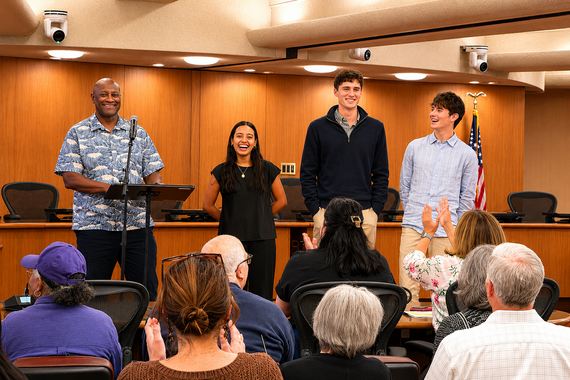 Supervisor Colbert recounts fond memories of the great work of the D2 Intern team. Pictured here: Jessica Mendieta Alvarado, Henry Houser, and Calvin Gundee.
The Marin County Board of Supervisors recently recognized the District 2 Marinterns team as the County’s 2025–2026 Intern Team of the Year, honoring a group of students whose work helped support civic engagement, research, and community initiatives throughout the year.
The District 2 intern team included Jessica Mendieta Alvarado, Calvin Gundee, Henry Houser, Lizbeth Mendieta Alvarado, Riley Merklin, Hava Rossiter, Sydney Tzur, and Ashley Wang. Working alongside Supervisor Brian Colbert and District 2 staff, the students participated in hands-on local government projects while learning how public policy and community engagement work in real time.
Over the course of the internship, team members conducted research and data analysis that informed a presentation to the Board of Supervisors on Placer.ai and helped organize the first-ever District 2 Commissioner Appreciation Reception. The interns balanced long-term policy projects with day-to-day constituent and government work, gaining direct exposure to the operations of local government.
The group concluded their internship experience with a visit to the State Capitol, where they met with Assemblymember Damon Connolly and leaders from the California State Association of Counties to further deepen their understanding of government, advocacy, and public service.
The recognition reflects the growing impact of Marin’s Marinterns program and the important role young people continue to play in shaping the future of local government.
|
|

Marin County recently announced a major reorganization of its executive leadership structure aimed at improving collaboration across departments and delivering more coordinated government services for residents.
As part of the transition to a modern County Executive model, the County appointed three Assistant County Executives to oversee broad operational areas including community services, internal operations, and health and human services. The restructuring effort follows years of planning and organizational review focused on improving accountability, breaking down departmental silos, and creating a more integrated approach to complex countywide issues.
County officials say the new structure is designed to better address challenges that often span multiple departments, including housing, homelessness, wildfire resilience, infrastructure, climate adaptation, digital modernization, and public service delivery.
The transition builds on work approved by the Board of Supervisors in 2025 to modernize a leadership framework that had remained largely unchanged for decades. Over the past year, the County conducted interviews, employee engagement sessions, and reviews of government models across California to help shape the new approach.
County officials emphasized that day-to-day services for residents will remain the same, while the new structure is intended to help departments work together more efficiently and respond more effectively to community needs.
|
|
|
|
The Town of Ross is continuing several pavement and roadway improvement projects this month, with drivers likely to experience delays and temporary lane controls in portions of Sir Francis Drake.
Current work on Shady Lane between Fernhill Road and Norwood Road includes asphalt repairs and roadway maintenance, with one-lane traffic controls in place during active construction.
Additional drainage improvements are also taking place along nearby portions of Sir Francis Drake Boulevard, with crews working in phases over the coming weeks before a larger paving project anticipated later this summer.
Residents are encouraged to allow extra travel time, follow posted traffic controls, and consider alternate routes when possible while construction remains underway.
Town officials noted they are coordinating projects around school schedules, graduations, and increased summer traffic as best as possible while completing critical roadway maintenance and infrastructure upgrades.
|
|

Marin County has officially launched the pilot episode of its new podcast series, Beyond the Board: Conversations with Your Supervisor, highlighting ongoing efforts to improve communication and accessibility between residents and local government.
The inaugural episode focuses on FixIt Marin, the County’s new digital reporting platform for unincorporated Marin that allows residents to quickly report issues such as potholes, illegal dumping, damaged signs, fallen branches, and other neighborhood concerns.
The episode features Supervisor Brian Colbert, Marin County Chief Digital & Innovation Officer Crosby Burns, and community member Eric Wald discussing how the platform works, why it was created, and the County’s broader push toward more responsive and modern public service systems.
The pilot episode is available in both video and audio formats:
|
|
|
|
Nonprofit and community-based organizations across Marin County now have an opportunity to apply for funding through the County’s Community Grants & Investment Program, which supports one-time projects and events that align with County goals and community priorities.
The Marin County Board of Supervisors has proposed setting aside $1.15 million in the County’s 2026–27 budget for the program. Individual grants ranging from $1,000 to $50,000 will be available for projects that benefit Marin residents and promote creative, community-driven solutions.
Eligible applicants include:
- 501(c)(3) nonprofit organizations
- 501(c)(4) organizations
- Tax-exempt community-based organizations
- Groups working with a fiscal sponsor or fiscal agent
Organizations may submit one application each. While matching funds are not required, the County encourages partnerships and proposals supported by multiple funding sources. Preference may be given to collaborative projects led by nonprofits working alongside other community organizations.
Funding is intended for one-time initiatives and may not be used for ongoing operations, general fundraising, or religious or political purposes.
Applications are due by June 30. Following the application period, County staff will review submissions and make funding recommendations to the Board of Supervisors later this fall. Approved projects will receive funding for use between July 1, 2026, and June 30, 2027.
The program reflects Marin County’s continued focus on community partnerships, local innovation, and investing directly in projects that strengthen neighborhoods and improve quality of life for residents.
|
|
|
The Marin County Community Development Agency (CDA) recently presented proposed updates to the County’s code compliance and enforcement process aimed at improving consistency, transparency, and communication for both residents and property owners.
The proposal was presented to the Marin County Board of Supervisors following a series of public workshops and community feedback sessions held throughout the past year.
According to CDA, the updated framework was designed to create a clearer and more streamlined path for addressing violations of local zoning, building, and health codes while also helping property owners better understand the process for achieving compliance.
The proposed process simplified enforcement into several core steps:
- Receive a complaint
- Confirm whether a violation exists
- Provide an opportunity to correct the issue
- Escalate enforcement and penalties if needed
- Abate violations when necessary
County staff said the goal was to create a system that is easier to navigate, more predictable, and focused on achieving long-term compliance outcomes that improve neighborhood health and safety.
Residents can currently submit complaints through the County website, by phone or email, or through FixIt Marin, the County’s recently launched digital reporting tool for unincorporated Marin.
The proposal reflected broader County efforts to modernize government services, improve responsiveness, and create more transparent systems for community engagement and issue resolution.
|
|
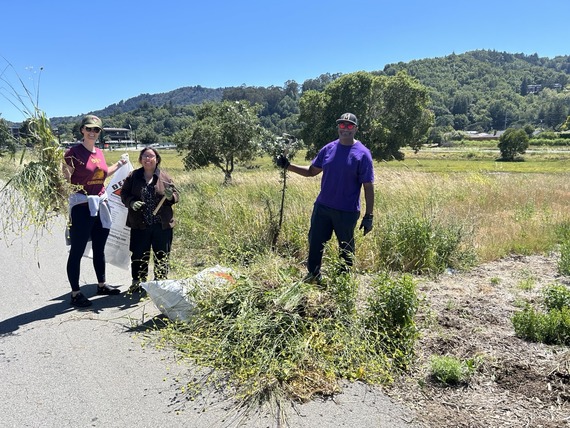 Team D2 pulling invasive species out of Hal Brown Park. Susannah Mrazek, Aide, Sonia Saltzman, Aide, and Superviosr Brian Colbert.
Earlier this month, Supervisor Brian Colbert’s office partnered with Marin County Parks and Open Space to encourage the community to come out for an invasive species cleanup and native habitat restoration event at Hal Brown Park at Creekside.
More than a dozen community members came out on a Wednesday to lend a hand, learn about local ecology, and give back to their community. Volunteers worked together to help remove invasive plant species and support the replanting of native vegetation that will strengthen habitat health and improve the long-term resilience of the park.
Participants also had the opportunity to learn directly from Kirk with Marin County Parks and Open Space, who shared information about the importance of native plants, habitat restoration, and the ongoing stewardship efforts taking place throughout Marin County’s open spaces and parklands.
This volunteer effort takes place every Wednesday and provides a great opportunity for community members to get involved and assist in the ongoing and incredibly important work of invasive species eradication and habitat restoration throughout Marin County.
Events like this are a reminder that environmental stewardship does not only happen through large-scale projects or policies. It also happens when neighbors come together to care for the places that make Marin special.
A huge thank you to everyone who participated, got their hands dirty, and helped make a positive impact at Hal Brown Park.
Sign up for future Hal Brown Park restoration days at Parks and Open Space!
|
|
|
As we head into the warmer months, May serves as an important reminder that wildfire preparedness starts long before smoke is in the air. In Marin County, we know firsthand that wildfire resilience is a year-round responsibility, and small actions taken now can make a major difference later.
There are several simple but important steps residents can take to help protect their homes, families, and neighborhoods:
- Create defensible space around your home by clearing dead vegetation, trimming trees, and removing combustible materials near structures
- Clean roofs and gutters of leaves and debris
- Prepare a go-bag with medications, important documents, chargers, pet supplies, and essentials
- Sign up for emergency alerts through AlertMarin
- Make sure your household has an evacuation plan and designated meeting location
- Harden your home where possible with ember-resistant vents, enclosed eaves, and fire-resistant materials
Residents can also learn more about home hardening, vegetation management, and emergency preparedness through Marin Wildfire Prevention Authority and Ready Marin.
Preparedness is one of the most effective tools we have. Taking steps today helps strengthen not only individual homes, but the resilience of our entire community.
|
|
It Takes a Village: Come to the Table Celebration & Fundraiser in Marin City |
Jumping high with District 2 Youth Commissioners Holden Fischer, Samantha Chew, Adriella Marcus, and Mira Sridharan |
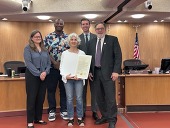
San Rafael Chamber State of the City Business Awards |
|
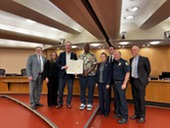
The Marin County Board of Supervisors officially proclaimed May as Wildfire Awareness Month alongside Marin County Fire Chief Jason Weber, recognizing the importance of wildfire preparedness and community resilience across Marin County. |
Supervisor Colbert helping Find Your Way youth set up for their first annual fundraiser featuring all their community initiatives in the areas of mental health, overdose prevention, education and more... |
Recognizing Gun Violence Awareness Month at the Board of Supervisors Meeting, with Janet Gennai-Rizzi from Moms Demand Action. |
|
MSIV North Bay NEXT 2026 with Talia Smith, Zach Kushel Supervisor Eric Lucan, and Susannah Mrazek |
Attended FanimeCon this weekend with my daughter Leila. She went as Jabber Wonger from Gachiakuta and we also ran into Sniper Mask from High-Rise Invasion. |
Center for Domestic Peace Annual Mother's Day Luncheon with Andrea Henderson |
|
 |
|
Have you ever wanted to work at the County of Marin? Here is the list of the most recent positions available!
|
The Director of Collections will serve as a senior leader within the Collections Team and a key strategic partner to the Chief Curator. This role will help shape and implement the overall collections strategy, including establishing priorities, workflows, protocols, resource planning, and budget considerations related to the care, stewardship, and long-term integration of the Institute's collections across multiple sites. |
|
 |
 |
|
Community Library Specialist
We are seeking a community-focused professional to support library programs, connect residents with resources, and help deliver welcoming services that promote lifelong learning. This position plays a key role in outreach, engagement, and public service at the Marin City branch. |
Marin Primary and Middle School seeks a Director of Enrollment Management to lead a highly responsive, relationship-driven enrollment program that will deliver an exceptional admissions experience. In partnership with a deeply committed leadership team, the Director of Enrollment Management will play a central role in ensuring that enrollment and retention policies are fully aligned with the school's mission and long-term sustainability. The Director will lead a comprehensive enrollment plan, build strong community pipelines, and position the school for continued strength in a dynamic and competitive landscape. |
|
 |
|
|
|
San Anselmo Repair Fair
Date: Saturday May 30, 2026 1pm-4pm
A free event where community members can bring an item (lamp, bike, clothes, small appliances, etc.) for free repair. Rather than leaving and retuning later to pick up their item, attendees sit with a Repair Coach who explains their approach to fixing the item. The Coach and attendee work collaboratively to try to fix the item. Repair Fairs keep useful items out of the landfill and spread knowledge and love of reuse and repair!
Fairfax Festival & Ecofest
Date: Saturday, June 13-14, 2026
The annual Fairfax Festival & Ecofest is a beloved, volunteer-run, and net-zero community event held in downtown Fairfax, California. Featuring three live music stages, a parade, a flea market, artisan booths, organic wine tasting, and a dedicated kids' area, this multi-day celebration is free and deeply rooted in the town’s eco-friendly, grassroots culture
|
|
|
|
|