Mosquito IPM at schools
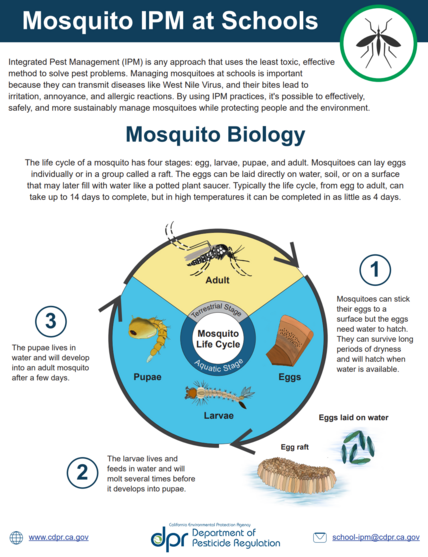
Managing mosquitoes at schools is important because they can transmit diseases, and their bites lead to irritation, annoyance, and allergic reaction. Mosquitoes depend on standing water to complete their life cycle, so it is important to remove these sources of water. To view our Mosquito IPM at Schools infographic, click the "View Infographic" button below.
Mosquito IPM around your home
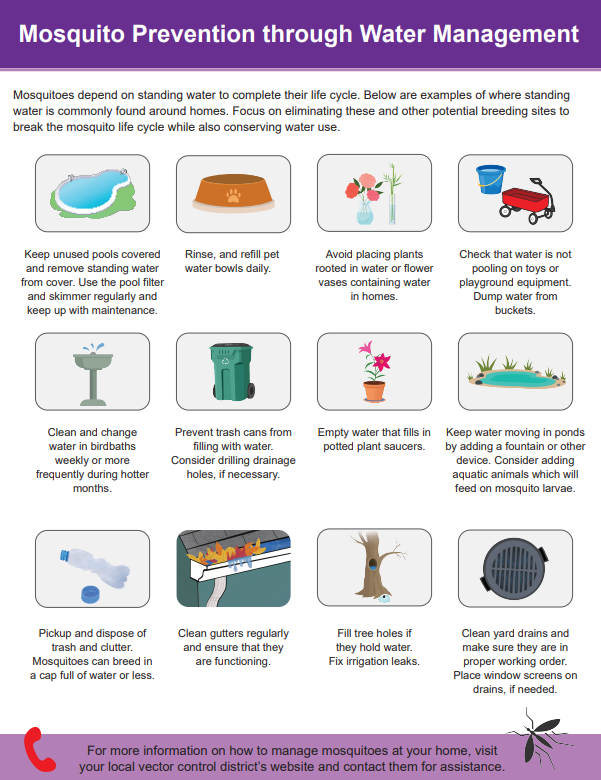
Rather than using pesticide sprays, which target adult mosquitos and don't provide long term control, focus on removing sources of water around your schools and homes to prevent them from becoming a problem. To view our Mosquito IPM at Homes infographic, click the "View Infographic" button below.
Additional Resources
Your local vector control agency can provide additional resources. Check out the website below for more details.
What is IPM?
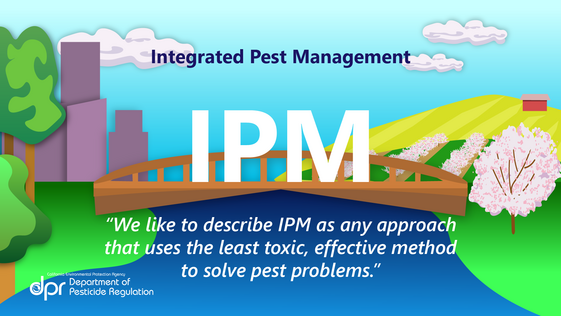
Integrated pest management, or IPM, is a sustainable pest management strategy you can use everyday. IPM focuses on a variety of pest prevention and non-toxic or least-toxic pest management techniques to effectively solve pest problems. IPM strategies use practices that exclude pests so they can’t cause problems and use pesticides only as a last resort. By using integrated pest management practices, it’s possible to effectively, safely, and more sustainably manage pests at your school or child care center while protecting staff, children, and the environment.
What is SPM?
Sustainable Pest Management (SPM) is a holistic, whole-system approach applicable in agricultural and other managed ecosystems and urban and rural communities that builds on the concept of integrated pest management (IPM) to include the wider context of the three sustainability pillars: Human Health & Social Equality, Environmental Protections, and Economic Vitality.

Follow DPR's social media outlets throughout the year to learn more!
|