|
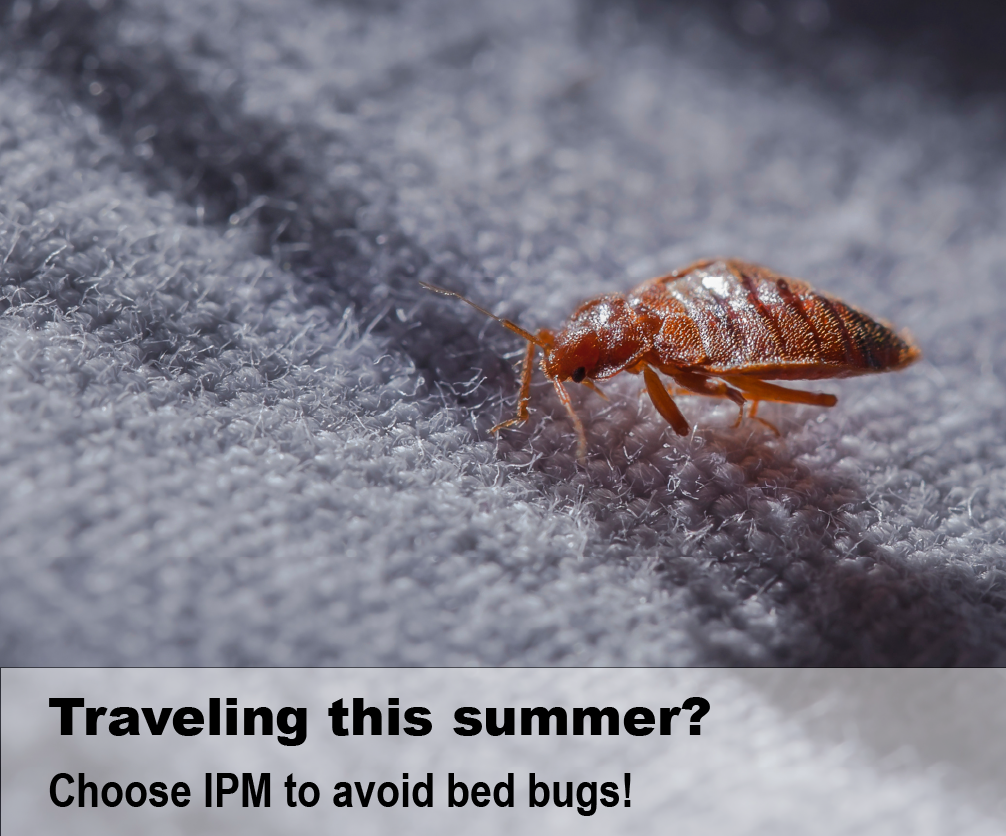
Traveling this summer?
Choose IPM to avoid bed bugs.
July 16, 2024
|
|
|
Attention, jet setters: When traveling this summer, keep your eyes peeled for tiny intruders that can hide in your accommodations – bed bugs! To avoid them, choose the integrated pest management (IPM) strategies of inspection and prevention. INSPECT your quarters upon arrival to identify any signs of bed bugs before settling in. PREVENT any transfer of unseen bed bugs to your home by properly handling your belongings after your return.
Nobody likes to think about bed bugs when planning a vacation, but by choosing IPM you can avoid your escapade becoming unforgettable for the wrong reasons!

|
|
Bed Bugs and Traveling Factsheet

Download and read DPR's factsheet for more information on how to avoid bed bug hitchhikers while traveling.
|
UC IPM's Bed Bug Inspection Video

Watch this video to learn more about how to inspect a bedroom or hotel room for bed bugs
|
Stopbedbugs.org

Check out stopbedbugs.org for more information on how to prevent and treat a bed bug infestation.
|
|
|
Questions? Contact Us:
Please contact the Department of Pesticide Regulation’s Choose IPM Program by emailing AskIPM@cdpr.ca.gov. For additional information about the Integrated Pest Management Branch please visit DPR’s website.
|
|
Who We Are
The California Department of Pesticide Regulation protects human health and the environment by fostering safer and sustainable pest management practices and operating a robust regulatory system to monitor and manage the sale and use of pesticides across the state. DPR’s work includes registering all pesticides sold or used in California, conducting scientific evaluation of pesticides to assess and mitigate potential harm to human health or the environment, investing in innovative research to encourage the development and adoption of integrated pest management tools and practices, monitoring for pesticides in the air and water, conducting outreach to ensure pesticide workers, farmworkers and local communities have access to safety information, and enforcing pesticide regulations in coordination with 55 County Agricultural Commissioners and their 500 field inspectors.
|
|
|
|