|
Back to Basics: Spider Integrated Pest Management
October 23, 2023
|
|
|
Spiders strike fear in some of us, but don't be fooled by their looks. They are actually beneficial helpers that feed on nuisance and garden pests, like flies and aphids. However, because spiders may build their webs in areas that are not appropriate in school settings, removal may be necessary. The resources below will help you learn the back-to-basics for how to manage spiders using safer, more sustainable integrated pest management practices.
|
|
Classroom Spiders: Best Management Practices
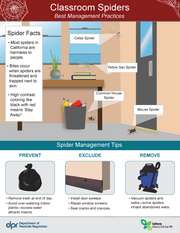
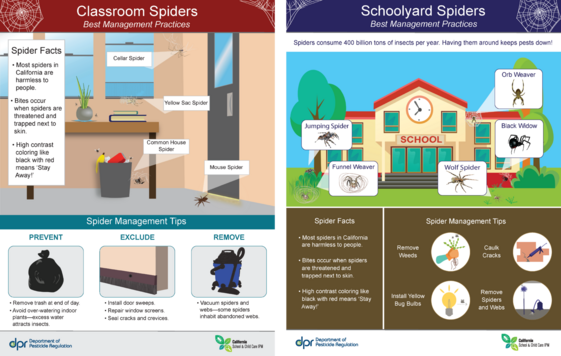
Check out this infographic to learn more about spiders you are likely to find indoors and how to manage those species using safer, more sustainable IPM practices.
|
Schoolyard Spiders: Best Management Practices
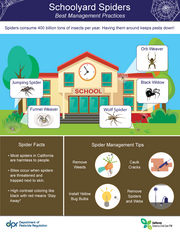
Check out this infographic to learn more about the most common spiders found in schoolyards and how to manage them using safer, more sustainable IPM practices.
|
Spider Integrated Pest Management Video
Watch this video on how to exclude spiders.
|
|
|
Questions? Contact Us:
Questions?
Please contact the Department of Pesticide Regulation’s IPM Branch by emailing school-ipm@cdpr.ca.gov. For additional information about the School IPM Program please visit DPR’s website.
|
|
Who We Are
The California Department of Pesticide Regulation protects human health and the environment by fostering safer and sustainable pest management practices and operating a robust regulatory system to monitor and manage the sale and use of pesticides across the state. DPR’s work includes registering all pesticides sold or used in California, conducting scientific evaluation of pesticides to assess and mitigate potential harm to human health or the environment, investing in innovative research to encourage the development and adoption of integrated pest management tools and practices, monitoring for pesticides in the air and water, conducting outreach to ensure pesticide workers, farmworkers and local communities have access to safety information, and enforcing pesticide regulations in coordination with 55 County Agricultural Commissioners and their 400 field inspectors.
|
|
|
|