|
OEFI Quarterly Newsletter- April 2024 |
|
|
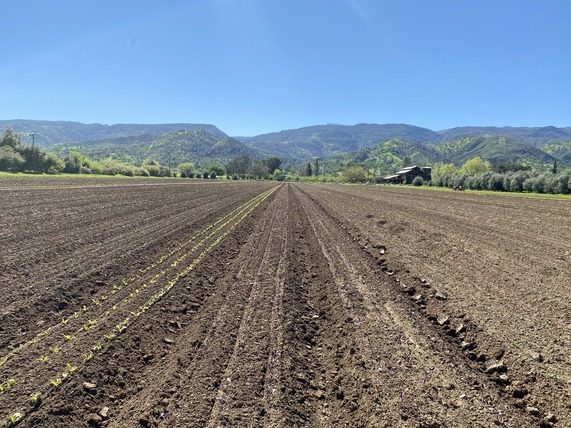
View of Full Belly farm in Capay Valley looking westward.
Toward a Proactive Strategy for Mitigation, Adaptation and Resilience for California Agriculture
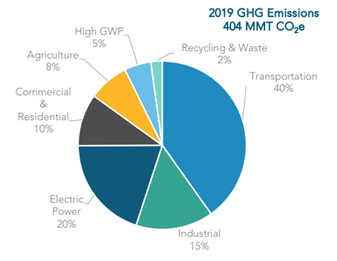
Though agriculture is a small slice of California’s greenhouse gas emissions pie- 8% of total emissions including forestry- agriculture has a lot to offer when it comes to being part of climate solutions. For the first time, CDFA is drafting a Climate Resilience Strategy. The strategy will provide a roadmap for building resilience in the face of climate change for California agriculture in alignment with the goal in the updated Ag Vision to “foster climate smart, resilient, and regenerative food systems”. The strategy will 1) lay out an overview of the challenges presented by a changing climate, 2) outline opportunities available to address these challenges, and 3) summarize the progress made towards these solutions by CDFA and its partners.
CDFA staff are currently in the information gathering stage. As part of the information gathering process, the Environmental Farming Act – Science Advisory Panel will be hosting a 2-day meeting May 9th and 10th. Topics the Panel will address include 1) Improving, maintaining, and quantifying soil health and soil GHG emission reductions, 2) Sustainability in CA dairy and ranching industries, 3) Changing climate and dealing with climate extremes in agriculture, 4) Land Use and Repurposing, and 5) Tracking Progress Towards Climate Resiliency.
Pie chart showing sources of greenhouse gas emissions in California.
Want to join us for the EFASAP meetings in May? You can attend in-person in Sacramento or register for the webinar with the links below. CDFA will post full meeting details here.
|
|
Moo-lah for Dairy Sustainability Projects Coming this Summer
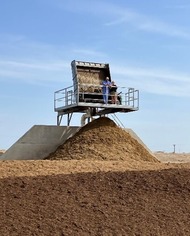
A new call for applications is coming soon for three of OEFI’s dairy and livestock manure methane reduction programs: the Dairy Digester Research and Development Program (DDRDP), Alternative Manure Management Program (AMMP), and Dairy Plus Program (DPP). The DPP is funded by a USDA Partnerships for Climate Smart Commodities grant that OEFI administers collaboratively with the California Dairy Research Foundation. OEFI expects to announce the opening of grant solicitation in June/July 2024.
DDRDP incentivizes the installation of dairy digesters and expects availability of approximately $10 million to award; AMMP supports the implementation of non-digester manure management practices such as conversion of flush to scrape manure collection and expects to have approximately $20 million to award*. The DPP supports manure management practices that also address nutrient surplus and has $57 million available.
Prospective applicants are encouraged to start planning and preparing in advance of the application period. Each program’s webpage contains information that can assist with the planning process, including materials and resources from previous grant solicitation rounds and availability of free technical assistance. Sign up for email notifications to be alerted about the application period, workshops and outreach events.
*The State Budget will determine funding availability on or after July 1, 2024.
|
HSP Success: Cover Cropping Improves Soil Health and Fertility While Reducing Greenhouse Gas Emissions and Dust
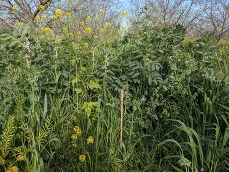
Orchards with bare alleys can have low water infiltration, needs for high inorganic fertilizer input, and dust problems on windy days. In 2019, Machado Family Farms Inc. received $74,970 from the Healthy Soils Program Incentive Grants to plant mixed cover crops on their 170-acre walnut orchard to address these issues.
Through three years’ implementation, the project has achieved not only an estimation of 780 metric tons CO2 equivalent GHG reduction benefits, but also multiple co-benefits shared by the recipient, including:
- Increased water infiltration from rainfall and sprinkler irrigation.
- Increased water-holding capacity determined by observations and soil water data readings.
- Easier/earlier/cleaner access with tractors/workers following rainfall/irrigation events.
- Less ruts from tractors/equipment in orchard alleys.
- Much less soil cracking and windblown dust when the ground is dry.
- Cooler ground temperatures in full sun, especially in younger orchards - benefitting microbial communities and reducing water loss.
- Reduced mowing by 3-4 rounds after the sheep grazing used to terminate the cover crop.
- Reduced pesticide sprays by at least 1-2 applications per block per year and increased length of time between sprays thanks to increased beneficial insects.
- Increased pollinator observations benefitting from a diverse mixture of cover crop species (triticale, bell beans, peas, mustard and radish).
- Exponentially reduced weed pressure, with weeds suppressed by fast-growing cover crops.
“We will continue to grow cover crops without funding,” says Drew Cheney, the operation manager at Machado Family Farms. “I would love to show you what we've accomplished. With the positive results of the ‘test’ blocks funded by the HSP, we slowly increased the cover-cropped acreage each year, until we seeded every single block in the fall of 2023. I've got a lot of ideas of what I want to accomplish, and there's enough science and tried-and-true experience to combine to shake things up.”
|
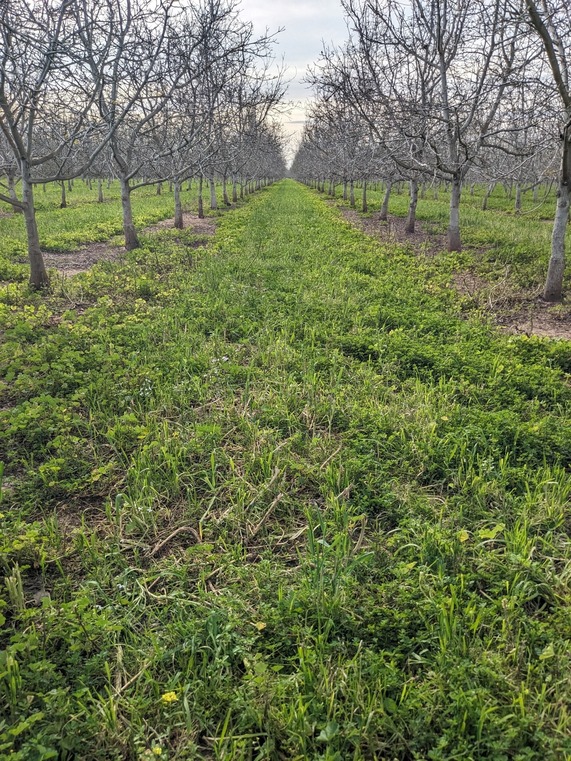 |
Cover crops in the orchard after sheep grazing.
First Proactive Integrated Pest Management Solutions Grant Award Concluded

The Proactive Integrated Pest Management Solutions Grant Program is thrilled to announce the successful completion of its first project: “Proactive Biological Control of Spotted Lantern Fly, Lycorma delicatula (Hemiptera: Fulgoridae).” Spanning nearly five years, this project was completed in February 2024.
The spotted lantern fly (SLF) is primarily known to feed on tree of heaven but has many other host plants, including grape, hop, apple, stone fruit, and walnut. Native to China, SLF invaded the US in 2014, established in the northeast, and has been spreading rapidly. The New York Department of Agriculture had a well-advertised campaign to get the public to squish the invading bugs on sight. While SLF has not arrived in California yet, it is now established in the Midwest and will be a devastating agricultural pest if it establishes here. CDFA and researchers are taking a proactive approach to control options so that the state can be well prepared for its likely arrival. Biological control is a non-chemical control option that can be effective for controlling invasive pests, but it takes many years to develop due to all the necessary safety testing. Historically, testing work does not start until the pest has established, spread, and is causing economic or ecological damage.
The award recipient, Dr. Mark Hoddle, and his research team at UC Riverside, investigated a natural enemy, Anastatus orientalis, an egg parasitoid from the home range of SLF in China, for its potential as a biological control in California. This tiny wasp lays its eggs inside SLF eggs, and parasitoid larvae consume egg contents preventing them from hatching. As part of the evaluations to assess the effectiveness of this wasp against SLF eggs, this project examined if the wasp would attack eggs of other insects, referred to as non-target species, to safeguard California's insects. This is a necessary part of evaluating non-native biological control agents prior to their release. The research team used eggs of more than thirty insect species that occur in the southwestern US. The results showed that the wasp readily attacked eggs of non-target species, and, therefore, its use for biological control of SLF in California should be viewed with extreme caution. By conducting this work proactively, prior to the establishment of SLF in California, this research helps pave the way for rapid responses should SLF populations be detected in California.
Feeling nerdy? You can read the whole study here.
|
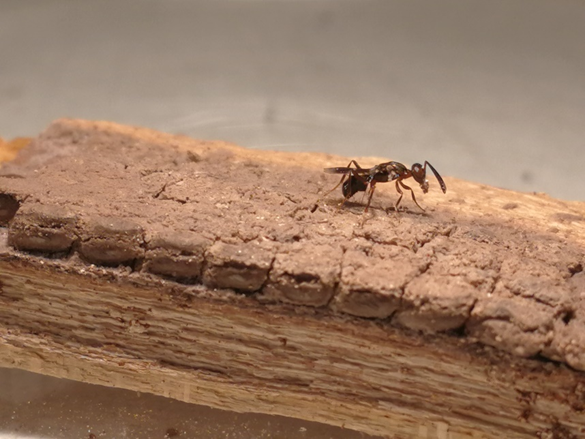 |
An adult Anastatus orientalis. Photo by Robert Malek, University of Trento
CDFA Staff Presents at World Ag Expo on Climate Smart Agricultural Incentives
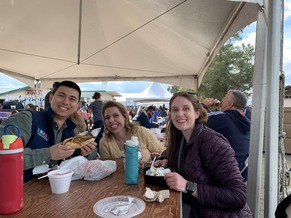
The World Ag Expo is the largest annual outdoor agricultural exposition in California, held annually at the International Agri-Center in Tulare. This year, on February 15th, The Office of Environmental Farming and Innovation (OEFI) staff Roberta Franco, Benjamin Lee, and Elizabeth Hessom presented on the Climate Smart Agriculture Incentives Programs OEFI offers.
Ben discussed the role of the Office of Pesticide Consultation and Analysis (OPCA). OPCA provides consultation to the California Department of Pesticide Regulation (DPR) on the potential impact of regulatory actions and pest management alternatives to mitigate those impacts and funds research and demonstration projects through the Biologically Integrated Farming Systems (BIFS), Proactive Integrated Pest Management, and IR-4 California programs.
Roberta presented on CDFA’s programs to reduce methane emissions and nutrient runoff from livestock operations, including the Alternative Manure Management Program (AMMP), the Dairy Digester Research and Development Program (DDRDP), and the newest program, the Dairy Plus Program.
Elizabeth provided updates on the Healthy Soils Program (HSP) and State Water Efficiency and Enhancement Program (SWEEP). Both the HSP and SWEEP programs are running Block Grant Pilot Programs, and their Block Grant Recipients (BGRs) are currently accepting applications for on-farm projects. If you are interested, or know parties that are interested in applying, please reach out to the HSP BGRs or the SWEEP BGRs, or email HSP and SWEEP mailboxes for more details cdfa.HSP_Tech@cdfa.ca.gov, cdfa.sweeptech@cdfa.ca.gov.
|
Seeking Tribal Input on Defining Regenerative Agriculture

The California Department of Food and Agriculture (CDFA) will hold two Tribal listening sessions to receive Tribal input on the state's definition of "regenerative agriculture" for the purpose of state policy and programs. Tribal members are invited to attend. CDFA recognizes that while “regenerative agriculture” may not have a consistent definition in state policy or programs, California Native American tribes have been using regenerative practices for millennia, and CDFA recognizes Native American voices are imperative for defining this term. CDFA is seeking input from California Native American tribes to develop a definition that is inclusive of tribal perspectives.
Note: OEFI is not facilitating this process. This is a courtesy post. If you have questions, please reach out to regenerativeag@cdfa.ca.gov.
|
|
|
California Climate Investments Released New Funding Resource for California Tribes
The Funding Workbook for All California Tribes (Funding Workbook) guides Tribal leaders and Tribal staff through assessing which California Climate Investments funding opportunities may be a good fit for your Tribe’s needs and priorities. The Funding Workbook is designed for everyone from previous grantees to Tribal leaders and staff who are exploring State climate programs for the first time. The Funding Workbook is meant to serve all Tribes, regardless of federal recognition, and includes Tribes who operate as nonprofits.
Visit the California Climate Investments website to learn more about the Funding Workbook, download a copy, request free copies, or make suggestions about the engagement and support you’d like to see from the California Climate Investments team.
|
|
|
|
|