|
 |
|
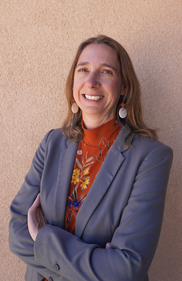
Thank you for your interest in the vital work of Housing & Community Development for the City of Tucson. It is my privilege to share a look back at some of our 2025 accomplishments and a preview of what’s ahead in 2026, with the strong support of the Mayor and City Council.
The work we do at HCD has never been more important. Safe, stable housing is the foundation for a family’s or individual’s success. Our programs and initiatives aim to support the well-being of all Tucsonans, with an intentional focus on low-income residents. While challenges remain, high housing costs, limited availability, and lingering impacts from the COVID-19 pandemic, our staff continues to rise to the occasion.
In 2025, we saw the power of collaboration and community engagement in action. From expanding affordable housing and supportive services to hosting neighborhood events and connecting residents with resources, we are building stronger pathways for Tucsonans to thrive. We celebrated new housing projects, increased access to emergency shelter, and launched programs that empower residents to lead in their own communities.
None of this work happens in isolation. Our achievements rely on the dedication of HCD staff, the ongoing support of our Mayor and Council, and the strong partnerships we share with community organizations, neighborhood leaders, and residents. Together, we are creating spaces where families and individuals can call home, feel safe, and envision a brighter future.
As we celebrate the progress of 2025, we also recognize there is much more work ahead. I am grateful to our staff, partners, and residents who make this work possible, and I look forward to another year of collaboration and community-driven impact.
With gratitude,
Ann Chanecka
Director Housing and Community Development
|
|
|
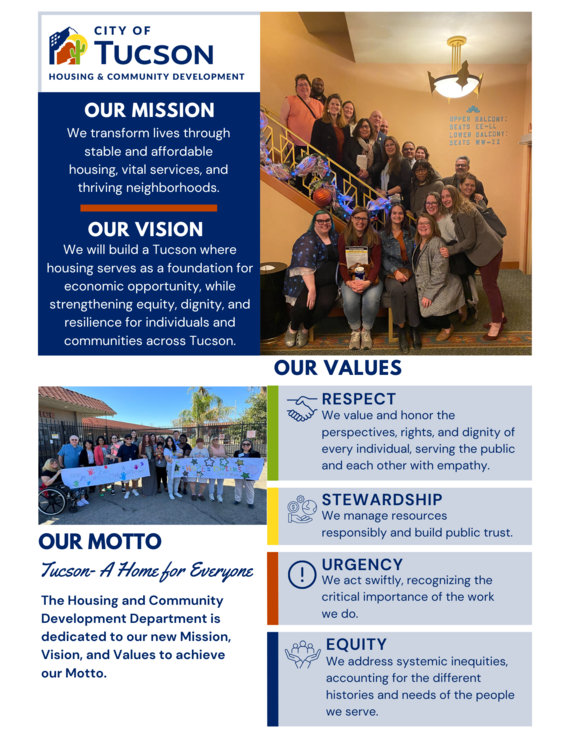 The Housing and Community Development Department is responsible for promoting affordable housing and community well-being within the city, with a focus on low-income individuals and vulnerable populations. HCD oversees programs funded by federal, state, and local sources related to housing assistance, homelessness prevention, neighborhood revitalization, and affordable housing development. Additionally, the department collaborates with local organizations, community stakeholders, and government agencies to foster sustainable development, enhance the quality of life, and address the socio-economic needs of the city’s diverse communities.
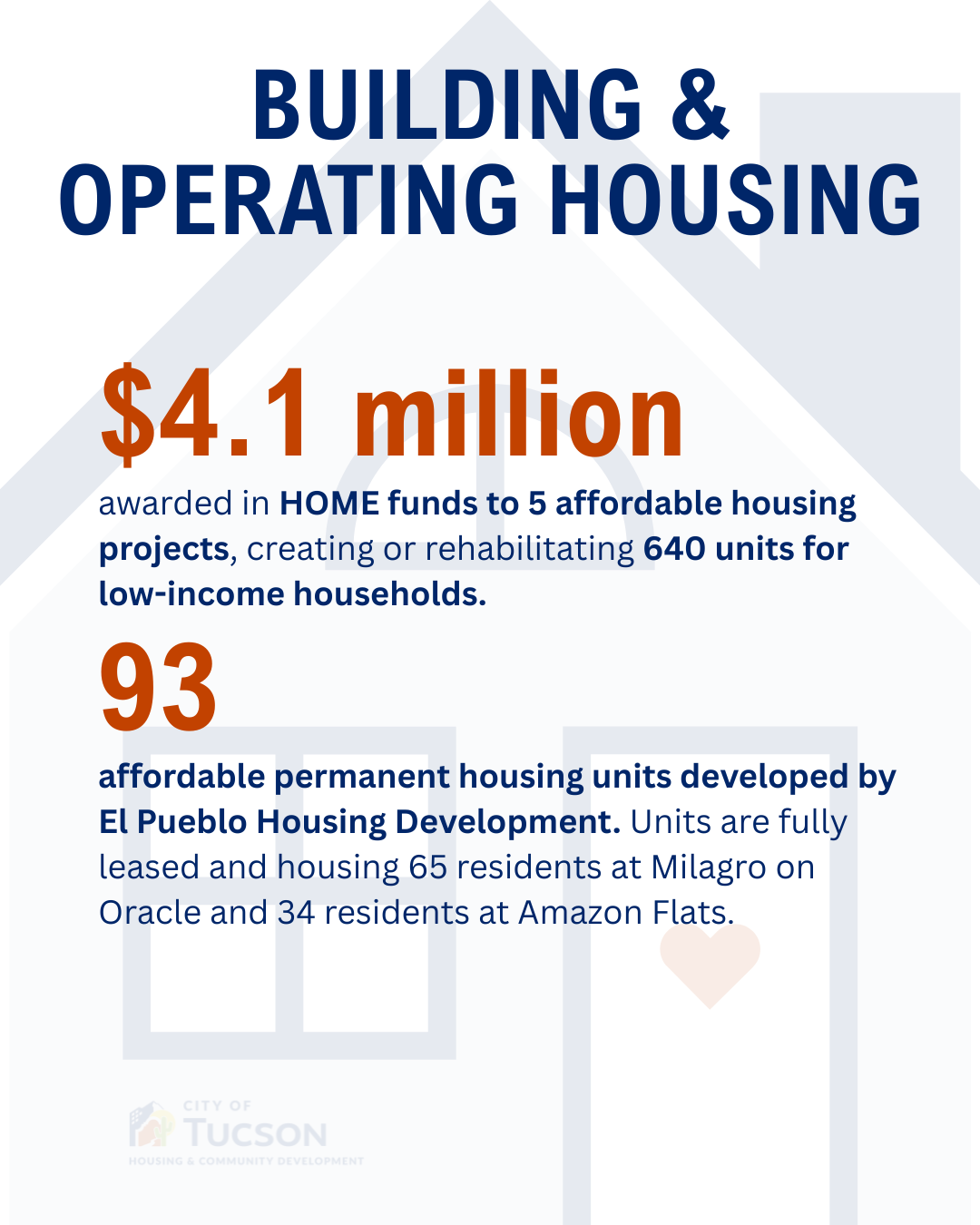
Building and Operating Housing: Building and operating housing means developing, preserving, and managing affordable homes at scale, expanding Tucson’s supply of subsidized units while ensuring long-term access to safe, stable housing for low-income residents. Here are some of our key accomplishments from 2025 around building and operating housing.
 |
|
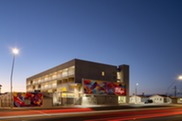
Milagro on Oracle Opens!
Last year began with a major accomplishment: Mayor Romero, Arizona Department of Housing Director Joan Serviss, and HCD Director Ann Chanecka led the ribbon-cutting for Milagro on Oracle, a 63-unit housing project in a redeveloped historic motor motel. Milagro on Oracle provides 63 residences for Tucsonans 55 years and older, including 19 units for unsheltered individuals. Milagro was the City’s first state Low Income Housing Tax Credit project in 10 years.
To learn more, visit City of Tucson Receives State Award for New Modern Affordable
|
 |
|
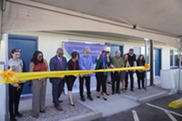
Amazon Motel Permanent Supportive Housing Opens!
Another project completed in 2025 was the transformation of the former Amazon Motel on West Miracle Mile. Amazon Motel provides permanent supportive housing for individuals experiencing homelessness in 30 refurbished studio apartments. This development offers supportive services to the residents until they are ready to transition to independent living. A second phase of this project, Amazon Flats, will begin construction of a new building with 59 new one-bedroom affordable housing units on a vacant lot adjacent to the motel.
To learn more, visit Old Amazon Motel re-opens as permanent supportive housing in Tucson
|
 |
|
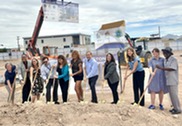
Sugar Hill on Stone Breaks Grounds!
In 2025 HCD broke ground for Sugar Hill on Stone, a 66-unit affordable housing development in Tucson’s historic Sugar Hill, along the City’s planned Bus Rapid Transit corridor on North Stone Avenue, at 1910 N. Stone Ave., on the site of the old Bum Steer. The development, which is expected to be completed by the end of 2026, includes 37 units for families and individuals relocating from Tucson House and 29 additional affordable units for households. The project is Phase II of the HUD Choice Neighborhoods Implementation Housing Strategy in the Thrive in the 05 area. Located on a previously vacant site, the development reflects the Sugar Hill Neighborhood’s vision, bringing much needed investment in a historically disenfranchised and disinvested community.
To learn more, visit City of Tucson Breaks Ground for 66 Affordable Housing Apartments
|
 |
|
Engaging the Community on Upcoming Affordable Housing Projects!
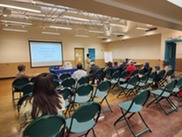
HCD conducted community meetings over three potential affordable housing developments: Main and Davis, Stone and Speedway, and South 10th Avenue. HCD staff held informational and listening sessions with residents in collaborative efforts to create dynamic and viable developments. Main and Davis is planned to be a multi-family housing project, with 67 units on two separate parcels in Barrio Anita adjacent to Davis Elementary and nearby on North Main Avenue in the Presidio neighborhood. Together, the two sites will provide high-quality, neighborhood-compatible housing that respects the unique character of some of Tucson’s oldest neighborhoods. Stone and Speedway, on the southwest corner in the Dunbar Spring neighborhood, across from the Pima Community College downtown campus, is Phase IV of the HUD Choice Neighborhoods Implementation The development is adjacent to a proposed high bus transit stop and is expected to deliver 120+ units of mixed-income housing near downtown. The South 10th project is an ambitious development on 12 acres of City-owned property, near West 22nd Street and Interstate 10. It is intended to be a mixed-use development for mixed-income residents. It is a critical response in the City of Tucson’s need for more affordable housing options in Tucson.
To learn more, visit El Pueblo Housing Development
|
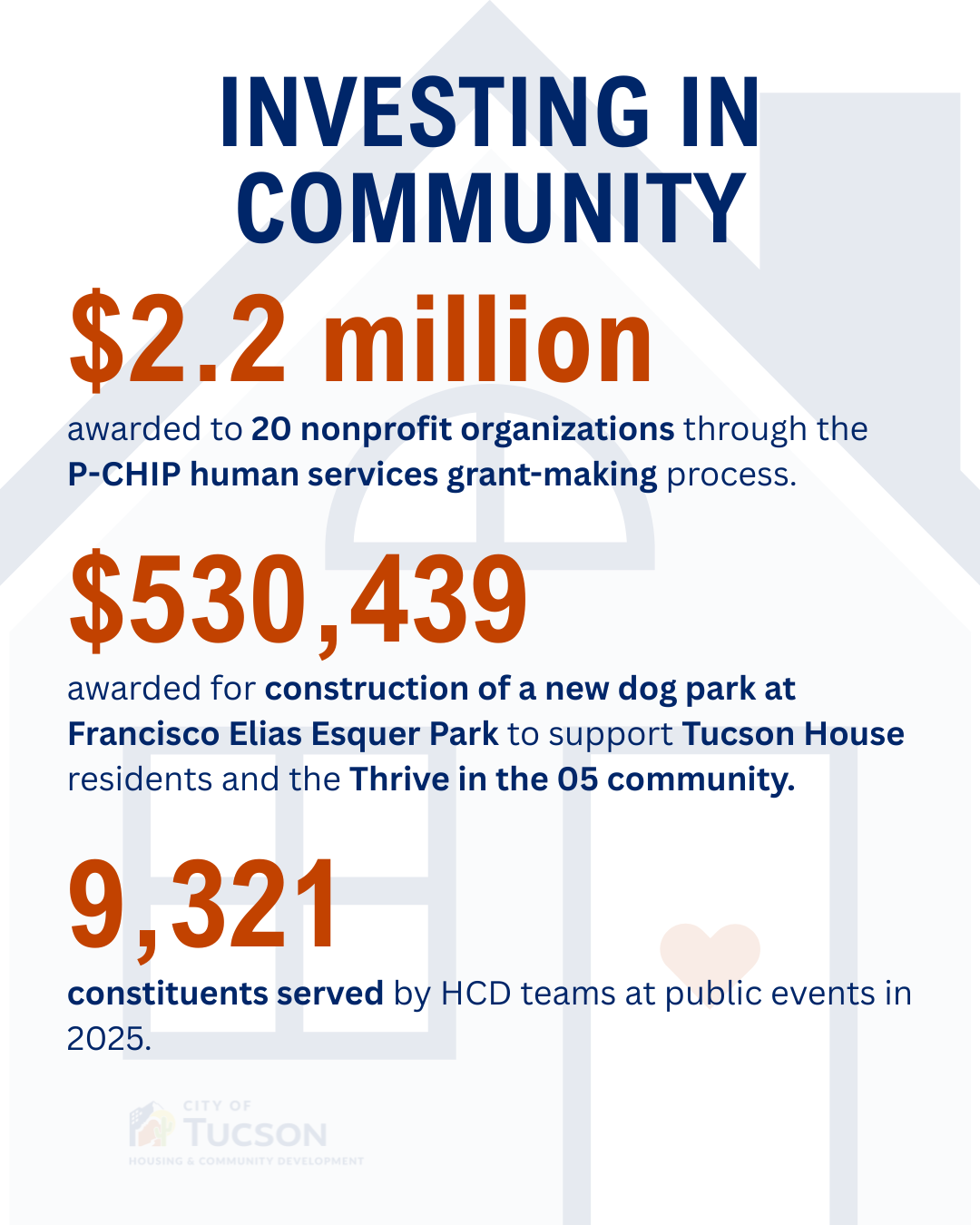
Investing in Community: Investing in community means partnering with local organizations, strategically directing funding, and financing affordable housing to strengthen neighborhoods, expand opportunities, and improve quality of life in areas that need it most. Here are some of our key accomplishments from 2025 around investing in community.
 |
|
Thrive in the 05 Fall Fiesta!
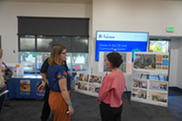
On Monday, October 27, residents, families, and community partners came together at Pima Community College Downtown Campus for the Thrive in the 05 Fall Fiesta. The evening welcomed around 120 attendees for a lively celebration of connection, community, and the work happening across the ’05. Guests heard updates from local organizations highlighting ongoing projects, resources, and initiatives supporting the neighborhood, and residents had the chance to ask questions and engage directly with community partners. The event also offered plenty of time to connect with neighbors over free tacos and ice cream, creating a warm and festive atmosphere. The Fall Fiesta was more than just a gathering, it was a celebration of community spirit, collaboration, and the many people working together to make the ’05 a vibrant, thriving place to live!
To learn more, visit Thrive in the '05!
|
 |
|
Wildcat Inn Celebrates New Playground!
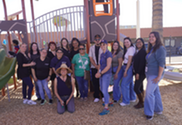
This fall, the City of Tucson’s Wildcat Inn shelter celebrated a special milestone: the opening of a brand-new playground. On Saturday, November 1, families, residents, and local partners came together for the ribbon-cutting ceremony, with around 60 people joining in the festivities. Since opening in 2022, the Wildcat Inn has served as a supportive, transitional housing community for families in need. City investments over the years have enhanced the site with new amenities, including a patio, canopy, stormwater improvements, and now a safe, inviting playground for children to play and explore. These upgrades provide a welcoming environment for more than 80 residents, including 35 children, giving families spaces to connect, children a place to play, and the broader community a reason to celebrate. The ribbon cutting was a meaningful milestone in the ongoing effort to nurture a safe, family-centered community at the Wildcat Inn.
To learn more, visit Wildcat Inn unveils new playground for kids and their families
|
 |
|
Neighbors Shape the Future of 29th Street Thrive Zone
After two years of community engagement, residents helped identify what they love about the 29th Street Thrive Zone, what could be improved, and ideas for positive change. With support from Promotores and community leaders, that input has been distilled into eight Action Activities to be implemented in 2026, backed by $1.3 million in City funding. Activities range from community-led events, leadership and organizing training, and employment and housing resource fairs, to legal support for tenants, expanded programs at Freedom Park Center, and localized refugee services. Residents also helped select a HUD-funded Rosemont Beautification project, currently in the planning phase, after one-on-one conversations with over 100 families in the area. Other highlights include the upcoming community garden and outdoor learning space at Freedom Park, along with opportunities for residents to lead workshops, events, and skill-building activities. These community-driven projects reflect the voices and priorities of neighbors, creating spaces, programs, and improvements that foster connection, learning, and growth across the Thrive Zone.
To learn more, visit 29 Street Thrive Zone
|
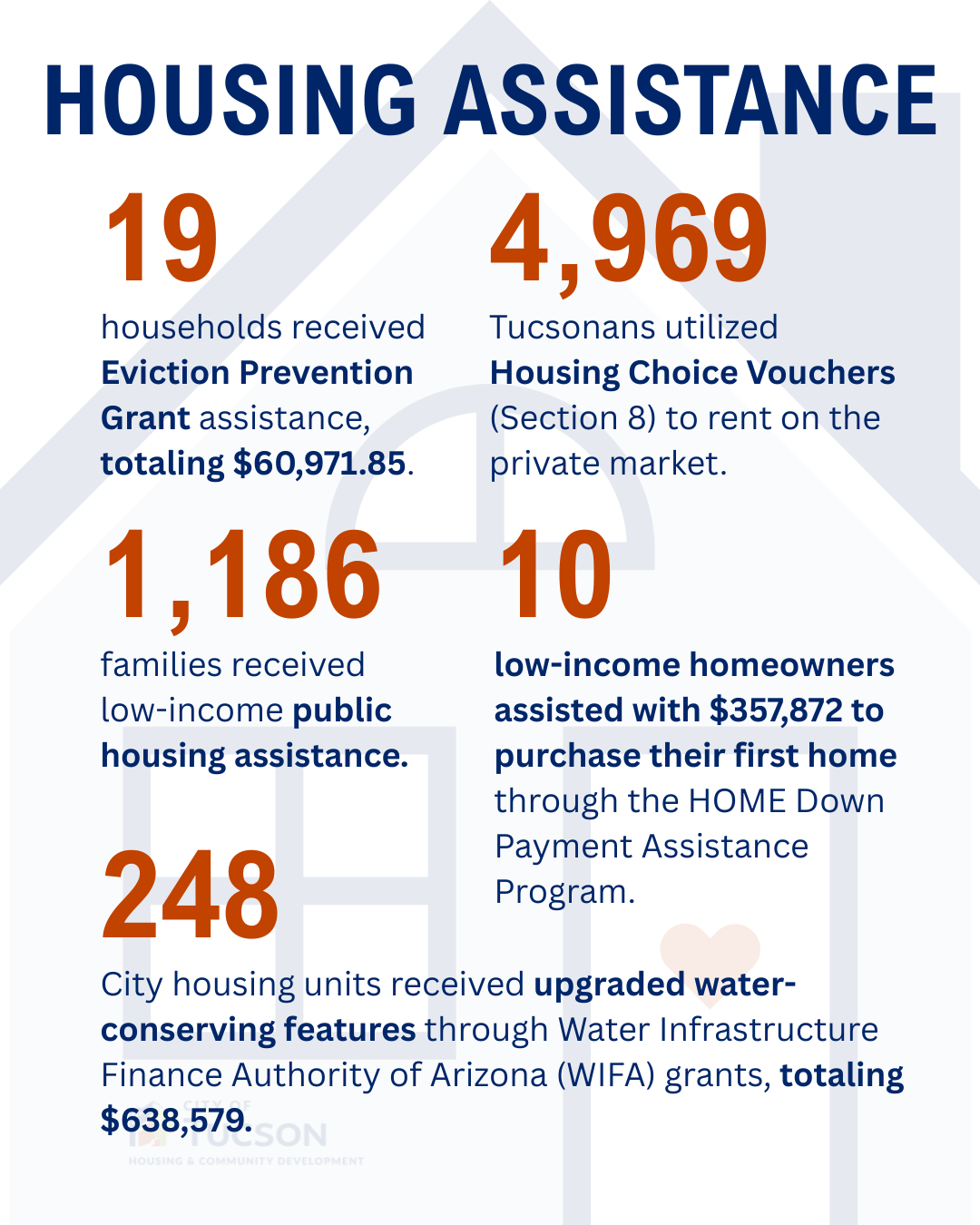
Providing Housing Assistance: Providing housing assistance means helping low- and moderate-income Tucsonans access and maintain safe, affordable homes through rental support, homeownership assistance, repairs, and lead hazard reduction. Here are some of our key accomplishments from 2025 around providing housing assistance.
 |
|
Family Self Sufficiency & Resident Opportunity Programs
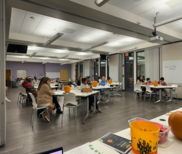
In 2025, the Family Self‑Sufficiency (FSS) and Resident Opportunity and Self‑Sufficiency (ROSS) programs supported 115 households through tailored workshops, personalized case management, and goal‑driven activity planning. The FSS program is a voluntary, HUD‑funded initiative that partners households receiving rental assistance with skilled case managers to develop individualized five‑year action plans aimed at increasing earned income and reducing dependency on welfare and rental subsidies. Participants work closely with their case managers to access transportation, education, employment counseling, job training, financial literacy, and homeownership counseling, all designed to help families overcome barriers and build lasting self‑sufficiency. This year, 8 participants graduated from the program, collectively earning $63,258 in escrow savings. These escrow accounts are built as participants increase their earned income, contributing to savings that can be accessed when program goals are met or at graduation, empowering families to invest in their futures.
|
 |
|
HOME Downpayment Assistance and Homeownership Support
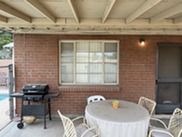
In 2025, the HOME Downpayment Assistance Program helped 10 low-income households become first-time homeowners. Participants completed education, received months of one-on-one counseling, and saved for years to reach this milestone. One homeowner shared: “I never thought I'd be able to provide a home like this for my family and I. You ladies are simply amazing. I’m literally in tears right now.” The program provides deferred, zero-interest loans for a portion of the purchase price, paired with counseling to ensure families are ready for homeownership. It also supported 134 households with rental security deposits, helping families secure safe, stable housing.
To learn more, visit Down Payment Assistance Program
|
 |
|
Home Rehabilitation & Lead Hazard Reduction
In 2025, the Community Development program helped 31 low‑income homeowners maintain safe, healthy homes through rehabilitation and lead hazard reduction programs. These programs address urgent repair needs, improve energy efficiency, and mitigate lead-based paint hazards in older homes, keeping families safe and reducing financial strain. Repairs can include roofing, electrical, plumbing, HVAC upgrades, and lead mitigation for homes built before 1978. By helping families stay in their homes, these programs protect both health and financial stability while preserving neighborhood housing stock.
To learn more, visit Homeowner Repair Programs
|
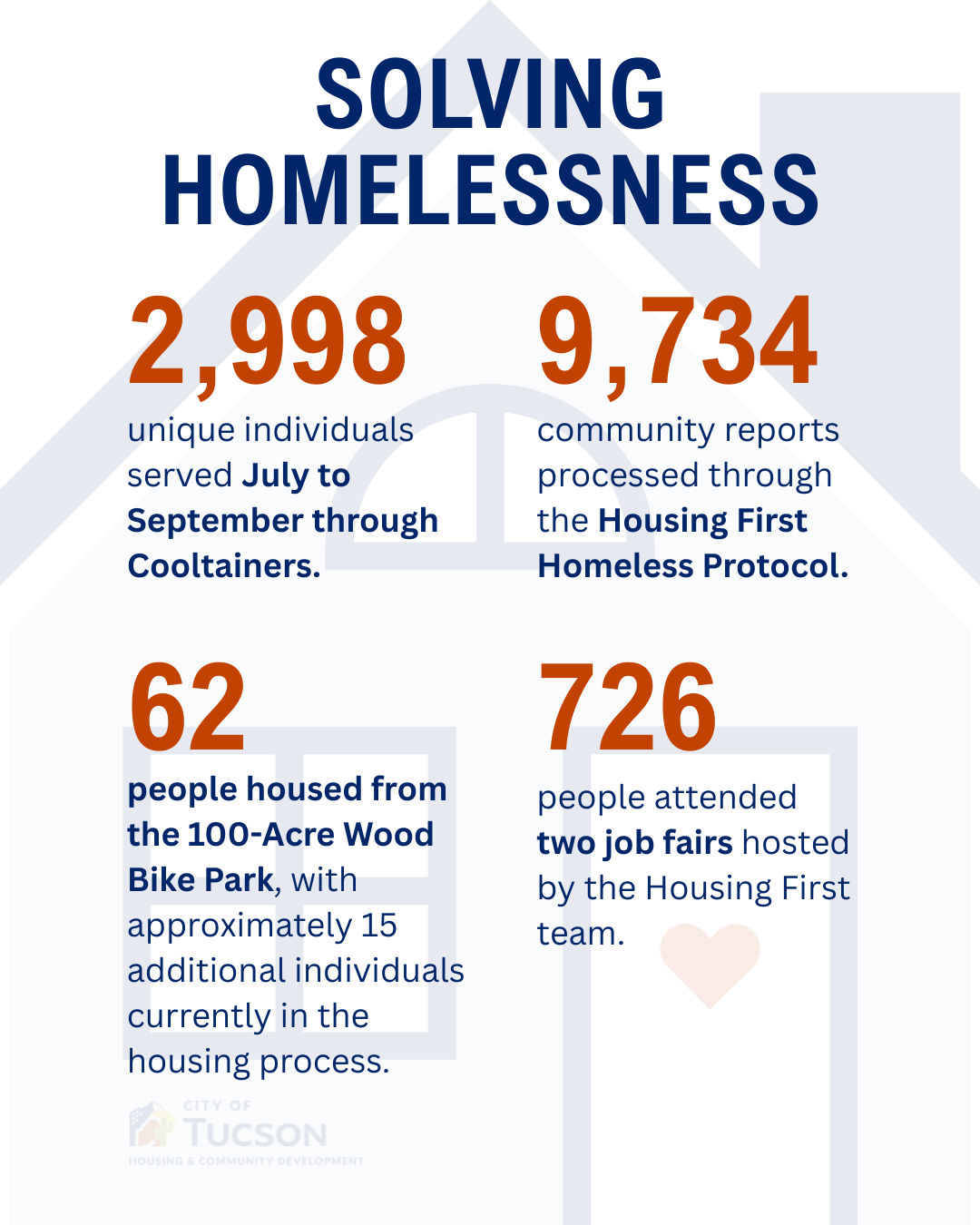
Solving Homelessness: Solving homelessness means coordinating housing, outreach, and supportive services to make homelessness rare, brief, and one-time by prioritizing permanent housing and targeting resources to those who need them most. Here are some of our key accomplishments from 2025 around solving homelessness.
 |
|
Coordinated Action at 100 Acre Wood Bike Park
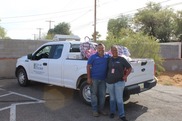
In 2025, the TPCH Unsheltered Initiative launched an intensive, coordinated effort at 100 Acre Wood Bike Park to connect individuals experiencing homelessness with housing and supportive services. Beginning in July, City teams and community partners worked side-by-side onsite to provide housing navigation, treatment referrals, legal assistance, and stabilization support. More than 125 individuals were engaged through this place-based initiative, with many referred to permanent supportive housing, affordable housing opportunities, and critical health and recovery services. Weekly coordination and strong field presence ensured consistent, compassionate care. This effort highlights the power of collaboration—demonstrating that when agencies align around shared goals, meaningful progress toward housing stability is possible.
To learn more, visit TUCSON PIMA COLLABORATION TO END HOMELESSNESS
|
 |
|
The Housing First team continues to work closely with City departments and community partners to support residents experiencing homelessness. Through strong collaboration, the City helps operate and support multiple shelter sites across Tucson, including Wildcat Inn, Desert Cove, Craycroft, and Casa Del Pueblo, providing safe refuge for families, adults, and individuals in need. In response to extreme summer heat, Housing First also expanded cooling center operations citywide. Additional sites were opened, and hundreds of summer relief kits, filled with water, electrolyte drinks, sunscreen, and cooling towels, were distributed. The Ward 5 cooling center alone recorded more than 2,300 visits this summer, underscoring the urgent need for accessible, lifesaving spaces during extreme heat. Together with community partners, Housing First remains focused on making homelessness rare, brief, and non-recurring by connecting individuals to shelter, services, and permanent housing pathways.
To learn more, visit Housing First
|
 |
|
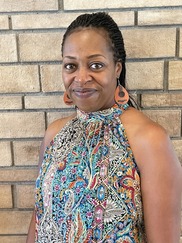
Community Spotlight – Trystan Hawkins (Housing Choice Voucher)
Trystan Hawkins knows how much life’s struggles can drain a person. She also knows that perseverance and faith in oneself can overcome those personal challenges. Trystan, a 50-year-old single mom currently enrolled in HCD’s Family Self-Sufficiency program, recently was appointed to serve on the Public Housing Authority Board of Commissioners, as representative of her fellow public housing residents and HCV recipients. In a humble voice, she said her achievements did not come without help from others. Her FSS cheerleaders had her back.
“The FSS team has been fabulous,” she said, adding a big shoutout to her FSS counselor, Angela Gallegos, a FSS project coordinator. “She is absolutely a godsend,” Trystan said. Trystan, who lives on Tucson’s far southeast side, has been a Housing Choice Voucher recipient for the past three years. FSS participants, who also include public housing residents, work with FSS staff to map out personal and professional goals in areas of education, employment, financial literacy, and homeownership. The overarching goal is for the participants to increase their income and lessen their dependency rental subsidies and other forms of public assistance.
Within the FSS program, 118 participants across both HCV and Low-Income Public Housing programs have been connected to community services and resources, and 49 households now have one or more adults employed, demonstrating meaningful progress toward self-sufficiency. Trystan said a key in her progress and growth has been her close working relationship with Angela. “I was able to stay motivated with all the roadblocks out there,” she said. “And there were many.” One of her biggest challenges was finding a place to live, a place which would accept her housing voucher. Trystan, who is black, felt some prospective landlords and property managers discriminated against her because she was an HCV holder. But she persisted and, with her FSS team, she eventually found a comfortable place to live with her teenage son in a higher opportunity area thanks to the new Small Area Fair Market Rent policy.
As she moves forward, with the goal of graduating from the FSS program, Trystan said a new goal is to be an effective and vocal member of the Board of Commissioners, advocating for public housing and HCV residents. She figures since others have helped her, she in turn will help others. “I love doing what I do, helping the community. You have to be part of the community,” she said. “You can’t be an island.”
|
 |
|
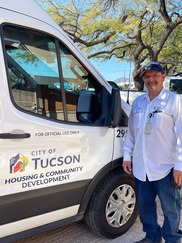
Staff Spotlight – David Garcia (Public Housing)
While nearly everyone sees a well-worn house, owned by Tucson’s Public Housing Authority, with its faded walls, missing fixtures, a torn window screen and other deficiencies, David Garcia sees something else. He sees newly painted walls, clean cabinets, kitchen and bathroom fixtures, and everything else that says, “job well done.” Beyond the important cosmetic improvements, David sees something more meaningful: he sees a Tucson family enjoying a safe and secure home which will give the family a strong foundation to grow.
“I do the best job I can,” said David while taking a break from a restoration job on a PHA house on East Lester. David is a housing technician with Housing and Community Development, a position he has held for nine years. He, along with other HCD housing technicians, are the go-to employees who transform PHA living units into clean, inviting homes for Tucson residents. He puts houses back together. “I do everything, you can say,” he says. “There are a lot of skill levels here,” he adds, referring to his fellow HCD technicians who are jacks of all trades. David has been with HCD for nine years. But before HCD, he worked in the Environmental Services Department for about 10 years. His first job was as a heavy equipment operator in the Brush and Bulky program.
He learned his basic working skills alongside his brothers and his father who had a roofing business. It was good work. Family work. But after marriage and his family began to grow, David looked for a job with health benefits, insurance and a pension. Joining a new family, the City of Tucson family gave him and his family financial stability. Providing some level of stability for others, David understands, is how he views his work. His work leads to providing a Tucson family with a comfortable home to call their own. “We all got to step up,” he says. “I try to make an impact.”
|
 |
|
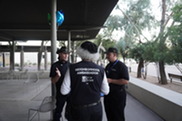
Resident Spotlight: Tucson House Ambassadors
Resident leadership is thriving at Tucson House! In the spring of 2025, the City of Tucson launched the Tucson House Ambassador Program as part of the Thrive in the 05 Transformation Plan, and the response from residents has been inspiring. Seven dedicated Ambassadors are now stepping up to help build a stronger, more connected community. These Ambassadors meet every two weeks for training in leadership, communication, and community organizing, while sharing ideas and listening to neighbors. They’re already making an impact by checking in with neighbors one-on-one, sharing information about local resources, events, and services, gathering community feedback and ideas, and helping plan events that reflect residents’ interests and needs. The program is about more than meetings, it’s about fostering a culture of care, connection, and empowerment. Change starts with neighbors talking to neighbors, and Tucson House Ambassadors are showing how powerful that can be.
|
|
|
 |
|
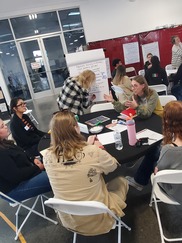
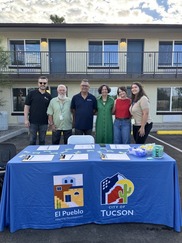
In late 2025, the City of Tucson hosted six public engagement events to hear directly from residents about housing, homelessness, and public safety. At these roundtables, participants spoke with department directors and the Chief of Police after a brief overview of City budgets. Residents highlighted top priorities for the Housing and Community Development Department, including housing preservation, middle housing, voucher waitlists, and the impacts of funding cuts. Post-event surveys showed strong support for expanding emergency and transitional shelter options, increasing affordable rental housing, and improving coordination among City departments and service providers. These forums gave residents a meaningful voice in shaping Tucson’s housing strategies and City services. |

 |
|
Big Changes at Tucson House
2025 was another year of continued dedication and services to the Choice Neighborhood participants. Resident Services provided 3300+ care coordination activities to residents, connecting residents to care improving health and wellness, employment and income, youth education, and housing stability. Resident Services and People Partners hosted 211 events at the Tucson House, linking 1000+ attendees to critical resources and services. Highlights include health and wellness fairs, health insurance education and enrollment campaigns, onsite employment services, end of life planning, free pet clinics, benefits enrollment, and social events enriching resident connection and engagement. In collaboration with the Public Housing Division, Housing Choice Voucher Division, Revival Development, and Resident Services, 23% of residents (72) exercised their right to relocate from the Tucson House.
2026 will consist of more moves for residents throughout Pima county, including back to the Tucson House's remodeled units and to new Choice housing phases at Sugar Hill on Stone. Resident Services will leverage the relationships built with residents to ensure housing stability as they navigate moving and construction at the Tucson House. In effort to provide excellent services to Choice Neighborhood participants, Resident Services will build off the momentum of the past 2 years and target the following areas: build out case management tools and infrastructure to better align work with CNI goals such as but not limited to resident assessments, care plans, release of information forms, consent forms; deeper coordination between People Partners, Relocation staff, and Property Management including regularly occurring case conferencing meetings and clear and uniform methods on information sharing and collection; and streamlining case management documentation infrastructure and methods to better serve evaluation, reporting, front line staff, and supervisor needs.
|
 |
|
El Pueblo Housing Development in 2026
El Pueblo Housing Development (EPHD), the City of Tucson’s nonprofit development arm, continues to lead the way in creating stable, affordable housing for Tucson residents. In 2026, EPHD has several exciting milestones on the horizon:
-
Sugar Hill on Stone: Finishing construction and leasing up this new affordable housing community!
-
Tucson House Transformation: Groundbreaking for the largest concentration of public housing in the City, as part of the Choice Neighborhoods Implementation Grant in the Thrive in the 05 area.
-
City of Tucson Affordable Housing Projects Across Tucson: Progress continues on Stone & Speedway, South 10th, Main & Davis, and other upcoming projects, with potential Low-Income Housing Tax Credit (LIHTC) awards supporting several of these housing projects.
-
Expanding Impact: EPHD continues to plan and develop over 1,200 units of affordable housing, combining construction with supportive services to create thriving communities for residents.
With strong community partnerships and continued support from the City, 2026 promises to be a year of growth, transformation, and new opportunities for Tucson families. Stay tuned as EPHD works to provide safe, healthy, and affordable homes across the city.
|
In 2025, HCD began to view with deep concerns the future of funding from the federal department of Housing and Urban Development. President Trump proposed significant reductions in HUD assistance to state and local governments. However, the final appropriations enacted earlier this year reflected strong bipartisan support for existing federal housing programs.
The enacted THUD (Transportation Housing and Urban Development) bill provides $77.3 billion to HUD in the upcoming fiscal year, a $7.2 billion increase from last fiscal year. The new HUD budget maintained or increased funding for some of HUD’s largest programs, including a $2.4 billion increase for tenant-based rental assistance and a $1.7 billion boost for project-based rental assistance. The new budget also calls for A $366 million increase for homelessness assistance grants.
However, in the new budget, the Public Housing Fund took a $491 million hit, leaving $8.3 billion for the new fiscal year. HCD will continue to be vigilant with the public funds it receives and spends as the department advances it various housing initiatives and programs.
|
|
|
|
|