Tuesday’s Study Session and Regular Meeting agendas are packed, and I spent much of this week preparing. Below, I’ll highlight topics of interest and share more about any next steps. I have linked to more information throughout my summaries in the hopes it’ll make it easy for you to check out what we’ll discuss so that you can provide feedback. I always want to hear from you!
Monday: Kylie and I kicked off the week with City Manager Tim Thomure, who gave us an overview of several City-owned properties that will be discussed during Tuesday’s Study Session. There are a couple of impactful and potentially transformative projects on the horizon for our downtown urban core—the future of the building and parcel that the Joel D. Valdez Library will soon move out of (and into the old Wells Fargo across the street), as well as redevelopment of the Ronstadt Transit Center. Here’s a link to the draft Request for Information (RFI) that we’ll review for redeveloping the library parcel. Mayor and Council will also talk about ownership of the MOCA building, as well as the Ward 2 building on the eastside.
We also met with the Department of Transportation and Mobility (DTM) and received an overview of the Transit Safety and Security Action Plan, as well as some proposed updates to the fees they charge for their services. We’ll discuss both during the Study Session and will have the option to either direct staff to proceed or continue the item(s) for future discussion if we aren’t ready to move forward yet.
Tuesday: I spent the morning reviewing meeting materials, preparing notes, and responding to emails. The afternoon was spent getting briefed by Planning and Development Services (PDSD), Housing and Community Development (HCD), and Environmental Services (ESD).
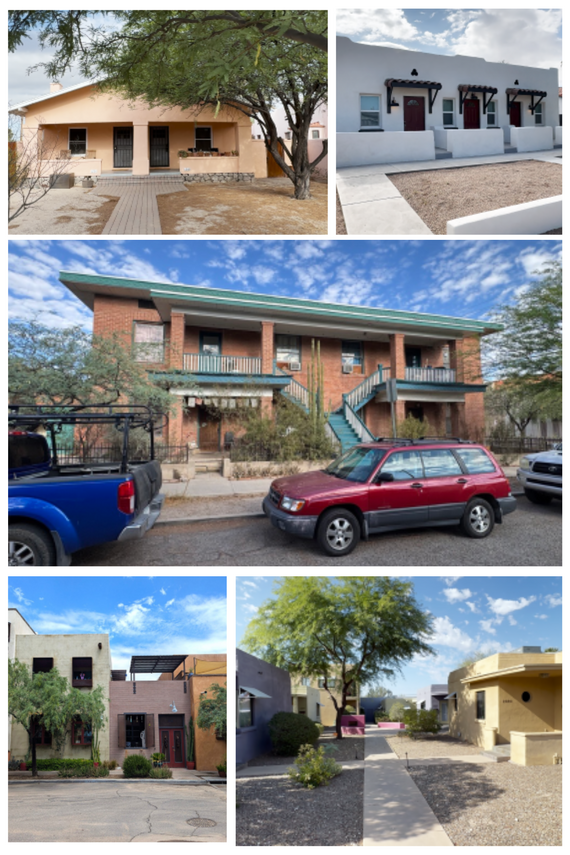
In our briefing with PDSD, we also reviewed the proposed Middle Housing code amendment and the three boundary options that are being considered. There will be a public hearing and vote during Tuesday’s Regular Meeting. The reason for the term “middle housing” is that it’s a housing type that is in the middle of the spectrum: not as big as a single-family home, but smaller than a traditional apartment complex. Duplexes, triplexes, and smaller casita complexes fall into this category. This code amendment will make it possible to build these types of homes within the boundaries my fellow Mayor & Council members and I select on Tuesday. Here are a few examples of middle housing that exists in Tucson right now:
Both on the campaign trail and in the five weeks since Election Day, I have spent lots of time connecting with people about Middle Housing. I have heard from skeptics who worry that so much middle housing will be built that it will change the uniqueness and character of their neighborhoods, as well as make parking too scarce, overrun streets with too many cars from adding more neighbors to the area, and enable mini-dorms. I want you to know I hear your concerns and, should we see some of these problems materialize we have tools at our disposal to address them, and there are others we can create, such as design requirements. But on balance, the benefits of expanding our housing choices far outweighs the worst-case scenarios many opposed to the policy have expressed.
I have heard from far more Tucsonans whose experience mirrors my own: working professionals, people with families, college graduates, and seniors on fixed incomes who have very few affordable housing options to choose from. While middle housing will not solve the affordable housing crisis, it’s a step in the direction of ensuring that our housing is as diverse as the people who need it. Like other renters, I spent most of my adult life lacking stability and having to move multiple times throughout the years. I will never forget the frustration and exhaustion of having to work so hard to find places to live that fit my needs and my budget and consistently wished there were more middle housing options to choose from. The only people like me who could afford to live next to campus in Sam Hughes had to hope to find a casita or guesthouse, and the only place I could afford in Armory Park as a single person was a small studio in an apartment complex. We need more choices, more options for more people at all stages of life than we currently have, and adopting this policy moves us in that direction.
Below, I’m including analysis of the middle housing amendment from an engaged constituent and subject matter expert who reached out to our office recently:
1. This proposal unlocks housing we already allow. It is not a rezoning.
-
Tucson’s current zoning and ADU code already permit up to four units on every lot citywide.
-
The Middle Housing Code Amendment simply removes barriers that have prevented these units from realistically being built.
-
This is not a land-use change, it is a flexibility and feasibility update to make existing entitlements usable.
2. The public has already indicated strong support for going bigger.
-
Over 66% of respondents during public outreach recommended a larger or citywide boundary.
-
Expanding citywide aligns with what the community has asked for: more flexibility, more housing options, and a fairer distribution of opportunity.
3. Citywide implementation distributes growth fairly and reduces neighborhood pressure.
A limited boundary concentrates new housing in a handful of neighborhoods, often historically impacted or already facing development pressure. A citywide approach:
-
Balances new housing across the entire city
-
Prevents overburdening specific areas
-
Supports a healthier, more stable housing market in every ward
-
Allows housing to go where market demand already exists and where housing choice is currently lacking
4. More housing types help prevent displacement and support community stability. Middle housing options promote:
-
Reduced displacement and gentrification by giving households more choices
-
Multigenerational living and aging in place
-
Housing that meets the needs of diverse families, incomes, and lifestyles
5. A citywide model maximizes Tucson’s infrastructure investments.
-
Encourages densification within existing city limits, rather than sprawl
-
Makes better use of existing transit, utilities, and public services
-
Strengthens the long-term efficiency of city infrastructure investments
6. Historic protections remain in place.
-
Areas within NPZs, HPZs, and AES overlays are already protected under existing regulations.
- A citywide approach does not change or weaken these protections; it simply allows more opportunities in areas where development is already appropriate.
7. A citywide boundary gives Tucson a real chance at addressing its housing shortfall.
-
Even with a citywide approach, we will not fully meet the projected need of 30,000 units, but limiting the boundary ensures we fall much further behind.
-
Expanding opportunity across the entire city is the only way to materially close the gap and ensure Tucson remains livable and affordable for future generations.
8. Reducing lot sizes expands homeownership opportunities and affordability. Increase homeownership access and affordability through middle housing.
-
Construction of a 650 sq ft home costs approximately $200,000 in today’s market.
-
A fourplex on a single large lot requires an upfront investment of $800,000+ (plus land) a major barrier for individuals and small-scale builders.
-
By subdividing a large lot into four smaller lots, each household can build a unit for around $200,000, dramatically improving ownership feasibility.
-
Smaller lot sizes help meet density goals while distributing cost and risk more evenly.
-
This approach supports middle housing types in a way that is:
-
Still consistent with neighborhood scale
In the materials, you will also see an option to exclude areas currently zoned rural residential. In Ward 6 that covers El Encanto and Colonia Solano neighborhoods. I support that exclusion. This is another reason why it makes sense to me to apply this ordinance city wide, as the further east, west, north and south our city stretches, the more rural residential zones there are, making the staff proposed boundary less necessary.
Our last meeting of the day was with Pat Tapia from Environmental Services (ESD). In addition to getting an overview of some much-needed fee updates we’ll discuss in January, I also connected with him about an ongoing situation involving an alley behind a Circle K that keeps getting trashed to the point of being a public health nuisance. Pat and I will meet in person at the property next week along with the owner to discuss short- and long-term solutions.
Later that evening, I had the pleasure of attending the Campus Community Relations Committee (CCRC) meeting in person. It was great getting to connect! I took lots of notes, and one highlight is that the process for updating the University of Arizona’s Master Plan is underway. I’m most interested in how the plan will affect the neighborhoods that surround the university, especially in terms of better and safer connections and how the edges of campus impact residents. You can read more about the timeline and goals of the plan on their website. We’ll be sure to keep you informed about any opportunities to participate and provide feedback to help shape the plan, especially since 2019 was the last time public input was gathered.
Thursday: I appreciated getting to meet with Chief Kasmar and his staff to talk about our local response to ICE raids and other incidences involving federal action. I’m eager to help the City communicate in a more transparent, timely, and direct way with constituents to the extent they are able, and to provide clear and useful information so that you will know what to do if something happens. I’m a big believer in hoping for the best and planning for the worst and want to ensure we are fully prepared for all possibilities. This is an ongoing situation, and I’ll keep you updated as we continue having conversations.
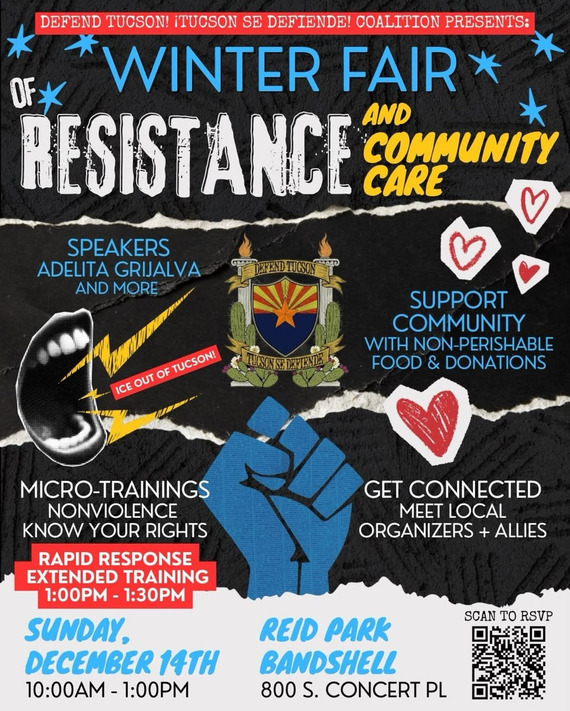
I encourage you to attend the Winter Fair of Resistance event at Reid Park this Sunday (see the flyer below). There will be micro trainings so you will know what to legally and safely do if federal actions take place in your neighborhoods.
Later in the day, Kylie and I met with the International Rescue Committee (IRC), an organization that has been resettling refugees in Tucson for close to 30 years. We talked about the impacts of federal policies over the last year on the safety, health and overall stability of refugees in Tucson. In January, close to 4,200 refugees and asylum seekers will no longer be eligible for SNAP benefits, also known as food stamps. They have been working with the Community Food Bank of Southern Arizona on food distribution events, and three recent events served almost 300 families each. The IRC is requesting the following support from community members who are able to help:
-
More legal and information services staff are needed in order to respond to client questions about the security of their status, risk of deportation, and other potential consequences of federal policies; a significant expansion in need for legal services (legal representation/prep for re-interviews); and potential need for immigration court representation (removal defense) for clients whose legal status is terminated. Contact us if you can offer this type of support or have any referrals.
-
Aside from certain exceptions, many refugees are required to work but face many barriers to employment. Many potential employers shy away from hiring people with different immigration statuses and confusion around the different work authorizing documents they carry. Getting a job can also be difficult for people who don’t speak English as their first language. The IRC makes it clear: anyone who comes to the country with refugee status may legally work in the U.S. Please reach out if you have any leads on workforce training programs or other resources.
Understandably, there is a lot of fear and confusion within the refugee population right now and a little compassion and neighborliness in this time goes a long way.
Friday: Kylie and I spent the morning getting a tour of Downtown Links (more on that and the RTA in future letters), and then we headed to the office to connect with Marlene about constituent issues and requests and to finish collaborating on this newsletter!
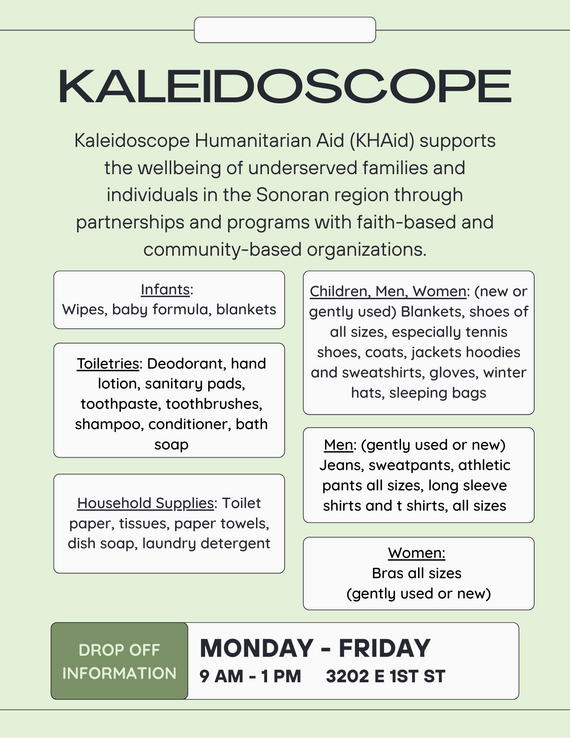
In next week's newsletter, we are excited to introduce you to two new staff members joining the team on Monday! If you are in the area, stop by and say hello during our walk-in hours, 9am to 1pm. We’ve enjoyed getting to meet many neighbors and constituents who have dropped off snacks, treats, and even a copy of a recently published book (thanks, Dr. Spark).
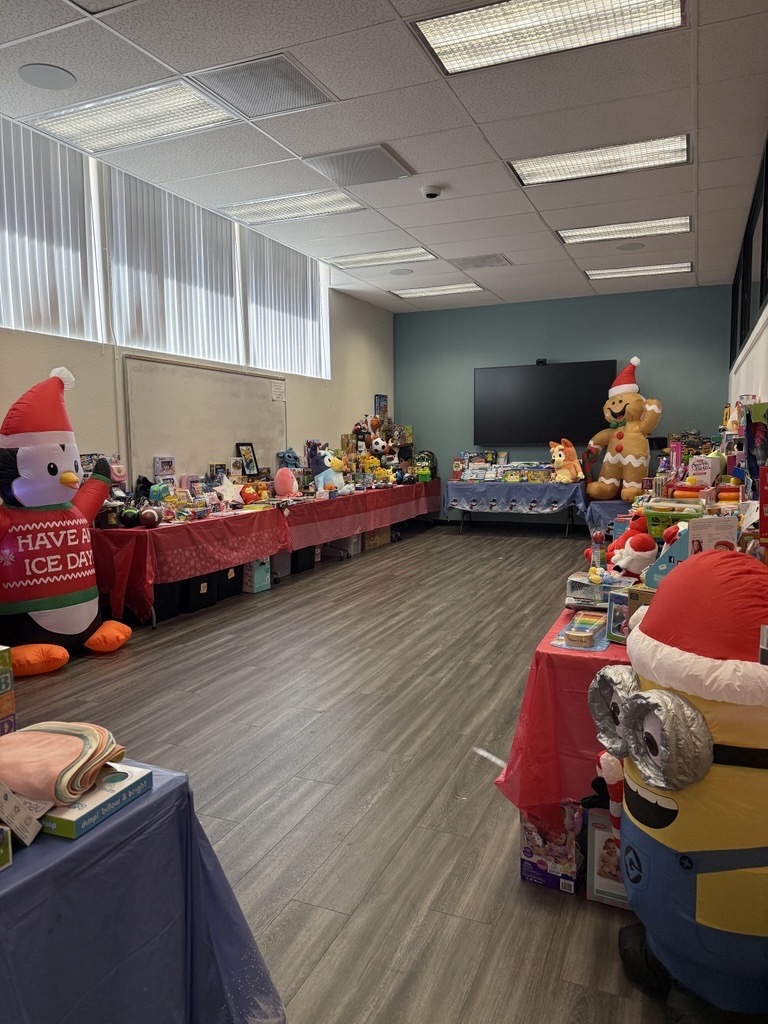
We also want to thank everyone who patiently rescheduled or moved their weekly meetings from our community rooms as we made way for a very special holiday event sponsored by Emerge. This is an annual takeover of all of the Ward 6 community rooms to allow families to shop for the holidays in privacy and safety. It was such a treat to spend the week with Lori, Josue, and the many volunteers and employees with Emerge who put on an incredible event. Special thanks to Dave Slutes at La Rosa, Alex Kack with the Pima County Democrats, and Brent Davis who each pitched in and shared use of their spaces to allow some Ward 6 neighborhood associations and organizations to hold their regular meetings. We are back to our regular schedule next week for the community rooms and continue to take meeting room requests through the Ward 6 website.
in community,
The newsletter told us it wanted to move to Friday, so now you get two this week.
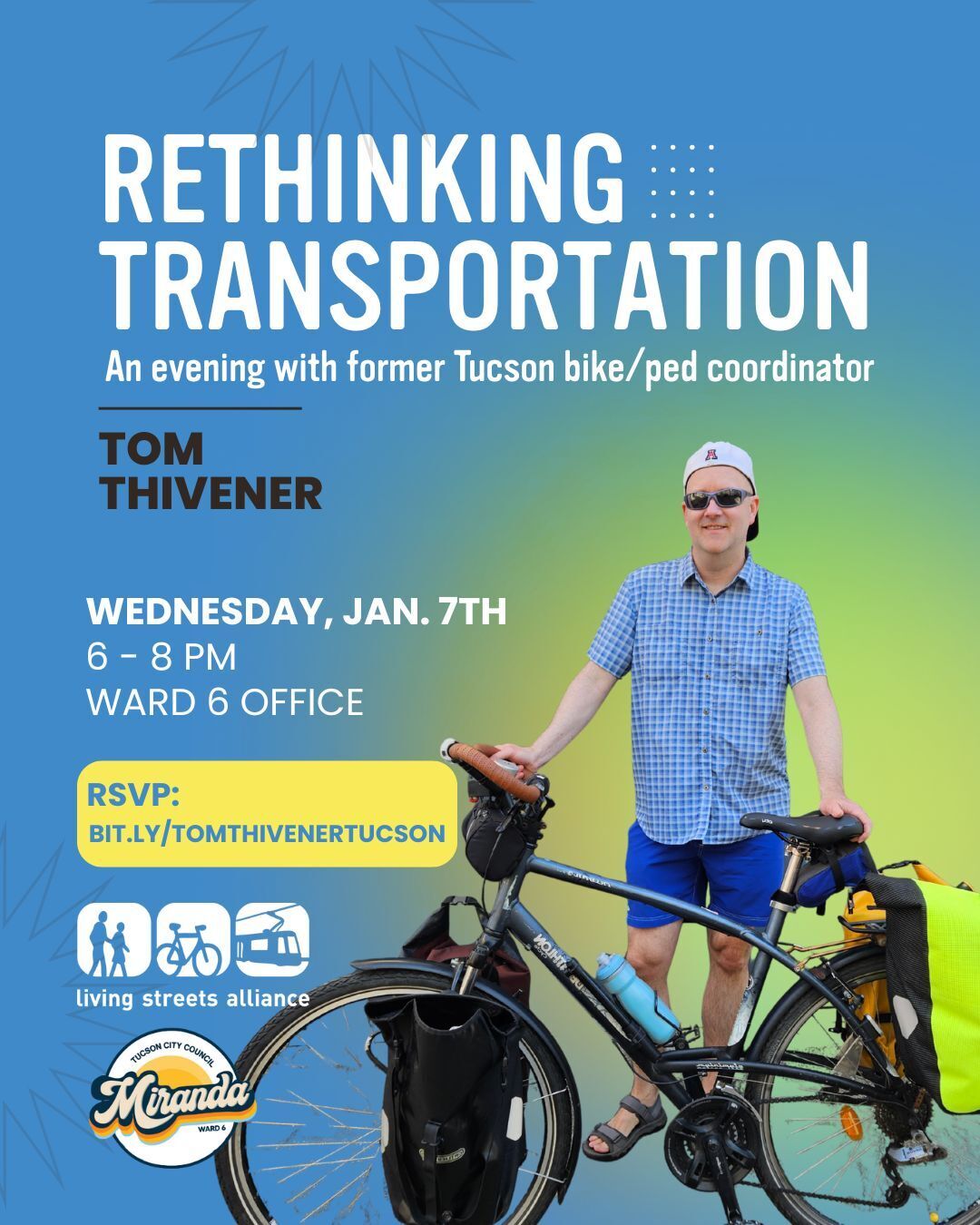
Join us on Wednesday, January 7th in the Ward 6 community room from 6 - 8 pm to discuss RTA Next.
We’ll take a closer look at key concerns surrounding RTA Next—also known as Propositions 418 and 419—which will go before voters in March 2026. Maass, who served on the RTA Citizens’ Advisory Committee, and Albert Elías, city planner, former public administrator, and chair of LSA’s Advocacy Committee, will share insights on what’s at stake and what a more forward-thinking approach could look like.
Defend Tucson / Tucson Se Defiende (DTTSD) is a cross-sector Tucson coalition—labor, faith, mutual aid, students & educators, immigrant rights advocates, small business, environmentalists, veterans, human rights advocates, peace advocates, and pro-democracy orgs—committed to democracy, nonviolence, and local self-governance. They organize peacefully, lawfully, together—so everyone can participate in public without fear. They are hosting micro-trainings this weekend so you can know your rights and protect the rights as others in peaceful, lawful ways. Stop by the Reid Park Bandshell this Sunday, December 14th from 10am to 1pm to learn more.
 |
|
- Deadline: January 8, 2026
- Honorarium: $15,000
- Eligibility: Have resided in the City of Tucson for at least two (2) years prior to the date of submission.
|
 |
|
2026 Operating Support Grant for Organizations
- Deadline: January 6, 2026
- Amount: Up to $15,000
- Eligibility: Non-profit 501(c)(3) Arts Organizations in the City of Tucson, Pima County, Southern Arizona, and Tribal Nations. *Fiscally Sponsored Arts Organizations that meet all other requirements are eligible to apply.
|
 |
|
- Deadline: March 19, 2026
- Eligibility: The program is open to eligible applicants located within the Arts Foundation’s service area, which includes counties and Tribal Nations that reside between the southern edges of the Gila River to the US-Mexico international border. All complete and eligible applications will be part of a competitive peer-panel review process.
|
Tucson’s Community Safety, Health and Welfare Program has prepared a very useful document, Family Preparedness Plan for Immigrant Families, in English and Spanish. Click the buttons below to download a PDF file of the plans.
520-221-4077
Raids. Prolonged stops. Interactions with ICE or Border Patrol
Request witnesses and community presence to ensure your rights are respected
Great Decisions is a nonpartisan/nonprofit program run nationally by the Foreign Policy Association and locally by the Tucson Great Decisions Association. It works like a book discussion group, except that instead of reading a book, we read and discuss a chapter in the Briefing Book that accompanies the program. (There’s also a video presentation that’s part of the program.) After an introductory meeting, there will be meetings for each of the eight topics to be discussed in 2026. It’s not designed to be lecture or a class, but rather an opportunity for members to informally gather to consider topics of worldwide importance. We promote active engagement in these discussions, based on our own backgrounds, our readings, and our awareness of the present global situations. This coming year the topics will include American foreign policy, tariffs and the world economy, US/China relations, nuclear proliferation, Africa, and human rights.
Ward 6 will be hosting meetings of Great Decisions, sponsored by the Tucson branch of AAUW, the American Association of University Women, on Mondays from 10 to 11:30 AM beginning on January 27th, 2026. There is no cost to attend and participate in meetings, but the cost of the Briefing Book is $32, a discount from the cover price. Members may also participate via Zoom, thanks to hybrid technology available at Ward 6.
All members in the community are welcome. Please contact Shirley Muney at smuney2k@yahoo.com, and visit the Tucson Great Decisions Association website at www.tgda.org.
|