 Tucson's Haunting Water Tales
This October, Tucson Water dives into the eerie side of our desert oasis. From whispered legends of phantom cowboys to mysterious shadows in historic places, Tucson’s relationship with water runs as deep as its history – and sometimes, it’s downright spooky!
Join us as we wade through ghost stories and local lore that make our city’s waterscape uniquely enchanting. Whether you believe in spirits or just love a good tale, these stories are here to delight – and maybe send a shiver down your spine!
The “Ghost River”
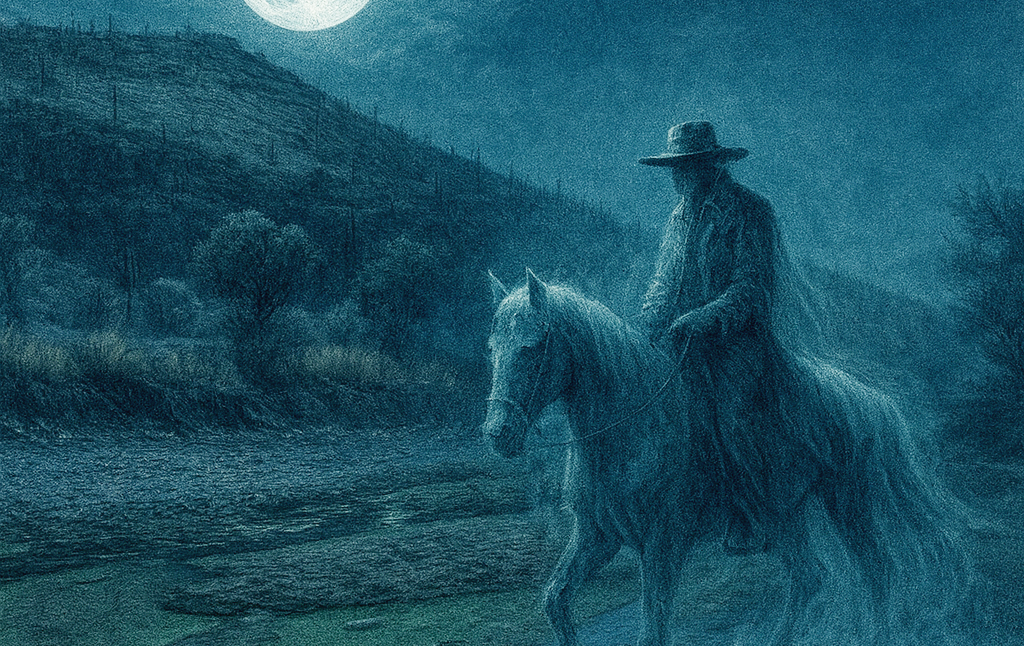
Once a thriving waterway, the Santa Cruz River now flows only in small stretches, earning its nickname as Tucson’s “ghost river.” Witnesses tell of a shadowy vaquero appearing on moonlit nights, riding his horse silently along the dry riverbed. His figure drifts through the sand as if retracing a route long lost to time – before vanishing without a trace. Those who glimpse Tucson’s phantom cowboy swear the echo of hoofbeats follows them long after the river has gone still.
 |
|
The Lake at Reid Park
By day, the Reid Park lake is lively with ducks, geese, and children tossing breadcrumbs. But once night falls, the shallow water turns as black as ink, swallowing every trace of light.
Some say a ragged fisherman appears on the far bank, a lantern flickering at his side. His boots leave no splash in the water, yet the sound of slow, deliberate footsteps circles the shoreline. Those who edge closer watch the figure fade into the mist – leaving only the black water, silent and still, as if nothing had been there at all.
|
Santa Rita Hotel Ripples
At the historic Santa Rita Hotel, guests and staff claimed to see ripples forming across glasses of water in perfectly still rooms, when no one was near. The strange phenomenon, paired with flickering lights, echoing footsteps, and an eerie silence, would happen just before the water stirred. Some say the ripples were the hotel’s way of reminding visitors that its past was never fully at rest.
Lake Elmira – The Flooded Underpass
After monsoon storms, the Stone Avenue Underpass transforms into a deep, temporary pool known as “Lake Elmira,” named after a daring teen who swam it in 1937. On heavy monsoon nights, Tucsonans say flashes of lightning or a passing car’s headlights have been known to reveal a young figure at the water’s edge, ready to dive – only to vanish in an instant.
*Tales are based on folklore and legend, shared for entertainment only.
|