|
I first visited Building Bridges Community Center during Amphi Cyclovita, when the Center was the site for the Holiday Market and Taste of Amphi Potluck, which showcased talents of some folks who frequent the Center and its programs. I recently returned for a tour on a busy Friday morning to learn more about how Building Bridges supports Tucson’s refugee community.
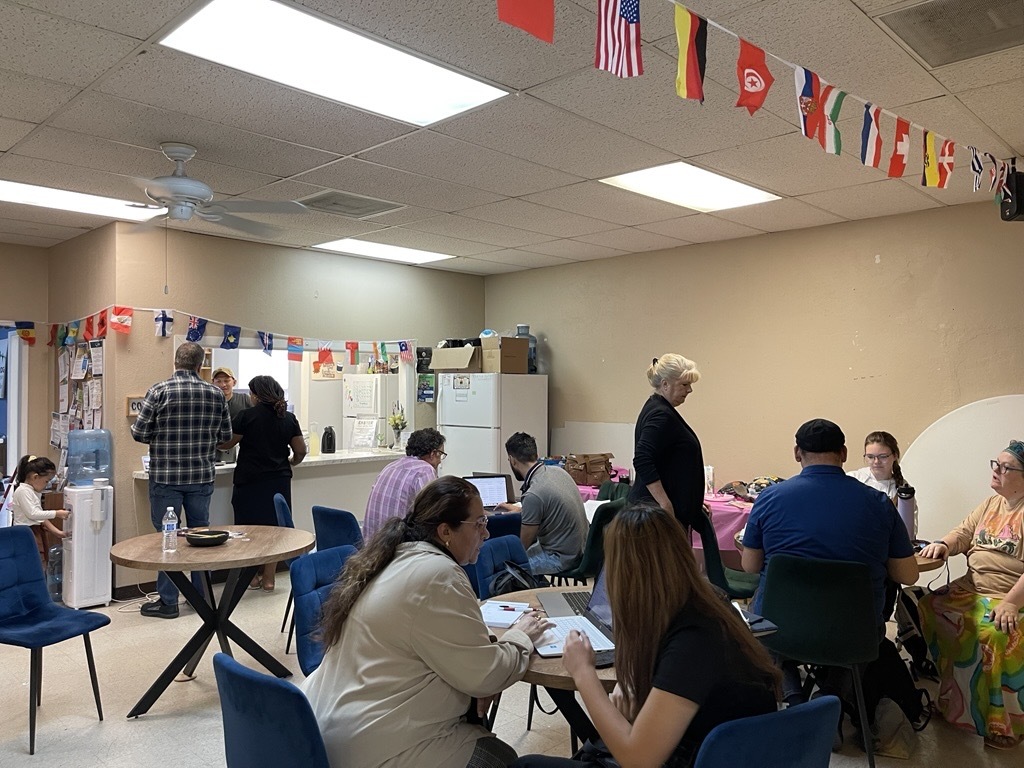 The community coffee shop in full swing. People use this time to catch up with neighbors, meet with staff, and enjoy some free coffee and pastries.
During my tour, it was apparent that the Center has become a coveted resource for all community members, with one neighbor who was dropping off donations describing it as “the best place in the neighborhood.” Pete Seiferth, Building Bridges’ former Executive Director explained “The original vision was to help refugees find friends and build community, and this is the core of what we are trying to do. And all the different programs help us work towards that.” They partner with local resettlement agencies and offer programs such as English classes, employment support, food and clothing pantries, sewing and craft classes, social groups, and coordinated off-site gatherings to also meet people where they're at. Eventually, the Center would also like to expand their programming to have a driving program.
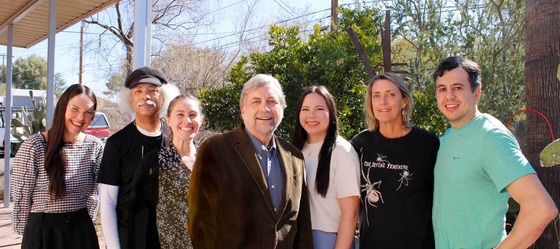
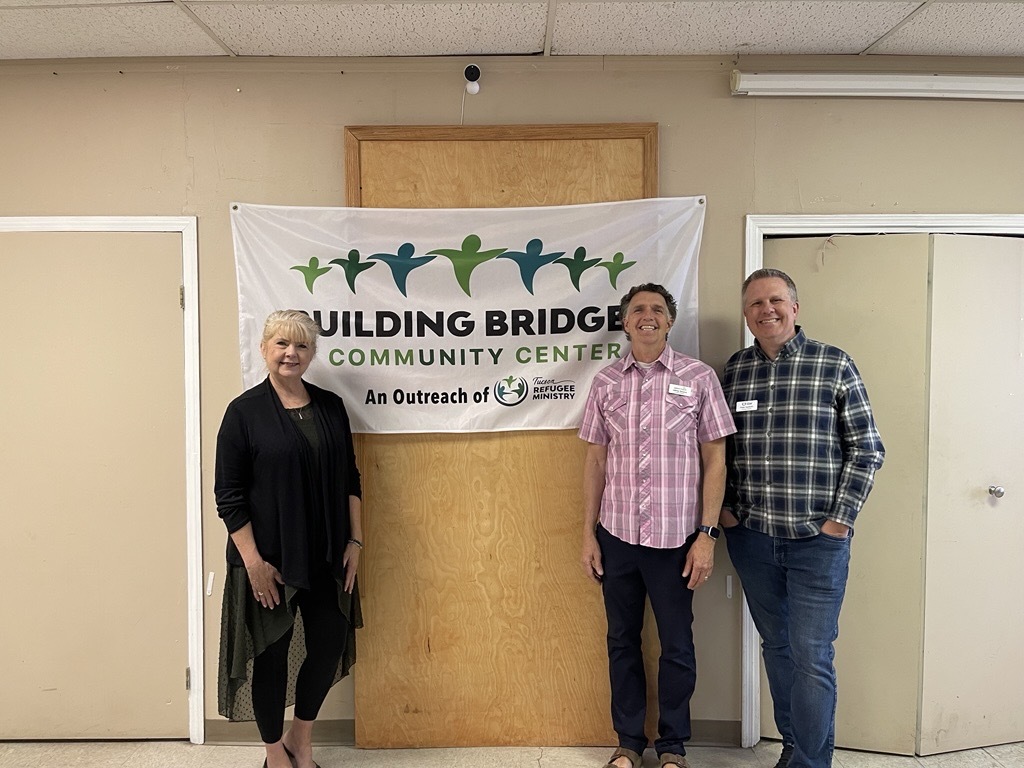 Building Bridges staff: Terry Alexander, Jeffrey Simons, and Pete Seiferth.
One of their standout programs, Arrive and Thrive, helps participants identify their transferable skills and goals to connect them with local job opportunities. At the Holiday Market, I met Leidy, a participant who shared her story of resilience and hope through her candle business, The Light of Hope. Leidy shared while her and her family were living in Columbia they relied on candles as their only source of light, which became her daily reminder to not give up. I was happy to learn she and her sister sold out of the 100 candles they made for the market and hope to keep growing the business.
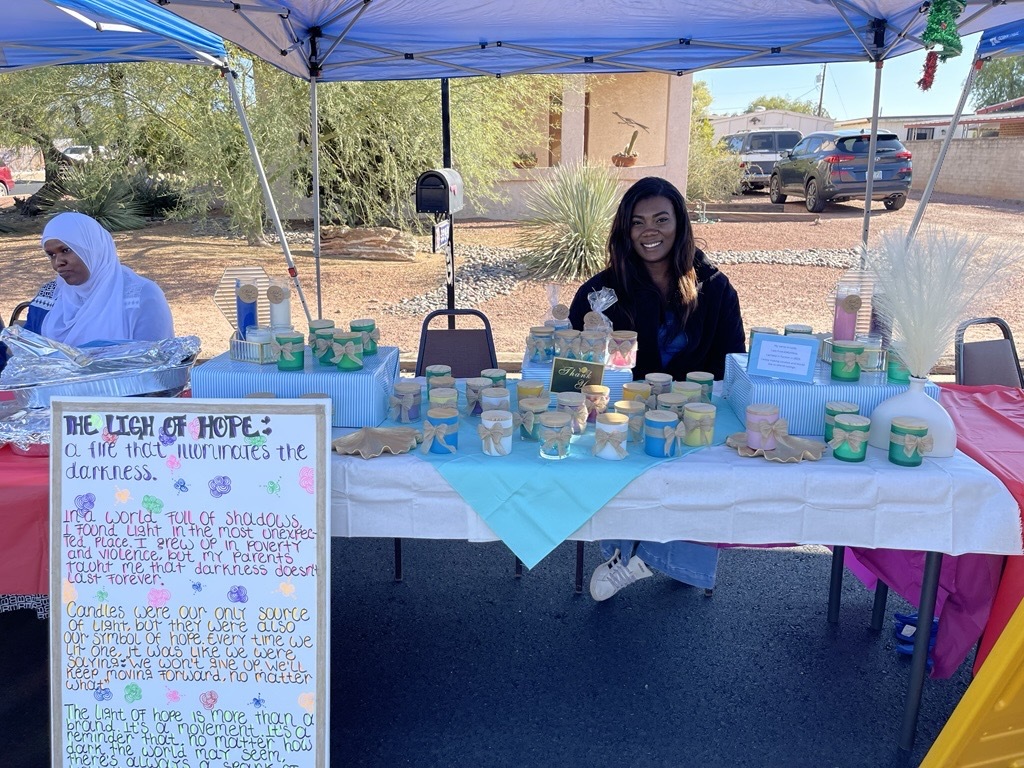 Leidy at her Light of Hope booth selling candles.
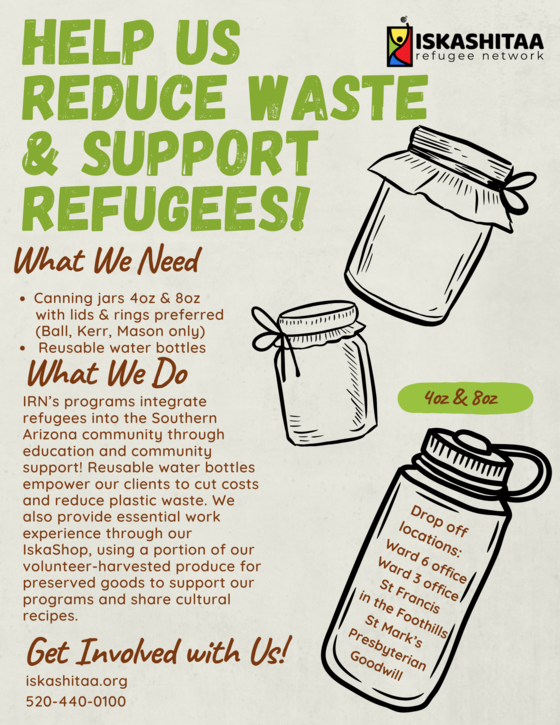
The Center is supported by staff, dedicated volunteers, donations and grant funding. With past support from City of Tucson ARPA funds and a State grant for translation services, they’ve expanded programming and resources. Building Bridges continues to welcome donations of new or gently used clothing, household items, child and adult hygiene products, and non-perishable food. They can be dropped off at the Community Center, at 3355 N Fontana Ave., during community coffee shop hours every Wednesday and Friday from 8:30-11:30 AM.
PEEPs is in its fourth year providing scholarships for kids three to five years old to access high quality preschools across Pima County. PEEPs (Pima Early Education Program scholarships) was created by the Board of Supervisors in Spring of 2021 with two goals: to increase the number of 3-5 year old children from income eligible families attending high-quality preschools and to increase the number of high-quality preschools
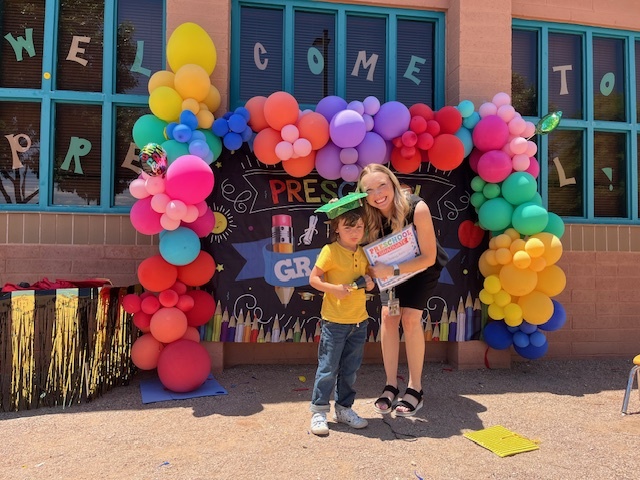 My kid being allowed to walk during the pre-k graduation even though he had one more year to go.
Using Federal American Recovery Plan Act (ARPA) funding, the County committed $30.2 million over the course of three years, the City committed one million in the first year. Library District funding will replace the temporary ARPA funding for future years at $10M a year. The next year, of the total cost to run the program, $12,940,280, the City contributed $750k or 6%. Of the 1,411 children served by PEEPs, 60% are within City limits.
The $750k contributed by the City helped fund preschool classrooms on five school district campuses, three in the Amphi District here in Ward 3 and two in the Sunnyside District. The draft budget presented at Mayor and Council on April 22 recommended cutting this item; these five classrooms serve 90 kids.
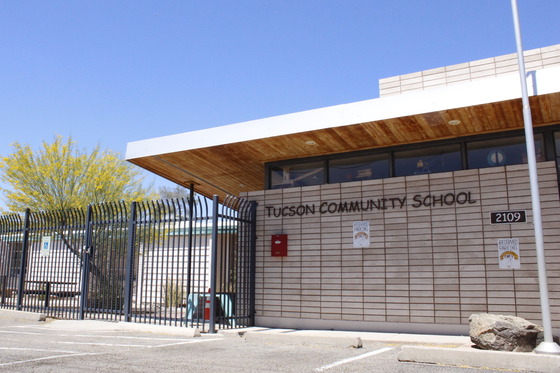 Tucson Community School, a participant in the PEEPs program.
As a reminder, the benefits of early education are cascading. Pre-school strengthens children’s social and emotional development. These spaces are valuable in helping children recognize and manage emotions, recognize and solve social problems, and learn how to be friends. Pre-school also helps kids transition into a school setting, sitting at tables, taking turns, and communicating bathroom needs.
Having a safe, stimulating, consistent place to leave your child every day alleviates so much stress for working parents. Low-income parents are often under intense pressure due to a lack of access to daycare. Without childcare, it’s much more difficult to work a consistent job — as you’ll frequently need to call in sick to cover gaps in informal childcare or take care of a sick child. It’s much more difficult to pursue additional education as an adult and move up to a higher-income position. Without childcare it’s much more difficult to leave a violent or dangerous home because it involves moving yourself and your children away from your only sources of childcare, which are typically hyper-local — a neighbor or a relative.
 Outer Limits School another participant of the PEEPs program.
Tucson’s Prosperity Initiative ’s first policy is “Increasing Access to Affordable High Quality Early Childhood Care and Education.” According to the memo, that accompanied the April 4, 2023 agenda item when the initiative was adopted, funding early education is a priority because it is a “frequently cited strategy for addressing generational poverty, timely because of current housing crisis and the challenges of finding adequate childcare as a result of the pandemic, and designed to intentionally address different causes of poverty.”
Tucsonans also recognize the value with 51.9% of our recent budget survey respondents choosing "fund early education."
A tentative budget adoption will take place at the May 20th Mayor and Council session and a public hearing and adoption of the tentative budget will be on June 3. The fiscal year begins July 1. If you would like to comment to Mayor and Council, one easy way is to send an email to all mayor and council offices is to email: CityClerks@TucsonAz.gov
|