|
Jeremiah Dean, Lead Planner, Space Team
Housing and Community Development
Tucson is becoming a more resilient city, one home at a time. Through strategic improvements in public housing, the City of Tucson’s Housing and Community Development (HCD) department is advancing residents ability to face climate challenges. These initiatives support the Tucson Resilient Together goals by saving energy, and conserving water, in public housing units across the city.
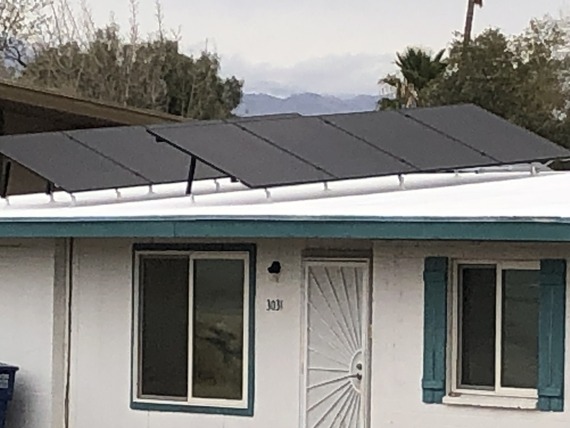
A key effort currently underway is the installation of solar energy systems on 15 public housing homes. Solar panels use energy from the sun instead of electricity from power plants, lowering families' monthly energy bills and helping protect the environment. As Tucson summers get hotter, solar energy helps keep homes cool without increasing costs for families. These efforts help us move toward the city’s community-wide goal of achieving carbon neutrality by 2045.
|
|
New solar panel installation in Tucson |
|
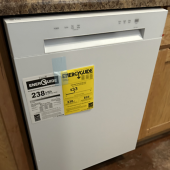
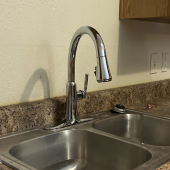
Water conservation is another major priority. To promote efficient water use, HCD is replacing old water fixtures and appliances in public housing units. Over 90 units have already received upgrades, including low-flow toilets, water-efficient showerheads, and high-efficiency appliances. |
|
New energy-efficient dishwasher, upgraded kitchen faucet, and improved showerhead installed recently in one of the Public Housing Units |
|
These improvements support the city's commitment to reducing water use and protecting Tucson’s limited water resources. These housing upgrades are directly connected to the Tucson Resilient Together framework, which prioritizes sustainable infrastructure and healthier communities. By improving public housing with solar panels and water-saving technology, the city is taking important steps toward its climate goals while making life better for residents.
Investments in energy and water efficiency make housing more affordable, especially for low-income families. According to the American Council for an Energy-Efficient Economy (ACEEE), one in four low-income households spends over 15% of their income on energy bills. Through these efforts, Tucson’s public housing residents can experience more stable and affordable living conditions while contributing to the city’s larger climate resilience strategies.
The ongoing efforts of the Housing and Community Development department demonstrate the city’s commitment to fostering a more climate-resilient community. By integrating renewable energy and water conservation into public housing, Tucson is making critical advancements toward a sustainable future. These initiatives serve as a model for climate action, ensuring that residents not only have access to safe and affordable housing but also benefit from long-term environmental and economic stability.
As these projects continue, Tucson’s public housing will become an even stronger foundation for resilience. Each solar panel installed and water-saving fixture replaced represents another step toward making Tucson a more resilient and sustainable city.
|
|
|
We’re excited to share that on March 8th, 2025, The City of Tucson Heat Action Roadmap was honored with the prestigious Healthy Communities - Crescordia Award at the 2025 Arizona Forward's 43rd Annual Environmental Excellence Awards.
We're thrilled by this recognition of our commitment to building a more resilient and sustainable Tucson!
|
|
|
2025 Arizona Forward Environmental Excellence Awards
Healthy Communities - Crescordia Award
|
|
Community Spotlight: Celebrating Iskashitaa Refugee Network’s Harvest Program!
|
|
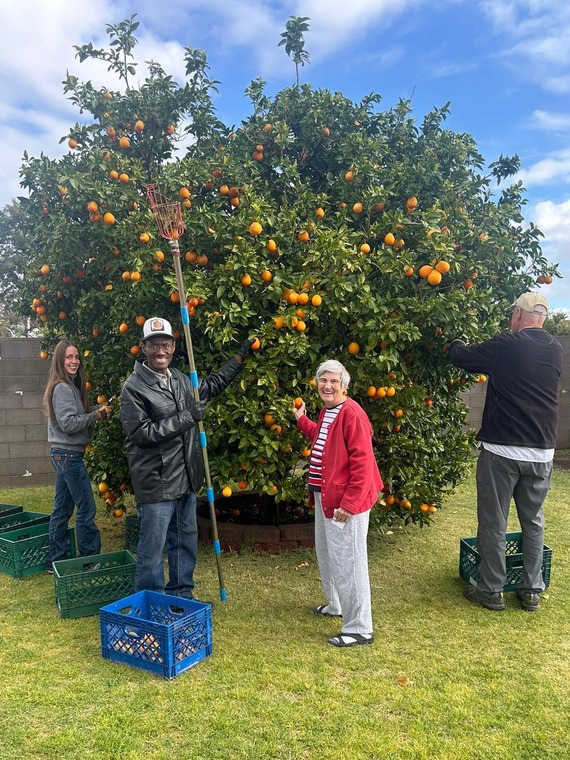
Did you know that mature citrus trees can produce up to 1,000 lbs of fresh fruit each season? Since 2003, Iskashitaa Refugee Network’s harvest program has been turning this abundance into action by rescuing fruit from backyard trees, tackling food insecurity in Pima County, and ensuring that valuable citrus doesn't go to waste.
Their incredible work not only puts nutritious, locally-grown fruit into the hands of community members but also reminds us all to value and care for our trees. After all, a well-tended citrus tree is more than just fruit—it provides essential shade, cooling, and environmental benefits to our city.
The City of Tucson proudly supports Iskashitaa’s important work. Since the start of Tucson’s Food Waste at Home Programin January 2024, the City has provided approximately 20 tons of compost and mulch to Iskashitaa. This compost helps nourish local fruit trees, supports healthy harvests, and promotes sustainable gardening practices in our community.
|
|
|
Iskashitaa Refugee Network’s members
|
|
Let's give a huge shoutout to Iskashitaa Refugee Network for their continuous impact and dedication to a healthier, greener Tucson |
|
Tucson’s First Electric Garbage Truck Hits the Streets
Tucson is taking big steps toward a cleaner future! As part of Tucson Resilient Together, the City’s climate action plan, the first fully electric garbage truck is now in operation. This marks a key milestone in testing new technologies to help us reduce emissions and improve air quality. The truck, introduced on February 26 by the City’s Environmental Services Department, runs entirely on electricity—meaning no tailpipe pollution and less noise in neighborhoods. It also helps cut fuel and maintenance costs, making city services more efficient.
Mayor Regina Romero highlighted the importance of this shift, saying, “This is a major step forward for our City. Transitioning our fleet to cleaner alternatives improves air quality, reduces emissions, and moves us toward sustainable operations.”
Tucson has already expanded electric transportation, with one of the largest electric bus fleets in the Southwest. Now, by adding electric waste collection vehicles, the City is leading by example, showing how sustainability and innovation go hand in hand. As this truck hits the streets, Tucson will evaluate its performance and explore more ways to integrate electric vehicles into essential services. This is one more way Tucson is working toward a healthier, more resilient future for all.
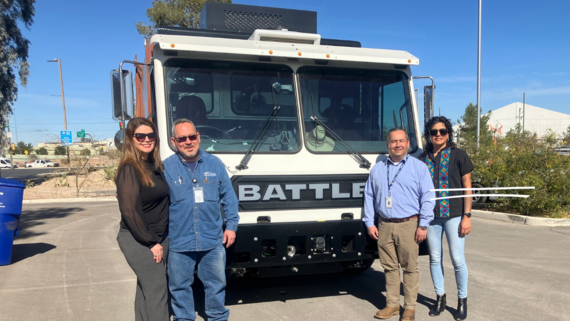 |
Tucson’s first electric garbage truck in action
|
|
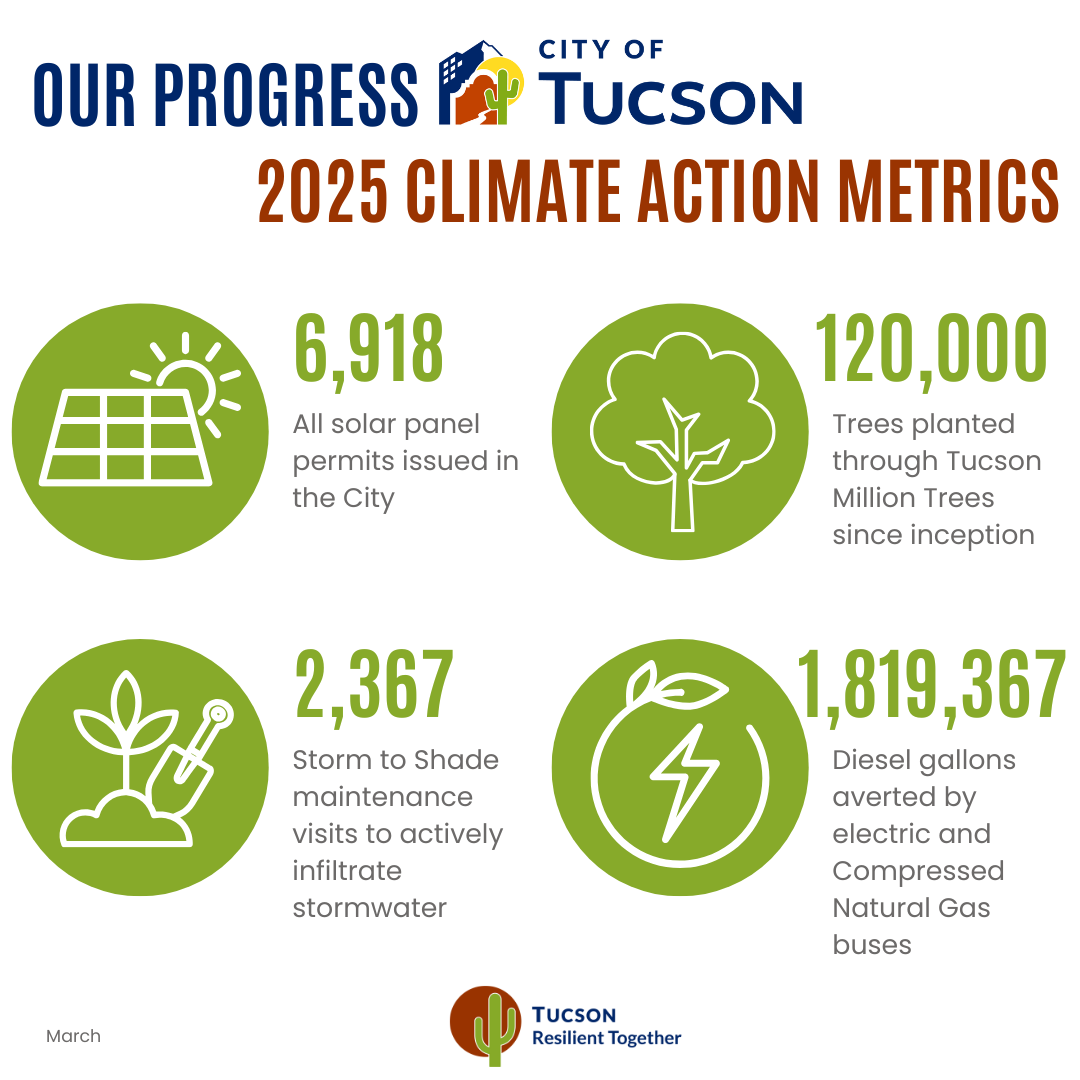
How are we doing?
2025 Climate Action measurements from the City of Tucson
Sustainability Tip of the Month
Eco-Friendly Laundry Tips
Did you know that heating water accounts for up to 85% of the energy used in a washing machine? Save energy by using cold water whenever possible—it not only reduces energy use but also helps prevent microplastics from shedding into our water systems. Many researchers and the Cleaning Institute have found that washing in cold water helps preserve fabric integrity, reducing the release of microplastic particles into waterways.
-
Always wash full loads to maximize efficiency, and if your washer and dryer are over 10 years old, consider upgrading to ENERGY STAR®-certified models for better performance.
-
When drying, clean the lint filter after each use and run back-to-back loads to prevent your dryer from reheating. If possible, dry clothes during off-peak hours—before 3 p.m. or after 7 p.m. in summer—to lower energy costs and reduce strain on the power grid. Air drying is another great option that saves electricity and helps clothes last longer.
Upcoming Events
Get involved with climate actions around the city!
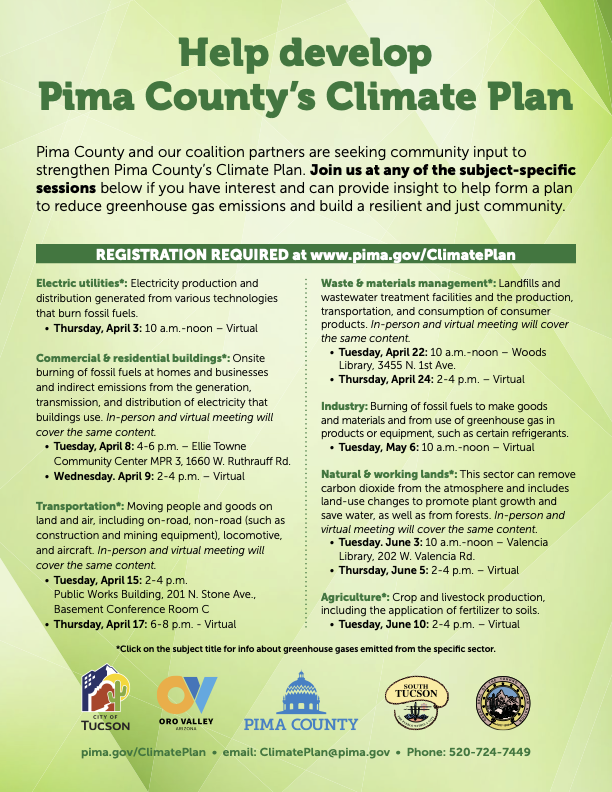
Join Pima County's Climate Planning Sessions
Help shape Pima County’s Climate Plan by participating in subject-specific workshops to share your insights on reducing greenhouse gases and building a resilient community!
|
|
|
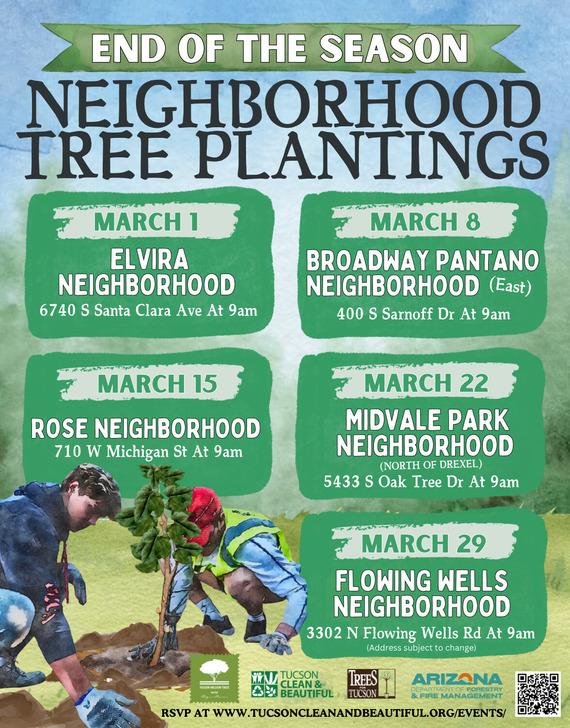
End of Season Tree Planting Events
Join us as we celebrate the conclusion of our Neighborhood Tree Planting events for the season!
|
|
|
Buying Solar 101
Learn everything you need to confidently navigate the process of going solar—from selecting reputable installers to understanding financing options, tax credits, and more
|
|
|
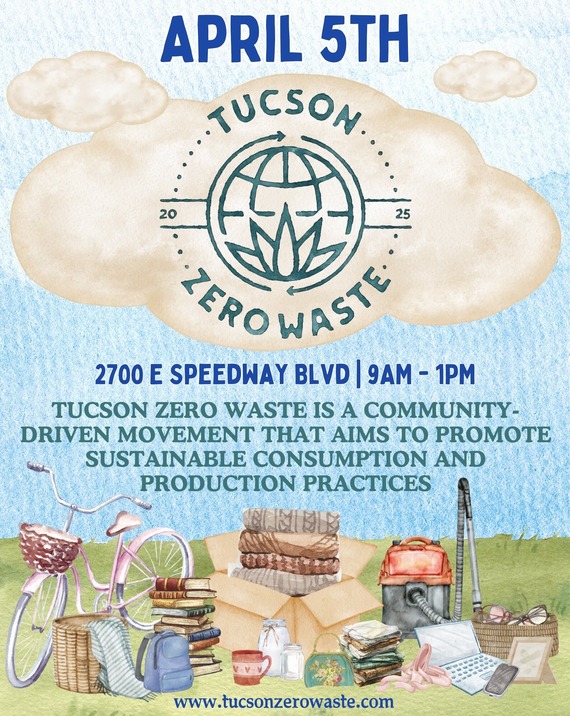
Tucson Zero Waste Event
Join us April 5th at Tucson Zero Waste to support sustainable living, explore eco-friendly practices, and help build a greener community!
|
|
This month, we invite you to participate in a national survey to understand how people use water at home.
Tucson Water is partnering in a national study on home water use, led by Flume and the Water Research Foundation. Your participation in this short, anonymous survey (5-10 minutes) helps shape future water efficiency programs, policies, and rebates.
Complete the survey for a chance to win an iPad!
|
|
|
|
|