|
A common request that comes to the Ward 3 office is a resident asking the city trim a tree or cut weeds that are in their right of way. They are often not so happy to discover that this is the responsibility of the adjacent homeowner. In recent years, the issue has come up more as Prop 411 street improvements often require residents to trim the trees along their curb enough so that construction vehicles can access the entire road unencumbered by trees that hang into the street. Similarly, the City’s garbage truck operators have struggled with so many of Tucson’s alleys being overgrown, creating safety risks for drivers.
Something that often surprises people about property lines in Tucson is the fact that the right of way in front of, behind, and sometimes to the side of a house, is both “public” and “private” property. It’s a gray area. The right of way in front of a house, for instance, is where pedestrians are allowed to walk, whether or not there is a sidewalk. As anyone who walks in Tucson knows, most neighborhoods are notoriously missing continuous sidewalks, but a right of way is nonetheless the designated area for walking.
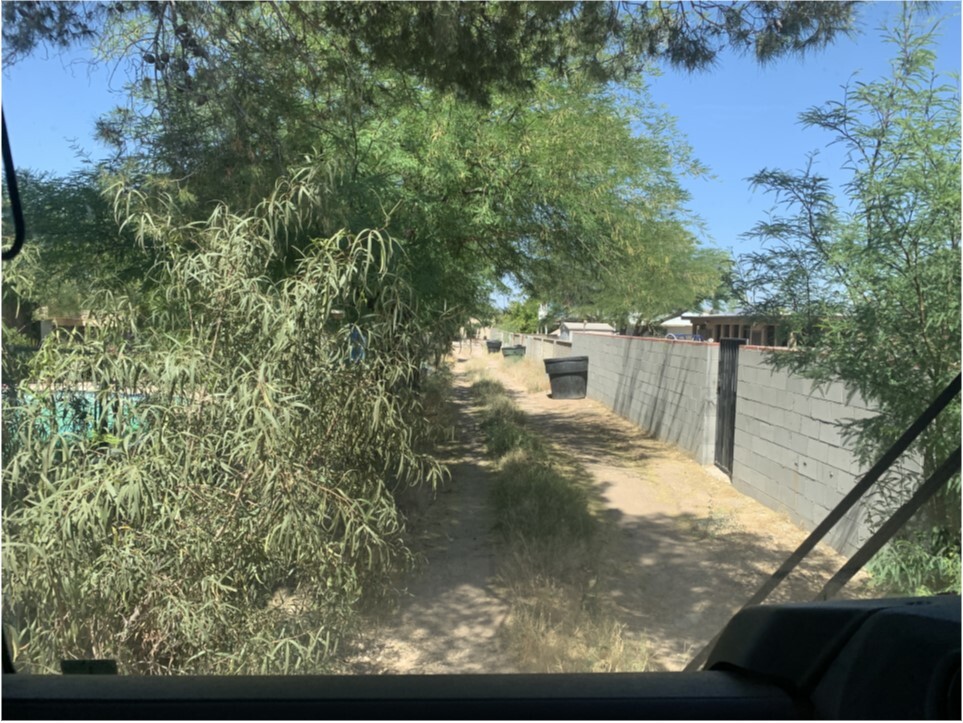 Trees block an alley, where garbage trucks have difficulty getting through safely.
The right of way is public in the sense that it is not trespassing for others to use it. There can also be public infrastructure located in the right-of-way (street signs, light poles, etc). For any public infrastructure in need of maintenance or repair, it is the City who is responsible. However, our city ordinances also mandate that vegetation in the right of way must be maintained by the property owner, not City departments. So if a street lamp is out, residents are advised to report it to the City. But if a tree needs trimming or weeds need pulling, that is the property owner’s job. This applies equally to the right of way in front of a house, the right of way to the side of a house if it’s on a corner, or the alleyway behind a house. The property line extends to the curb, or to the halfway mark of the alley, and that area is free for public use, but must be maintained by the private property owner. Incidentally, in Chapter 25 of our Code of Ordinances, Sec 25-12 states that owners “are required to keep the public sidewalks immediately abutting their property in good order and repair.” But that's a subject for another article.
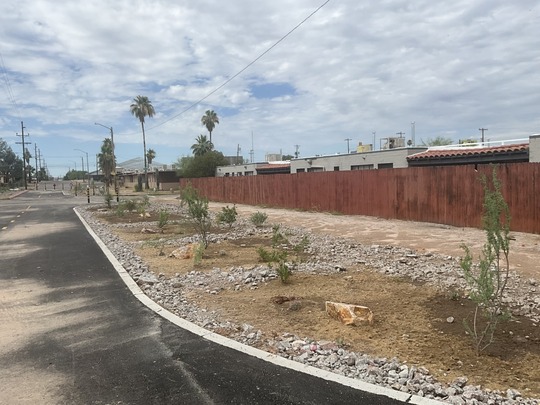
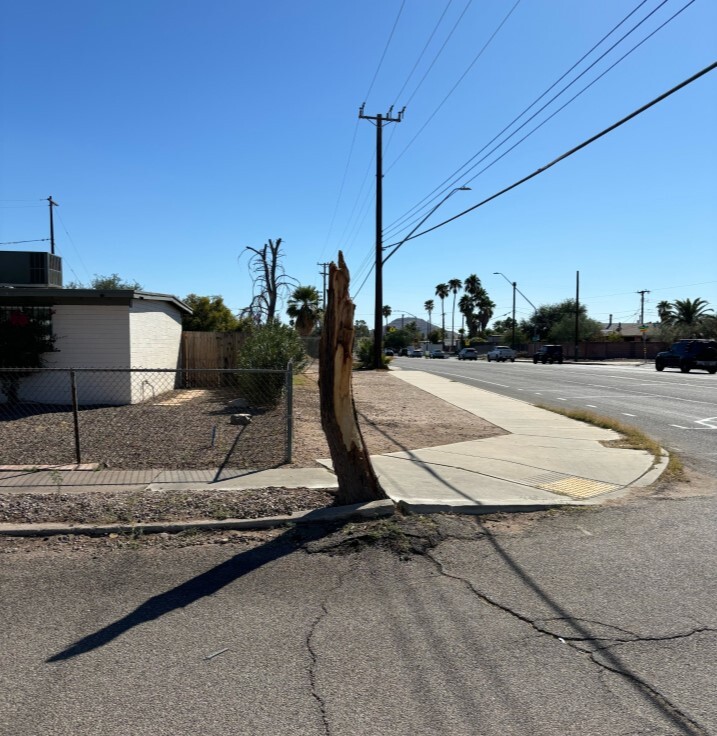 A broken tree stump in the strip of dirt between the curb and sidewalk.
Let’s all do our City workers a solid and keep the trees and weeds in our alleys and along the curb trimmed.
The Ward 3 office has offered a space for groups to convene and hold events for quite a while now. When COVID-19 hit, things changed dramatically, to say the least. Our office had to adjust to the new normal and our staff along with many of our constituents had to work remotely. Our entire office and community room shut down for a stint.
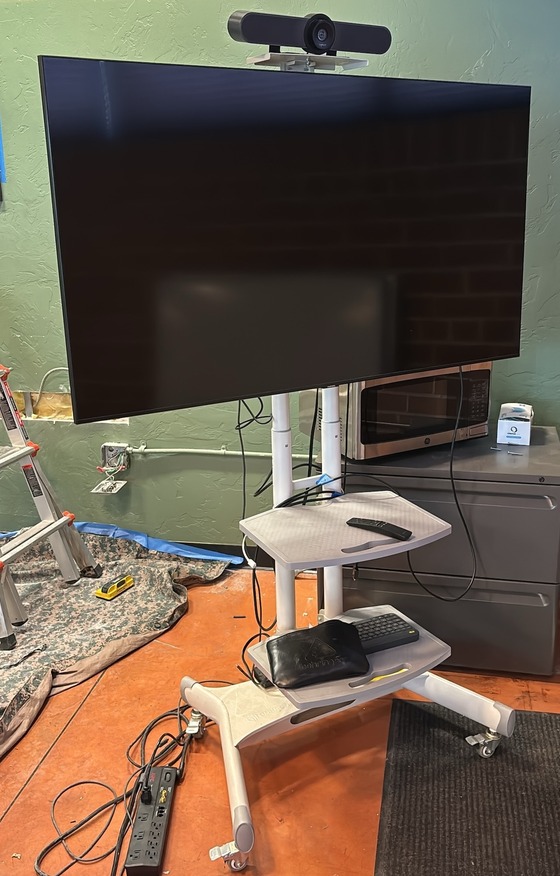 Tthe tech cart used in the Ward 3 Community Room, affectionately called HAL 9000.
When we finally opened up we needed to readjust to the times and offer our public a way to use our room in accordance with the new safety protocols of social distancing and remote/hybrid meetings. As a stopgap measure, we acquired a cart with a monitor and a Zoom-ready camera mounted on top. This setup proved to be an adequate solution for our hybrid meetup problem... at first. As things opened up and people started to return to in-person meetups our space came to be more in demand for groups needing to host events just like before. However, now more groups required video meeting technology for their meetups. With more people using that room we began to encounter compatibility issues. Not everyone had the same devices so we had to get adapters and dongles to make things work. Wheeling the cart in and out of storage started to wear and tear the equipment. Then there is the issue with the monitor (a Samsung TV) not displaying the content of the device if the channel was changed by accidentally hitting the wrong button on the remote.
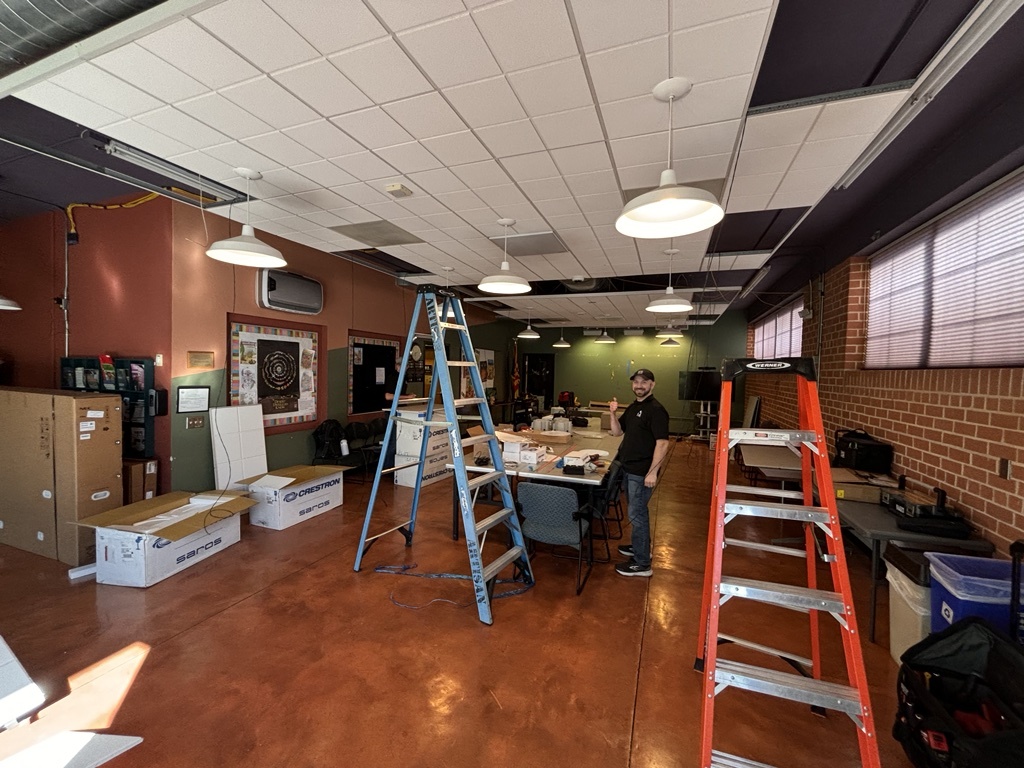 Our Community Room being remodeled and upgraded with the help of Caleb DeJesus.
We carried on helping folks where we could up until this year when we got a notice from the City's IT department that our room was due for an upgrade. Enter Joe Nearhouse City of Tucson IT Project Manager extraordinaire. He stopped by our office talked to us about our needs for our room and designed a project to simplify and modernize our space. No longer will we need to blast the speakers on the TV so people in the back of the room can hear, because we will have some fancy speakers embedded in the ceiling. We also won't have to wheel a cart in and out of storage, because a giant 98" monitor will be mounted on our wall. There will also be microphones in the ceiling to pick up the voices of everyone in a meeting. Attendees do not have to sit up front anymore in order to be heard. All of the wiring will be in the wall and scheduling will now be done on a tablet that will be available and visible to all in our lobby. These are just some of the most notable improvements.
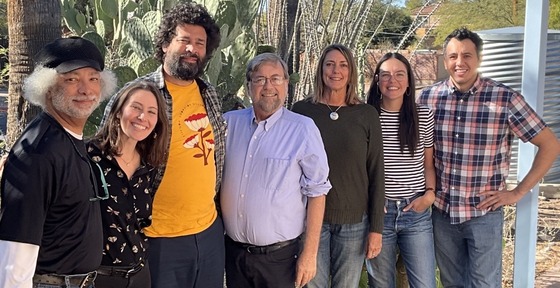
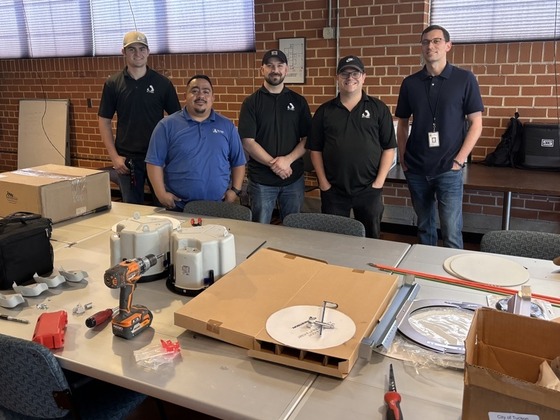 The crew in charge of our remodel from left to right: Zane Thomas, Lupe Hidalgo, Caleb DeJesus, Manny Davidson, and City IT Project Manager Joe Nearhouse.
Our room will be finished and fully functional on October 31 just in time for Halloween, what a treat!
Community Corridors Tool Draft Report & Proposed Code Language Available
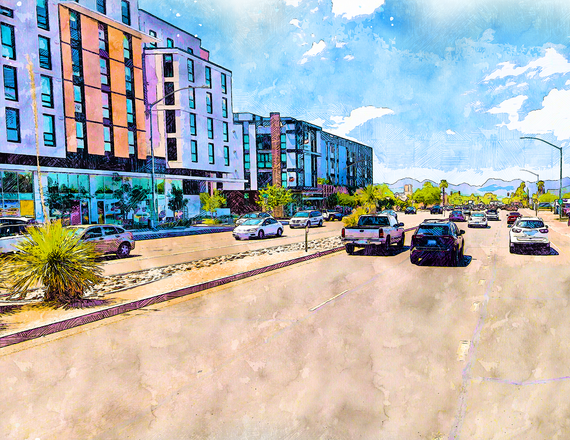 The City of Tucson Planning and Development Services Department (PDSD) is pleased to share the Community Corridors Tool Report, Executive Summary, and Draft Proposed Code. The documents are now available for your review and input.
These documents provide background information on the Community Corridors Tool (CCT), a summary of the tool’s organization and standards, and a draft of the proposed code amendment. The CCT was developed per the request of Mayor and Council to create zoning tools to spur redevelopment along our corridors.
Goals of the Community Corridors Tool:
- Make infill development, especially affordable housing, simpler to build along corridors
- Remove barriers to attainable housing
- Promote transit-oriented infill development that supports climate action goals
- Update zoning to make it easier to permit the full spectrum of housing types
- Simplify redevelopment of underutilized and vacant sites
Highlights of the Community Corridors Tool:
- Builds upon previous planning and community engagement efforts as well as adopted city plans and policies
- Updates zoning to facilitate development patterns supported by city policy
- Provides additional height, reduced parking minimums, and flexible development standards in order to make it easer to build along corridors
- Encourages walkable communities and sustainable development with requirements for wide, shaded sidewalks, trees, open space, and active ground floor uses
- Promotes design that transitions in scale and connects to surrounding residential neighborhoods
- Includes additional incentives for affordable housing, the preservation of historic buildings, and mixed-use development
How to Access the Documents: The draft Report and Proposed Code Document are available for review at the button below.
PDSD invites the community to attend two upcoming meetings to learn about the proposed Community Corridors Tool and share feedback. An in-person meeting will be held on Wednesday, October 30, at 5:30 p.m., and a virtual meeting will be held on Monday, November 4, at 11 a.m.
City of Tucson Mayor Regina Romero will provide welcome remarks at both the in-person and virtual meeting.
In-Person Public Meeting
Date: Wednesday, October 30, 2024
Time: 5:30 p.m. – 7:00 p.m.
Location: Tucson Convention Center, 260 South Church Avenue
Note: Free parking in Lot B at the Tucson Convention Center
Virtual Public Meeting
Date: Monday, November 4, 2024
Time: 11:30 a.m. – 1:00 p.m.
Location: Zoom Meeting
-
In-Person: Attend any of the upcoming public meetings
The feedback period will close on Monday, November 25, 2024. Input collected online and at the meetings will be used to refine the proposed zoning changes.
To learn more about the project, please visit the Community Corridors Tool website.
|