|
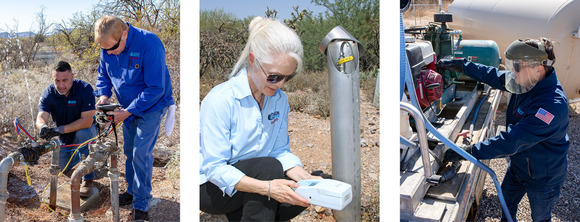 From field sites to the utility's Water Quality Laboratory, Tucson Water employees monitor, test, and document water quality that exceeds federal and state requirements.
Our Commitment to Safe, Clean, and Reliable Water
Tucson’s water story is a 4,000-year-old tradition of responsible dwelling in the Sonoran Desert.
The two questions we are most frequently asked at Tucson Water are:
- “Does Tucson have enough water for the future?”
- “Is Tucson’s water safe to drink?”
The answer to both questions is “yes.”
Providing fresh, responsibly sourced, quality water has been the vision and commitment of Tucson’s Mayor and Council and City of Tucson staff over many decades. And it continues to be Tucson Water’s top priority.
For more than 100 years, Tucson’s growth has required a more adaptive approach to delivering quality water to customers day in and day out. Tucson is one of the largest communities in North America that relies entirely on a groundwater system, with Tucson Water serving more than 240,000 households and businesses in the metropolitan area. Our natural water source that lies deep within underground aquifers is supplemented with Colorado River water delivered via Central Arizona Project (CAP) facilities. This CAP water is recharged into local aquifers that act as natural filters before water is pumped out through groundwater wells.
Our water is routinely monitored and tested at hundreds of locations across the Tucson Water system before it is served to customers. The utility goes far beyond what is required by federal and state regulations -- Tucson Water conducts tens of thousands of tests every year because we are committed to providing safe, clean water to our friends, families, and neighbors.
Today, Tucson Water is implementing sustainable water strategies for the next century with our One Water 2100 plan. Tucson Water and the City of Tucson will continue to invest in capital improvement infrastructure projects to address system reliability and other pressing challenges surrounding water resource management and water quality. Our employees take pride in serving the Tucson community and ensuring that high-quality drinking water is delivered to customers 24/7. We will continue to be stewards of Tucson’s water future and help to guide our community toward being responsible Sonoran Desert dwellers.
|
|
Learn about water quality monitoring and treatment, access annual water quality reports, read FAQs, and more here. |
|
Kudos: Tucson Water wishes to thank all the federal Congressional delegation members who have provided us with support over the years. In particular, the Honorable Senator Kelly and Senator Sinema; Congressman Grijalva, Congressman Ciscomani, Congressman Gallego, and Congressman Stanton. Many thanks. |
|
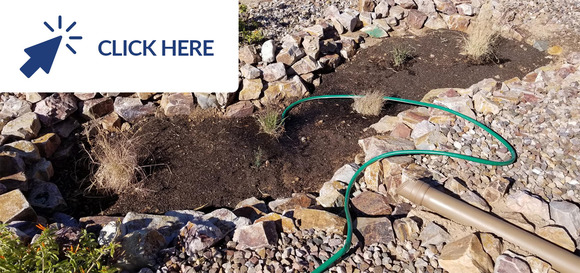 Did you know that in 2023 Tucson Water expanded its rainwater harvesting rebate to include more resources for passive types of water harvesting systems that use earthworks?
Prepare to Harvest Rain
If you’ve considered installing water harvesting features on your property, now is the time to act to be ready for monsoon storms.
Take advantage of the big changes Tucson Water made to its rainwater harvesting rebate in 2023, offering more benefits to customers:
- Customers who properly follow rainwater harvesting system installation guidelines can receive up to $2,000 per property, based on the size of the system installed.
- A system can now be any combination of active and passive features like basins, berms, and swales.
- Now there’s online pre-approval and review to better ensure your system meets rebate guidelines and maximizes rainfall capture.
Why harvest rainwater to use on your landscape? It conserves valuable tap water, helps to prevent erosion and runoff, nurtures plants with water that has less salt and lower mineral content, replenishes groundwater, may reduce your utility bill, and more!
|
|
Reminder: Before installing a rainwater harvesting system, applicants must take a free rebate workshop. |
|
Connect me to rainwater harvesting info – and make it easy!
Click to learn:
- Rebate guidelines & pre-approval
- Free workshops (required for rebate)
- Passive system photo gallery
- Video tutorials & FAQs
- Permit & zoning info
- Resource list
- Site plan guidance
|
|
City of Tucson
Environmental Services
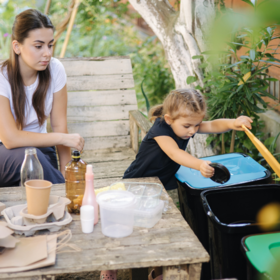 How to Recycle Right
Unsure where to toss that string wrapper, plastic bottle, or glass jar? Download a flyer on how to sort recyclables. Blue bin: cardboard, hard plastics, cans, and paper. A purple bin for glass. And orange bags and bins for hard-to-recycle film plastics. Recycle right to make Tucson cleaner and more sustainable.
|
Pima County
Wastewater Reclamation
 Watch Birds at These Ponds
Pima County Wastewater Reclamation offers birdwatching at two of our facilities, open at 7 a.m. daily. Green Valley, 2201 N. Old Nogales Highway and Avra Valley, 10000 W. Snyder Hill Road. For rules, directions, and closing times, click here or call 520-724-6500.
|
|
 Water Matters is a monthly newsletter brought to you by Tucson Water
|
|
|
|
|