|
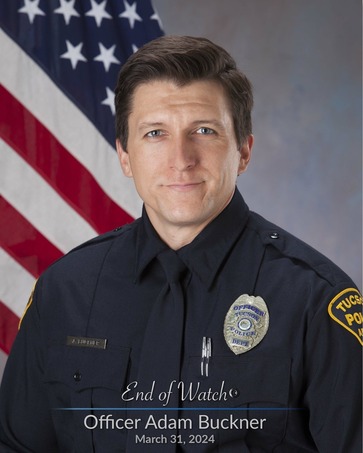
This week we mourn the passing of TPD Officer Adam Buckner. He lost his life in the line of duty on March 31 when he was involved in a collision while answering a call. A driver failed to yield while making a turn on 6th even though Officer Buckner had a green light and his siren and lights were on. His patrol vehicle collided into the turning vehicle and Officer Buckner succumbed to his injuries. In his honor we are sharing the following information in case the public wants to send flowers or donations. Thank you for your service and rest in peace, Officer Buckner. The Vice Mayor and Ward 3 staff extends their condolences to the family.
Flowers for the service will be received at 30 N. Church Ave, Tucson AZ 85701. It is requested that any service flowers be delivered on Saturday April 6th (between 3-7 P.M.) or on Sunday April 7th (between 8:30 A.M. – 3:30 P.M).
Cards
Cards of condolences can be addressed to: Ms. Catie Buckner c/o BSU, 270 S. Stone Ave, Tucson, AZ 85701.
Donations
If you would like to make a monetary donation, the Erik Hite Foundation is taking a collection in which 100% will go directly to Officer Buckner’s family. The link can be accessed at: https://secure.qgiv.com/for/tpdofficeradambuckner/, you can also text adambuckner to "50155".
If you would like to support the Erik Hite Foundation you can donate here https://erikhitefoundation.org/support/donate/
By Shannon Jenkins
Earlier this week, Ward 3 visited the Watershed Management Group (WMG) Living and Learning Lab at 1137 N. Dodge Blvd. to learn more about composting toilets. WMG's Senior Program Director Catlow Shipek was joined by City staff from the City Manager's office, Planning and Development Services Department (PDSD), and Environmental Services.
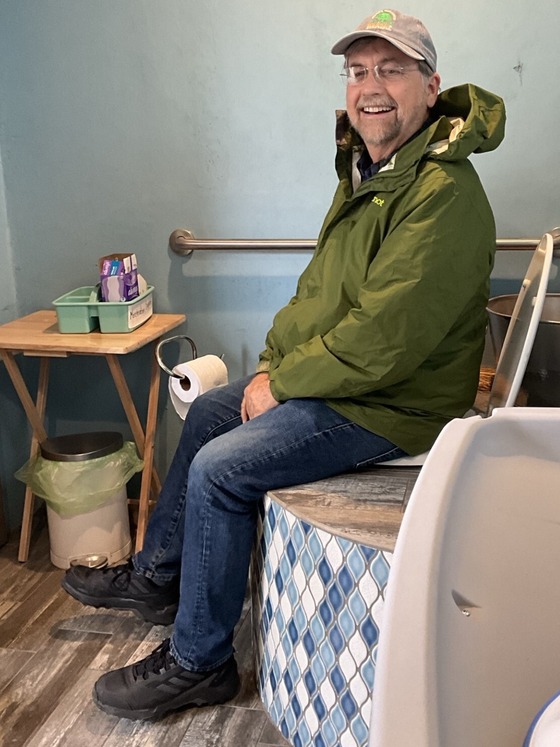 Vice Mayor Kevin Dahl happily seated on a composting toilet.
We heard that the main two reasons people install composting toilets is 1) to conserve about 10 gallons of potable water a day per person and 2) to utilize humanure as a safe composted material in their yards.
We learned a lot about how these systems work, and the variations that are available. For example, WMG sells a site built barrel system here: https://watershedmg.org/ctkit, and many other prefabricated systems are commercially available and often marketed as "waterless toilets" or "self-contained toilets" since they don't need to be connected to a sewer system.
Here are some notable features of composting toilets:
-
they separate urine from solid waste to balance the air, moisture, and carbon to nitrogen ratio; this ensures effective composting
-
fecal coliforms and other pathogens are deactivated during the composting process
-
they have features that prevent flies from entering or leaving the closed system and spreading diseases
-
they're approved for use at the state level by the Arizona Department of Environmental Quality (ADEQ)
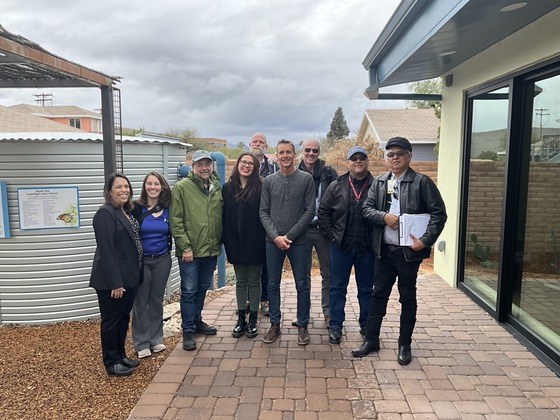 From left to right: Assistant City Manager Liz Morales, Ward 3 Office Administrator Shannon Jenkins, Vice Mayor Kevin Dahl, Chief Resiliency Officer Fatima Luna, (back) Assistant Building Official Matthew Carlton, (front) WMG Senior Program Manager Catlow Shipek, (back) Michael Becherer of Swain Associates Architects, (front) Building Official Juan Garcia III, and Environmental Services Engineering Associate Joseph Varelas.
A while back, the Ward 3 office requested installation of one of the prefabricated composting toilets in our staff bathroom at the office. We wanted to see how “user friendly” these toilets are and if they would be a viable option to replace drinking water when disposing of human waste. While working to grant that request, Planning staff realized that there's not a clear path to permit these toilets at the City level, much less install them on City property. So over the next few months, Vice Mayor Dahl will be working with City staff to hammer out a workable permitting process for these toilets. We know these systems aren't right for everyone, but the Tucsonans who want them and are willing to commit to the required maintenance deserve a clear path forward.
If you're at all interested in composting toilets, I highly recommend WMG's Composting toilet class - they offer it quarterly, and I took it myself a few years ago. The next class hasn't been posted yet, but you'll be able to find it here: https://watershedmg.org/event. And if a composting toilet isn't right for you, maybe consider the many other ways that you can conserve water.
On March 15 I wrote about the Milagro On Oracle project that is replacing the No-Tel Motel. The article mentioned that the mural by Jessica Gonzalez will be redone, but it did not mention the iconic No-Tel sign. At the time we didn’t know what was going to happen to the sign. There were rumors it would be preserved on-site as a historic item, or maybe the new residents would be asked to decide whether is stays or goes. Turns out that while iconic and for some a beloved and interesting reminder of the motel’s role in our community, as a late 20th-century addition to the building it is not “historic.” According to city staff, the sign is not independently listed on the National Register, even though it's installed on a contributing building. Just because a building is considered contributing doesn't automatically give the sign the same status. Staff has informed us that the sign doesn't meet the qualifications for contributing, which include retaining its historic integrity and contributing to the historic character of the district.
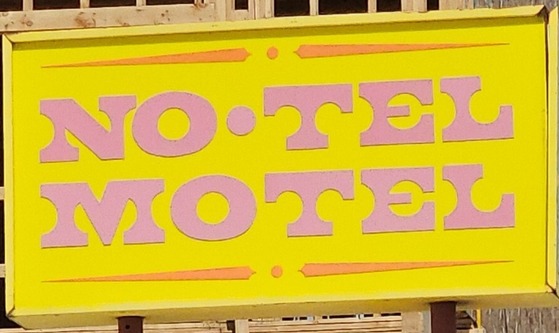 The No-Tel Motel Sign.
So what will become of the sign? The sign will be preserved. Johanna Hernandez Deputy Director of Tucson’s Housing and Community Development stated "We are committed to preserving the sign and determining an outcome that meets both the mission of HCD and EPHD to provide affordable housing in our community with dignity and integrity and the vision of these members of the community to preserve this part of our community’s past. The immediate priority is to remove the sign so that it can be preserved and protected."
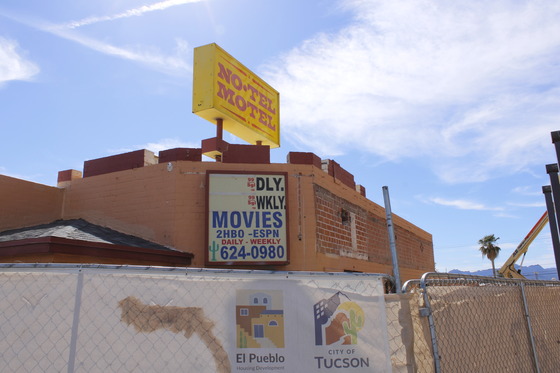 The sign as it currently stands during construction of El Milagro on Oracle.
While the No-Tel sign will not remain in its original location, it will be salvaged, perhaps in a local museum like the Ignite Sign Art Museum. In any case, this quirky bit of Tucson's history will be saved.
It isn’t often that we have meetings with several departments at once but last week we had a big Props Update meeting with the Department of Transportation and Mobility (DTM), Business Services*, Tucson Water, and Parks and Recreation to learn more about proposition funded projects in Ward 3 and their status updates. We have three recent Propositions that were voter approved in the City.
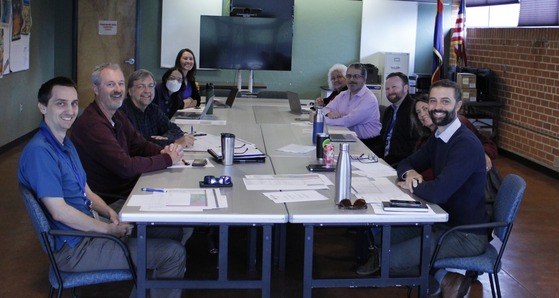 From left to right: John Van Winkle, Tucson Water; Greg Jackson, Parks and Recreation; Vice Mayor Kevin Dahl, Ward 3; Marlene Avelino, Ward 3; Shannon Jenkins, Ward 3; Jacque Martinez, Business Services; Aaron Williams, City Manager's Office; Billy Hayes, Business Services; Katie Bolger, Ward 3; and newly appointed Deputy Director Andy Bemis, Department of Transportation & Mobility..
Prop 101: Safer City, Better Streets. In May 2017, voters approved a five-year, half-cent sales tax to fund public safety capital needs and road repairs. Of the funds raised, 60% were designated for a Safer City; for vehicles, equipment, and facilities for the Tucson Fire and Police departments. The remaining 40% was split for road improvements between arterial streets and residential streets.
Prop 407: Parks + Connections. In November 2018, voters approved a $225 million bond package to improve City parks’ amenities and connections. Park projects include improvements to playgrounds, sports fields, pools, splash pads, recreation centers, and other amenities. Connection projects include greenways and shared-use paths, pedestrian safety and walkability, and bicycle boulevards.
Prop 411: Better Streets | Safe Streets. In May 2022, The City of Tucson asked voters to extend the existing but temporary half-cent sales tax from Prop 101 for an additional 10 years. The funds collected will be used solely for neighborhood street improvements and systemwide street safety projects. Safety improvements can include projects such as street lighting, sidewalks, bicycle network enhancements, traffic signal technology upgrades, and traffic-calming features.
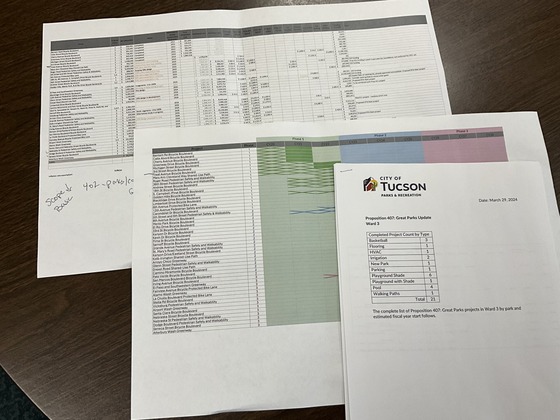 Projects, timelines, phases, monies - enough to cross your eyes!
The big update meeting was to inform us of what projects have been completed, which are in progress, and which are in future phases. We also covered areas in which there are gaps in funding due to rising costs. A project specified in Prop 407 with a price tag calculated in 2018 is considerably more expensive today. The different departments are working hard to identify these gaps and find ways to come up with additional funding; such as impact fees, state and federal grants, Storm to Shade funds, ARPA dollars and partnerships with nonprofits.
A good example of this work is the recent $2.57 million federal grant awarded to DTM for the Blacklidge Bicycle Boulevard. This bike route will be 4.5 miles long from Oracle Road to Columbus Boulevard and will safely connect five parks and four schools.
For more information and to track the progress of these Propositions check out tucsondelivers.tucsonaz.gov/
*Business Services sounds like services for Tucson businesses but is actually in support of the City of Tucson as an organization, so think internal.
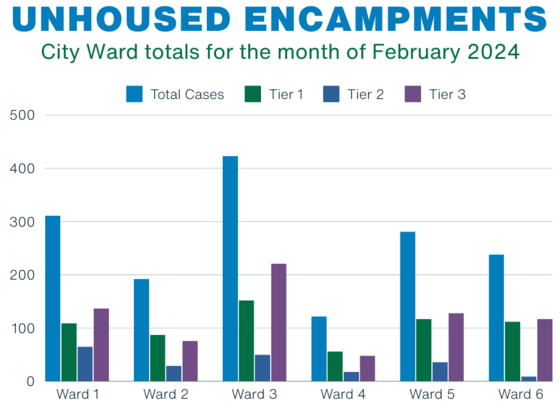 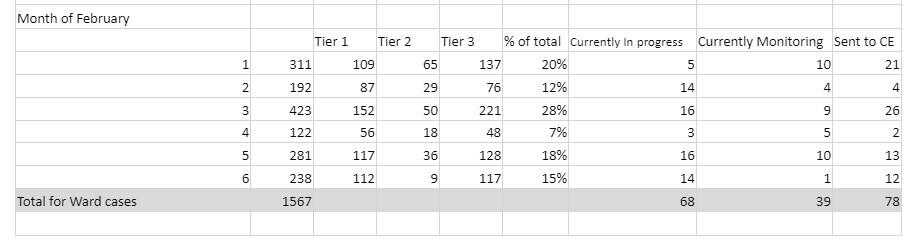 Total reports submitted: 12,912
Not an encampment reports: 35% Duplicate reports: 49%
For more information regarding the definitions of the different tiers or to report an encampment please refer to the Homeless Encampment Protocol and reporting Tool using the button below.
|