Date: 01/08/2024
Topics in This Issue:
-
2024 School Shootings
-
Plastics
-
Glass Recycle/Reuse
-
Sex Trafficking Forum
-
Changemakers Grant Program
-
Plan Tucson Open Houses
-
PFAS and Colorado River Allocations
-
UA Financial Mess
-
City Housing Open House
-
Sustainable Tucson
-
Door to Door Scams
2024 School Shootings
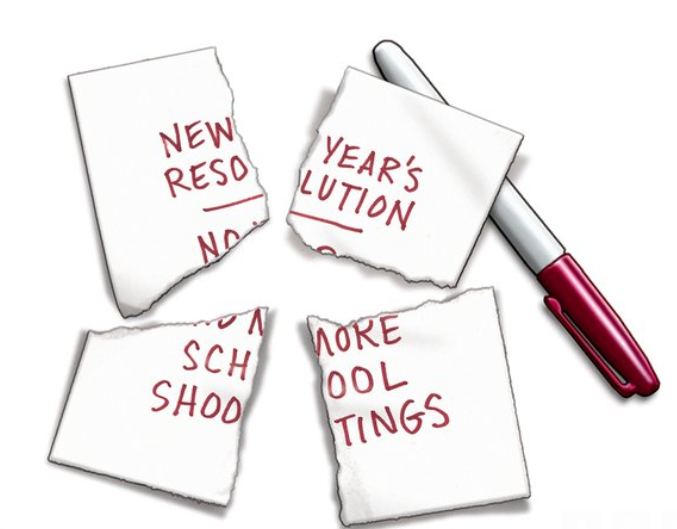
In case any of you made a resolution related to doing away with school shootings, it didn’t last a week. I hope your resolution to diet and exercise is doing better.
It began on January 3rd in Midlothian, Virginia. An 18-year-old was shot in the parking lot of Manchester High School while a basketball game was going on. Fortunately, he was not killed. However, the next day at Perry High School in Perry, Iowa one young person wasn’t so lucky. As their new semester was just getting started a 17-year-old kid shot and killed a 6th grader and wounded 4 other students and one school administrator. One of the students is still listed as in critical condition. The Perry High School killer took his own life.
That’s school shootings. But Gun Violence Archives has already recorded over 500 deaths related to guns. Here’s how that breaks down:
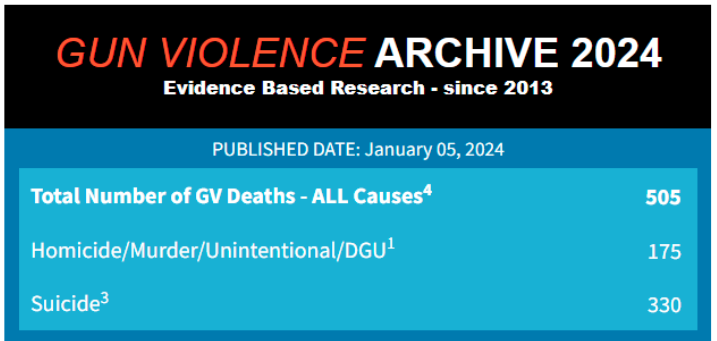 There were 5 mass shootings recorded – defined as an incident in which 4 or more people were shot. So we’re off and running on a new record-setting year. Some records are not made to be broken. Without changes in state and federal legislative offices the gun violence trends will only continue in the wrong direction. 2024 is an election year.
Plastics
We’ve hit the ground running in the plastics program in ‘24. The first full week of the year generated between 6 and 7 tons of plastic at the drop off sites. That’s likely a reflection of Christmas collections. We’ll of course continue tracking the numbers each week.
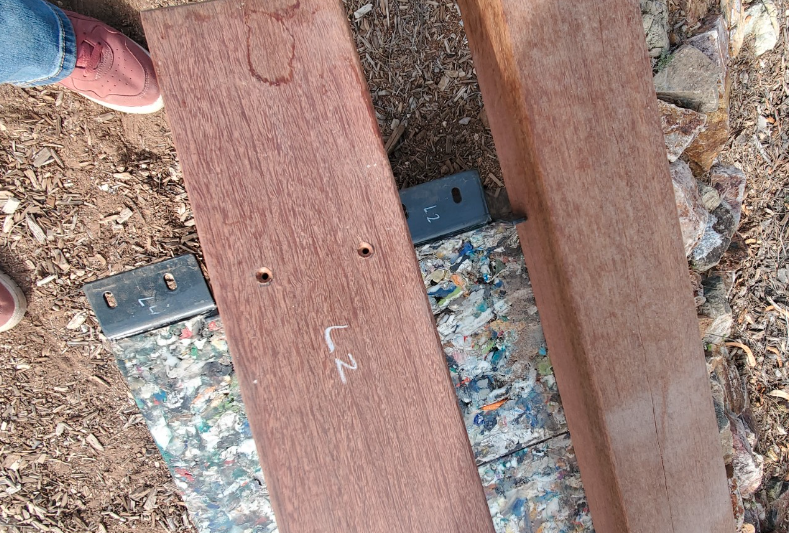
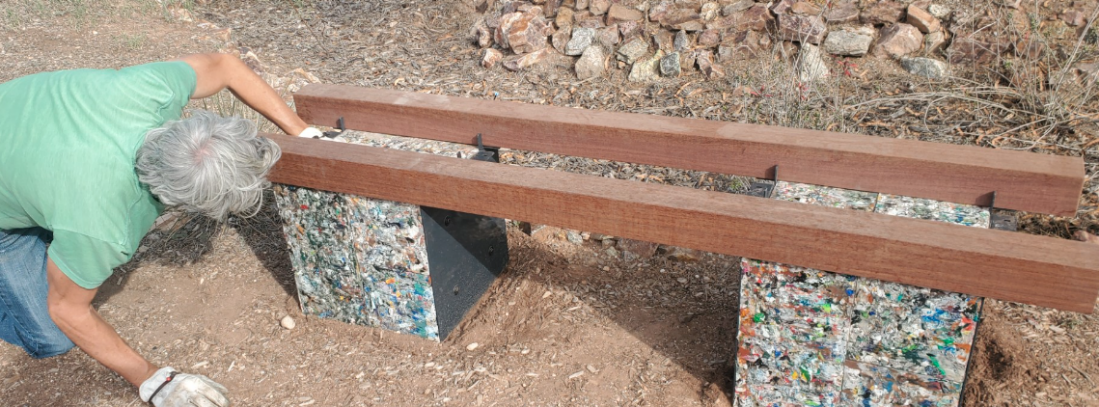
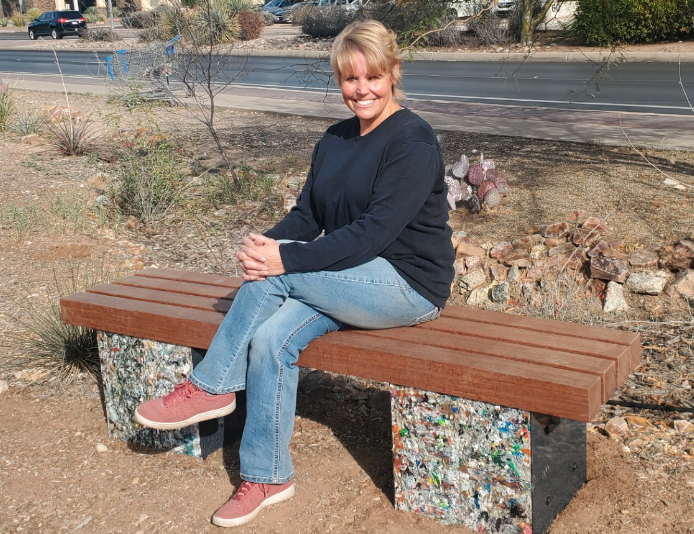
The start of the new year also saw 3 more ByFusion benches delivered and built out in the community. This montage of photos shows the very simple process used to put together the 6’ bench that El Montevideo bought. You start by laying out the beams onto the blocks. Everything arrives pre-drilled and pre-measured.
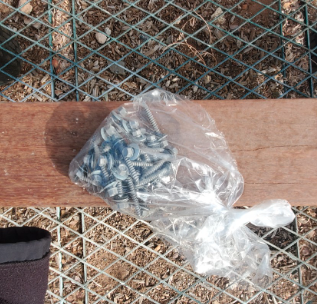
The hardware is also included in the bench kits.
Pretty simple process – line up the holes in the beams with the holes in the bench bracket and screw in the hardware. That’s 8 screws per beam.
After about 20 minutes of turning your screwdriver, your bench will be ready for use.
We also had two more delivered to our housing department this past week. The cost is about $1,200 – and each bench is diverting nearly 200 pounds of plastic from the landfill, ocean or side of the road. If your neighborhood, business or non-profit would like to get one or some of these onsite just reach out to me and we’ll help connect with BF.
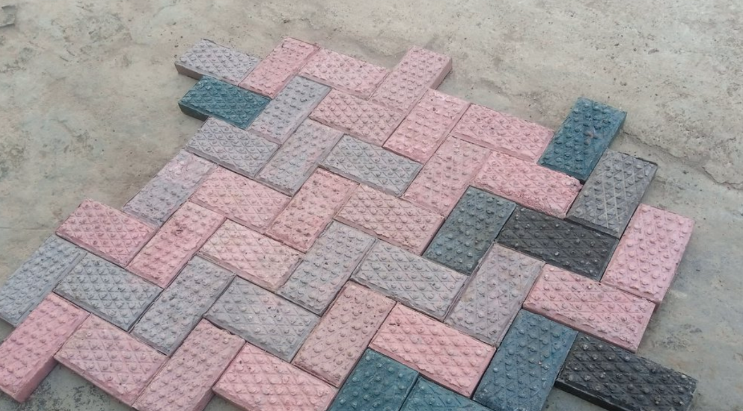
And thanks to Garden District resident Dave for sharing the article highlighting the micro business that’s popping up in Kenya related to plastics and reuse. When I was in Kenya it was commonplace to see people simply burning trash of all sorts on the side of the road. You can imagine the impact on air pollution. In Nairobi this lady – Nzambi Matee (pronounced N – zombie Mat – ee) is doing something somewhat similar to the BF blocks. As you can see from the pictures, her pavers are being used more for walking paths than for structurally certified construction – but it’s still taking debris and putting it to a great use.
 |
Nzambi is a 29-year-old engineer who studied biochemistry in school. She was recently honored as Young Champion of the Earth 2020 for Africa. That award provided some funding through the U.N. that she used to help get her business off the ground. Nzambi estimates that in Nairobi alone they generate 500 tons of plastic waste every day. As it true here, very little of it is recycled.
Instead of sitting on the sidelines and watching this stuff continue to pollute the environment, Nzambi is now making these pavers from the plastic waste. Based on our reality I can assure her that she will not run out of her source material anytime soon. So kudos to Nzambi for getting involved.
And kudos to you all for continuing your involvement as ‘24 begins.
Glass Recycle/Reuse
A colleague’s newsletter recently included this statement: Even though the official policy is currently not to accept it, that glass does get recycled just as it did when that was the policy. That glass gets sent to a company in Phoenix called Strategic Materials, which reuses the glass. So, even though the policy has not changed yet, if you won’t take glass to the purple dumpsters, and you’re deciding between the green trash bin and the blue recycling bin, please choose the blue bin and it will be recycled.
The policy that was approved by M&C several years ago to take glass out of the blue bins and set up drop off sites around the city is still in effect. We have a contract with Strategic Materials (SMI) to take the glass, crush it and sell the resulting silica sand into the secondary market. They have customers such as Dow Corning who use the product in their manufacturing process. The city receives $5 per ton of the glass we deliver, and we get 10% of the product they produce. That product is used in our own construction and roadway projects as a way of avoiding having to buy sand at a quarry. We use concrete all the time and therefore we use the sand produced by SMI as well. The program is not a huge money maker for the city – in fact, we’re barely breaking even from a cost standpoint. But for all of the right environmental reasons I continue to support the program. When and if the policy is changed that will be done by an action of the full M&C, not through a newsletter piece.
If you choose to put your bottles into the blue bins you’re choosing to enrich the bottom line of Republic Services. They run our material recycle facility and so any revenue gleaned from recycling of the glass that ends up there goes into their coffers. If you’d prefer to see the glass reused in the city program in the way I’ve described please continue to bring it to one of the 20 drop off locations that exist around the city.
I’m not sure what to make of the last sentence in that quote shown above – the choice isn’t recycle or not. The choice is using the glass in the city reuse program or fatten the Republic corporate kitty.
Sex Trafficking Forum
I write about sex trafficking from time to time because our office has been deeply involved in trying to combat the problem for a decade. And please be clear – trafficking is a problem in Tucson, and our youth are vulnerable largely due to access to, and involvement with social media.
Please join us on Monday, January 22nd at 5:30pm for a presentation on the topic. We will host this public forum in the community room at the ward 6 office. The presentation will be led by Dominique Roe-Sepowitz, the leading scholar and researcher in this area in Arizona. In addition, we’ll have representation from one of the agencies who report trafficking victims to law enforcement, TPD will be on hand and we’ll have the personal story from a trafficking victim. We’ve done this before and based on comments from people who came to become informed, they were surprised at the data, and the ease with which this is happening in our community.
The Gem and Mineral Show is coming soon. So is the Book Festival. The NCAA final four is played in Glendale this year. Every major event such as those brings out-of-town guests into our community, some of whom come with free time and disposable cash. There’s a trafficking circuit that ‘tracks’ these events and provides the victims at each stop. And they recruit at each stop.
Trafficking happens daily over the internet. It can be salacious exchanges between a minor and an adult, all over the internet. There does not need to be physical contact, and there does not need to be a third-party involvement (a pimp.) Come on the 22nd and you’ll see how trafficking is defined in federal statute, and you’ll hear how it’s manifesting in our community. We will follow up this forum with a presentation to M&C on Tuesday the 23rd.
Changemakers Grant Program
The Changemaker grant program delivers support directly to local small businesses. It’s a part of our economic development office support for our local entrepreneur's. The funds being distributed come from the city ARPA funds that came out during the COVID federal support days. Those are over, but there’s still some funding to be distributed. The city is partnering with Groundswell Capital – a financial non-profit – in administering the grants.
These grants are intended to increase business revenue while decreasing business expenses. The goal is both growth of our local entrepreneur sector, and retaining what is already in place. Through this program our hope is to increase awareness and support for small local businesses.
To be eligible the business must be a for-profit business located within the City of Tucson (including the City of South Tucson), have 50 employees or fewer and must be either a sole proprietorship, or registered to do business in Arizona. If a sole proprietorship it must be independently owned – not a franchise – and register as a DBA. You can apply for more than one grant, but the total a company can receive is no more than $10,000. These dollars are for business expenses – examples of ineligible uses include:
-
Costs incurred prior to grant window
-
Payment of non-business expenses (e.g., personal credit cards, family car, home repairs)
-
Direct financing to political activities
- Religious activities, such as worship, religious instruction, or proselytization and/or those that promote or inhibit religious interest
-
Costs previously covered by alternate federal, state, or local grant funding
-
Payment of fines or federal or state taxes
-
Purchase of drugs, tobacco, or alcohol
-
Entertainment
-
Bonuses
-
Non-business travel
The application window closes on February 11th. For a more complete description of the program, and to apply please use this link:
https://www.groundswellcapital.org/changemakers?utm_campaign=9f04d759-8562-4212-82fd-d4714c9f5a37&utm_source=so&utm_medium=mail&cid=d2d8b7ca-d06f-412f-9ab5-fe1ac8a5542c
Plan Tucson Open Houses
Every 10 years the city is required by state statute to submit to the voters a long-range planning document – ours is called Plan Tucson. It’ll be on the ballot in 2025. The public is of course a part of putting the Plan together, and public meetings are happening now to get your input.
Plan Tucson will contain sections describing for example our various community resources, transportation and mobility options, neighborhood resources and business development, accessibility issues and of course climate action. People can select which area or areas they’d like to be involved with. The goal is to put to the voters a document that broadly defines how the city wants to grow in the coming years. It’s a values statement, not a zoning document.
The next two opportunities for you to get involved will be on Wednesday, January 17th from 5:30pm until 7pm. That will be an online-only meeting. Then on Saturday the 20th there will be an in-person meeting out at the newly remodeled ward 2 office (7280 E. Broadway – Suite 100.) That meeting will run from 10am until noon. Both events will have prizes for participants, and the meeting out at Paul’s office will include food and some family friendly activities.
PFAS and Colorado River Allocations
Last week I shared some data and charts put out by Water Casa and their staff. The point was that because of an extra-large snowfall last year we dodged the bullet of being in a Tier 2 drought and having our allocations from the Colorado River threatened. The section included maps showing that this year promises to be hot and dry. So the reprieve is indeed temporary.
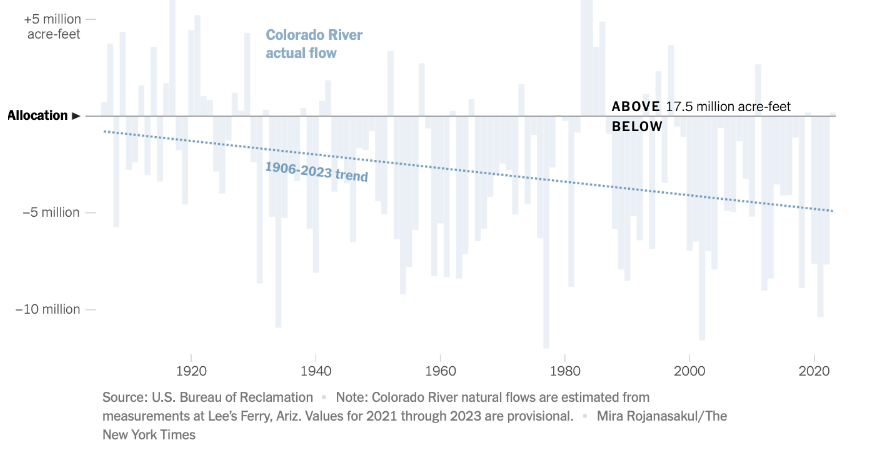
I titled this section PFAS and our allocations because PFAS is right now polluting our groundwater. When – not if – our CAP allocations are significantly reduced we will be reliant on that groundwater to serve city and county customers. So, cleaning the system is not an option, and it must happen quickly. That’s not Chicken Little crying that the sky is falling. The reality is everyone’s allocation on the Colorado is trending down. Water is allocated from the Colorado based on an assumed flow of 17.5-million-acre feet. It’s often much less than that. Last year was a gift. This Bureau of Reclamation graph shows that pretty starkly.
The state of California proposed a series of conservation measures. Their goal was to follow Tucson’s lead and make conservation a way of life in California. The response was to call for less restrictive conservation measures and to extend the timelines for compliance. That’s not Chicken Little – it's head in the sand.
We have a good relationship with the state Department of Environmental Quality. They’re helping us fund some PFAS pilot treatment facilities. That’s good. We’re negotiating a settlement from our lawsuit against 3M and other PFAS-product manufacturers. That will yield somewhere in the range of what we’ve already invested in addressing the issue. That’s ok, but not nearly enough, and not fast enough. And Congress has attached PFAS remediation funding to several bills that are making their way slowly through the legislative process. That’s too slow.
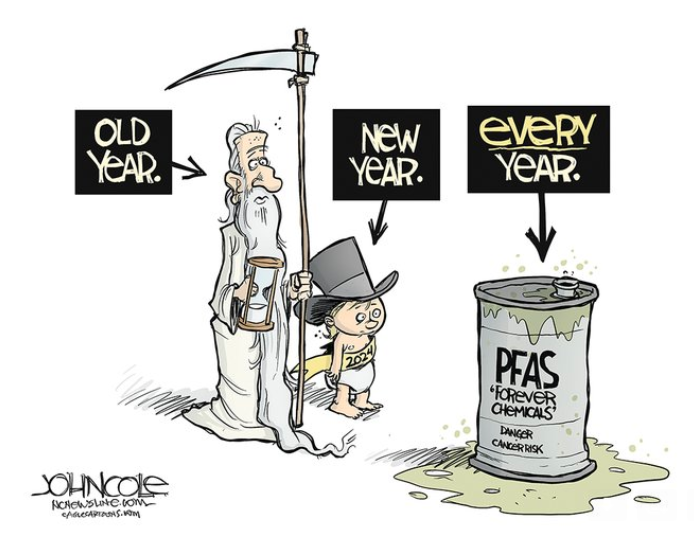 |
PFAS is not going away. It does not dissolve by itself in the aquifer. It bio-accumulates and will affect food stock that feeds on polluted water, and agriculture that is irrigated with tainted water. It’s called a ‘forever chemical’ for good reason. We need the treatment plants. There is a polluted plume just outside of our central well field. The use of firefighting foam on the DM base is the likely cause of the pollution. The DOD needs to become a part of the solution.
The rules governing allocations of the Colorado River water will expire in 2026. There are talks happening right now aimed at rejiggering who gets how much. One concern is that with the election happening this November if there is a change in administration the cast of characters involved with those negotiations will change and the whole process will be set back by months, if not years. The effort is to get some significant agreements in place ahead of the election. That is going to be a difficult deadline to meet, especially if the reductions in allocations are significant enough to make a difference in the trend line you see in the graph up above.
Stay tuned – there's a lot of work to be done on this. Without the PFAS piece of the puzzle we’d be at a different level of urgency. But that’s not our reality. There are lots of moving pieces, and they all involve levels of complexity.
UA Financial Mess
Thanks to Dylan Smith of the Tucson Sentinel for publishing this op/ed I wrote over the weekend. There’s more, but this gives a peek into some of the areas the Regents can look into, and some thoughts on some of the ideas that have been floated as possible solutions.
The Arizona Board of Regents recently brought in John Arnold to serve on an interim basis as chief financial officer at the University of Arizona. He's a numbers guy so if he's allowed free rein and he asks the right questions he could offer some good counsel.
They know there's a quarter-billion-dollar mess. Arnold is tasked with turning stones and finding causes/solutions. The press has highlighted at least three main costs centers for the mismanaged funds. One is an $87 million gift to the Athletics Department, another is the cost associated with bringing in the Global Campus, and the institutional costs for research and development have been north of $250 million. Arnold has a roadmap to work from.
In the area of Athletics, he might start by checking into these areas: Have capital projects been audited to assure ABOR budgets were adhered to, or were side projects created to bypass ABOR rules? When Athletics says it's financially self-sufficient as all auxiliary units are supposed to be, how much in lost revenue to the university is included in the hundreds of tuition and fee waivers granted to that department?
Even if there's a payment plan somewhere for the $87 million, those dollars came from someplace – and their reallocation to Director Dave Heeke and Athletics therefore deprived some other areas. What was that cash flow and what other opportunities were sacrificed?
Economists call that an opportunity cost. It's pretty basic. When state facilities are used for private camps, is the UA receiving market-rate compensation? And student fees are being collected from all students, regardless of whether or not they attend athletic events. Do students therefore have access to use intercollegiate athletics facilities, including the academic center that houses computer labs, tutoring and meeting rooms? The answer is that they do not, but Arnold can confirm independently if he wishes.
One new revenue stream UA President Robert Robbins has suggested publicly is to use athletics facilities for things such as concerts. Been there, done that.
It's an uninformed suggestion that could end up costing money, not bringing in new dollars. First of all those events would be competing against the shows Centennial Hall is trying to attract. A conversation with them could be helpful. But even for large rock concerts that aren't going to use Centennial, there are deal-breakers Robbins evidently hasn't considered. Tucson is a B market on the concert tour circuit. That means dates for meaningful shows are squeezed in as a tour is routed through the major cities. That limits flexibility in scheduling. McKale Center is already heavily booked for athletics events, team practices, coaches private camps and maintenance. There are not multiple open dates he will find during the year.
For those dates that are available, the venue has restrictions that make it unappealing to large shows. The truck ramp is at a slope that means semi-trailers cannot back down it for loading shows in and out. That means all of the rigging and gear has to be loaded in by hand – fork lifts – very labor intensive, very expensive and shows don't want to spend the time and money on that. When the gear does arrive on the arena floor, Robbins and Heeke would be placing the integrity of the playing surface in jeopardy. The maple playing surface is what's called a fixed-floating system. There's a gap between the maple you can see and the hard surface a couple of inches below. It's to lessen the impact on players. The last shows we did there (Garth Brooks) crushed the maple. One reason is that all of the sound had to be floor stacked – the high steel inside of McKale is not structurally built to hold the 80,000 to 100,000 pounds of sound and lighting that comes with major shows. He should check with some of us who have been down that road before.
What about the football stadium? A little checking there would reveal that major shows shy away from booking outdoor events due to the instability weather causes. The artificial turf in the stadium is subject to puncture and damage – the loading in for commencement each term requires significant labor and materials to protect it. Placing seating on the field increases the vulnerability. Finally, you don't make money by "facilitating" major shows. You only make money by promoting. When you facilitate you take a fee to help with the show logistics. There's no down-side risk, but there's no high up-side revenue potential. When you promote, you take that financial risk. The last time the UA had ASUA promote a show in McKale they lost roughly $50,000 – Whitesnake was a bust and the UA at that time stopped promoting. It was the right decision. We made a few thousand dollars facilitating Garth Brooks for two nights in McKale and probably spent most of that rehabilitating the venue. Arnold and ABOR should think hard about the suggestion that booking multiple outside events in those venues is going to make a dent in the financial hole Robbins and Heeke are trying to dig out from.
When Ashford College – now the UA Global Campus – was purchased, Robbins was proud to announce that he only paid a dollar for it. Despite protests from faculty and staff, he went ahead with the deal. Arnold might want to confirm the newly absorbed operations costs that were involved. The local media has said those costs are in the $265 million range. One would have to assume that also meant hiring staff to manage the new operations. There's a cost to that. The federal government wants to claw back about $70 million in tuition money the Ashford students received. Robbins is now spending money on that litigation. Costs? Who should ABOR hold responsible?
I shared the data from the National Science Foundation last week that shows the UA spent over $250 million in institutional dollars to attract research and development grants. Robbins has announced publicly that one of his solutions to the athletics and wider financial mess is to consolidate support services on campus. One of those would be the development staff.
Is merging staff with the UA Foundation going to help offset the $250 million spent to get the grants? How does it save money by having development officers work the same limited donor pool for dollars? Who will prioritize asks?
The Robbins and Heeke skybox suites have been remodeled at a cost of nearly $3 million. Now they need to finally do the west side of the stadium. Will that project (estimated at between $90 million and $150 million) take precedence over donor asks for other campus projects? Merging the donor pool sounds like a not-so-well-thought-out idea.
And bringing other support functions into the broader campus administrative burden does nothing to alleviate the work load. Someone still has to do the HR, IT, payroll and other work. Is Robbins simply suggesting reassigning current Athletics Department staff to new operating units on campus and pointing to the then "reduced costs" he achieved in Athletics? Arnold is a budget guy. He can do that simple math to show the savings were nil or negligible.
A part of this mess is the UA being a good community partner. Buying properties off-campus in order to bypass city zoning rules (Honors College) is not a good way to build that relationship. Arnold might want to look into other recent UA property purchases to see what's being paid in comparison to appraised values, and how the anticipated uses will impact the surrounding neighborhoods.
And the current public relations mess happening over the dismantling of the historic Soleri Chapel makes the public relations component to this whole mess even more of a factor for ABOR and Arnold to keep in mind. While Robbins' spokesperson says they're "documenting" what's in the chapel, in layman's terms it simply means they're taking pictures of what they're taking apart so people can go to archives and see what used to be there.
Robbins and Heeke have suggested balancing the Athletics budget by increasing basketball and football ticket prices by 25%. Economists have another basic principle – price elasticity of demand. Basketball already has the image of being elitist and too expensive for the general public to attend. And football just had a successful season. Now the coach wants pay raises for himself and his staff.
Will the public perception – if not the reality – be that the price increases are only going to pay for the salary hikes? Is the public perception going to be that they're paying to solve the financial mismanagement created by others? It's an easy concept to float but they'd better do some market studies before assuming it's going to generate new and significant revenue.
People from within Robbins' and Heeke's own inner circle share with me that the work environment has become difficult. That's what happens when you create a culture of mistrust within the institution. We will see if the ABOR review these and other areas of concern help to alleviate that condition.
City Housing Open House
The city housing department owns several properties scattered around town. You read a lot about housing affordability – these units are our way of making housing available and keeping it affordable.
The city has recently completed renovating a property we own that’s located at 626 N. Dodge, in the Miramonte neighborhood. Please join us between 4pm and 5:30pm on Friday, January 19th for an open house during which city staff will show off these newly remodeled units. Our housing folks had this scheduled for last week but weather got in the way. We hope you can join us on the 19th.
Sustainable Tucson
This week's Sustainable Tucson (ST) meeting will include a report from the Conference of the Parties conference that was recently concluded in Dubai. While their goal at the conference was to deliver a significant road map for addressing climate change, Forbes Magazine is quoted as saying “despite important progress, COP28 fell short of delivering the decisive action on climate change that science says is needed."
Join ST by zoom on Tuesday, January 9th at 6pm. They’ll have a conversation led by UA delegates to the conference Joona Mikkola (Arid Lands Resource grad student,) Dr. Mona Arora (Environment and Policy in the Mel Zuckerman College of Public Health,) and Yevheniia Varyvoda (PhD researcher, also in the Zuckerman College.) These will be first hand observations of what happened at the conference. They’ll leave time for Q&A at the end of the meeting. For more information please go to their website: https://sustainabletucson.org/ |
|
 |
Door to Door Scams
Last week the Arizona Attorney General put out a warning related to door-to-door scam attempts. I’m aware of slimebags trying to scam seniors with phone calls – door to door is yet another area to keep in mind.
While convenient, the AG warns that door sales are a way for scammers to use fraudulent and high-pressure tactics to close a deal that could end up bad for you. One popular product that’s now being scammed on doorsteps is solar panel systems. The AG offers these tips to avoid that outcome: HERE.
Here are a few things to keep in mind if a sales person arrives at your door. Please share these with seniors you know who may be living alone – they're often vulnerable targets of scammers.
-
You do not have to let a person at the door enter your house – be cautious w/letting strangers inside your home.
-
Be sure to get all terms and conditions in writing – word of mouth isn’t sufficient.
-
For solar work, or other contracted work that requires permits, ask to see the Registrar of Contractor permit from the seller
-
Never pay with cash
And remember that in Arizona there’s an allowed three-day ‘cooling off’ period in which a customer can cancel most door-to-door purchases of $25 or more. The seller is required by law to give you notice of that right to cancel. You can review that statute here.
If you or someone you know has been scammed, please report the incident to the AG’s consumer protection department. In Tucson that number is 520.628.6648. You can also file a report online at this link: file a consumer complaint
Sincerely,
Steve Kozachik
Council Member, Ward 6
ward6@tucsonaz.gov

City of Tucson Resources
|