Date: 12/27/2023
Topics in This Issue:
-
January – Gun Safety Training/Self Defense for Women
-
February – Becton Dickinson
-
March – Sex Trafficking
-
April – Service Agreement with ByFusion / Plastics Program
-
May - Prop 412 – TEP Franchise Agreement
-
June – PFAS Litigation
-
July – PACC Rats
-
August – Housing Affordability
-
September – Microgrids
-
October – 6th and Campbell Development
-
November – Multifaith Forum in Support of Democracy
-
December – Randolph Park Reimagined
-
In Closing - 2024 Loved Ones
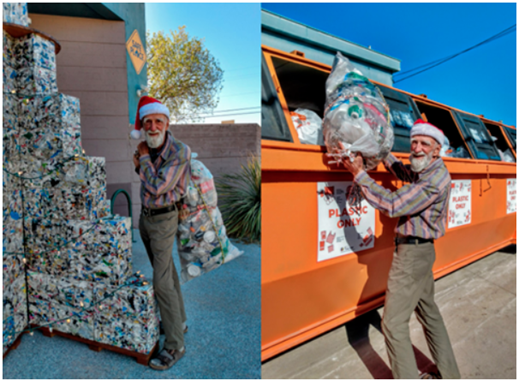
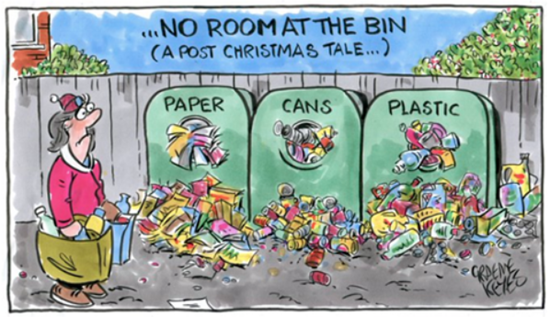
Each year for the last newsletter of the calendar year I do a retrospective – month by month of things we at the ward 6 office have been involved in advancing. It’s a kind of fun way to see where we’ve been, and to get our heads ready for where 2024 will be taking us. Here’s how ‘22 ended – with some significant donations to the plastics program. Through this look-back you’ll see ByFusion and our program referenced a couple of times. Ahead of that, thank you for your support and involvement in the plastics program.
Now, on with the review...
January – Gun Safety Training/Self Defense for Women
If you’ve followed my work since I was first elected, you’ll know that I’ve been involved in advancing gun safety legislation. While that is often a frustrating path to travel, involving pre-emptions from the state and an overall lack of interest in engaging from the gun lobby, last year was a bit different. At least with respect to a new relationship I’m nurturing with the owner of Diamondback Shooting Sports.
 |
Ben Anderson is certified to teach gun safety/use/handling. He also owns one of the local gun stores in Tucson, Diamondback Shooting Sports. Ben and I first began working together in an effort to get TPD and federal law enforcement to put into place some workable protocols for intercepting straw gun purchases. Those are when a person who is legally permitted to buy a gun makes a purchase for someone who is a prohibited possessor. Ben says the transactions are often relatively easy to spot – but the dealers need a way to quickly contact law enforcement to help prevent the transfer. We’ve got Ben and the appropriate agencies connected.
While we were working on the straw purchase issue, we struck up a conversation that led to me making the ward 6 community room available for Ben and his team to teach a gun safety course. In January we had a full house of people who may not have ever set foot inside of a gun store, but who wanted to learn firearm safety. Diamondback supplies local law enforcement with their weapons, and they teach gun safety classes, so Ben brought a legitimate set of credentials to the table.
To his credit, the ward 6 training was given for free. I know some of the people who took part in our event signed up for more advanced training with him later on. In addition, we enlisted some of Ben’s team to come back and offer a free self-defense course for women. Again – for free, and well attended.
My rapport with the gun industry has been a bit rocky. But for the January event we found some very fertile common ground – teach people who will be handling a weapon the correct way to do it.
Back in 1966 I took an NRA-sponsored gun safety course. Back then the NRA was focused on teaching the safe handling of firearms and not simply finding ways to get them into everybody’s hands. It’s a new day. I’m hopeful that what Ben and I began last year can continue; that is, showing that even while we may differ on laws regarding gun control, there is certainly a common ground we can stand on in regard to gun safety. He is a responsible gun dealer, as shown by his willingness to post a suicide hotline behind their counter and his refusal to sell a gun to somebody who is showing clear signs of distress. I’m grateful to Ben and his team for collaborating on the courses and look forward to doing more of that in the months ahead.
Later in the year we had an opportunity for the M&C to take a public position in support of the BATF proposed rule that would require a background check on all gun sales. I was not allowed to put a Resolution in support of the rule on the agenda, despite the fact that I had written it well in advance of the meeting date. I hope many of you took advantage of the link to comment that I had in the newsletter. One reason that would have been an important issue for the city to weigh in on is the on-going ‘debate’ in the Star between letter writers about whether or not the AR15 should be considered an ‘assault’ weapon. One guy wrote that the bullet is ‘smaller’ than the one a 9mm handgun shoots and therefore if the 9mm isn’t called an assault weapon then neither should the AR15. He’s right about the bullet size – and it is a stupid argument. Here’s why (and I suspect the writer knows this stuff but was intentionally deceptive.)
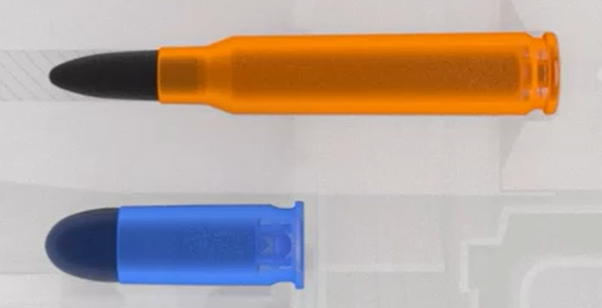
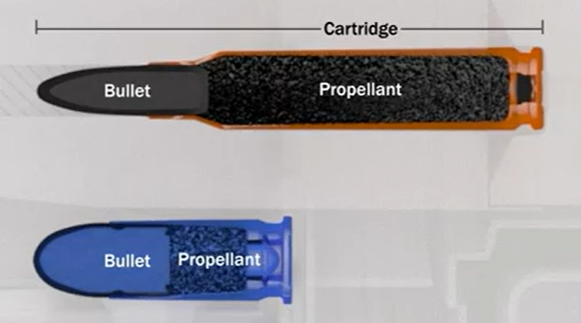
Here are images of a .223 (fired by the AR) and a 9mm bullet.
The AR casing is the orange one. If you look inside, you’ll see the 9mm bullet is in fact larger than the one fired by AR15:
But notice that the AR has significantly more gunpowder (propellant) than the 9mm does. The AR15 bullet can travel the length of 6 football fields in one second. When it hits its target the bullet tumbles inside the victim’s body and literally tears up body organs that were not directly hit by the bullet. That’s due to the velocity at which the bullet enters the body.
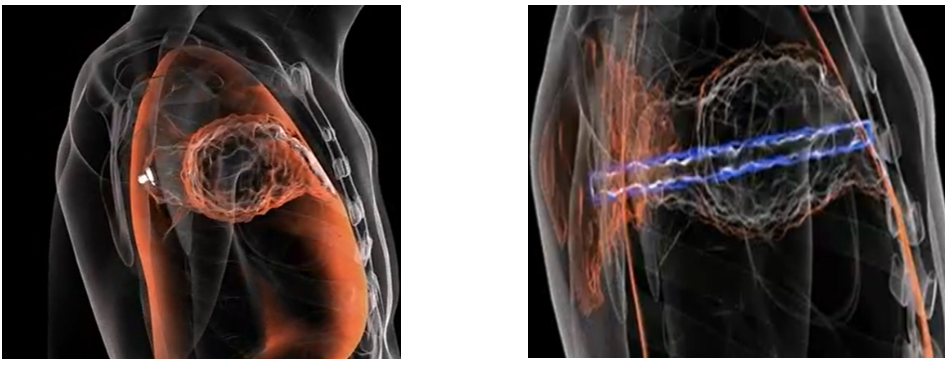
This is a graphic image of the .223 tearing up a lung vs the effects of a 9mm bullet. The AR bullet somersaults through the victim. The 9mm follows a more linear path. Neither is a great experience, but one is significantly more lethal than the other.
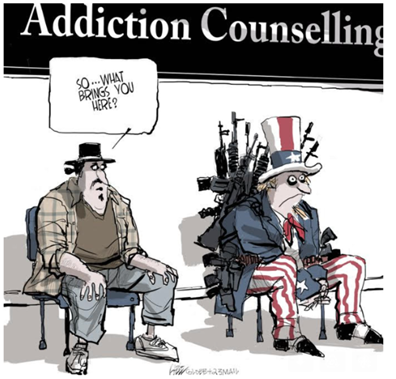
It is legal to sell an AR15 for cash out of the trunk of your car. No background checks are required. Civilians do not need an assault weapon. The city council should have been afforded the opportunity to advocate for that position through the Resolution I had written.
February – Becton Dickinson
In April 2021 Becton Dickinson (BD) announced that they were opening a new facility out by DM. The plant will sterilize medical equipment – clearly an important business. The problem was they proposed to use a chemical called Ethylene Oxide (EO) to do the sterilization. EO is a highly flammable and highly toxic chemical. Lots of people both on M&C and in the economic development community jumped on the BD bandwagon without concern for the public safety issues EO should have raised.
During a January 2022 study session, I offered a motion to oppose the facility, both in its proposed location, and because of the chemicals they intended to use. BD had plans for using up to 450,000 pounds of the chemical annually. I wanted the city to require a transportation plan and a review of their safety protocols. We were advised that requiring local conditions needed the approval of the federal government. I asked that the city attorney initiate that request.
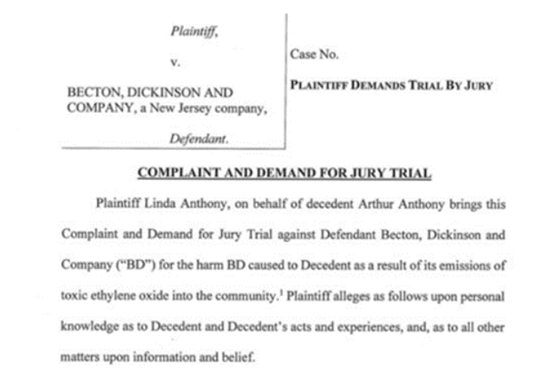
BD has already been sued over the impacts caused by the release of EO. In a newsletter earlier this year I included this cover page from one such lawsuit:
In February of this year we learned two important things. One was the city was given authority to impose our own local regulations on the transportation of EO through our community. Without that approval by the federal government we’d have had no voice in how EO moved through the city. Given that we had just shut down major travel routes due to a semi-truck rollover that released nitric acid, the issue of moving toxic chemicals through the city was fresh on everyone’s mind.
The other important February announcement was that BD had decided they would operate their Tucson facility without using EO. All along, through each media story I participated in regarding BD I made it clear that I’d fully support their operation in Tucson, but not if they use a highly toxic and flammable chemical and do it right under the DM flight path. DM officials agreed. So having BD announce they’d heard the message loudly and clearly and that they will continue their development plans for Tucson in a manner that does not include EO was a win for everybody.
There will be a ribbon cutting for the new BD facility, likely late in ‘24 or early in ‘25. Everyone taking part will be all smiles – as they should be. The business will be an important economic driver for the region, and it will not bring a toxic threat along with it. Some things are worth fighting for. This was an example.
March – Sex Trafficking
At the start of the year the sex trafficking unit inside of TPD was largely ineffective. That’s not just my observation – my staff and I heard it from multiple agencies who are responsible for reporting suspected trafficking incidents. Their experience was few of them were being properly investigated. Rewind the tape a few years to when my office was working with TPD, the courts, victims and support agencies on this topic. At that time there was a more robust recognition of the problem, and most importantly a more robust effort to hold the traffickers accountable, and not criminalize the victims. That’s the goal.
In March, in partnership with the ASU Office of Sex Trafficking Intervention Research (STIR), the Pima County Juvenile Probation office and Our Family Services, we pulled together a large meeting, the purpose of which was to throw light on trafficking in Tucson and Pima County, and to begin to rebuild both the TPD agency response, and their relationship with the agencies.
There was a series of 3 meetings; the first two done virtually and the final meeting held in person in the community room at the Benedictine. The instructional parts of the meetings were facilitated by Dominique Roe-Sepowitz. She’s the director of the ASU STIR program. Throughout the series the goal was to engage with vulnerable youth in the community, their adult leaders, statewide agencies and law enforcement – relationship building and education. The in-person meeting was a full house.
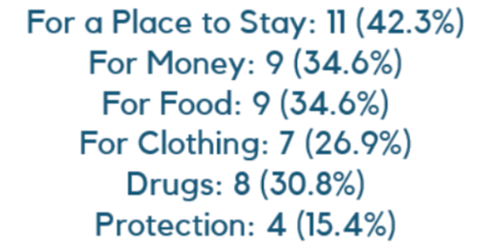
The issue is a significant threat to our youth. State reporting agencies advise us that there were roughly 50 Tucson youth trafficked last year. That’s about one per week. One mother trafficked her 3 daughters. None of those ended in a conviction. We can do better for our youth. Couch surfing is trafficking if being allowed to stay in a house is traded for sex. Hunger, drug addiction, fear – all can be a means of being trafficked. This graphic shows the variety of reasons some of our youth report being involved:
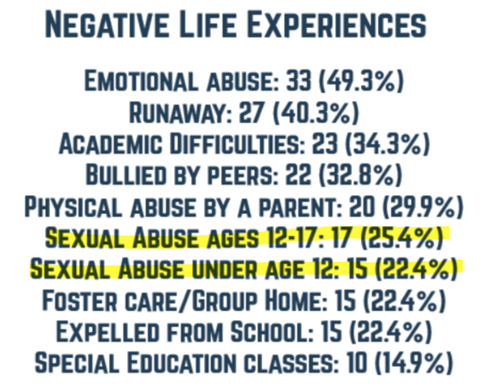
Often youth come from some negative life experience that result in being victimized in a trafficking setting. This graphic shows what’s happening to our kids:
Over ½ of the young people who took that survey reported involvement with drug use. Nearly 15% were addicts while still under age 18. Add to that roughly 2/3 reporting some current mental health issue and over a third report having tried suicide.
Here’s a very good piece focused on the meeting we facilitated run by Reyna Preciado formerly from KGUN9.
https://www.kgun9.com/news/local-news/starting-the-conversation-sex-trafficking-in-tucson
Things are changing for the positive. TPD has made significant internal staffing changes in direct response to our engagement. The relationships with the agencies are fluid and positive. I have asked for a January study session update on the work we’ve done, and the progress being made. Our kids should not be for sale – we’re on the road to addressing that.
April – Service Agreement with ByFusion / Plastics Program
Throughout the first quarter of ‘23 I was working with city staff and ByFusion on pulling together the final terms of the service agreement that will get the plastics program up and running in Tucson. We finished that work in April – final vote happened the first week in May, but that became a formality once the heavy lifting was done.
Credit for getting us to this point belongs on the city side to Carlos DeLa Torre – Environmental Services director, Mike Ortega – City Manager, Mike Rankin – City Attorney, and to all of the city workers who are busy 6 days per week servicing the roll offs at the ward 6 office, and on a less frequent basis out at the other two drop off locations. On the ByFusion side of course Heidi Kujawa – CEO of BF helped us navigate from their side to the final deal. And none of it happens without your support and enthusiasm for the program. To date we’ve collected roughly 200 tons of plastic. Without the public providing the momentum working on the details of the service agreement would have felt empty.
While we were working on the agreement Arizona Forward took note of what we were doing and awarded the program a statewide honor for being the #1 program in Arizona in the category of Circular Economy Solutions. You can see the trophy sitting inside of our front entry when you come by to drop off your plastic.
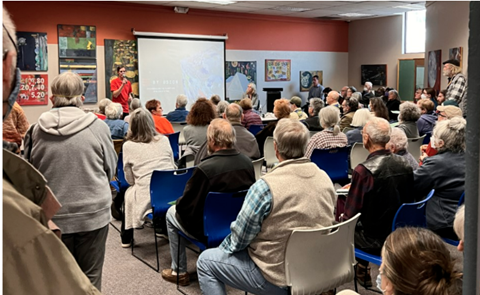
Just ahead of the vote we hosted a community meeting to give you the opportunity to meet Heidi and ask any questions you had about the program. This is a picture from that night – a full house in the ward 6 community room.
The agreement with BF is for 5 years. On the city side we will be making quarterly payments to assist in their standing up the business. Throughout we’re diverting significant amounts of plastic from the landfill, thereby extending its useful life. We are reducing the contaminants that may have otherwise ended up costing us money at the Material Recycle Facility. We are reducing greenhouse gas emissions at the landfill. We are reducing deforestation and reducing the mining of limestone out at Twin Peaks. We are building the shell of the facility from which they’ll operate. ByFusion is investing over $2M in the fabrication of the machine that will make the blocks. During the presentation to the M&C this was one of the coolest pieces of the program:
 |
I am in regular contact with the city project manager who’s working on the building construction. Heidi also participates in those meetings. On a sidebar process we have local members of the design team working with BF design people to be sure we’re building the shell in a way that makes the operation of the system most efficient. There are some long lead time items – electrical gear for one – that are now in the queue for ordering. Everyone is hoping and expecting the operation to be fully functional by the end of the year.
The city will continue to benefit from the BF operation even after they’re running. We will get 10% of the blocks they produce to use in construction projects of our own. If we get to the point where we’re between construction projects and don’t need a delivery of blocks we will be able to offset the quarterly payments we’re making by the value of the blocks we would have received. The city will own the facility they’ll be operating from so if at some point in the future they want to relocate, we will continue to have use of that space.
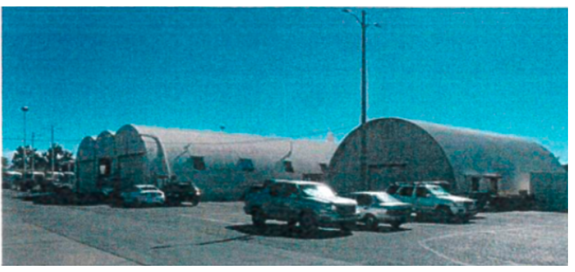
Location of the operation was one decision that slowed some of the work on design for the building. I had – and continue to – prefer a location over on Plumer. For logistics and public access reasons I feel it would have been a superior site. The old quonset huts are standing and would have needed minimal tenant improvements.
The decision was ultimately made to put the operation out at Los Reales. It’ll work there too. Although it wasn’t the city manager who was holding up an agenda item to approve the move, I finally told the him that what was most important to me was to avoid a public argument over site location, and to make a final decision so we could get on with design and building. So, Los Reales it is.
ByFusion is already receiving some of our plastic and is using it in projects both in Tucson and nationwide. They’ve had the opportunity to merge some of the Tucson plastic with ocean debris so your participation in this program is partnering with the effort to clean the mess in the Pacific Ocean. We’ve got local projects at Mission Garden, El Pueblo Community Center, Himmel Park, the Reid Park Zoo, the Children’s Museum, in front of the ward 6 office, at pocket parks scattered throughout the city, and soon several on a larger commercial scale. What we need is to finish the facility, get BF here so they can start hiring and churning out the blocks that your contributions are making possible.
What started with a small pilot program about a year ago has now grown into a ‘first in the world’ opportunity for Tucson to ‘act locally’ while thinking globally. None of it would have happened without your involvement.
May - Prop 412 – TEP Franchise Agreement
Tucson Electric Power (TEP) has a 20-year long franchise agreement (FA) with the city through which they pay us an annual fee for the right to put their utilities in our rights of way (ROW.) That agreement expires in 2026. It will be the city voters who approve an extension, not the mayor and city council. Early in ‘23 TEP asked us to put that vote on a May ballot. It got tied up with the questions that are still unresolved related to undergrounding utilities on our scenic and gateway routes. It failed by nearly 7,000 votes, 55% to 45%.
While I voted to put the measure on the ballot, some on the M&C assumed that required me to also support the terms of the agreement. In fact, I believed the FA was flawed in several areas, penned an op/ed that appeared in the Star opposing it and continue to believe that was the correct position.
The FA had all of the basic boilerplate provisions extending the agreement and extending the ROW fee they pay to the city. No problem there. And yet the community was and continues to be engaged in a heated dialogue over whether or not new transmission lines going in along Kino/Campbell should be installed above or below ground. Kino/Campbell is listed as a gateway corridor in city plans. According to our ordinances any new utilities being installed along a gateway corridor must be put underground. TEP was willing to do that, but in the FA they included a section that would impose a fee on ratepayers to cover their costs for that work. That cost-shift was just one of the problems I had with the FA.
In addition to the public conversation about undergrounding there was an equally fervent dialogue happening related to setting goals for and transitioning to renewable sources of energy. None of those goals were included in the extension of the franchise agreement. I don’t believe they should be, but having the utility agree to measurable commitments to renewables in a side-document was something the community was asking for. It still is.
The undergrounding discussion is still not resolved. TEP filed an action in front of the Board of Adjustment asking for an exemption from our local ordinance. When that was denied they appealed to Superior Court. That case is still pending. While that’s going on the utility is continuing to bring proposed new routes for their transmission line project to the public. The message is simple – they need to improve service to midtown. If they are forced to underground on one route, they’ll find another. TEP has continually resisted the notion of paying for any portion of the transmission line route to be put underground through their own resources.
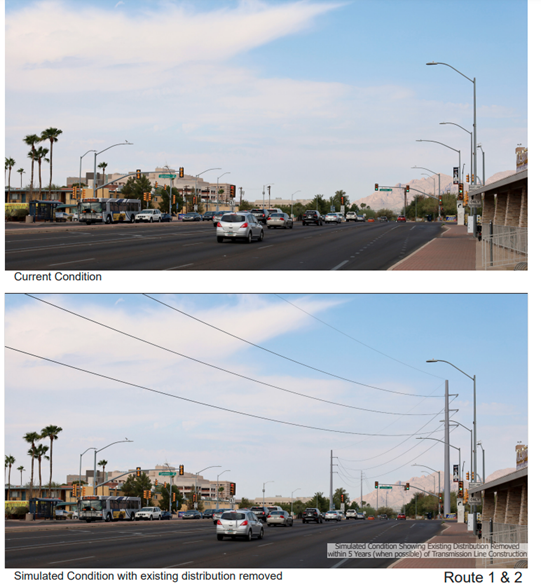
Here’s a graphic taken from the TEP website for the DeMoss Petrie project site. It shows the current condition at Campbell and Speedway, and what the visuals would become if over ground transmission lines were allowed.
Recognizing that there are likely areas along their proposed route where over grounding might be appropriate – Speedway/Campbell is not one of them – M&C approved a process by which TEP can request an exemption from the undergrounding requirement. That “Special Exception” process is still an option. TEP has chosen to appeal the decision that upholds the integrity of our local ordinance, widen the footprint of the proposed transmission line work so it avoids the gateway corridor, and continue towards getting a proposed route in front of the Arizona Corporation Commission by late ‘24.
While that is happening there has been no concrete action taken regarding an agreement that’s separate from the franchise agreement through which TEP agrees to fund and implement specific identifiable projects to accelerate the transition to renewables.
This section is about the Prop 412 vote on the franchise agreement. The utility really should keep in mind that when the public is asked again to vote on a FA, it will be thinking about both the undergrounding conflict and the need for a binding agreement related to transitioning to renewables. And the 12% rate hike TEP was just awarded by the ACC will also be front of mind. I’d like to see a FA that does not contain any new fees for undergrounding, a side agreement that spells out commitments related to transitioning to renewables, and TEP acknowledging that complying with our local ordinances is a part of them doing business in Tucson. They should be using our Special Exception process and seeking variances from the undergrounding required on scenic and gateway corridors. And for those segments that are along those corridors where we insist on undergrounding TEP should bear those costs.
You’ll have a new FA in front of you probably next year. It’d be great if it was accompanied by some or all those other items I’ve listed above.
June – PFAS Litigation
In the summer of 2018 I asked then mayor Jonathan Rothschild, city attorney Mike Rankin, city manager Mike Ortega and then water director Tim Thomure to join me at the ward 6 office for a meeting that included a litigation team that was involved with suing the manufacturers of PFAS. That is a chemical used largely for firefighting, is spec’d by the military as a mandatory component of the foam they use for fighting jet fuel fires (AFFF), and it has been manufactured and sold to the public by 3M and other manufactures since the 1960’s. That meeting was the catalyst for my bringing a study session request to M&C later that year through which we authorized the city attorney to join in litigation against 3M and others who had produced and marketed PFAS. That decision was made less than 30 days before our statute of limitations would have run out thereby preventing us from joining the suit and collecting any damages. At the time Joe Ferguson was the Star reporter covering city business. He quoted me as saying this about that suit:
“At the very least, the product manufacturers who have known the effects of what they were distributing owe it to our community to fund the cleanup, fund our lost water capacity and fund maintenance going forward of any treatment facilities we have to build in order to clean it out of our system,” said Kozachik.
“If that’s tens of millions of dollars, that’s 3M’s problem. Our ratepayers shouldn’t have to pay a penny for their negligence.”
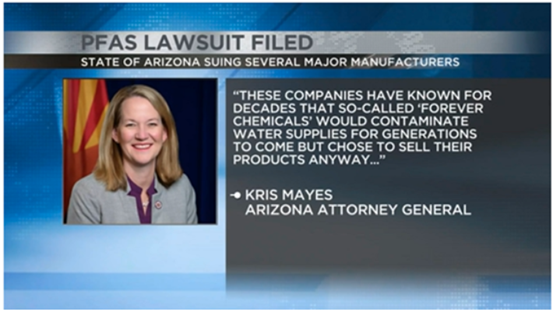
In June of this year state attorney general Kris Mayes announced that Arizona is also going to file suit against 3M and other PFAS product manufacturers. Under the previous AG we couldn’t get any support for our litigation effort from the state level. Now with the new administration we’ve got a partner in Phoenix.
In Tucson we’ve had to decommission over 20 water production wells due to excessive levels of PFAS. We’ve spent or committed over $50M in work related to containing the chemical. That includes testing, shutting down wells, and changing filters in our treatment facility. We’re installing a new treatment testing operation in midtown, near the corner of Broadway and Randolph Way. That is to test to be sure the treatment process is effective. The state department of environmental quality has been a good partner and is helping to fund that project. They’re also helping fund work out on the southwest side where water contamination has an ugly and troubling history. None of the local or state funds should end up coming from the rates you pay for water. That’s why we’re suing 3M.
Here’s a portion of the statement issued by AG Mayes in June:
While she was newly joining into the litigation process our own suit entered a settlement phase. The companies have said they’d pay more than $10B (Billion) dollars to settle the first in what will be a wave of claims against them. That’s not a sign they’ve become concerned corporate citizens. It’s because their own shareholders see the writing on the wall – as was true in nicotine cases and in opioid cases, product manufactures who pushed their toxic products into the public are being held accountable. Better to settle now and avoid the likely bankruptcy that would result if the case went to trial.
Here’s the Star story Joe Ferguson wrote about our taking that action. In it I’m quoted as saying they had known the chemical was toxic for years, and that it was 3M’s obligation to make it as though the pollutant had never infiltrated our aquifer. That’s still true.
https://tucson.com/news/local/tucson-city-council-votes-to-sue-3m-other-manufacturers-over-contaminated-wells/article_dae15cc7-14db-511f-9795-eecfb3098627.html
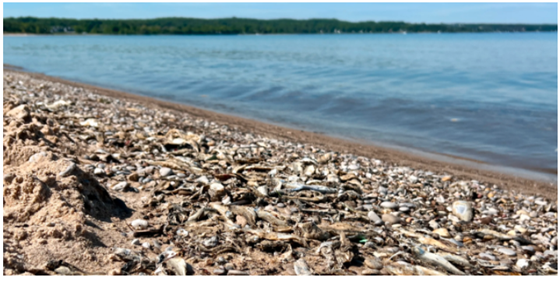
This is a picture of thousands of dead fish on the shores of Lake Huron. That’s in Traverse City, Michigan. I used to swim in Lake Huron and I vividly remember scenes like this one summer when the fishing boat we used to go out on had been cancelled. 3M and Dupont are implicated in dumping PFAS into the Lake. Traverse City is also a part of the 3M lawsuit that’s being settled.
 |
The city’s portion of the settlement is still to be determined. That’ll be a function of how many cities want to join in the settlement offer, how many want to go it alone and continue with their own litigation, and some calculation of the costs and vulnerabilities each litigant city is and has faced. We won’t know any of the actual data until mid-’24. What we can count on though is that the quote I gave to Joe Ferguson about the cleanup costs being ‘tens of millions of dollars’ will be borne out when we announce our slice of the settlement pie. This all began with that meeting in the ward 6 meeting room back in 2018. I’m grateful to Jonathan, both Mike’s and Tim for their support, advocacy and hard work on this throughout the process.
July – PACC Rats
Ok, that’s gross. It’s a mouse squeezing up through a little crack in the baseboard of a house. In July many of us in midtown got an “Introduction to Rats” crash course courtesy of Pima Animal Care Center Dawn Gouge (an entomologist at the UA,) and the state Game and Fish department.
Early in the summer the Sam Hughes list serve started getting populated with neighbors reporting seeing rats up in trees, in bushes and generally all over the neighborhood. What began as a sort of anecdotal report grew into something that deserved a better answer than to call Truly Nolan. In my first couple of efforts to get some city and/or county guidance the answer was pretty much that we didn’t get involved in things like this that happen on private property. Fair enough, but we must have some resources to at least give guidance on possible remedies.
The Pima County health folks stepped up and in partnership with Pima Animal Care Center we made some contacts who offered some possible routes to consider. One that nobody was suggesting was to lay out traps or poison. The chance for impacting other forms of wildlife, or humans was too great to encourage that approach. But PACC tossed out some ideas that we followed up on with their recommended expert from the UA, Dawn Gouge.
One idea that didn’t go very far was to get a bunch of feral cats and turn them loose on the rodents. The idea brought several downsides. Some of those included it would take a lot of cats, they’d have to first become habituated to the area – which meant feeding them – and they aren’t really choosy about what they feed on, so birds would also be a target. That idea didn’t make the cut.
Another idea that was floated early on was to use barn owls. Initially that sounded like it might fly. They’re cute and effective. But they’re effective on a relatively small population of rodents – small ones. Rats the size that was starting to appear may be too large for the barn owls so they’d either find something else to feed on, or simply leave the area and find one where the food stock was more plentiful. In addition, barn owls don’t cover a real wide territory so there would need to be several of them, and each would need an initial nesting box to be provided and serviced by a neighbor while they were getting used to the area. For those reasons, and others, Game and Fish was not supportive of that approach.
Mice and other small rodents have flexible bodies. If you’ve got daylight showing under the sweep of your door, a small mouse can squeeze under it. In the summer they’ll seek out cooler living quarters. In the winter they’ll seek out warmer ones. Signs that you might have a rodent problem include things such as seeing chewing on food packaging, fruit trees outside with fruit having been chewed on or rodent droppings around food packaging. If you have dripping water, that’s an attractant. If you’ve got date palm buds on the ground, that’s a mouse salad. Even fruit that hasn’t dropped from the tree can be a food source. So rodent proofing your yard is one important part of controlling them.
They’ll go where they have food, water, and someplace to live. Many of our older homes with lush vegetation are easy and attractive habitat for all sorts of urban wildlife, rodents included. The most effective approach is if neighbors can band together and everybody agree on an approach. Wildlife won’t hang out where they can’t eat or drink. They need a place to sleep. Cleaning your landscape and making sure there are no points of entry are important first steps. Avoid having exposed compost piles and be sure to trim branches so they’re not in contact with your roof. Doing that neighborhood-wide is the key.
We had a full house gathered here at the ward office when Dawn came in for her presentation. The takeaway – rodents are a part of the urban wildlife landscape. We’re not going to get rid of them. But to an extent we can control where they thrive. And each individual homeowner can play a role in that approach.
August – Housing Affordability
According to groups such as Southern Arizona Homebuilders Association the city lacks roughly 4,900 housing units. The simple supply/demand calculation is one factor in escalating home costs. Another is out of state investors who buy single family or multifamily properties and use them as rentals. In Arizona local jurisdictions cannot impose rent controls of any kind. So, we’re a happy hunting ground to investment groups who don’t have to look the person in the eye who they just jacked up rent on and tell them they need to leave. While the city can’t unilaterally solve the housing crunch, there are things we can and should do to address the housing stock. We began that effort in August.
Here’s the motion that we adopted unanimously:
It was MOVED by Council Member Dahl, duly seconded to direct staff to address the barriers to development of additional housing options through the use of tiny homes in two phases. First, staff shall take near term action to address the urgent need for shelter capacity by implementing a pilot program at city-owned Fire Station 8 that will concurrently explore micro-shelter options while working towards a PAD with ample community and stakeholder engagement. Second, staff shall include tiny home considerations in the ongoing work already directed by mayor and council to address the housing affordability emergency in Tucson.
The rezoning at the fire station is a nice start. But it’s also a signal that we need code changes if we’re serious about housing affordability. What’s proposed to happen at Fire Station 8 is a rezoning to allow several tiny homes to be placed on that lot. The fact that we have to go through an extensive and costly rezoning makes the point – our codes need to catch up to both the need for housing that is affordable, and recognize that there’s a market now for living structures that didn’t exist when our codes were first adopted.
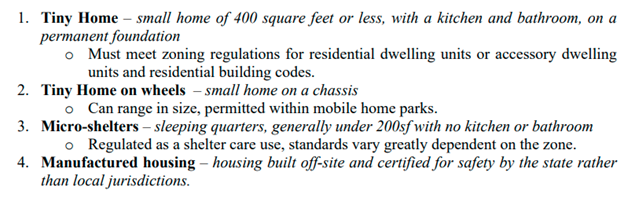
I supported the motion largely because of the last sentence. We’ve already got a process in place whereby staff is exploring ideas to facilitate things such as tiny home villages without having to go through extensive rezoning processes. One of the first challenges the city has to confront is how we define certain types of housing. Here’s what’s in our existing codes:
Our codes were drawn up decades ago when nobody was considering living in a house of say 500 square feet. And the notion of ‘housing affordability’ wasn’t a topic of widespread concern. So our codes reflect the times in which they were adopted – which does not reflect our current reality. Those are points I made during our study session discussion. The pilot project is nice – it's not enough.
Staff has said that we have the tools in place within our existing codes to allow for clusters of small living units. They’re right. But those tools are expensive and time-consuming processes that when they’re done the whole notion of affordability is out the window. I’ve suggested homogenizing those definitions so we aren’t being so restrictive in where clusters (villages?) can be developed.
There are complexities in our codes that I pointed out need to be addressed. For example, we over-define and therefore over-regulate where particular housing products can go. We need to review what a ‘shelter’ unit is, differentiating between congregate shelters and non-congregate shelters, look at the number of residents allowed and site use for things such as minimum lot sizes, setbacks, parking and that sort of thing. A few examples I offered include these:
- Right now, our codes call a tiny house with a sleeping loft a 1-bedroom unit. That means we require more parking than if it was considered a studio. That designation should be an easy change for us – it's a studio.
- Right now, if we have more than 2 units on a site, we designate the development as commercial. That kicks in commercial building codes which are more appropriate for a real business than for say 5 tiny houses sitting on a single lot. We should remove that commercial designation when we’re talking about a small tiny home village. It’s residential.
- Right now, if a project has shared parking, we call it a condo. That adds liabilities to the general contractor, which is resulting in few, if any projects being built that don’t have individual parking assigned by the unit. A community parking arrangement is still residential – our codes can reflect realistic parking requirements and eliminate the condo designation.
- The impact fees we charge for tiny homes is a significant cost item for builders. We should be able to look at the actual ‘impacts’ of say a 120 square foot tiny house that has no plumbing and price that accordingly.
- We don’t require EV charging stations, greywater hook-ups and solar readiness for remodels of ADU’s. We shouldn’t require that for tiny home villages either.
What I suggested at the end of my comments during the study session was to consider beginning the process of tackling all of this by initiating an overlay. It’d be better to simply do a text amendment (amend the existing codes) that captures all of what we’re trying to achieve. Something such as an amendment saying “in all areas designated R2, R3, industrial, or mobile home zoning allow for small home development (to be defined) up to some # of units, address required parking, setbacks, open space and other requirements, allow for shared amenities such as shared laundry, kitchen, restroom facilities (so we’re addressing the ‘shelter’ restriction,)” - my intent in doing it this way is to put into code some by-right housing options where we’re already allowing multi-family development, but where our existing codes define the village clusters out of the conversation without rezoning processes.
These code changes are not exclusively intended to address our homeless situation. Right now, far too many people simply can’t afford an entry-level house. They’re north of $300K – not something that’s easily attainable. And we have no control on what landlords do with rent escalation. So those code changes are intended to allow points of entry to home buyers who are right now hostage to landlords and rent hikes. And yet our homeless population is also captured in some of those solutions. A non-congregate tiny home village that has shared amenities is right now not an option by right in our codes. It should be one of the changes we implement.
And as to our homeless population, the notion that our housing first model is the only approach we should be investing in is tired, and not working for the majority of our unhoused population. I’ve long been advocating for a tiered approach in which we allow for safe parking in designated locations and safe camping in designated locations. We’re finally beginning to hear others at our M&C table use the phrase ‘tiered approach.’
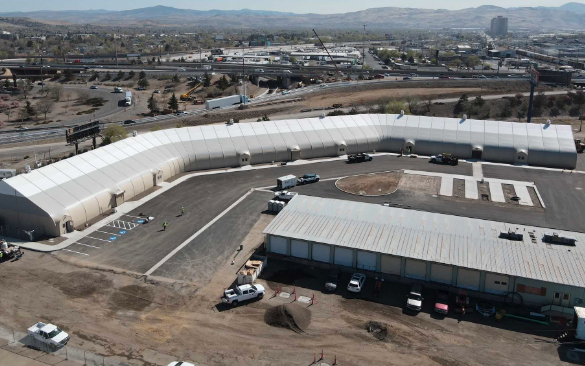
The city of Reno just cut their homeless number in half by creating what they call their “Nevada Cares Campus.” Here’s an aerial of it:
They house 600 people in a giant tent and associated sleeping quarters – tiny houses. I’ve continually received only push back from M&C on advancing ideas such as safe camp sites where we provide a water source, porta-john, social services and police oversight. We will do a better job of addressing the needs of our homeless population and the community when we act on the reality that ‘homelessness’ is not a monolithic term that can be used to define anybody you see on the street. Different approaches work in different individual circumstances. Our current approach doesn’t reflect that reality.
Here’s a good piece KOLD ran on Christmas Day. https://www.kold.com/2023/12/26/homeless-numbers-climb-during-holidays-search-different-strategy/
September – Microgrids
When I proposed a microgrid project to city staff it was intended to begin the conversation about how the city can invest in stand-alone solar power supplies, take the load off from the TEP grid and make some of our critical infrastructure facilities invulnerable to power outages. Kevin joined me in presenting this idea to the M&C. On paper it was a proposed 15-mile route along our high capacity transit corridor that runs from roughly Stone and River out to the airport. But embedded in that large footprint are several opportunities to cherry pick sites to demonstrate the value of microgrids.
Microgrids are in use all over the world. In remote areas of the middle east they’re used to supply power where larger utility options don’t exist. What I made clear to staff was that I didn’t expect them to bring us back a fully baked 15-mile transit corridor grid. Instead, find sites along that route where we can follow a crawl-walk-run approach, starting small to demonstrate the value of the program, and build from there. In our September meeting we gave direction to start with the Donna Liggins Center – a community center in ward 3 that also serves as a cooling center for people during the heat of the summer. It lost power during our monsoon this past year and was down for about 3 days. Had it been on its own power we wouldn’t have had to shut down a cooling center.
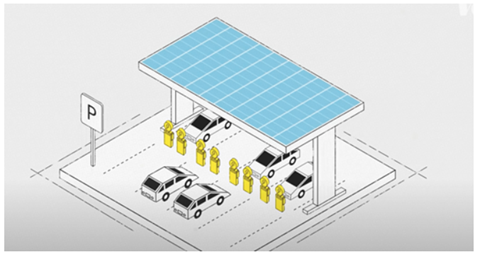
Microgrids can serve a multiple of functions. This one for example is powering some EV stations. We might also look at using them to provide backup power for our water pumping stations. In the event of a power outage or a rolling brown-out, we still need to get water to you. And we have a cooling center in each ward – build from the Donna Liggins start and get them all on a microgrid.
 |
The folks at TEP are quick to point out that the limiting factor in a microgrid is storage capacity. They’re right. I’ve suggested to them that partnering in this work would benefit them in several ways. One is to the extent we’re not relying on their grid for some of our power, it reduces their need to expand. Another is we all benefit from mutual research and development into the battery storage field. Let’s do it together. Yes, we’d want them to help fund it. And finally, while the community works through the frustration of the transmission line undergrounding and a franchise agreement that lacks specifics on how the utility is investing in renewables, seeing them partner with us on the microgrid work would be something tangible they could point to. And with the recent announcement of a major battery research/production facility opening in Tucson there are other private sector partners we should tap into.
In its infancy any technology is more expensive than once it is fully developed at scale. But somebody needs to be a leader. That can and should be us. We’re doing it through the glass reuse program that’s now up and running, we’re doing it with the plastics reuse program we’ve just about got in place, and there’s no reason we can’t be leaders with the development of microgrids to help power some of our important city services, take the load off from the TEP grid and let others follow our lead once again. We’ll be looking for a progress update on the Donna Liggins proposal early in ‘24.
October – 6th and Campbell Development
In the fall of 2022, I asked the council to vote to deny a rezoning request for the SW corner of Campbell and 6th. The vote was to send the design team back to the drawing board and come back with a new proposal. According to our zoning rules if we deny a rezoning request the developer cannot come back for a new vote for at least a year unless there is a substantial change in the proposal. In this case, through the good faith work of all parties involved we ended up with a superior product that has broad support.
The project is multifamily development coupled with some retail. When this first came to M&C there were multiple areas of disagreement. Those included the heights, type of liquor license, hours of operation, parking, low income housing, student housing and traffic mitigation within the neighborhood. We had a lot of ground to cover in the reconsideration, and everyone came to the meetings with a serious intent in finding a way to Yes.
One of the big pieces included in the rezoning we just adopted for this site is disallowing student housing. This is the section where that’s addressed:
There will be apartments, a hotel, office, parking and retail. But none of that will be renting rooms by the bed as is typical with the student housing developers who populate the Tyndall/Speedway area.
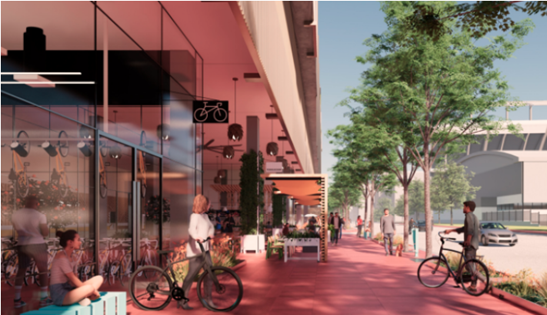
Here’s a rendering of what the retail component may look like:
Both sides agreed to some height restrictions that are lower than what were originally being proposed but are taller than what many of the neighbors originally felt comfortable with. That’s how compromise works. There was give and take with respect to hours of operation and the sale of alcohol. The developer is making a significant direct donation to the city Housing Department dedicated to housing assistance or affordability. I’m working with him now on the possible purchase of a city-owned parcel that could fill that need. The property owner is also making a sizable donation to the Rincon Heights neighborhood to address traffic mitigation efforts. That, along with other items not germane to zoning conditions are found in a Community Benefits Agreement that was signed by both the developer and the neighborhood association prior to our vote.
We began working on this corner and its rezoning about 5 years ago. At times many of us felt frustration – feathers got ruffled, but in the end the greater good was found in coming together and meeting on some common ground. Thanks for that are due to the property owner Scott Cummings, Rincon Heights neighbors, Rory Juneman from Lazarus & Silvyn, and Tim Kinney from Kinney Law AZ.
In January I’ll be bringing a similarly difficult rezoning to M&C for approval. It’s the Capstone project slated for the SE corner of Speedway and Euclid. A very similar series of meetings, disagreements and hard work to find common ground took place with that project. I’m anticipating we’ll get that one across the finish line early in ‘24.
November – Multifaith Forum in Support of Democracy
Those of you who follow the work my staff and I are involved with know that we have a lot of contact with refugee groups representing multiple faith traditions. In today’s political and international environment bringing people of differing backgrounds together is navigated carefully. In November I was proud to take part in an event that intentionally included a broad cross-section of faith traditions, some of whom are in conflict internationally. It was important that we show we can set aside differences and come together in support of some common values.
|
Congressman Ron Barber and former newspaper publisher Don Henninger are the Arizona lead for the Carter Center sponsored Democracy Resilience Network. It’s a group dedicated to ensuring safe and secure elections and is right now active in 4 states. Arizona is one of them, and Tucson hosted their second large gathering.
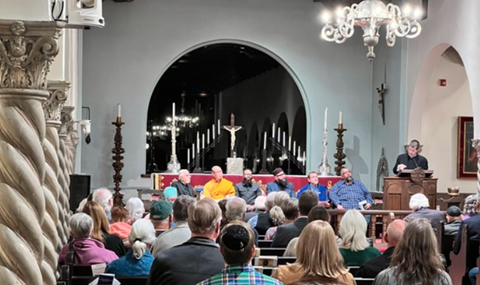
St. Phillips in the Hills Episcopal church was host for the event. As you can see, we had a full house for this important celebration of democracy.
The timing was key. Not only are we on the cusp of the 2024 national and statewide elections, but internationally there’s conflict all over. Russia is well over a year into its invasion of Ukraine. Wouldn’t it be great if a simple ‘cease fire’ Resolution was enough to bring Putin to his senses? And in the middle east the October 7th hamas attack on Israeli civilians has led to the prolonged fighting in Gaza that continues even today. And our own domestic political situation is divided and bitter. In the midst of all of that we had Christians, Jews, Muslims, Sikh, Buddhist, and a representative from the Pasqua Yaqui Nation on the dais speaking in support of the importance of free and fair elections.
The Democracy Resiliency Network has 5 guiding principles; ensuring each election follows an honest process, campaigns are conducted in a civil manner, voting is secure, there’s fair oversight, and that outcomes are trusted by the broad community. It was great to see Pima County Supervisor Rex Scott, County Recorder Gabriella Cazares-Kelly and County Attorney Laura Conover all in attendance to support those values. And most importantly you can see the community filled the pews. Thank you for being a part of that.
Diana, Dora and Nadia from the ward 6 office all came and took part. We’re all grateful to Ron Barber for inviting me to share some music and be a part of the event preparations. And all of those involved are grateful to Reverend Robert Hendrickson from St. Phillips for opening their doors and hosting this important event. It’d certainly be great to see the Resiliency Network message spread as this election season unfolds.
December – Randolph Park Reimagined
In the city, Golf is what’s called an enterprise department. That means it’s supposed to financially carry its own weight. For years, largely while it was being run by city staffers it ran a deficit. At the urging of the then council member from ward 1, and now mayor golf has climbed out of the deficit and is now making money. The primary reason for that is we’ve contracted with a private golf management team from OB Sports. To their credit they’ve turned the enterprise around.
The city owns 5 golf courses. Silverbell and El Rio are on the west side, Fred Enke is on the east side and Randolph North and Del Urich are at the Randolph Golf Complex in Reid Park. The only 2 courses out of those 5 that make money are the two at Randolph. They carry the enterprise budget and with their success the enterprise is barely breaking even.
Along comes an idea to carve those two courses up and create a ½ mile walking path from Alvernon over to Randolph Way. The M&C voted 6-1 in December to continue the process of designing and exploring that concept. I voted against it. Here’s why.
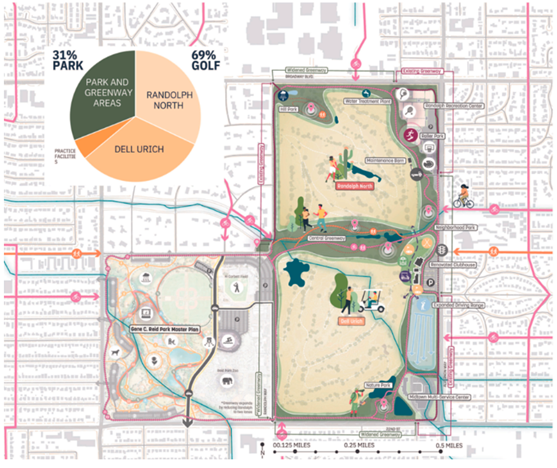 |
If you look at this graphic, hidden beneath the bubble showing the percentages of golf vs park space is Colonia Solana neighborhood. What’s not shown in the picture is all of the neighborhoods in midtown that are downstream of Randolph, the neighborhoods and businesses over by 4th Avenue and downtown. That’s an important point because prior to a $12M renovation of Del Urich that took place back in the ‘90’s, all of those areas were flooded during our monsoons. The Pima County Flood Control District sponsored a project along with the U.S. Army Corps of Engineers through which over 400,000 cubic yards of fill were removed from the golf course and a series of water detention basins were created. If you walk the course, you’ll see significant hills throughout it. The driving range is essentially a detention basin. Any change to the topography of that area will require approval from both Pima County and the Army Corps. Getting design documents to them, and their approval process will take several years. The M&C just said we should have ‘phase 1 done in about a year.’ That’s not true.
So what’s ‘phase 1?’ That’s a remake of portions of Del Urich to allow for a more pleasing multi-use path experience. The David Bell path right now is right up against Alvernon, 22nd Street and parts of Broadway. The M&C believe we can take portions of the golf course and pull the path away from the roadway. I support that goal. But saying we can do it outside of any broader design and approval process is simply not reality.
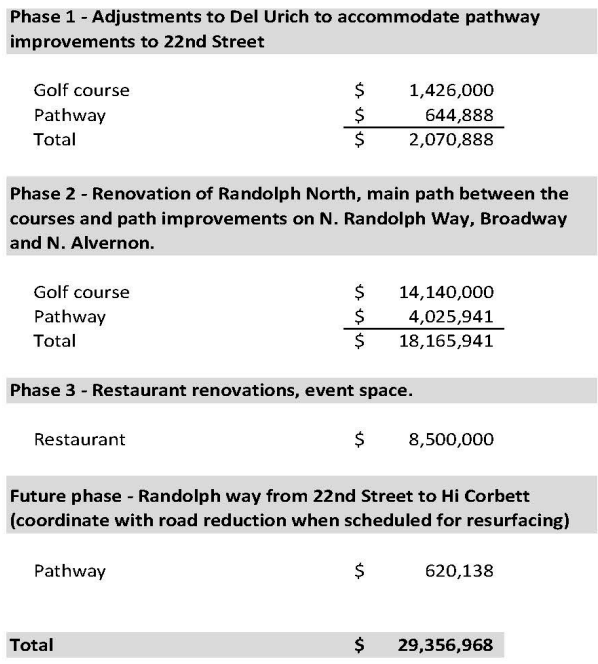
Here’s the phasing of the motion that was passed:
Through Proposition 407 we are committed to spending just under $5M on irrigation upgrades to the Randolph Golf Complex. What M&C are suggesting is that we can carve out $1.4M of that and do irrigation upgrades to Del Urich in a way that allows for the new multi-use path. That’d be great except for the fact that until we know the extent of the proposed full redesign of the golf courses we won’t know where that irrigation is needed. And the$644K earmarked for the pathway won’t be enough to cover design, and construction. We’re starting out in the hole doing a project that will affect the only part of our golf enterprise that’s not in the hole.
Then comes the idea of slicing the walking path between the two courses. What’s shown on the graphic will eliminate or significantly impact 8 of the existing holes. It will impact existing old growth trees. It will impact existing urban wildlife corridors. And changing that topography will require extensive new civil engineering work to assure we’re not putting thousands of residents and businesses back into a flood plain. We don’t have the money; the final design is fraught with issues and the goal is simply to cut a ½ mile path through the middle of the golf courses that are keeping the enterprise financially whole.
A carrot that’s being dangled out for the golfing community is the promise that we’ll be creating a new championship course with what remains of the golf complex. Right now, Randolph North is about 6,900 yards. The UA just moved to Tucson Country Club – that's a 7,900-yard course. That course is marginally attractive for collegiate tournament play. We’re proposing to reduce the footprint of our course and expect it to compete for major tournaments against the resort courses in Marana and Pima County that are now hosting professional golf each year. You cannot reduce the size of the course, include spectator circulation space, room for restrooms, concessions, tents, gallery viewing and grandstands and think you’re going to have anything close to a ‘championship course.’ One of the council members says he plays golf. At least he should have known better than to buy into that idea.
Also shown on the concept we just advanced is an $8.5M upgrade to the restaurant that’s out at Randolph. The Doubletree is right across the street. They’re in the process of renovating the Javelina Cantina. It won’t cost them anything close to $8 million dollars, and they won’t appreciate the competition from the public sector if the city ever does pull off this effort.
The concept also calls for reducing the width of Randolph Way. I’d invite the mayor and council to attend a baseball game or a large zoo event and see what the outgoing traffic looks like. Putting what is essentially a residential street on a diet when it’s expected to carry thousands of event-related vehicles isn’t something anyone on the council would support if it were proposed for their own neighborhood.
If we want to turn golf space into public multi use space, we’ve got plenty of opportunity at the 3 courses that lose money. Doing that could help the enterprise. But carving up the golden goose is not an appealing option – at least in this council office.
In Closing - 2024 Loved Ones
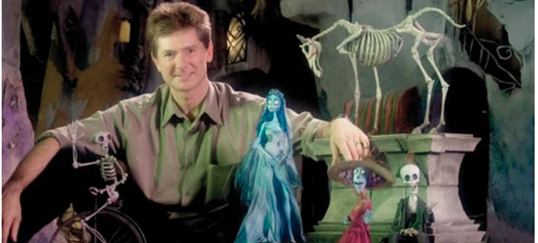
In September I lost my brother Pete to conditions associated with Aphasia. In December I partnered with the Loft and Friends of Aphasia on a screening of Nightmare Before Christmas, the movie in which Pete received a nomination for an Oscar for his work as Director of Photography and special effects coordination. The proceeds went to support the work of Friends of Aphasia. Since that event I’ve heard from some of you who are familiar with and have lost their own loved ones from that condition. It’s a sad and cruel way to leave this place.
Pete Kozachik on the Corpse Bride Set
You can learn more about that condition at the Friends of Aphasia website www.friendsofaphasia.org If you Google Alzheimer’s or Dementia care you’ll see lots of references. Ignoring it isn’t a vaccine against it happening in your family.
I’m grateful to Cathie Batbie, Sean Mooney and Eric Fink from KVOA who ran this very nice spot about Pete – I’m grateful to the station technicians for putting it together: Oscar-nominated cinematographer Pete Kozachik passes away
As I was reflecting on Pete’s death it struck me that our community and many of you I’m familiar with have also suffered the loss of a loved one during this past year. I can think of John C. Scott – multi decade radio talk show host and former Arizona state senator. Donovan Durband – Park Tucson director and one of the first people I hired to work in the ward 6 office. Billy Sassi – multi decade long parks worker. Mel Zuckerman – founder of Canyon Ranch. Barbara Escobar – Pima County Department of Environmental Quality. Bill Buckmaster lost his wife of 51 years. Ben Tuchi – former VP for finance at the UA. And each of these friends lost a loved one; Gabi Rico (Arizona Daily Star,) Chris Tanz lost Jean Paul Bierney (neighborhood advocate,) Pat Hamilton from the AGI team lost a loved one, the community lost the founder of the west side Friday Night Open Mic Jam Ray Armstrong, Thomas Aguilara (liquor license attorney) lost a loved one, Priscilla Storm (Diamond Ventures) also lost a loved one, Phil Swaim (architect) lost his dad, Yolanda Herrera (Unified Community Advisory Board chair) lost a loved one, Jeanette Mare (Ben’s Bells) suffered a loss in her family, Bill DuPont (neighborhood activist) had a loss, and Jan Vasilius and Ann Charles of the Kaimas Foundation lost local art and memorabilia collector Kathy Gilson Snow White. That’s just a list of people I know who come to mind. This newsletter gets a lot of views – I'm sure many of you can reflect on a similar loss you suffered this past year. It’s a club none of us want to be members of, but many of us are.
Thanks for your support of the work this office is involved with each year. As important as it is, none of it is as important as staying close to those you love. That’s our ward 6 team hope for you as we open 2024.
And do us a favor by helping to keep the ward 6 recycle center clean throughout the coming months. Thanks.
Sincerely,
Steve Kozachik
Council Member, Ward 6
ward6@tucsonaz.gov
City of Tucson Resources
|