|
|
I’m excited to announce that Tucson has been awarded a $50 million Choice Neighborhoods Implementation (CNI) grant from the U.S. Department of Housing and Urban Development (HUD). This highly competitive grant supports our effort to create more than 550 new or rehabilitated housing units, establish an extensive support system for residents in Tucson House, and strengthen ongoing public investments in the 2.3 square mile Oracle Road and Miracle Mile area known as Thrive in the ‘05. The $50 million grant enables the City to leverage federal funds for an additional $300 million from public, private, and non-profit sources.
The City’s grant application was guided by the community-driven vision for the Thrive in the ’05 Transformation Plan (https://thriveinthe05.tucsonaz.gov/), which Mayor and Council adopted in 2022. It is designed to strengthen businesses, assist struggling neighborhoods, provide social services to residents, and reduce crime in this area located in the 85705 zip code.
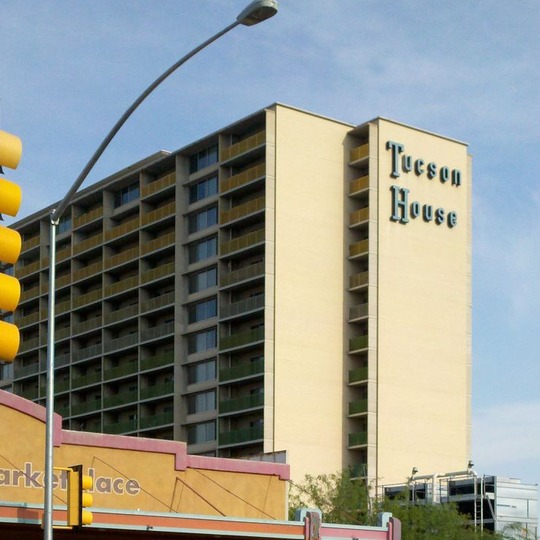 Photot of the Tucson House by Cactus4u - Own work, CC BY-SA 3.0, https://commons.wikimedia.org/w/index.php?curid=24317851
The rehabilitation of Tucson House, the City’s largest public housing facility with 408 units in 17-stories, is the heart the grant. Built as a luxury apartment in the early 1960s, the building suffered from hard times, was acquired by HUD in the 1970s, and then given to the City for public housing. After all this time it needs major improvements. Tucson House Resident Mike Edmonds (and part-time Ward 3 staff) said, “This grant shows that the City truly cares about Tucson House residents, and they haven't been forgotten. We're excited to see our home transformed into a modern city within a city."
 Tucson House Resident and Ward 3 part-time employee Mike Edmonds.
The project will also increase the inventory of mixed-income and affordable residential units in the surrounding area through three new developments in a partnership between the City’s Housing and Community Development (HCD) department and Gorman & Company, a national affordable housing developer. The work will offer robust, on-site services including wrap-around case management for current Tucson House residents and increase the availability of high-quality health and educational services across the neighborhood.
Specifically, five critical community improvements will take place on top of the investments already committed in the Thrive area. Those projects are a homeowner preservation program, enhancement of the Drachman Gateway as part of Pima Community College’s hub, improvement and beautification of the North 15th Avenue corridor, support for additional retail and commercial visual exteriors, and development of a new commercial kitchen/food incubator space and community kitchen to provide training and increase food access. In addition, HCD will apply Community Development Block Grant (CDBG) funds in the area for additional neighborhood improvements including a health clinic adjacent to the Tucson House.
Going forward with implementation, key partners will include Pima County, United Way, Community Food Bank, Pima Council on Aging, ASU School of Social Work, ASU OCHER, Beacon Group, Sun Tran, Pima Community College, and the Pascua Yaqui Tribe.
The grant is the direct result of the hard and talented work of Tucson’s staff and our community partners, the vision of Mayor and Council, strong support from our Congressional delegation, and input from neighborhood residents. Many thanks and congratulations to all.
-Kevin
|
|
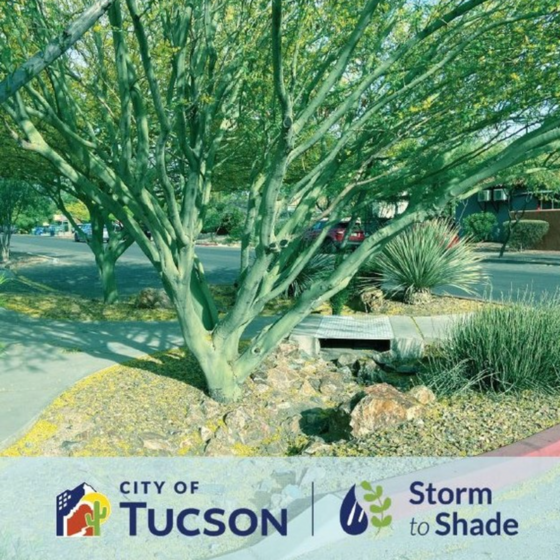 An example of one of the Storm to Shade projects in Tucson.
On Tuesday, July 17, 2023, Mayor and Council officially approved fund expenditures for three Green Stormwater Infrastructure (GSI) projects, including one in Ward 3. The Storm-to-Shade program, which is part of the City of Tucson Water Department, manages the design, construction, outreach, and maintenance of the City’s GSI projects. The Storm to Shade program was started as a pilot project a little over three years ago and recently adopted by Mayor and Council as a permanent program. It is funded by a small charge on all Tucson Water customers inside the City limits. The average fee is less than $1.00 per month and is tied to a customer's consumption, meaning the more water you use, the more you pay. That money is then used to construct water harvesting basins that collect stormwater run-off to grow desert-adapted and native trees and vegetation. The vegetation (Green) and basins (Infrastructure) provide shaded walkways which lower localized temperatures and reduce the heat island effect. Additionally, native vegetation creates bird and pollinator habitats. We also know that trees and vegetation act as carbon captures that help clean the air.
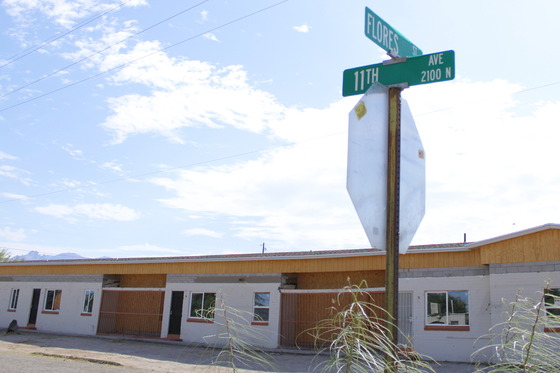 The intersection of 11th & Flores.
All this to say, we are excited for our first Storm-to-Shade project in Ward 3. It will be located at the intersection of 11th Ave and Flores St in the 85705 zip code. This neighborhood intersection was recently closed to vehicle traffic in an attempt to reduce drug and prostitution-related crime. The Ward 3 office decided to invest some of its Storm-to-Shade allocation to the area to help with beautification and much-needed greenery.
We are excited to see construction start and we are even more excited to share pictures of the completed project!
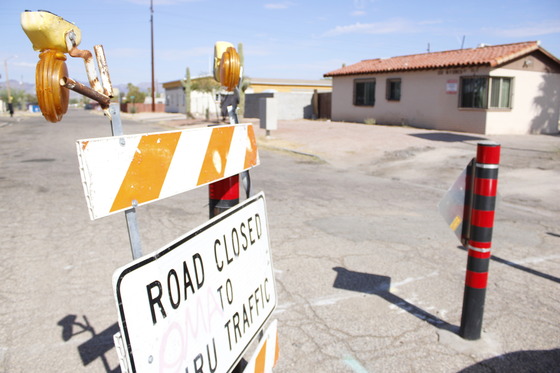 One of three traffic blockades used to curb crime in the neighborhood.
|
|
|
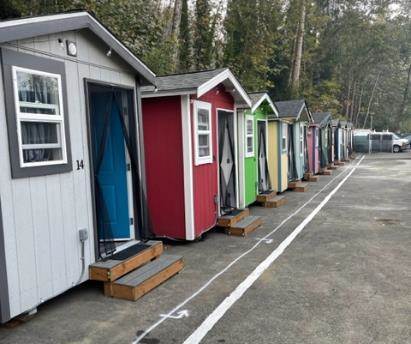
A tiny home village in Washington built by The Hope Factory. Photo by Dave Gamrath.
During the last Mayor and Council study session, Council Member Dahl along with Councilmember Santa Cruz and Mayor Romero requested a discussion regarding potential revisions to land use and zoning code to allow for easier implementation of tiny homes in Tucson. The word “tiny home” is used in a variety of ways, and so part of that discussion consisted in providing direction to the city’s Planning and Development Services Department to return with recommendations for consideration at a future meeting.
A memo from PDSD outlines three distinct definitions of tiny homes as they can be used in our community:
1. A small home (full dwelling unit) on a permanent foundation – must meet zoning regulations for normal residential dwelling units or accessory dwelling units and residential building codes.
2. A small home on a chassis or wheels – these are regulated similarly to mobile homes and/or recreational vehicles.
3. A sleeping quarters (generally under 200 square feet, with no kitchen or bathroom) – these are regulated as a shelter care use in most zones and the regulations can vary greatly dependent on their location.
As the memo points out, the Unified Development Code (UDC), regulates homes by land use and not by construction type. “So depending on how it is used, a ‘tiny home’ could be single-family residential, multi-family residential, an accessory dwelling unit, a sleeping quarters, or a shelter care use. Each of these uses have different standards.” Each of these plays a role in addressing the connected crises of housing affordability and homelessness. They each call for different regulations and so they each will need to be addressed separately.
The first is already legal in Tucson. If you want to build or buy a fully functioning house with a bathroom and kitchen that happens to be very small, Tucson code does not preclude that in every residential zone (R1, R2, R3).
The second kind of tiny home, much like mobile homes, are not allowed in residential zones, but are allowed in our mobile homes zones (MH-1 and MH-2) or as a recreational vehicle use.
The third kind of tiny home, however, is challenging to site in residential zones because they are considered a shelter care use when placed on a site in a village model for transitional housing.
As Council Member Dahl articulated during the discussion, our office is especially interested in finding ways to allow the third kind of tiny home as an important part of our fight against homelessness. The Ward 3 office has been in communication for months with two non-profits who specifically want to build tiny home villages, where each has communal kitchens, bathrooms and social space, but the tiny homes themselves are under 100 square feet, and mostly for sleeping and keeping out of the elements.
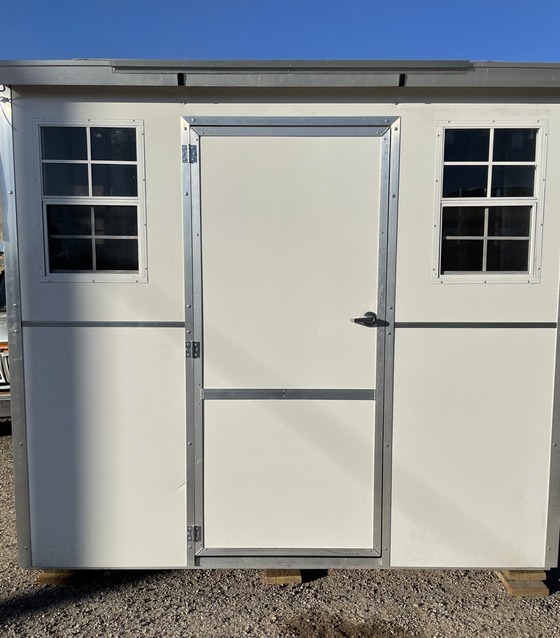 Sleeping quarters building used for sheltering the unhoused.
Hope Factory began as a nonprofit in Seattle, and has been spreading around the US, with a number of volunteers here in Tucson hoping to establish this model locally. Volunteer labor is used to build tiny homes based on blueprints and plans shared by architects based in Seattle. These architects work with each community to adapt these homes to the very different communities they serve. These one-room homes are wired for electricity, and have cooling systems, but are not set up for running water.
The Homing Project uses a similar size and style of tiny home (one room with electricity and cooling, but no water), but rather than build them with local volunteers, this nonprofit buys pre-fabricated homes from a company called Pallet Homes, which is also based in Washington. These homes are easy to assemble and are also easy to take apart and move as needed.
For both of these groups, having communal kitchens, bathrooms, and other shared spaces is not just a way to save money, but also part of a larger plan to help build community among folks who often have been isolated through the terrible ordeal of being unsheltered. The idea is to help integrate folks back into social situations, and prepare them for integrating beyond the tiny home village.
Mayor and council were overwhelmingly in favor of revising our UDC and our building codes to add these tiny home villages to the Tucson landscape of affordable housing and shelter. Next month, PDSD will come back with recommendations and continue the conversation with a discussion of potential challenges and ways forward.
The Ward 3 office will be displaying a Pallet Home owned by The Homing Project between Monday, July 31st and Saturday, August 5th.The Homing Project will have volunteers on hand to show the home and answer questions about it between 9am and 7pm on those dates. We invite residents to come by and see it for themselves. For anyone who has questions and is not able to come by, feel free to email our office.
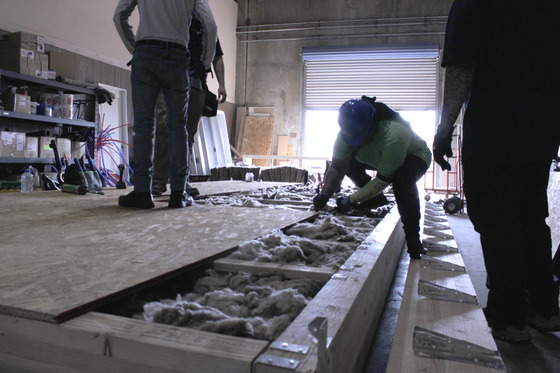 Construction workers building a platform for a tiny home.
|
|
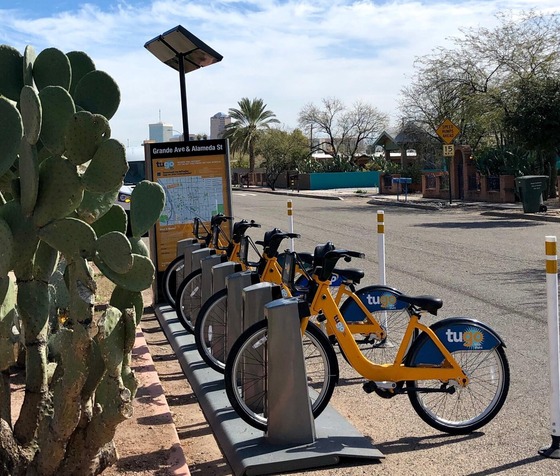 TuGo bikes parked at a TuGo station.
It’s hard to think about riding a bike when it's 109 degrees out but the more cars on the road, the hotter our days will become and since this last week was the hottest ever recorded, that’s food for thought…According to the USDOT Bureau of Transportation Statistics, 52% of all daily trips taken in 2021 were less than 3 miles. If we could replace half those vehicle trips with an alternate form it would make a huge impact.
Perhaps you’ve noticed the yellow bikes around town? Sturdy and bright, the TuGo Bike system is city owned. Bike share systems have popped up in cities around the world for decades to support micro-mobility - the ability to go short distances, on low impact vehicles, usually bicycles and scooters. Tucson set up Tugo in 2017, has 330 bikes and 41 stations throughout town. To date, 103,435 trips have been taken since the launch with 14,834 trips taken in 2022 alone. Tucson also has an e-scooter program, with bright orange electric scooters owned by Spin which are permitted to operate in the City limits.
Ben Elias, a lead planner at the Department of Transportation and Mobility recently visited the Ward 3 office to discuss this city resource and explore ways of increasing their use.
“Operating e-scooter and bike share is a great way to provide safer, less-expensive, more equitable and sustainable mobility options across Tucson. Systems like ours can contribute to a healthier, more vibrant and resilient community and act as an essential service like public transit. It also compliments other ways of getting around, folks may take a bike or e-scooter on just that first or last mile of their trip and arrive safely and efficiently,” Ben shared.
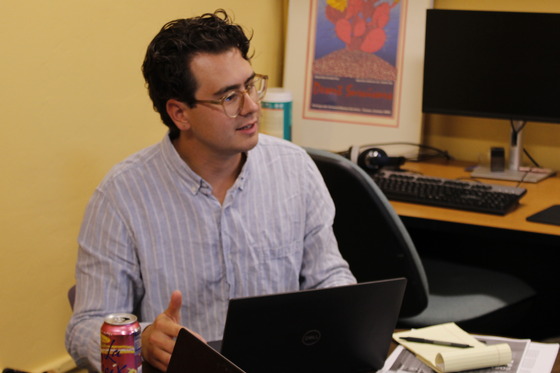 Ben Elias, Lead Planner with the Department of Transportation & Mobility.
Ward 3 currently has 4 TuGo bike stations; at the southeast corner of Pima Community College Downtown Campus, Park Ave and Lester St, Mountain Ave and Copper St, and Campbell Ave and Copper St. To use a bike you can download the PBSC app on a smartphone and create an account or you can go to a docking station with a kiosk and use a credit, debit, or prepaid card.
Once you pay your bike is unlocked from the dock and you can be on your way. Your ride must also end at a docking station. The Pay as You Go is $1 to unlock and 0.25 cents per minute of ride time. There is also a monthly option for $18, an annual pass for $80, and a Tugo for All yearly pass for $5. That last option is for those already enrolled in SNAP, Medicaid or SunTran Economy fareplan.
In our meeting with Ben we discussed ways to make the bike share program more accessible and functional for a wider audience. We do not currently have the funding to add more bikes/docking stations so we are looking at low-performing stations to move around. We are also discussing adding more robust baskets so people can take a short trip to a grocery store or run errands.
For transportation, convenience or enjoyment, the city and your neighborhood looks different on a bike and our bodies feel good when we move them. There are many reasons to ride a bike and even more reasons for the city to make them accessible for all (or more, at least!)
 The Ward 3 staff Shannon, CJ, Council Member Dahl and Mike riding TuGo bikes during the Downtown Parade of Lights in 2022.
|
|
 Rhubarb /ID#A810969
Age:3 months
Qualities:
Rhubarb, better known as "Roo," is a special little kitten. Roo came into PACC in May with his back legs paralyzed. He has been in foster with a PACC staff member since. He needs a little help with going potty but is an otherwise normal, silly kitten who enjoys affection, wrestling with his kitty buddies, and chasing toys.
Fee: Rhubarb has a $0 adoption fee. Adoption includes spay or neuter, age-appropriate vaccinations, microchip, and a free vet visit.
Contact: Rhubarb is currently in foster. If interested in adopting him, please email pacc.adoptafoster@pima.gov.
Fee:
Harvest has a $0 adoption fee. A $20 license fee applies to adult dogs. Adoption includes spay or neuter, age-appropriate vaccinations, microchip, and a free vet visit.
Contact:
Pima Animal Care Center, 4000 N. Silverbell Rd.
Monday, Tuesday, Thursday, and Friday, 12pm - 7pm.
Wednesday 1:30-7pm. Saturday and Sunday 10am - 5pm.
|
|
|
Fort Lowell Corridor Crime and Safety Meeting
Tuesday 8/15, 5:30 – 6:30 pm
AGM, 3544 E. Fort Lowell Rd.
Meeting info and North Dodge Website
The Ward 3 office is open open at 1510 E. Grant Rd. from
9 am - 1 pm, Monday through Friday. Staff will answer phone messages, emails and requests for meetings by the next business day. Leave your message at 520-791-4711 or email ward3@tucsonaz.gov.
Our office is closed on the first Friday of every month for staff training and development. Feel free to reach out to us via phone or e-mail our staff will be working remotely.
|
|
|
Ward 3 Is Accepting Donations for the Iskashitaa Refugee Network!
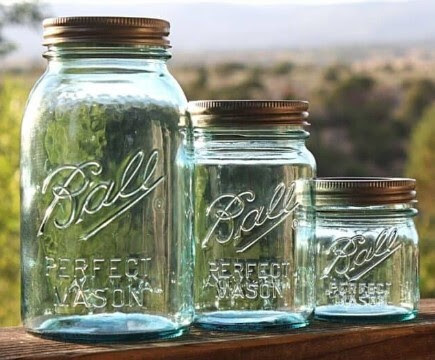
The Ward 3 office is currently accepting donations of art supplies and canning supplies on behalf of the Iskashitaa Refugee Network. We are ONLY accepting jelly jars, Kerr, Mason, or Ball jars for preserving/ canning, with or without canning rings. Feel free to drop by 1510 E. Grant Rd. during our office hours (9 am to 1 pm Monday through Friday) if you'd like to support the work of this wonderful non-profit with a donation.
Free Back to School Event on August 5th, 2023
 Free After School Drop-In Program beginning August 7th
 Grocery Sharing at Tucson Food Share - 2500 N. Stone Ave.
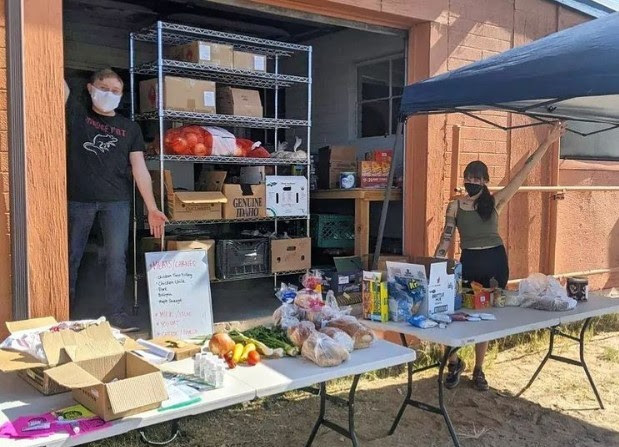 Groceries are shared Mondays 4:30- 6:00 pm,
Thursdays 6:00 - 7:30 pm, and Saturdays from 8am-9:30am.
https://tucsonfoodshare.org/ has more information about volunteering, donating, or requesting delivery.
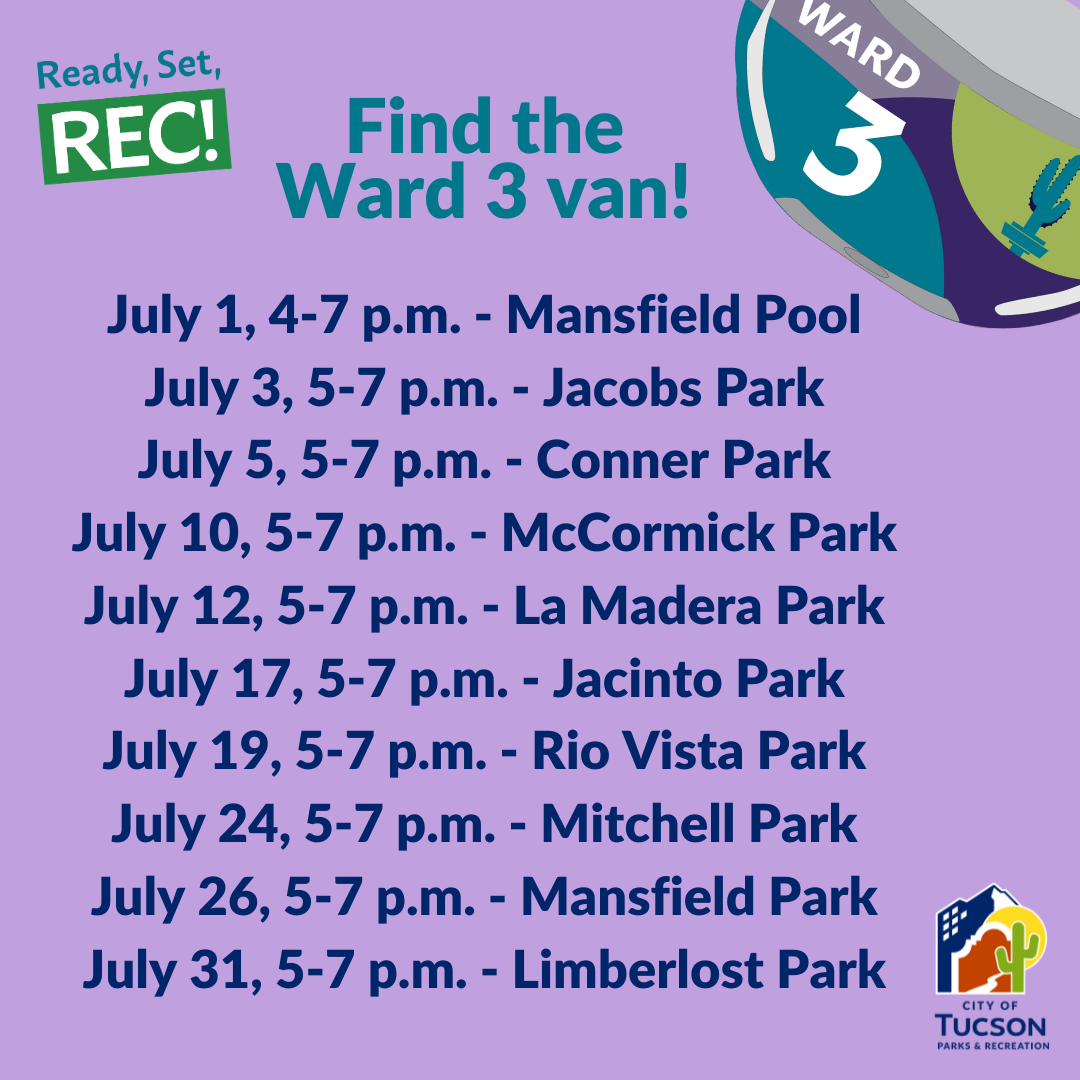
Ready, Set, REC! in June
|
|
Free Public Defense Clinic!
Get Paid to Get Lifeguard Certified!
 Are you or someone you know looking for a part-time job? Tucson Parks and Recreation is hiring lifeguards to operate and maintain the safety at City pools year-round. The minimum age to be a lifeguard is 15 years old. Pay starts at $16.75/hour.
The City will pay applicants to get their Lifeguard Certification through the City’s certification path. The lifeguard class is an intense, fast-paced course, and strong swim skills are required. All applicants must pass a swim test to qualify. For more information on becoming a lifeguard or to register for the swim test, visit the website.
Sign Up for Tucson's Climate Action Report!
You can use this link to subscribe to the Climate Action Report through the City Manager's Office:https://public.govdelivery.com/accounts/AZTUCSON/subscriber/new
Did You Know?
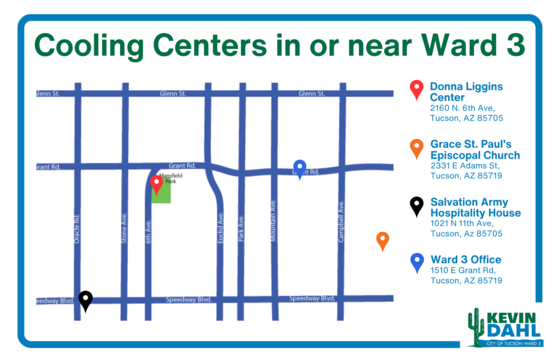
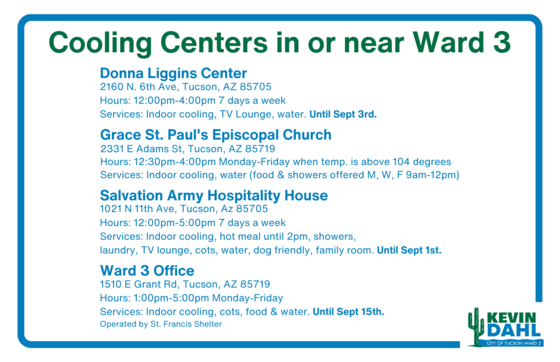
Cooling Centers Are Open Across Tucson!
In an effort to meet the need for respite from the record-high temperatures this summer, Tucson opened cooling centers on June 5, 2023.
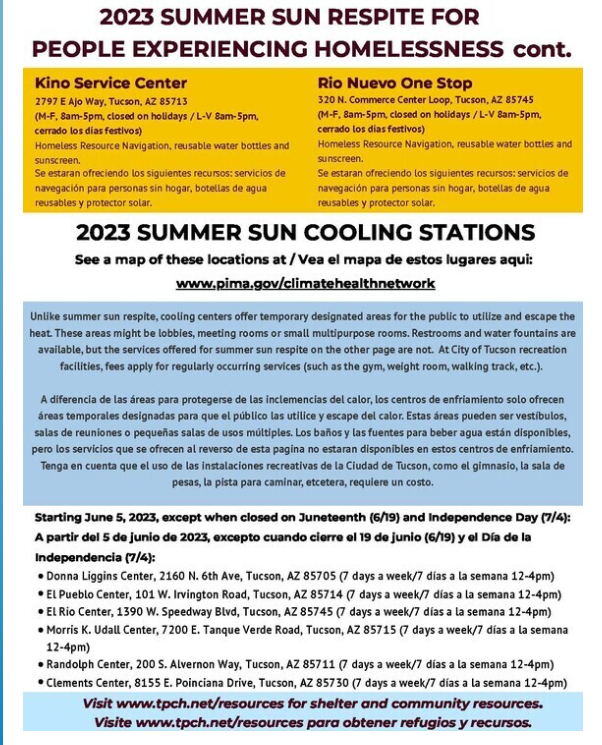
The City cooling centers are open seven days a week, from noon-4 p.m. (closed for holidays on June 19 and July 4). The locations are listed below.
-
Donna Liggins Center, 2160 N. 6th Ave, Tucson, AZ 85705
-
El Pueblo Center, 101 W. Irvington Road, Tucson, AZ 85714
-
El Rio Center, 1390 W. Speedway Blvd, Tucson, AZ 85745
-
Morris K. Udall Center, 7200 E. Tanque Verde Road, Tucson, AZ 85715
-
Randolph Center, 200 S. Alvernon Way, Tucson, AZ 85711
-
Clements Center, 8155 E. Poinciana Drive, Tucson, AZ 85730
The cooling centers will be operational and stay accessible based on usage. Resources will be allocated to locations that demonstrate serving the highest level of need.
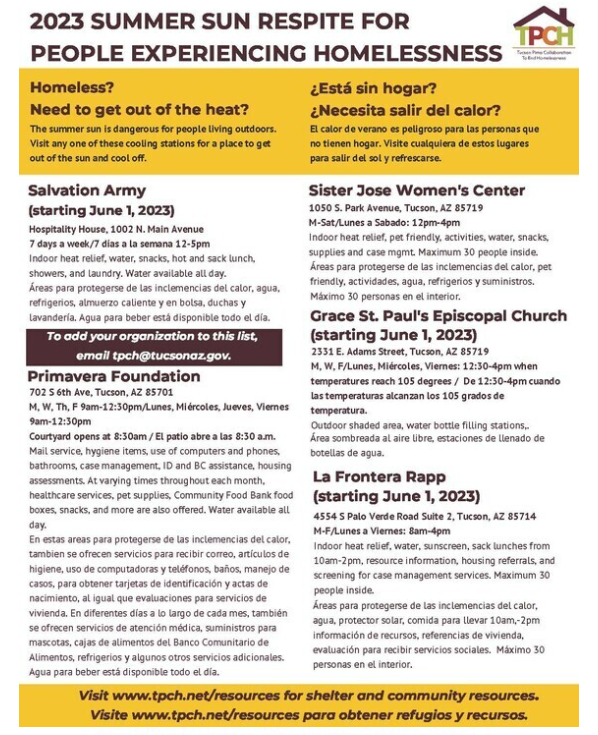
In addition to these cooling stations, the Tucson Pima Collaboration to End Homelessness has a list of more cooling centers and locations for water and supplies.
These additional locations where people can get out of the heat and sun include:
-
Salvation Army Hospitality House, 1002 N Main Ave.
Open seven days a week, noon to 5 p.m.
-
Primavera Foundation, 702 S. 6th Ave., Tucson, AZ 85701.
Open Monday, Wednesday, Thursday, and Friday, from 9 a.m.-12:30 p.m.
-
Sister Jose Women’s Center, 1050 S. Park Ave., Tucson, AZ 85719
Open Monday-Saturday, noon-4 p.m.
-
Grace St Paul’s Episcopalian Church, 2331 E. Adams St.
Open Monday, Wednesday, and Friday, from noon-4 p.m.
-
La Frontera RAPP, 1082 E. Ajo Way
Open Monday-Friday, 8 a.m. to 4 p.m.
-
Kino Service Center, 2797 E. Ajo Way, Tucson, AZ 85713
Open Monday-Friday, 8 a.m.-5 p.m., closed holidays
-
Rio Nuevo One Stop, 320 N. Commerce Center Loop, Tucson, AZ 85745
Open Monday-Friday, 8 a.m.-5 p.m., closed on holidays
  Remove Your Pool!
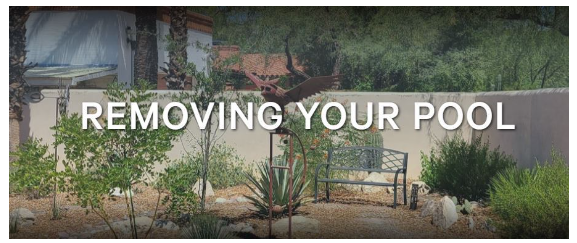 More than 20% of single-family households in Tucson have a swimming pool. A typical pool uses almost 30,000 gallons of water per year and represents significant costs to operate and maintain. As a pool owner, do you ever wonder about the benefits of not having a pool? If so, Tucson Water, Metro Water, Oro Valley Water, and Marana Water have collaborated to create a new hyper-local website (find it here) to answer common questions, such as how much you can save, who removes pools, the cost benefits, and how getting rid of a pool can conserve water and energy. If you want to keep your pool, the website also offers tips on how to check for leaks, use pool backwash for irrigation, and more.
Connect Arizona Affordable Connectivity Program
  Tucson Water Discounts
Call 520-791-5443 to make an appointment or visit this site for more information: https://www.tucsonaz.gov/water/low-income-assistance-program
 We welcome your feedback !
Please feel free to email us at Ward3@tucsonaz.gov
To subscribe to this newsletter go to https://www.tucsonaz.gov/ward-3
|
|
|
|
|