|
Date: 07/10/2023
Topics in This Issue:
-
Guitar at St. Phillips Plaza and Flora’s
-
Family Food Project
-
Sonoran Institute Trash Study
-
Refugee Donations
-
Rainwater Harvesting Program Rebates
-
10 Free Bike Helmets
-
Kidco Afterschool Programs
-
PCOA – Walking with a Partner
-
Sustainable Tucson
Guitar at St. Phillips Plaza and Flora’s
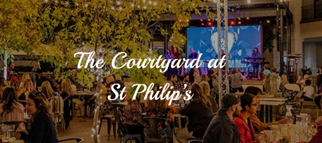
During the summer hiatus from the Arizona Inn, I’ve been given the opportunity to share music at a couple of pretty cool local venues. One is coming this Sunday, 7/16 from 6pm until 9pm at the St. Phillips Plaza.
You may have visited the courtyard for some of their weekend farmer’s markets. Those are great – they also have the courtyard set aside several nights per week for live outdoor music for patrons of the restaurants, hotel and surrounding residences. Come on out and enjoy dinner, something to drink to stay hydrated, listen to music and just being around good people.
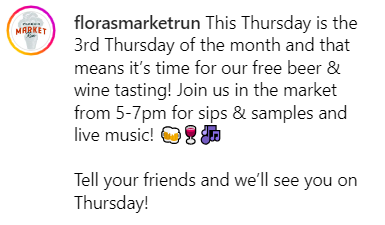
Later in that week Flora’s (the former Rincon Market) hosts a wine tasting evening. They do this every 3rd Thursday monthly. From time to time, they include some quiet live music – the 20th will be one of those times. Join in the wine tasting – or just come for dinner – at 5pm on Thursday the 20th. It’s more support of our local restauranteurs, while enjoying some time out with friends and neighbors. Here’s their own Instagram post announcing the event:
If you were enjoying the Arizona Inn Wednesdays, both St. Phillips Plaza and Flora’s will be a nice way to stay connected with you.
Family Food Project
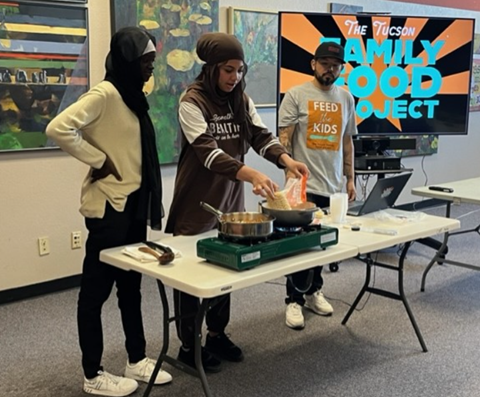
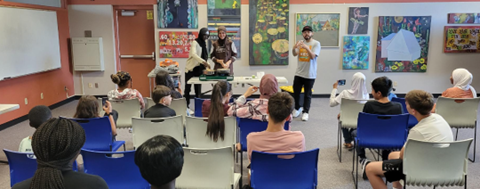
Our meeting with the Family Food Project and Lutheran Social Services got off to a bit of a slow start – some of our wires got crossed in terms of starting time – but in the end 20 young people, all here as refugees were taught how to cook a healthy meal, and each of them took home the ingredients and instructions to repeat their lesson at home and feed their own family.
This is Abrar from Sudan and Hanah from Syria. Steven Cota-Robles is off to the side giving them the instructions on how to make the meal. Both were quick learners, and everyone on hand enjoyed what they created.
Last Thursday we had kids from Sudan, Syria, Congo, Afghanistan, and Eritrea on hand to learn about the program. The Family Food Project is expanding throughout the city, touching lives of high school kids who are food insecure. For a repeating donation of $20 per month you can feed a family of 4 a total of 4 different meals, each prepared by the kids. For more information on the program go to www.ttffp.org.
Tucson Plastic Program
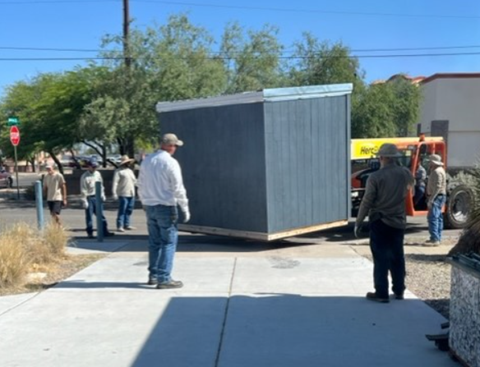
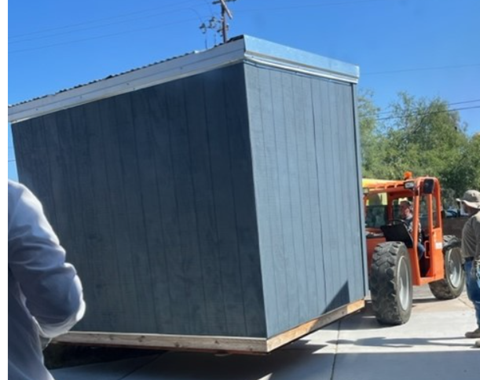
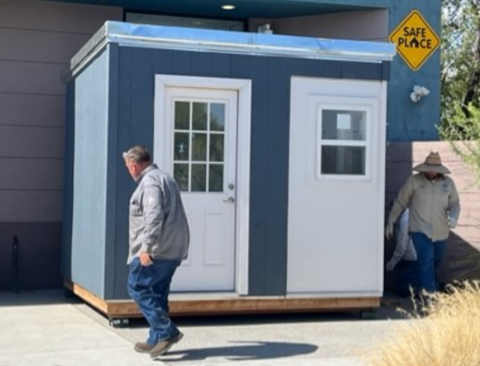
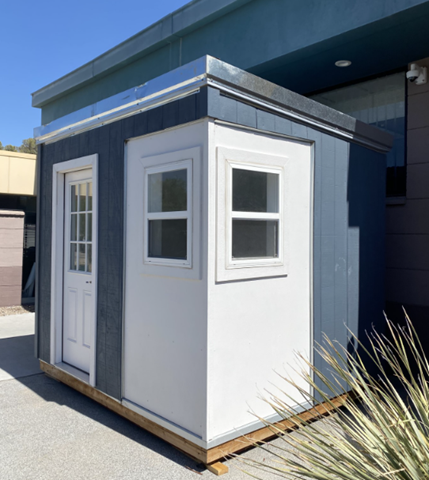
Last Friday we had several of the city facilities management/carpentry workers out to help us load in a ByFusion tiny home at the ward 6 front entry. These photos show the process – it's an 8’ x 10’ house that can, and will be used to help with our housing affordability challenges.
With that, we’re pretty much out of room on our front entry. ByFusion is well represented now with the bench, planter and now a tiny home.
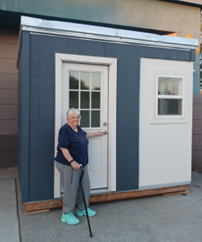
KOLD’s Bud Foster should be happy with his own following. The morning after his piece on the tiny home ran, we had several emails, several people stopping by and someone even called out to me while I was running supporting the “plastic house.” Here’s Sharon stopping in to take a peek:
In July I’m looking forward to the M&C discussion of how we address in our codes the need for housing that’s affordable. In recent newsletters I’ve shared some examples of where we can up our game. With the arrival of this ByFusion structure it’s my intention to give our planning and code people, along with builders and residents an opportunity to come by and see what is being built with the non-recyclable plastics we’re collecting through the ByFusion program.
The three side/rear walls are built with the ByBlocks. I’ve mentioned multiple times that you can cover the blocks with any material you can use on cinder blocks. In this case the model home is clad with the exterior siding. This unit has been sitting outdoors in Boise, Idaho for two of their winters and is no worse for the wear. Now it’s going to experience a Tucson summer.
The blocks used in this tiny home weigh roughly 1,500 pounds. That’s all-waste diversion. It’s also great insulation. More on plastic waste below in the Sonoran Institute section. The unit is prepped for electric. When BF was on site last week during the unit’s arrival, I took the opportunity to connect us with Dan Raneri from La Frontera. There are several exciting projects in the works that can involve these tiny house structures, helping to provide transitional housing for people in need. Whether those projects end up in the city our in the county will depend on how responsive the respective processes will be. There’s certainly plenty of need to go around so nobody should become fixated on taking credit or being first.
Anticipating the question about cost – the tiny house in front of our office is a one-off. Once a pre-fab partner is identified so the siding, roof and flooring can be pre-fabricated and simply dropped into place we can have the conversation about cost in the context of producing in quantity. ByFusion is working in L.A. with some potential pre-fab partners and I’m starting to work locally on helping make introductions with some of our local suppliers. What is operating in ByBlocks favor is there is no need for adhesives or mortar in the construction process. That alone reduces construction costs.
We’re juggling several pieces to the roll out of this program. The service agreement is in place. This week we may have a better idea as to which of the sites under consideration for ByFusions operation is more economically viable. BF is in the process of ordering long lead time items for the fabrication of the block making machine. We’re making adjustments for hauling and storage of the material you provide. And there are design discussions going on for several local projects, each of which will be used later to build efficiencies into design work for future projects. It’s a start up – and all of the plastic you bring to the office is a piece of what makes us realize how important the program is to the region.
We’re now at 126.98 tons collected since August. Thanks to Dave and Helen from Green Valley for sending along their note about how they’re making 2 trips per week up to the ward 6 office to drop off Green Valley residents’ plastic. The couple used to live in southern Baja close to a turtle sanctuary. It was there they became sadly aware of the impact our plastic waste is causing to marine life. They’re now advocates for our program in Green Valley. I let them know that once we get ByFusion established in Tucson, Pima County may be in a position to expand collection sites and save Dave and Helen their semi-weekly trips.
And don’t forget to enter the Reid Park Zoo ecochallenge. It’s where you join the zoo team and make a commitment to reducing the amount of plastic you use in your daily life. We’re going to install a ByFusion bench at the zoo when they become available in the DIY kits. A part of that will be a plaque inscribed with the ecochallenge winners. Use this link to get involved:
Join the Team!
Sonoran Institute Trash Study
 |
|
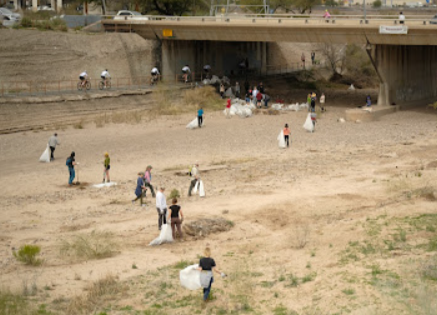
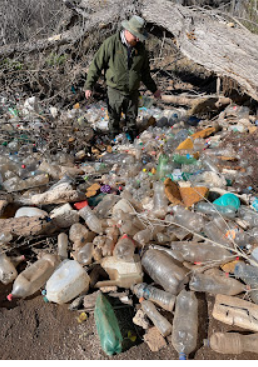
Last week Diana and I joined Ward 1 resident Miguel Ortega in Parque de San Cosme introducing the plastic program to other west side and Barrio Viejo residents. While we were there, reporter Dan Shailer showed up to continue a conversation we had begun about the program. During our chat, he showed me pictures he had just taken from an excursion into the Santa Cruz riverbed with members of the Sonoran Institute. The goal of the riverbed work was to gather debris that had accumulated, try to identify the source and hopefully take steps to reduce or eliminate further pollution.
|
Sonoran Institute used about 70 volunteers and collected nearly 4,000 pounds of trash from the riverbed in just 2 hours. The project is supported through our friends at Watershed Management Group, Tucson Clean & Beautiful and the Loft Cinema. Here’s a picture of the work as it was taking place.
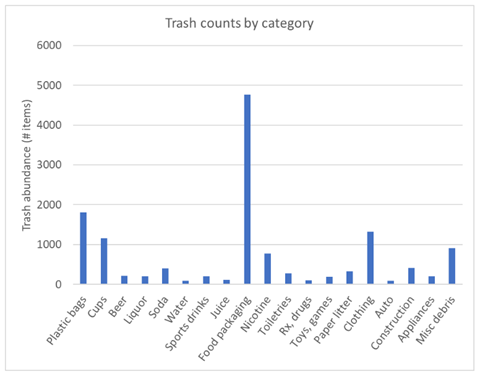
Collecting the trash prevents it from building up and creating debris-dams that can divert or stop the river flows. The debris can also create pools of water that can breed mosquitos and other pests. So, what is the group finding during their riverbed clean-up trips? Lots of plastic. Food packaging and cups make up nearly ½ of what they find. This bar graph breaks it down:
Single use plastic bags made up roughly 10% of the junk they collected. Between the restaurant clam shells and grocery store carry out bags you and I can make a meaningful difference in how much plastic is a part of our lives. Take your Tupperware carry out containers to the restaurant for when you go out to eat. Take your cloth bags to the grocery store when you shop. Join the zoo ecochallenge and use those two commitments to get you started.
The Sonoran Institute will have 2 more Santa Cruz riverbed clean ups before the end of the year. I’m in contact with Luke Cole from the Institute about ways we can coordinate their work with the ByFusion program. More to come on that.
Use this link to learn about Sonoran Institute and volunteer opportunities.
upcoming events
Refugee Donations
We love the donations you bring in support of refugees, homeless and generally those in need in our community. Our weekly contacts with Casa Alitas keep the guests they are helping well provided for. This time of year sunscreen and lotions are particularly important. Also new, unused underclothes, sneakers sizes 9-13, hygiene products, shoelaces and ball caps/t-shirts are always hot items in their Tienda.
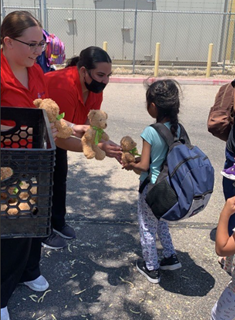
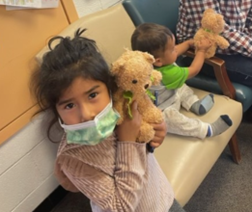
We’ve also put out a request for small stuffed animals in the past. Congregation M’kor Hayim took that to heart recently. They sponsor a monthly parking lot collection event at the JCC where they gather items in support of a local non-profit. This month they chose instead to pass the hat and collect financial contributions they used to order 480 small Teddy bears for the kids coming through the Alitas Welcome Center. Thanks to Judy for sharing these pictures they took while they were handing out the stuffed animals to the kids. Yes, they got parental permission for me to use the photo’s of the kiddos.
Nobody should have to endure the traumatic conditions the southern border migrants have had to go through. Especially the kids. What’s particularly cool about the work done by the M’kor Hayim group is these little ones are feeling cared for by strangers for what maybe the first time in their lives.
With that – same sort of list of needs. All that changes out at Casa Alitas are the identities of the people coming through. They’re all people who have been through hell – and these days the heat that matches – and deserve to be treated with compassion.
Rainwater Harvesting Program Rebates
Prior to July 1st we had a cap of $500 on the level of rebate you could get for installing water harvesting basins at your home. Now you can qualify for rebates of up to $2,000 for the combined rainwater harvesting systems you install on your property. There’s an approval process through which Tucson Water will review your plans to be sure we’re rebating money for what will be effective systems. Use this link to get to the Tucson Water rebate site, scroll down to Rainwater Harvesting Rebate and open that tab.
So far over 3,500 Tucson Water customers have gotten involved in this program. Collectively they’ve captured over 125 million gallons of rainwater and put it to productive use on their property. And these rebate increases make the idea even more attractive.
When you visit that link, you’ll also see rebates Tucson Water offers for other water conservation ideas. Those include fixtures such as toilets, washing machines, greywater systems and more. Check them all out. You can save water and get paid while you’re doing it. Each tab on that link has the eligibility requirements for each of the programs. Above I wrote about the work the Sonoran Institute is doing, and how Watershed Management Group is involved in their projects. Both of those agencies are partnering with Tucson Water in offering the free rainwater harvesting workshops you’ll need to take in order to get the rebate.
10 Free Bike Helmets
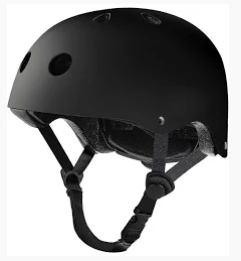
Do you have a skate-boarder or bike rider in your life? Does he or she have a helmet? We’ve got 10 free hard-shell helmets we’re giving away on a first come-first served basis. All are sized medium, all are brand new, and all meet the Consumer Product Safety Commission safety standards. Stop by the Ward 6 office and just ask at the window.
Be sure you’re sizing the helmet properly. If it’s too loose it can be a safety issue. Bike shops all have the extra padding if you need to install some to be sure the helmet is snug.
Kidco Afterschool Programs
Beginning next Monday, July 17th registration starts for the renewal of the 2023-2024 school year Parks & Rec Kidco afterschool programs. The program includes structured activities for kids ages 5-11. The child must currently be enrolled in kindergarten in order to qualify.
The programs run from school dismissal time until 6pm. The activities include things such as arts and crafts, performing arts, sports, games, nutrition – all sorts of things to keep them active and occupied in a safe environment until mom or dad gets off from work and can take them home.
The registration fills quickly. It will open at 8am on the 17th. There’s a $500 fee for city residents that covers a child for the entire school year. Parks has payment plans and some scholarship opportunities that are need-based. Use this link for registering online: EZEEreg.com.
PCOA – Walking with a Partner
From addressing the needs of kids to addressing the needs of seniors. I get periodic updates on programming from Pima Council on Aging. They run a wide variety of programs that keep seniors active, safe and thriving. This update is more of an encouragement than a specific PCOA program – walking with a companion can reduce loneliness.
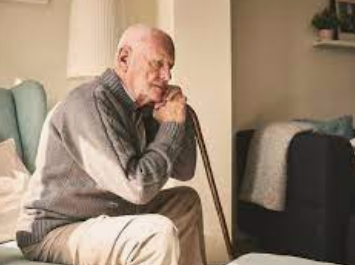 |
The pandemic caused a lot of unhealthy isolation. Seniors were included in the groups suffering from the effects of being alone. PCOA shared the results of research conducted with about 175 adults age 65 and over. They did health checks and surveys asking about how often and in what contexts they took walks. The research found a strong correlation between older adults who walked at least one time per week with a companion, and lower average levels of loneliness when compared to seniors who did not take those walks on a weekly basis. While the walking is good from a cardio-vascular standpoint, the loneliness piece only improves when the activity includes a companion.
Find yourself a walking buddy – or several of them. And if you know someone who’s alone, suggest to them a weekly walk in the neighborhood or in a park. The side effects of loneliness can include anxiety, depression, inability to sleep, and high blood pressure. The antidote is pretty easy.
 |
|
And while I’m on the ‘walking with a buddy’ theme I’ll add this plug for the Tucson Home Sharing program. I regularly see Deb and Sharon – home sharing pals and founders of the program – out walking together in our neighborhood. |
The program is important for helping with housing affordability, and the companionship the PCOA research is addressing. Check out their website at https://www.tucsonhomesharing.org/
Sustainable Tucson
Sustainable Tucson meets again this week – still virtually, and still covering important environmentally-related issues. This month the guest speakers will be talking about ways you can save money on the installation of solar units.
 |
|
The meeting starts at 6pm on Tuesday, July 11th. Use the https://sustainabletucson.org/ link to sign into the meeting. The title of this month’s meeting is “Joining Forces for Clean Energy: A Practical Guide to Saving Money and the Planet.” Good goals.
|
The speakers will include Flor Sandoval from the Sonoran Environmental Research Institute, Ben Nead from the Tucson Climate Coalition, solar lawyer Bruce Plenk and solar installer Duane Ediger. Together the group will speak to ways you can get involved in solar of all sorts, and they’ll talk about state and federal support that’s available.
Sincerely,

Steve Kozachik
Council Member, Ward 6
ward6@tucsonaz.gov
City of Tucson Resources
|