|
Good morning,
This week, the Pima County Board of Supervisors approved a series of contracts and agreements directing opioid settlement funds toward prevention, treatment, and coordinated response efforts across our region.
The recommendations for these disbursements came from the Regional Opioid Settlement Advisory Committee (ROSAC), a multi-jurisdictional body formed to guide how opioid settlement funds are used locally. ROSAC has met regularly since July 2024 to evaluate evidence-based strategies and recommend priorities for the use of these funds.
These dollars come from legal settlements with opioid manufacturers and distributors, and my priority has been clear: we must use them in ways that create stability, accountability, and real pathways to recovery, while also addressing the impacts residents see every day in their neighborhoods.
On January 6, six community-based organizations received opioid settlement funding, totaling just over $1.86 million. I believe these investments will make a meaningful difference in our community, and I’ve highlighted a few key discussion points below.
Agenda Items 25 and 27 focus on wrap-around support and law-enforcement coordination. These programs are designed to help people avoid cycling back into crisis by connecting them to treatment, peer support, and services that restore stability.
Connecting people struggling with substance use to treatment and support helps prevent them from falling back into cycles they’ve already worked to escape, while restoring stability in their lives. These efforts work hand in hand to help community members find a path to success, especially those who are struggling to do so on their own.
I also want to highlight the youth prevention efforts included in Agenda Item 26. If we are serious about addressing substance-use disorder, we must intervene early, before addiction takes hold. This belief is grounded not only in strong data, but also in my years of hands-on experience as a middle and high school teacher and administrator.
I was encouraged to hear that the County is expanding outreach in middle and high schools, working with TUSD, Sunnyside, and rural districts through the Youth-to-Schools Program. Prevention is not optional, it is essential.
The Board also approved two Memorandums of Understanding with the Department of Justice Services to expand:
-
Peer Navigation Support, helping individuals move from crisis toward recovery by increasing the highly successful Transition Center’s hours of operation; and
-
Law-Enforcement Co-Response, building on nationally recognized best practices already in use by the Tucson Police Department and Pima County Sheriff’s Department.
As Justice Services Director Kate Vesely noted during the meeting:
“These programs don’t stop at city limits. People move across jurisdictions, and our response must do the same. By coordinating across agencies and communities, we avoid duplication, strengthen partnerships, and improve safety for residents and businesses alike.”
After this round of awards, ROSAC will continue meeting to determine the most effective uses for the remaining opioid settlement dollars and to review the metrics built into every contract. As Dr. Theresa Cullen from the Health Department emphasized, “Every contract approved includes clear performance metrics, and all programs are reviewed through the Regional Opioid Settlement Advisory Committee.”
This work is complex, but the goal is simple: help people recover, prevent future harm, and build safer, healthier communities across all of Pima County.
Learn more: Opioid Settlement | Pima County, AZ
Watch the BOS Meeting: January 6th BOS Meeting Discussion start: 3:50 31
Rex
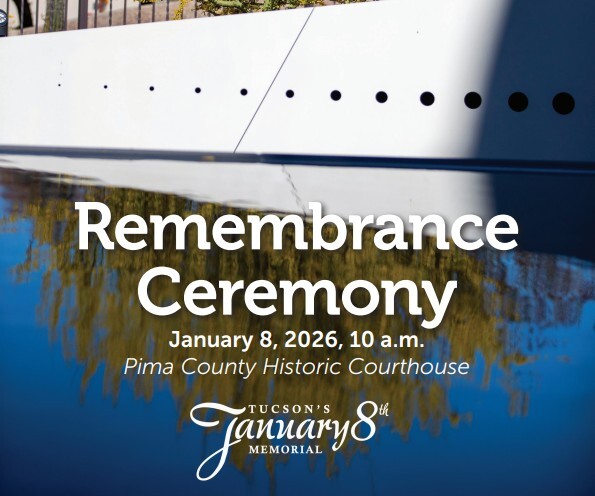
January 8th Remembrance Ceremony
Yesterday, I had the privilege of being emcee at the ceremony. Below were the thoughts I shared on this day of remembrance, community fellowship, and hope for the future.
Two days ago, during our first Board meeting of the year, our Chair, Supervisor
Jennifer Allen, made some very moving and inspiring remarks about both this sad
anniversary and the tragic events at the US Capitol five years ago this week. Chair
Allen reminded us that we have made precious little progress in the 15 years since
January 8, 2011, towards confronting gun violence, which ended and affected
many lives in our community that day and countless more across our country in
the years since. She also called on every one of us to stand up for democracy,
which was threatened and defiled in a historic and unique way in Washington, DC
on January 6, 2021.
Congresswoman Giffords and everyone else who gathered in that parking lot on
Ina and Oracle were engaged in the work of democracy. A member of the US
House seeking to hear from the people she served. Her dedicated staff, there to
support her efforts at outreach. Her constituents, each one present to share
concerns and opinions with their member of Congress. Today, we ought to reflect
on the fact that it is increasingly rare for elected officials at all levels to conduct
that kind of gathering due both to fears of political violence and the bitter, coarse,
polarized nature of our public discourse.
During last year’s remembrance, we heard from our beloved Gabby Giffords, and
were awed by how clearly and well she spoke given the horrendous injuries
inflicted on her. She told us to move ahead and to not look back, even though
losses hurt and setbacks are hard. Most importantly, she reminded us of all that is
possible and sustainable when people care for each other and work in
partnership. As Gabby said, when those two things are in place, change is
possible. A better world is possible.
I drive through the intersection of Ina and Oracle frequently, on my way to events
in our district, or to visit our daughter, who lives northwest of there. Oftentimes, I
have glanced at that parking lot, reflecting with sadness on the lives lost that day.
From here on out, whenever I am there, I will think instead of all that is possible
when we come together with mutual respect and common purpose. As Jennifer
Allen said this week and as Gabby Giffords said last year, we need to move
forward with both courage and conviction…and we must do so together.
 |
DISTRICT 1 - PODCASTS
I'm excited to again share some exciting news from the District 1 team! We’ve launched a brand-new podcast series called Inside Pima County with Supervisor Rex Scott.
This podcast takes you behind the scenes of county government and introduces you to the people who make our community function every day. Each episode features conversations with department and program directors who oversee the critical services Pima County provides.
From public safety to parks, from environmental stewardship to community support programs, you’ll gain a deeper understanding of the work our dedicated employees do to support you and your family.
Listen in and learn what Pima County is all about.
Website: Inside Pima County with Rex Scott
Subscribe to or follow to us on your favorite podcast platform so you don't miss our latest episodes!
Other great Pima County Newsletters!
2026 Pima County Community Wildfire Protection Plan Survey (Link)
Thank you for choosing to take this survey to help improve wildfire safety in Pima County. This survey will help us better identify how to plan to lower the risk and damage caused by wildfires to people, nature, and buildings.
Pima County Safety Action Plan: Survey (link)
We believe the people who use our roads every day are the ones who know them best. We invite you to help us design a plan that meets the needs of our entire community.
Engage Pima County (link)
Engage Pima County is our community's new hub to create sustainable solutions to important issues, challenges and opportunities in our community. Thank you for participating, joining us and making your voice heard.
Catch Rex talking about Pima County issues that impact you!
Find more information:
|