 Dec. 12, 2025
 Pima County launches new climate action website
We are pleased to announce the launch of our new Pima CAN website, a hub where you can find information and resources to learn more about greenhouse gases and hot topics that are affecting the Pima County community.
The resources on this site connect folks with:
- Tips to help you and your loved ones protect yourselves during episodes of extreme heat.
- Information about green stormwater infrastructure that enhances livability and resilience.
- Handy information about wildfire and invasive species.
- Quick links to rebates and tax credits for energy efficiency.
- Background on actions the County is taking to prepare for the challenges posed by climate change.
This is just the tip of the iceberg. Through collaboration across departments and with regional partners, Pima CAN! integrates climate action into county operations, planning, and policies that advance sustainability, equity, and environmental stewardship across Southern Arizona.
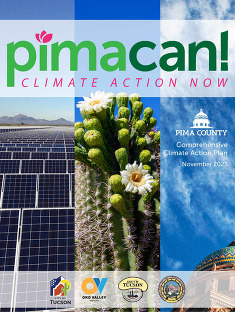
Comprehensive Climate Action Plan (CCAP)
As a deliverable of the four-year Climate Pollution Reduction (Planning) Grant (CPRG) awarded to the Pima County Department of Environmental Quality in 2023, the Comprehensive Climate Action Plan (CCAP) was submitted to the U.S. Environmental Protection Agency (EPA) on Nov. 26.
Pima County worked with coalition partners (City of Tucson, Town of Oro Valley, City of South Tucson, and the Tohono O’odham Nation) and community stakeholders to develop the plan. The CCAP sets specific science-based targets for the reduction of greenhouse gas emissions (GHG) and other harmful air pollutants in the short term (2030) and long term (2050).
Sixteen measures were identified for seven EPA-required sectors: electric utilities, residential and commercial buildings, transportation, waste and materials management, industry, working lands, and agriculture. Based on emissions projections, the sectors providing the largest reductions are transportation, electric utilities, and commercial and residential buildings. Measures include the deployment of renewable energy and battery storage, transitioning to electric vehicles, improving energy efficiencies, effective waste management, and managing lands more efficiently.
Co-benefits of these measures include improved public health from reduced air pollution, lower energy costs, reduced water use, reduced waste, protected ecosystems, cooler surface temperatures, job growth, improved mental health, enhanced quality of life, and improved economic conditions.
For more information, visit www.pima.gov/ClimatePlan or www.pima.gov/PimaCAN.
|
Climate Action Plan for County Operations (CAPCO)
On Dec. 2, 2025, the Pima County Board of Supervisors approved the Climate Action Plan for County Operations (CAPCO). This plan outlines internal strategies to reduce greenhouse gas emissions while addressing more expansive sustainability goals, including water, landscapes, extreme heat, wildfire and invasive species, and waste and materials.
Under this plan, the County aims to reduce greenhouse gas emissions from its operations by 60% below 2021 levels by 2030, ultimately striving to achieve Net Zero emissions by 2050.
On May 6, 2025, the Board adopted Resolution 2025-11, establishing the framework for the 2025-2030 Plan. The County’s Climate Action Teams, multiple departments, and regional partners were engaged during the planning process, reflecting broad collaboration and shared responsibility. Departments will begin aligning programs and operations with the plan’s strategies and regularly track and report its progress toward its 2030 emissions goal and beyond.
|
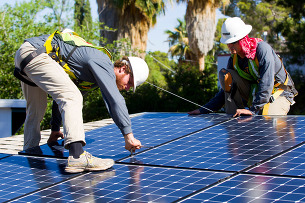
Tax credits for energy-efficient purchases in 2025
The Arizona Governor’s Office of Resiliency centralized tax credit resources for residents, businesses, governments and organizations in their Clean Energy Hub.
Arizonans may claim tax credits if they purchased specific energy-efficient products in 2025. Tax credits exist for new (up to $7,500) and used (up to $4,000) electric vehicles if they were purchased by Sept. 30, 2025.
If the following items are purchased and installed by Dec. 31, 2025, tax credits may be available:
- Heat pump air conditioner/heater: up to $2,000
- Heat pump water heater: up to $2,000
- Weatherization and insulation: up to $1,200
- Electrical panel: up to $600
- Home energy audit: up to $150
- Rooftop solar installation: 30% of qualifying costs
- Battery storage installation: 30% of qualifying costs
- Geothermal heating installation: 30% of qualifying costs
In addition, electric vehicle chargers installed and in service by June 30, 2026, may provide up to $1,000 tax credit.
|
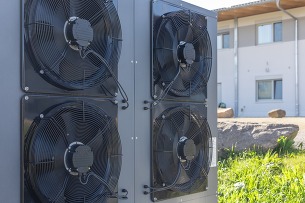
Save money at time of purchase and on monthly utility bills
The Arizona Governor’s Office of Resiliency, through its Efficiency Arizona program, offers point-of-purchase rebates for installing qualifying energy-efficient appliances and upgrades in low-income and historically underserved households. A single eligible household may receive up to a total of $14,000 in rebate dollars through their Home Electrification and Appliance Rebates Program (HEAR).
Funds for these opportunities are expected to continue for two to four years, depending on funding availability.
- Electric heat pump: up to $8,000.
- Electric heat pump water heater: up to $1,750.
- Electric heat pump clothes dryer: up to $840
- Electric stove/cooktop/range/oven: up to $840
- Insulation, air sealing, ventilation: up to $1,600
- Electrical wiring: up to $2,500
- Electrical panel upgrade installation: up to $4,000
|
We want your feedback!
Pima County is developing the 2026 Community Wildfire Protection Plan to reduce wildfire risk. Your input will help identify high-risk areas, guide fuels reduction projects, and improve emergency response. Click the link below to take the survey today.
|


