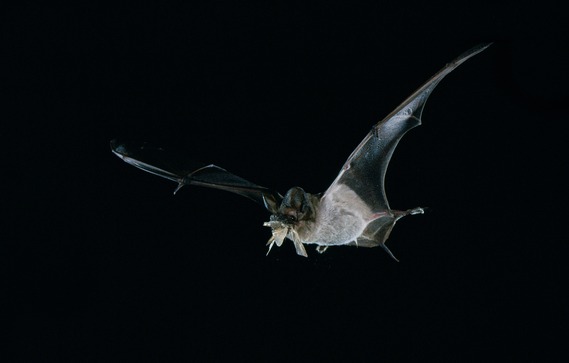
 Bat walks offer rare insight into Arizona’s most mysterious residents
Bats can be difficult to see in the night air after sunset, when the only sign of their presence may be a soft fluttering of wings. But it's still possible to observe bats, even if you can't see them.
Pima County Conservation Lands & Resources' nighttime bat walks are a rare opportunity to get a better view — and a better understanding — of these familiar but mysterious creatures. These walks are held at spots like Agua Caliente Park, El Rio Preserve, and Historic Canoa Ranch.
During the walks, participants will be able to keep track of all of the bats they detect. This information will be used to help researchers better understand bats and their place in the Arizona ecosystem. Not only do the walks help educate the public about bats, but they also give everyone a rare opportunity to participate in citizen science.
Bird of the Month: Greater Roadrunner
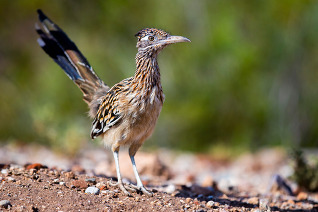
One of the iconic birds of the American West is the Greater Roadrunner, a fleet-footed, long-tailed sprinter of a bird. A member of the cuckoo family, these birds are high on the wish list for visiting birders and Historic Canoa Ranch is a great spot to see them.
These birds are unmistakable if one gets a good view. They generally appear to be brown with white streaks, but in good light, the brown magically transforms into green, copper, and violet. This transformation is caused by the structure of the feathers, producing iridescence. The tail is long and dark, with white tips to the outer four pairs of feathers. The wings are short for the size of the bird and dark in tone. There is a patch of bare skin behind the eye, which is orange and blue.
A close cousin, the Lesser Roadrunner, is found in arid regions of Mesoamerica, from southern Sonora to Nicaragua and the Yucatan Peninsula. It differs in being smaller (about 18 inches), with a smaller bill, and buffier on the underparts.
Greater Roadrunners are adept predators, feeding on large insects, lizards, snakes (including rattlesnakes), small mammals, and birds. They can be mobbed by other birds due to this predatory nature. Lizards are the dominant item fed to nestlings.
As the name suggests, these birds are swift runners, capable of reaching up to 15 miles per hour. While they are fully able to fly, Greater Roadrunners prefer to run from danger, only taking wing as a last resort. While Warner Brothers would lead us to believe that these birds utter "meep meep" calls, they actually make cooing sounds reminiscent of a dove’s call.
Greater Roadrunners are assuredly more common than sightings would suggest. They are well-camouflaged among vegetation when standing still, and tend to flee when they sense a person approaching. But an early morning walk around Historic Canoa Ranch may well result in a sighting of one of these fascinating birds.
Last Month’s Trivia Question: Lucy’s Warbler is one of only two cavity-nesting members of the warbler family. What is the other?
Answer: In addition to Lucy’s Warbler, the only other cavity-nesting warbler is Prothonotary Warbler, a denizen of swamps and riparian forests of the eastern U.S.
This Month’s Trivia Question: What other cuckoo species has been recorded at Historic Canoa Ranch?
|
Getting a good read on the past

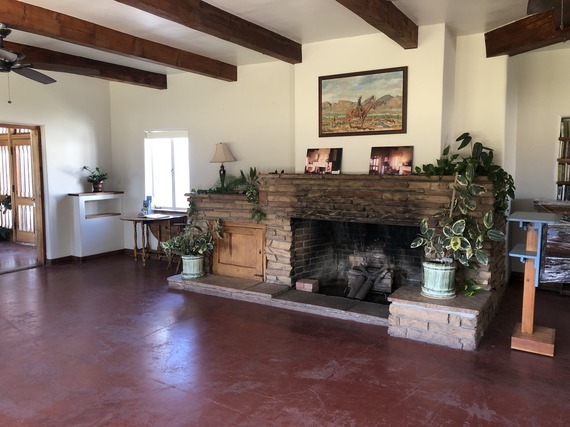
It's easy to forget, but for most of Historic Canoa Ranch's long history, the people who lived there had no internet, no smartphones, no iPads, and even no television. When they wanted to entertain themselves in the evenings, one of the best options was to pick up a book. It's fun to imagine them reading late into the night, perhaps by oil lamp or even candlelight.
Thus, when you take a tour of Historic Canoa Ranch, you'll notice that almost every building has a vintage bookcase like this one -- and often more than one! The books range from studies of Arizona plant life to classic Westerns by authors like Zane Grey.
|
Protecting yourself from heat-related illnesses this summer
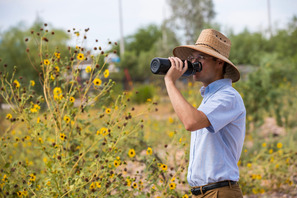
Every year, nearly 2,000 people visit emergency rooms in Arizona because of heat-related illnesses such as heat exhaustion or heat stroke. You can keep yourself and your loved ones safe by learning the symptoms of heat illness and by taking the appropriate steps to protect yourself. Visit pima.gov/heat for more information.
|
July and August programs and events
 Please visit our website to register for any of these upcoming events!
|
Friday, July 18, 8–9 a.m.
|
Gardens of Canoa Ranch
|
|
Saturday, July 19, 8–9:30 a.m.
|
Historic Canoa Ranch Tour
|
|
Saturday, July 26, 8–9:30 a.m.
|
Historic Canoa Ranch Tour
|
|
Friday, Aug. 1, 8–9 a.m.
|
Gardens of Canoa Ranch
|
|
Saturday, Aug. 2, 8–9:30 a.m.
|
Historic Canoa Ranch Tour
|
|
Friday, Aug. 8, 8–9:30 a.m.
|
Anza Tour
|
|
Saturday, Aug. 9, 8–9:30 a.m.
|
Historic Canoa Ranch Tour
|
|
Saturday, Aug. 16, 8–9:30 a.m.
|
Historic Canoa Ranch Tour
|
|
Saturday, Aug. 23, 8–9:30 a.m.
|
Historic Canoa Ranch Tour
|
|
Saturday, Aug. 30, 8–9:30 a.m.
|
Historic Canoa Ranch Tour
|
Interested in doing some volunteering this summer? Visit our website to learn more about our volunteer opportunities at Historic Canoa Ranch and other Conservation Lands & Resources programs, and be sure to mark these dates on your calendar!
|
Tuesday, July 22 • Starts at 7:30 a.m.
|
Green Valley Gardeners Volunteer Days
|
|
Tuesday, July 29 • Starts at 7:30 a.m.
|
Green Valley Gardeners Volunteer Days
|
|
Tuesday, Aug. 5 • Starts at 7:30 a.m.
|
Green Valley Gardeners Volunteer Days
|
|
Tuesday. Aug. 12 • Starts at 7:30 a.m.
|
Green Valley Gardeners Volunteer Days
|
|
Tuesday, Aug. 19 • Starts at 7:30 a.m.
|
Green Valley Gardeners Volunteer Days
|
|
Tuesday, Aug. 26 • Starts at 7:30 a.m.
|
Green Valley Gardeners Volunteer Days
|
|