Still time to comment on proposed changes to 2027-28 Arizona fishing regulations
View the webinar at https://youtu.be/mVEnlMZxcYg; comments accepted through July 24 at fishregscomments@azgfd.gov
The Arizona Game and Fish Department is still seeking public input on proposed changes to the 2027-28 Arizona fishing regulations. Written comments can be submitted by email to fishregscomments@azgfd.gov through July 24, 2026. Comments can also be submitted by U.S. mail to Arizona Game and Fish Department, Attn: Amberle Jones, 5000 W. Carefree Highway, Phoenix, AZ 85086.
A public forum webcast was held July 9 to further discuss the proposals and to take public comments. Visit https://youtu.be/mVEnlMZxcYg to view the webcast.
There are seven proposed changes:
- Establish daily bag limits at East Mesa Community Park Pond.
- Amend the daily bag limits at Maricopa Lake in Youngtown.
- Amend bass limits for Sahuarita Lake, Kennedy Lake, Silverbell Lake, and Lakeside Lake (Tucson area at four CFP waters).
- Remove current special regulations at Lee Valley Lake and return it to statewide regulations to address a management need to improve fishing for the public.
- Remove current special regulations at Lee Valley Creek and return it to statewide regulations to match proposed regulations for Lee Valley Lake.
- Increasing spearfishing opportunities at Lake Powell.
- Catch and release only for largemouth bass at Cluff Ranch Pond 3.
The proposed changes, and the rationale behind them, can be found at Commission Order 40 Proposals 2027-28.
The proposed regulation changes are scheduled to be presented to the Arizona Game and Fish Commission at its public meeting Aug. 7, 2026, in Williams, Ariz., at the Grand Canyon Railway Hotel. The public is welcome to attend. An agenda will be posted in advance of the meeting at www.azgfd.gov/Agency/Commission.
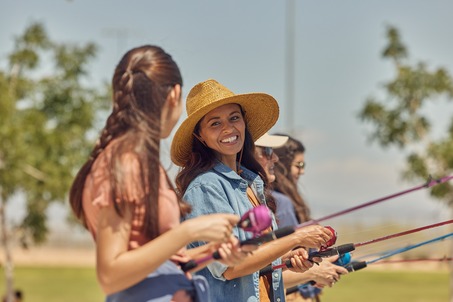
Want to learn how to fish but don't know where to start? Try the FishAZ Network
Arizona has extensive opportunities and destinations to go fishing, from a local pond to a remote mountain stream, but many don’t know where to get started. The Arizona Game and Fish Department and its partners offer the FishAZ Network, which brings all these opportunities in one place offering instructional and educational events, hands-on beginner fishing events, and other fishing based on your skill level and interest.
To learn more, and for a schedule of events, visit the FishAZ Network.
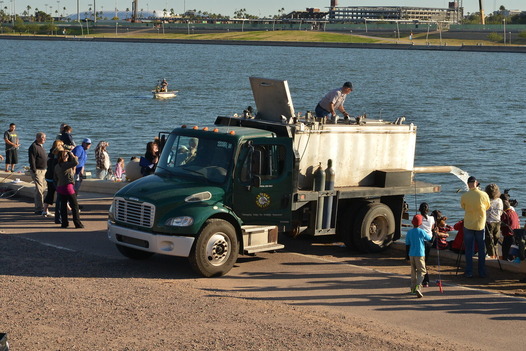
Fish stockings in lower elevation Community Fishing Program waters are on summer hiatus
Fish stockings into lower elevation Community Fishing Program (CFP) waters — Phoenix, Tucson, Safford, Gila Bend, and Yuma — are, as is typical, on summer hiatus due to seasonal high temperatures. Stockings in those waters will resume in mid September.
Fish stockings will continue through the summer months in cooler, upper elevation CFP waters (Eagar, St. Johns, Show Low, Prescott Valley, and Ash Fork).
Please visit the department’s CFP stocking schedule to determine more specific details.
Recent rescue of bald eagle is a reminder to clean up fishing line to keep birds free
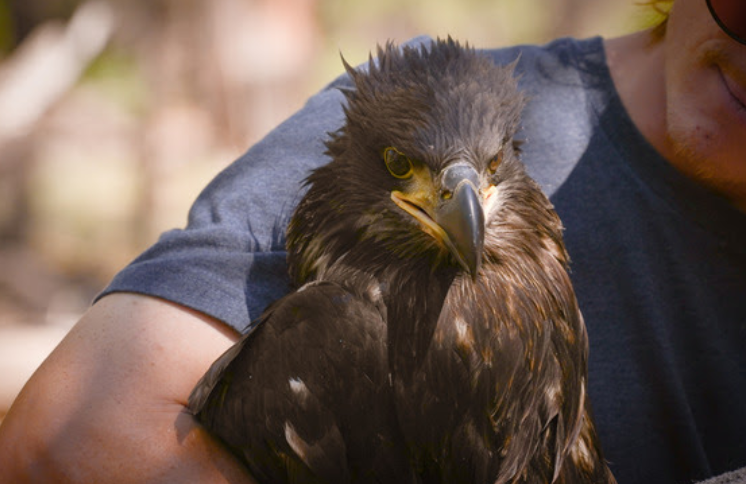
On June 19, a team of staff from the AZGFD, U.S. Forest Service-Coconino National Forest, and volunteers gathered outside Flagstaff to assist in placing a nine-week-old bald eagle into an active nest containing another eaglet of approximately the same age.
The foster eaglet was recovered by the biologists on May 21 during routine field work at Willow Springs Lake after they discovered a piece of monofilament fishing line hanging from its mouth. It was suspected that the bird had swallowed a fish hook that had become lodged in its throat and would likely result in death without intervention.
The eaglet was taken to Liberty Wildlife, a wildlife rehabilitation facility and AZGFD partner organization in Phoenix, where it received x-rays and surgery to remove the hook. Although a piece of the hook could not safely be removed during the procedure, the biologists were confident the bird would be able to thrive in the wild.
After recovery, the bald eagle nestling could not return to its original nest – it had been too long and the parent eagles had already left the area. Instead, the team identified a nest near Flagstaff as a potential foster site for the recovered bird.
“Fostering a nestling from a different nest works because the adult eagles are in parental care mode right now,” said Kyle McCarty, AZGFD eagle field projects coordinator. “As long as the foster nestling is approximately the same age as their resident nestling, the adults will feed, care for and protect that new one as their own.”
This rescue highlights the importance of proper disposal of monofilament fishing line, which can end up in the nests of bald eagles and endanger their lives.
Fishing line can get tangled around the bodies of bald eagle nestlings, cutting into their legs or tying them down to the nest. The line can also wrap around the animal’s neck or accumulate inside the stomach, preventing the ingestion of food and causing starvation.
It can also be hazardous to other wildlife and to people hiking, swimming or diving, and to boats.
The Arizona Game and Fish Department’s Monofilament Recovery Program encourages recreationists to properly dispose of used fishing line in trash containers or recycling bins to help reduce the risks discarded fishing line poses to wildlife and the environment.
Anglers are also asked not to cut fishing line and return fish with hooks back into the water, where it could be caught and accidentally swallowed by eagles and other wildlife. Use of lures or flies are great and effective angling options for anglers planning on catch and release.
“Anglers and recreators can help Arizona’s bald eagles and other wildlife by picking up improperly discarded fishing line along waterways, volunteering at clean-up events, and ensuring fresh line of the proper weight is being utilized when fishing,” said Kenneth Jacobson, AZGFD raptor management coordinator.
Read the full article.
AZGFD partners with Trout Unlimited on Arizona Fish Camp
The seven-day summer program aims to foster youth anglers
PAYSON, Ariz. - Summer is the perfect season to get young people away from screens and into the outdoors. This year, the Arizona Game and Fish Department (AZGFD) is excited to highlight its ongoing partnership with Trout Unlimited, a nonprofit conservation organization, fostering the next generation of anglers in Arizona.
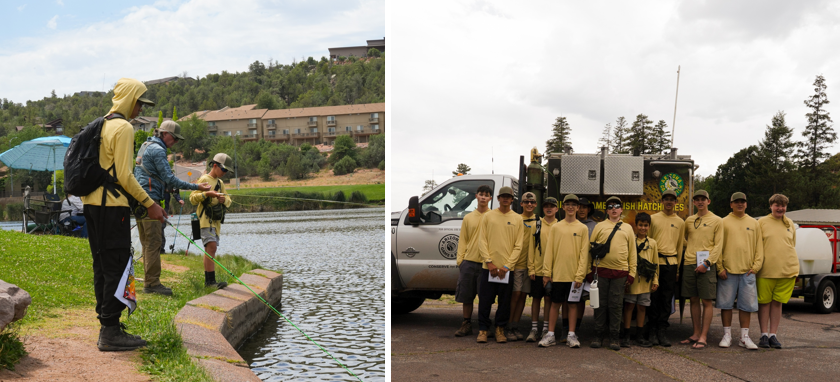
In June, two dozen young people between the ages of 13-17 attended Arizona Fish Camp, a seven-day immersive adventure program hosted by Trout Unlimited near the creeks and lakes of northern Arizona’s Mogollon Rim. With rods and tackle boxes in hand, students learned the fundamentals of fly fishing and fostered a passion for conserving, protecting and restoring Arizona’s freshwater fisheries.
During one camp outing, the students visited AZGFD’s Tonto Creek Fish Hatchery near Payson, Ariz., where they toured the facility alongside hatchery manager Bryce Sisson and got an up close look at the facility’s operations– including the tanks of various sportfish that will soon be stocked across Arizona’s waters.
On Friday, June 26, the group also had the opportunity to meet the Arizona Game and Fish Commission at their public meeting in Payson, where they were greeted with a round of applause.
“This camp is a great partnership between Trout Unlimited and the Arizona Game and Fish Department to showcase the state of Arizona and its diversity of fish and habitat,” said Steve Berry, a Trout Unlimited volunteer and Arizona Fish Camp instructor. “It’s a great program to keep these kids– the next generation of fly fishermen and women– moving forward into the future.”
Trout Unlimited and AZGFD share the belief that creating the next generation of conservationists is vital for the continued protection and restoration of wildlife species and habitat. Trout Unlimited also has partnered with the Department on projects around the state, including habitat restoration, species recovery and data collection.
“The importance of opportunities like this cannot be overstated. In a world where kids have a million choices of online and solitary activities to choose from, implementing a camp such as this where connection with nature and other kids are emphasized are becoming rare,” said Alec Young, Trout Unlimited’s angling recruitment, retention, and reactivation manager. “A huge job well done to the Arizona Council of Trout Unlimited and all of the partners that go into making this camp happen each year.”
Anglers can still participate in Arizona's Fish250 Challenge
The challenge continues! Anglers of all experience levels are invited to explore the incredible fishing opportunities found across Arizona by participating in the Fish250 Challenge.
It’s easy to participate. Just take selfies (or have someone take photos of you) at each of these locations and do the following to fulfill the Fish250 Challenge:
-
2 - Fish 2 Community Fishing Program waters
-
5 - Fish 5 Arizona lakes or streams
-
0 - Have 0 bad days
Once you’ve completed the Fish250 Challenge, fill out the completion form, download your photos, and click on “submit.” If you send in the form before the end of August, you’ll receive the Fish250 Sticker Pack.
The challenge is part of Arizona’s Outdoors250 celebration encouraging people to get outside, try something new, and reconnect with Mother Nature through outdoor recreation. Outdoors250, in turn, is part of America250, a nationwide initiative commemorating the 250th anniversary of the United States. For more information on the Fish250 Challenge, including information on where to fish, license requirements, regulations, how-to videos, and more, visit https://www.azgfd.com/fish250/.
For more information on Arizona’s Outdoors250, visit https://azstateparks.com/Outdoors250.
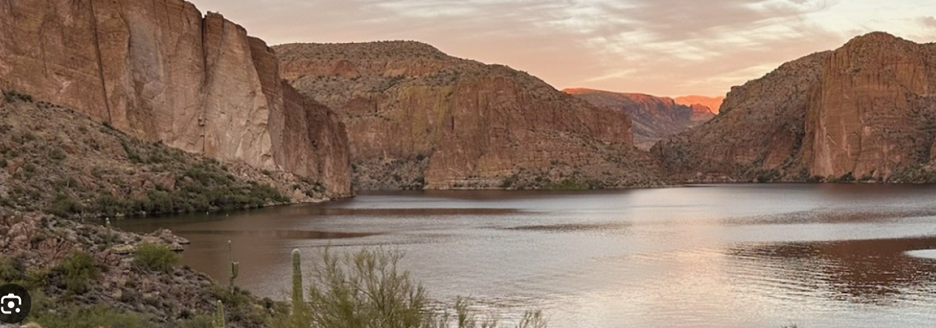
Canyon Lake. (Photo courtesy of Tonto National Forest).
Reminder: Canyon Lake drawdown to begin Sept. 16
Lake will be closed for about 16 weeks for critical dam safety inspections and maintenance
Anglers, boaters and other outdoor recreationists are reminded that the water level of Canyon Lake, about 50 miles east of Phoenix, will be lowered for approximately 16 weeks starting Sept. 16, 2026, for dam safety inspections and maintenance. Tonto National Forest will close the lake, including all boat ramps and access points, during this time.
Salt River Project (SRP) and the U.S. Bureau of Reclamation lower Canyon Lake for critical dam safety inspections and maintenance once every 20 years. While inspections and maintenance are regularly performed on the dams, some critical equipment is located underwater, which makes it inaccessible without lowering the lake level.
For more information, visit SRP information HERE or Tonto National Forest Information HERE.
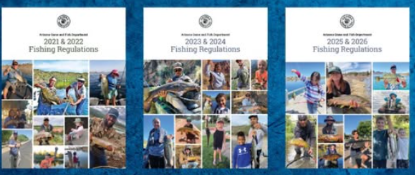
Arizona anglers: Want to be featured on the cover of the Fishing Regulations?
Want a chance to be on the cover of the 2027 & 2028 Arizona Fishing Regulations? Comment on this post in the FishAZ Facebook group with your favorite Arizona fishing photo for a chance to be featured. We can't wait to see where you've been fishing and what you've been catching.
By commenting on this post and including a photo, you are giving the Arizona Game and Fish Department permission to publish that photo as part of the 2027 & 2028 Fishing Regulations, should it be chosen.
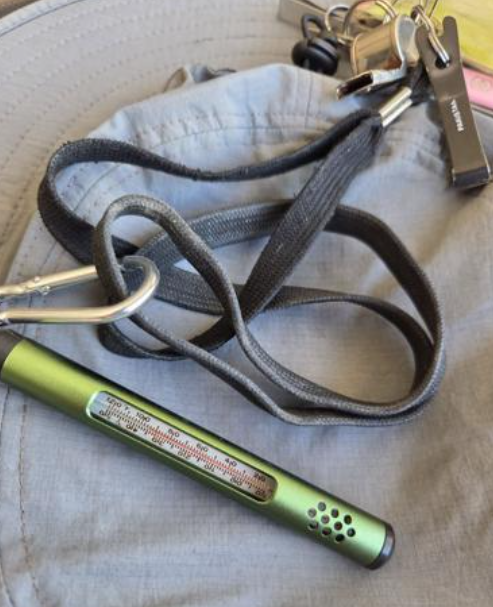
A stream thermometer on a lanyard allows you to easily measure water temperatures. Keep it dipped in the water for at least three minutes before checking. Photo courtesy of Jim Strogen and Payson Roundup.
Summer fishing for trout in Rim Country
As water temperatures rise in Rim Country lakes and streams, angler Jim Strogen advises fellow anglers that their approach to fishing for trout should take these warmer conditions into account. Trout are most comfortable in water temperatures well below 68 degrees Fahrenheit. Due to minimal snowpack and very shallow stream conditions this year, some streams are already reaching 70 degrees.
In a recent article in the Payson Roundup, Jim offers tips for those who want to enjoy fishing Rim Country streams over the summer. Read the article.
Also see the Mogollon Rim Streams section by Sam Simmons further down in this Fishing Report.
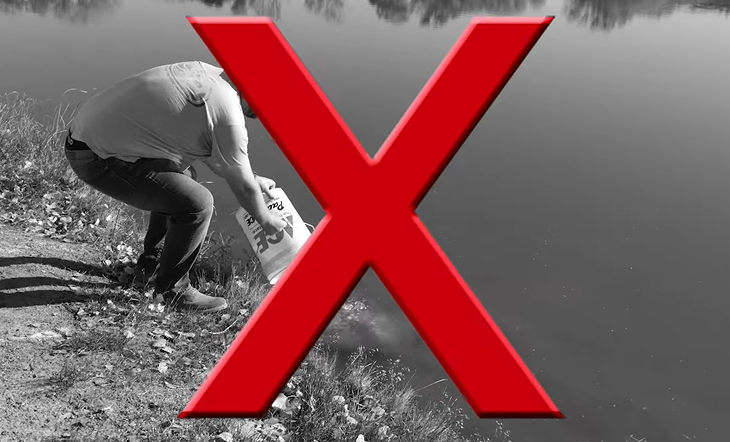
Reminder: It is illegal to transport live fish from one water body to another
Money spent on dealing with illegally introduced fish takes away from funds that could go toward providing more angler opportunities
Anglers are reminded that stocking or moving unauthorized fish from one water body to another in Arizona is illegal and can harm existing native fish populations and sport fisheries. Following illegal stocking, fish can move on their own to other locations from where they were introduced and establish new populations.
Colorado River states have spent nearly $100 million to deal with illegally introduced fish – money that could have been better spent providing more angling opportunities. If you see anyone illegally stocking fish into our lakes or rivers, please report it to Operation Game Thief at 1-800-352-0700.
See the video on how illegal moving or stocking of fish can do serious damage to native fish populations and ecosystems.
Boaters and anglers: Please help stop the spread of aquatic invasive species
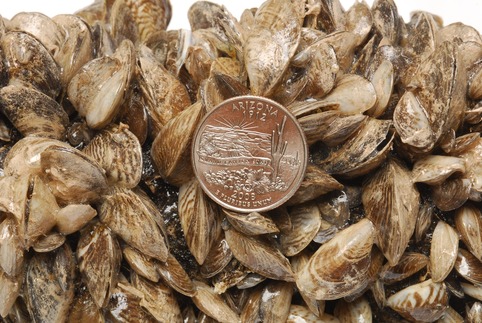
Aquatic invasive species (AIS) are threatening the public’s angling and boating recreation and our state’s water and electrical infrastructure. It is critical for anyone who owns or uses watercraft, or has a business reliant on watercraft, to understand the essential nature of this aquatic invasive species containment effort by the Arizona Game and Fish Department.
The spread of quagga mussels and other aquatic invasive species has far-reaching impacts, both financial and ecological, that can touch virtually every resident of the state. Whether you fish, or boat, or simply get water and electricity to your home, these aquatic invaders WILL affect your lifestyle…and possibly your wallet.
Please contact the Arizona Game and Fish Department Aquatic Invasive Species (AIS) Program at 623-236-7608 if you have any questions or would like to schedule a boat inspection.
For more information on aquatic invasive species, including links to Director's Order #1 (list of aquatic invasive species of Arizona), Director's Order #2 (list of AIS-affected waters in Arizona), and Director's Order #3 (mandatory conditions for movement of watercraft, conveyances and equipment from affected waters), visit
https://www.azgfd.com/fishing-2/aquatic-invasive-species/.
Important items
Recent stockings
Week of 7/13 to 7/17/26
Stocked with rainbow trout unless otherwise indicated.
North Central: Oak Creek.
Flagstaff/Williams: City Reservoir.
Mogollon Rim: Bear Canyon Lake, Canyon Creek, Knoll Lake, Tonto Creek.
Southern Arizona: Riggs Flat Lake, Rose Canyon Lake.
Week of 7/6 to 7/10/26
Stocked with rainbow trout unless otherwise indicated.
Flagstaff/Williams: Cataract Lake, Kinnikinick Lake (Tiger trout), Santa Fe Reservoir.
Mogollon Rim: Canyon Creek, Haigler Creek, Knoll Lake, Tonto Creek, Willow Springs Lake, Woods Canyon Lake.
Week of 6/29 to 7/3/26
Stocked with rainbow trout unless otherwise indicated.
Flagstaff/Williams: City Reservoir, Dogtown Lake.
Mogollon Rim: Canyon Creek, Christopher Creek, East Verde River, Haigler Creek, Tonto Creek, Willow Springs Lake, Woods Canyon Lake.
White Mountains: Silver Creek.
Check the stocking schedules HERE.
Reports
NORTHERN ARIZONA (report by Matt Rinker)
The forecast for Flagstaff, Williams, and the Mogollon Rim calls for scattered showers and thunderstorms throughout the weekend and early next week. Highs will be in the mid 70s and lows will be in the mid 50s. Water temperatures will be in the 60s to 70s. Lower elevations around the Verde Valley will see highs in the mid to high 80s with lows in the 70s. Be careful out on the water as lightning is likely with some of the storms.
Now is a great time to pursue one of the Department's Trout Challenges (https://www.azgfd.com/fishing-2/fishing-challenges/azgfd-trout-challenge/) or Bass Challenges (https://www.azgfd.com/fishing-2/fishing-challenges/arizona-bass-challenge/). Water temperatures are in the mid 60s to low 70s in the lakes around Williams and Flagstaff, which means warmwater species (largemouth bass, bluegill, channel catfish, and black crappie) are active. Trout fishing will start slowing down as water temperatures climb as summer progresses. Try fishing for trout early in the morning and late in the evening.
Bait Anglers: Worms, corn, and PowerBait will be your best bets for trout this week. Nightcrawlers are a good bet for walleye, and anchovies are a good approach for northern pike. Catfish are commonly caught on worms, hot dogs, and anchovies. Small pieces of nightcrawlers and mealworms on small hooks are a good approach for panfish (bluegill, black crappie, yellow perch, and yellow bass). Reminder, the use of live minnows and fish as bait is not allowed on any waters in Coconino County, including all of the bodies of water listed below.
Lure Anglers: Lures with flash and vibration such as Joes’ Flies, Panther Martins, Mepp’s spinners, Kastmasters, Rooster Tails, crayfish imitations, Pistol Petes, and Dare Devils are good choices. Think small for trout, 1/8 – 1/12-ounce lures are best (silver, gold, or copper). For warmwater species, crankbaits, soft plastics, and spinnerbaits have been working well. Pay attention to what is working and duplicate that presentation. Warmwater species like largemouth bass, bluegill and black crappie are moving in shallow.
Fly Anglers: Producing flies this week include #10 bead-headed Simi-seal leeches (brown, black, olive, and wine), #10 bead-headed Wooly Buggers (brown, black, olive, and wine), #10-12 Zug Bug, #12-10 Dragonfly Larvae (olive), #18-16 Zebra Midge, #16-#12 Pheasant Tail, #12-14 Prince Nymph, #12-14 San Juan worm, hoppers, damselfly, stonefly, mayfly, hopper, and caddis fly patterns.
Check the fishing regulations before heading out as many of the lakes around Williams and Flagstaff have special regulations. Reminder, the use of live minnows and fish as bait is not allowed on any waters in Coconino County, including all of the bodies of water listed below. Your licenses pay for the fish you catch; poachers are stealing from YOU. It is illegal to transport and release live fish in Arizona including all of the waters listed below; the illegal introduction of unwanted species is costly and diminishes the quality of our fisheries. If you observe a violation, please report it to the Operation Game Thief Hotline (OGT) at 1-800-352-0700.
This week's top picks for the northern Arizona region:
Trout: Santa Fe Reservoir, Knoll Lake, Dogtown Lake, City Reservoir, and Cataract Reservoir.
Bass, Bluegill, and Black Crappie: Lake Powell, Cataract Lake, Dogtown Lake, and Whitehorse Lake.
Channel Catfish: Lake Powell, Santa Fe Reservoir, Kinnikinick Lake, City Reservoir, Cataract Lake, and White Horse Lake.
Northern Pike and Walleye: Upper Lake Mary.
WILLIAMS LAKES (Kaibab National Forest):
Kaibab Lake - The Kaibab Lake day use, boat launch, and campgrounds are open. The limit is 2 bass minimum size 13 inches, the limit is 4 channel catfish, the limit is 4 trout. Only boats with a single 10-horsepower motor (or less) or single electric motor are allowed on Kaibab Lake. The lake is very low and launching a boat is challenging. Water temperature 72.49 F, pH 8.51, Dissolved Oxygen (D.O.) 6.65 mg/l, and turbidity 133.5 NTU on 7/10/2026.
Cataract Lake - Both the County and Forest Service day use areas are open. Only boats with a 10-horsepower motor (or less) or single electric motor are allowed on Cataract Lake. The limit is 2 bass minimum size 13 inches, the limit is 4 channel catfish, the limit is 4 trout. Anglers have been catching trout on worms, lures, and flies. Warmwater species like largemouth bass, bluegill, black crappie are also active. Rainbow trout were stocked last week. Water temperature 74.07 F, pH 8.51, D.O. 6.89 mg/l, and turbidity 35.31 NTU on 7/10/2026.
City Reservoir (Buckskinner Park) - Buckskinner Park and access to City Reservoir are open. The limit is 2 bass minimum size 13 inches, the limit is 4 channel catfish, the limit is 5 sunfish, the limit is 4 trout. Water temperature 66.76 F, pH 9.37, D.O. 8.05 mg/l, and turbidity 19.83 on 7/10/2026.
Dogtown Lake - The Dogtown Lake campground, day use, and boat launch are now open. The lake level is below the old boat ramp and launching a boat is a little challenging. Only boats with a single electric motor are allowed on Dogtown Lake. No gas-powered motors. The limit is 2 bass minimum size 13 inches, the limit is 4 trout. Anglers have been catching trout, largemouth bass, and black crappie. Water temperature 75.23 F, pH 9.06, D.O. 6.64 mg/l, and turbidity 24.43 NTU on 7/10/2026.
Santa Fe Reservoir - Only boats with a single electric motor are allowed on Santa Fe Reservoir. No gas-powered motors. The limit is 2 bass minimum size 13 inches, the limit is 4 channel catfish, the limit is 4 trout. Anglers have been catching trout on worms, PowerBait, flies (#10 Simi Seal Leeches, #12 Prince nymphs), and lures (Joe’s flies). Channel catfish were stocked last week and are being caught on worms by the dam. Water temperature 75.61 F, pH 8.75, D.O. 7.02 mg/l, and turbidity 7.73 on 7/10/2026.
JD Dam - JD Dam is catch-and-release only for trout; no trout may be kept; artificial fly and lure only; single-pointed, barbless hooks only. Only boats with a single electric motor are allowed on JD Dam. No gas-powered motors. This is the time of year the surface temperatures of the water get too warm for trout. If you plan to fish J.D. Dam, we suggest early mornings before the water temperatures get too hot.
Whitehorse Lake - The White Horse Lake campground, day use, and boat launch are open. Only boats with a single electric motor are allowed on White Horse Lake. No gas-powered motors. The limit is 2 bass minimum size 13 inches, the limit is 4 channel catfish. Anglers are finding success using lures with flash and vibration such as inline spinners and worms.
Russel Tank - The limit is 4 trout. Access to Russel Tank is open.
FLAGSTAFF LAKES (Coconino National Forest):
Lower Lake Mary - The daily bag limit is 4 trout per day and 4 channel catfish per day. Northern pike are unlimited, but must be immediately killed or released. Only boats with a single 10-horsepower motor (or less) or a single electric motor are allowed on Lower Lake Mary when there is water. Lower Lake Mary is currently dry.
Upper Lake Mary - Upper Lake Mary boat launches are open. Up lake of the Narrows is very shallow (~1-2 feet deep). Statewide limits apply for the fish species in Upper Lake Mary, check your regulations (page 6). The lake level is low and launching a boat can be challenging at the current lake level. Anglers have been catching northern pike, walleye, and a few bass.
Frances Short Pond - The limit is 2 bass minimum size 13 inches, the limit is 4 channel catfish, the limit is 5 sunfish, the limit is 4 trout. Surface temperature 73.76 F, pH 8.36, D.O. 5.90 mg/l, turbidity 21.31 NTU on 7/10/2026.
Ashurst Lake - FR 82E to Ashurst Lake and campgrounds is open. Only boats with a single 10-horsepower motor (or less) or a single electric motor are allowed on Ashurst Lake. The limit is 4 trout. Northern pike and green sunfish were illegally introduced and are not managed for in Ashurst Lake. Northern pike and green sunfish are unlimited in Ashurst Lake, please kill any northern pike and green sunfish caught. The lake level is very low and launching a boat is difficult. With the warming temperatures and increasing pH levels, trout fishing has slowed considerably. Try fishing early in the morning and in 6-12 feet of water. Water temperature 69.64 F, pH 8.95, D.O. 6.81 mg/l, and turbidity 14.22 NTU on 7/10/2026.
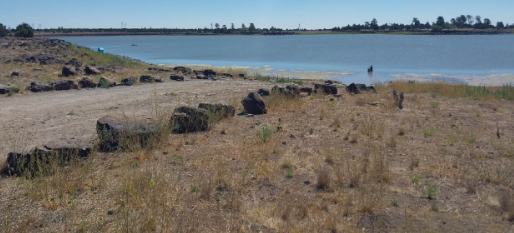 |
Kinnikinick Lake - FR 125 to Kinnikinick Lake is open. Only boats with a single 10-horsepower motor or single electric motor are allowed on Kinnikinick Lake. Please do not put rocks on the boat launch; as the lake levels rise, the rocks become hazards for boats and trailers. A few folks have been catching nice channel catfish on bait. Tiger trout were stocked last week. Surface temperature 61.66 F, pH 8.34, D.O. 6.93 mg/l, turbidity 59.01 NTU on 7/8/2026.
Mormon Lodge Pond - Mormon Lodge and access to the pond are open. Surface temperature 66.05 F, pH 8.16, D.O. 7.50 mg/l, turbidity 9.25 NTU on 5/15/2026.
Marshall Lake - FR 128 to Marshall Lake is open. Only boats with a single 10-horsepower motor or single electric motor are allowed on Marshall Lake.
CENTRAL ARIZONA
Bartlett Lake - See Gary Senft's recent reports from Bartlett, Apache and Roosevelt lakes at https://www.youtube.com/channel/UCUo7QaElWsI7PSQ588tc2XA/videos.
NORTH CENTRAL ARIZONA (report by Connor Hanley)
Dead Horse State Park Lagoons - No stocking has taken place in June or July, and the bite is slower than usual, but anglers can still catch channel catfish and largemouth bass out of the lagoons. Popular baits for catfish include chicken liver, worms, or corn while smaller (about 6-inch) hard and soft plastics have been shown to be effective for the bass. Special Regulations: The limit is 4 trout, 2 bass, 4 catfish, and 10 sunfish. For species not listed, or bodies of water without special regulations, refer to the statewide fishing regulations.
Goldwater Lake (Upper) - Upper Goldwater was stocked with rainbow trout on the weeks of 6/1 and 6/15, and this was the last time until fall that they will be stocked, so catch them while you can! Anglers are reported using PowerBait, PowerEggs, small soft plastics, and inline spinners for trout. Channel catfish are picking up this time of year, and popular baits include chicken liver, cut-up hotdogs, and nightcrawlers. Largemouth bass can be caught with either hard or soft plastic swimbaits. Special Regulations: The limit is 1 bass; minimum of 13 inches. Single electric motor only. For species not listed, or bodies of water without special regulations, refer to the statewide fishing regulations.
Goldwater Lake (Lower) - Rainbow, Gila, and brown trout are being caught out of Lower Goldwater by anglers using spinners and nymphs. Largemouth bass should also be active in the warmer season and usually are caught using moving baits and plastics. No stockings have taken place in June or July. Special Regulations: Catch and release only, artificial flies and lures only. Float tube only watercraft restriction. For species not listed, or bodies of water without special regulations, refer to the statewide fishing regulations.
Watson Lake - Channel catfish were last stocked in the lake on the week of 5/25. Anglers report catching nice largemouth bass and catfish. Largemouth bass can be caught on smaller plastics, and are usually found within thicker patches of aquatic vegetation this time of year. Special Regulations: None. For species not listed, or bodies of water without special regulations, refer to the statewide fishing regulations.
Mingus Lake - Rainbow trout were stocked for the last time until the fall on the week of 6/1. To catch these trout, try using PowerBait or inline spinners. Special Regulations: None. For species not listed, or bodies of water without special regulations, refer to the statewide fishing regulations.
Yavapai Lakes - No stocking has taken place at the Lakes in June or July. Anglers have reported catching largemouth bass using soft and hard plastics, especially crankbaits. Channel catfish are more active this time of year and can be caught using nightcrawlers, chicken liver, and cut-up hotdogs. Special Regulations: The limit is 2 bass: minimum of 13 inches, 4 catfish, 10 sunfish, and 4 trout. For species not listed, or bodies of water without special regulations, refer to the statewide fishing regulations.
Fain Lake - Channel catfish were last stocked on the week of 6/1. Anglers have been catching catfish using nightcrawlers and chicken liver, and trout using PowerBait, PowerEggs, and inline spinners. Largemouth bass can be caught on small (6-inch) soft and hard plastics. Special Regulations: The limit is 2 bass: minimum of 13 inches, 4 catfish, 10 sunfish, and 4 trout. For species not listed, or bodies of water without special regulations, refer to the statewide fishing regulations.
VERDE VALLEY STREAMS (Red Rock Ranger District, Coconino National Forest) Report by Matt Rinker.
Oak Creek - As of Jan. 1, 2023, the catch-and-release section on Oak Creek has been expanded to include Oak Creek from the Highway 89A bridge at Slide Rock State Park upstream to the Sterling Springs Fish Hatchery property boundary including the West Fork Oak Creek. This section will be catch and release only for trout, artificial fly and lure only, barbless hooks only. Access to the canyon via State Route 89A upstream of Sedona is now open following significant containment of the Pocket Fire. However, evacuation status is still in “READY” status as crew are still monitoring the fire. Stream flow: 31.0-34.5 cfs; Water temperature: 66.7-71.2 F; Turbidity: 1.8-2.2 FNU as of 7/13/2026.
West Clear Creek - Smallmouth bass are unlimited harvest in West Clear Creek. Roundtail chub are often caught in sections of West Clear Creek; please release them unharmed. The limit is 4 trout. Stream flow is 10.7-15.2 cfs and stream temperature 74.5-79.5 F on 7/13/2026.
Wet Beaver Creek/Beaver Creek - Bass are unlimited harvest in Wet Beaver and Beaver Creeks. There is the potential to catch a native sucker or roundtail chub; please release them unharmed. The limit is 4 trout. Stream flow is 7.22-7.89 cfs on 7/13/2026.
MOGOLLON RIM LAKES (report by Matt Rinker)
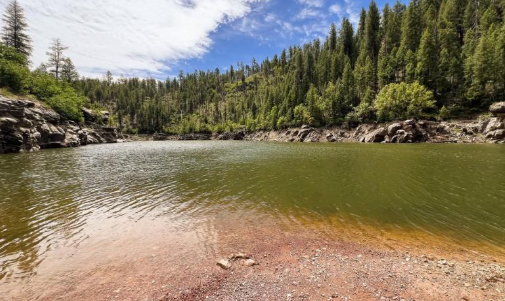
Blue Ridge/C.C. Cragin Reservoir - Rock Crossing campground is open. Only boats with a single 10-horsepower (or less) motor or a single electric motor are allowed on C.C. Cragin Reservoir. Green sunfish and golden shiner are unlimited and invasive, please remove them if caught. The boat launch is open, but the lake level is not up to the concrete launch, making launching challenging, but feasible. An algae bloom is present and trout have moved to 10-15 feet deep. Anglers are catching fish on lures and bait. Reservoir elevation 6,690.10 feet, current volume is at 8,282 acre feet or 55% full (and dropping), surface temperature is 63.87 F, pH is 9.64, D.O. is 10.58 mg/l, turbidity is 5.65 NTU on 7/13/2026.
 |
Knoll Lake - FR 300 and FR 295E into Knoll Lake are open. Only boats with a single electric motor are allowed on Knoll Lake. The lake level is below the boat launch and launching a boat is feasible, but challenging. No gas-powered motors. Reminder, the statewide limit is 4 trout per licensed angler per day. Anglers are finding success trolling inline spinners such as Joe’s flies. Rainbow trout were stocked last week.
Huffer Tank - Huffer Tank filled this spring from snow melt runoff, but is rapidy dropping.
MOGOLLON RIM STREAMS (report by Sam Simmons)
July can be a good time to head up to Rim Country to fish the regional creeks for wild and stocked trout. This time of year, the chances of afternoon monsoons increase, hopefully giving our streams a relief as we have been seeing increased stream temperatures this year. Chances of monsoons increase in the afternoons, making the mornings a great time to get out to fish. I typically fish early in the morning and try to be off the water before noon, then fish an evening bite after the storms. If possible, bring a thermometer to check stream temperatures before fishing. Fishing during warm water conditions can cause stress to trout and possible delayed mortality if practicing catch and release. A few quick tips:
- Fish early in the mornings before stream temperatures rise
- Land fish quickly and release fish, if possible, without removing fish from water
- Avoid fishing any water over 67-68 degrees, as fish mortalities can increase after handling
East Verde River - Upper East Verde River has been fishing well for wild rainbow trout, with a handful of bugs working well. This is the time of year to be throwing dry flies here and at the rest of the Rim creeks. Popular and effective patterns include terrestrial bugs such as black ants and beetles, mini hoppers, as well as elk hair caddis. Various small nymphs presented well around habitat will entice these fish to come out to eat as well when fish are tucked under cover. Try Pheasant Tails, Hares Ears, or Prince Nymphs as well as leeches (black or olive). Please remember, this is a special regulation water upstream of the Pumphouse. This is catch-and-release only for trout; no trout may be kept; artificial fly and lure only; single-pointed barbless hooks only.
Horton Creek - Horton Creek has been fishing well for wild brown trout in the mornings and evenings. Dry flies include an assortment of terrestrial flies with black ants and cicadas working really well. The brown trout at Horton Creek are opportunistic and will readily eat a fly if it is well presented. Small streamers are also a good choice if the dry fly action is slow. Stripping or jigging a fly next to boulders, logs, and other fish holding habitat typically gets a positive response and a fish on the line. This is catch and release only for trout; no trout may be kept; artificial fly and lure only; single-pointed barbless hooks only.
Canyon Creek - Canyon Creek is one of the streams that is susceptible to higher stream temperatures, especially in the Lower Section where it is managed for catch and release trout. This is catch and release only for trout; no trout may be kept; artificial fly and lure only; single-pointed barbless hooks only. This section of the creek does not have much shade compared to upstream sections, and checking stream temperatures is imperative here. Bringing a stream temperature thermometer and fishing early in the morning will be the best practice. Terrestrial dry flies such as cicadas, ants, and grasshoppers will work well if you can present it without spooking these fish in the clear water. The upstream section near the hatchery typically stays cool enough to fish most of the day without causing too much stress to fish. Water temperatures stay consistent in the upper 50s to low 60s in this section and the creek is stocked with rainbow trout weekly. There are also opportunities here for wild brown trout in this section. I like to throw nymphs such as Copper Johns and Pheasant Tails at stocked trout. Statewide trout fishing regulations apply to this upper section, upstream of the OW Bridge.
Pine Creek - Upper Pine Creek (upstream of the town of Pine) is a unique and remote wild rainbow trout fishery within the region. Recent fish surveys have found good densities of fish in this section despite low water conditions. Rainbow trout here will eat a variety of flies with dries being at the top of the menu. Due to the remote nature of this place, fish see little pressure and are eager to go after almost any fly you throw (if you do not spook them, of course). I enjoy throwing larger foam terrestrials such as hoppers and cicadas and watching them rise to crush the fly. If you chose to go to Pine Creek, it is best to contact a regional fish biologist about access to this remote wilderness fishery. Again, fishing in the morning is the best practice to beat the stream temperatures.
Webber Creek - Similar to Pine Creek, Webber Creek is the next major drainage to the east of Pine located upstream of Camp Geronimo which is private property. Access to the creek requires a long hike around the property. Webber Creek is home to a wild rainbow trout population and fishing is similar to Pine Creek. Varieties of dry fly patterns work well. Throw these flies into plunge pools, next to boulders and woody debris, and you’ll likely have one on! Talking to a fish biologist about access to this remote fishery is also recommended.
LEES FERRY/LAKE POWELL
Lees Ferry - Water temperature on 7/13/2026: 64.9-66.9 F; Dissolved Oxygen: 6.8-9.1 mg/l; pH: 8.1-8.4 std units; Discharge Rate: 6,260-8,950 cfs; Turbidity: 0.4-0.5 FNU. Fishing has been slow with most anglers landing 0-7 fish per day. Folks fishing with lures have been finding some success. Lees Ferry Anglers river reports posted at https://leesferry.com/river-report/.
Lake Powell - Water surface temperature (Wahweap Bay) on 7/13/2026: 81.0-86.0 F. Lake Elevation: 3,524.32 MSL (and dropping). Note: Please be advised that each calendar year, Utah has requirements for motorized boats before launching at a Utah waterbody. Read the following:
1. Register your vessel with your state’s Division of Motor Vehicles (or the equivalent in any
state/province for boat registration) — you will need your bow number to enroll in the
Utah AIS program.
2. Complete the annual DWR mussel-aware boater education course. Print out your proof of course completion or download it to your DWR Hunting and Fishing app.
3. Enroll your vessel in the Utah AIS Program. An annual fee per watercraft applies: $20 for
Utah residents and $25 for non-resident vessels.
4. A current-year AIS decal will be mailed to you; affix it to your boat with the instructions
enclosed in the mailer.
Important: You must have a professional decontamination completed before launching your
vessel in any Utah waterbody — regardless of season — if:
- You are entering Utah from another state.
- You have been at a mussel-infested water and not met the 30-day dry time required
for complex boats (vessels containing inboard motors, inboard/outboard motors,
ballast tanks, bilges, live wells, generators, AC units and any other raw water systems).
More information available at: https://stdofthesea.utah.gov/ais/motorized/.
The July Lake Powell report is courtesy of Dan Keller on www.wayneswords.net. Lake elevation continues to hover around 3,524 feet and will slowly decline, exposing new rocky points and islands. During the dog days of summer, the best fishing is generally during the first few hours of daylight and again during the evening. Fish can still be caught throughout the day, but most species are moving deeper or holding close to shade and steep structure.
Striped bass (striper)
Striped bass provide the most exciting fishing opportunity this month. Surface-feeding activity has increased as young stripers chase recently hatched threadfin and gizzard shad. Most stripers caught are smaller one- and two-year-old fish, but they are in good condition and great to eat. Last week we found large schools of striped bass feeding on the surface at Red Canyon and Ticaboo.
Watch closely for splashing, scattered surface activity and small groups of birds. Some schools look more like slurps than full boils and may disappear as soon as a boat approaches. Anglers reported surface-feeding stripers between Bullfrog and Knowles, along the main channel in the mid-lake area, near the Escalante and around the San Juan.
Smallmouth bass
Smallmouth bass remain dependable, although many of the fish being caught are small. Post-spawn fish have moved away from the shallows and are found around broken rock, submerged ledges, secondary points and offshore humps. Start the morning with a topwater lure along rocky points and shorelines. As the sun rises, move into 20–30 feet of water and fish slowly along the bottom.
Largemouth bass
Largemouth bass are more difficult to locate during the heat of summer. Concentrate on the backs of canyons, shaded cuts and coves that still contain submerged brush. Early morning is the best time to throw topwater lures, spinnerbaits or shallow-running crankbaits around brush.
After sunrise, use a Texas-rigged plastic, Senko, jig or drop-shot around the deepest available brush and nearby rock. Largemouth numbers are lower than smallmouth numbers, but some quality fish continue to be caught, including many reported bass over 4 pounds.
Bluegill, crappie and catfish
Bluegill can be found in protected coves containing brush, shade and relatively calm water. Use a small jig, piece of worm or lightweight drop-shot rig. Bluegills continue to be active on hot sunny days and are often willing to bite anytime of the day. Crappie are less predictable, but a few continue to be caught around brush and shaded canyon structure. Last week I had success catching several bluegills with a Z-Man Micro Ned-rig on a 1/10-ounce jig head.
Channel catfish are becoming increasingly active as the water warms. Fish sandy beaches and gradually sloping coves during the evening or after dark. Anchovies, hot dogs, cut bait, worms and prepared catfish bait will all catch fish.
July fishing plan
Be on the water before sunrise. Spend the first two hours watching for striper surface activity and throwing topwater lures for bass along rocky points. After the surface bite slows, troll main-channel points and canyon mouths to locate stripers.
During the middle of the day, fish deeper rocky structure with Ned rigs, tubes and drop-shot rigs. Return to the main channel during the evening and watch for surface activity.
Summer boat traffic, wind and extreme heat can make afternoon fishing difficult. Carry plenty of water, watch the weather closely and use caution around newly exposed rock islands.
With a little searching, anglers can still catch a variety of species at Lake Powell. Last week I was camping on the lake and planned to take the boat out to fish near camp after dinner. The wind picked up enough to start waves rolling and crashing onto shore. Rather than fighting the wind attempting to maneuver a boat, I decided to walk along the shore and see what I could catch. I would make three or four casts, and if I didn’t catch a fish, I'd walk a few more steps along the shore to cast to new areas.
I quickly learned the wind was working in my favor as it was pushing young shad right up near shore and fish were actively feeding on the abundance of shad. I usually don’t count the fish I catch, but the shore fishing was so good (in fact, much better than fishing we had from the boat all trip) that I decided to keep count. I ended up with 13 smallmouth bass, 6 stripers, 4 bluegill, and one channel catfish, all caught within about 20 minutes along less than 100 yards of shoreline.
So, if you find yourself fighting the wind and still want to fish, you might consider tying up your boat on a wind-blown shoreline and take your favorite fishing rod and a pocket full of jigs for a nice stroll on the beach. Good luck, be safe, and harvest some stripers!
WESTERN ARIZONA (report by Connor Hanley)
Lake Mead - Anglers have reported success catching largemouth, smallmouth, and striped bass on the lake. To maximize your chance of success at catching some of these fish, try fishing off the topwater as early in the day as you can, or later at night. Anglers have reported success using reaction baits, crank baits, and flukes in a shad pattern. For any fishing done later in the middle of the day, target deep water and try using finesse presentations. Special Regulations: Unlimited striped bass of any size, limit of 5 trout, and 15 crappie. For species not listed, or bodies of water without special regulations, refer to the statewide fishing regulations.
Willow Beach on Lake Mohave - The fishing has been slow and most of the stripers caught have been on the smaller size. Anglers may still be able to get lucky catching bigger stripers, and it’s reported that using trout imitation baits can help. The rainbow trout are still going strong for those fishing on or shortly after each Thursday that they are stocked. Anglers are using worms, PowerBait, and spinners to catch these fish. Special Regulations: The limit is 5 trout, there is no longer a limit for striped bass over 20 inches. For species not listed, or bodies of water without special regulations, refer to the statewide fishing regulations.
Lake Mohave - The fishing has slowed down on the lake. The anglers that are having the most success are going out early in the morning before sunrise to fish topwater for largemouth, smallmouth, and striped bass. Many smaller stripers in the 1- to 2-pound range are being caught. Trolling using a buck-tailed jig or swimbaits in a trout pattern has also been good to anglers looking for these bass. Special Regulations: The limit is 5 trout, and unlimited striped bass over 20 inches. Striped bass may be taken by spear or spear gun from that portion of Lake Mohave between Hoover Dam and Cottonwood Landing. For species not listed, or bodies of water without special regulations, refer to the statewide fishing regulations.
Colorado River Below Davis Dam - The striper bite has been reported to be slow below the Davis Dam, and most of the stripers caught have been smaller in size. Anglers have had some success using anchovies, but location is going to be the most important factor in catching a fish. Before sunrise, try fishing shallower water and go deeper as it gets warmer. Look for spots with shade, where stripers may stay in shallow water for longer. Channel catfish have also been reported being caught using anchovies and nightcrawlers in some of the coves. Special Regulations: The limit is 6 bass; minimum size 13 inches, and 5 trout in any combination. For species not listed, or bodies of water without special regulations, refer to the statewide fishing regulations.
Angler posts
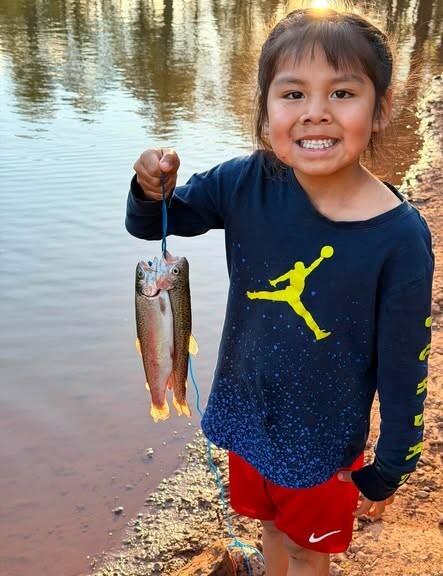
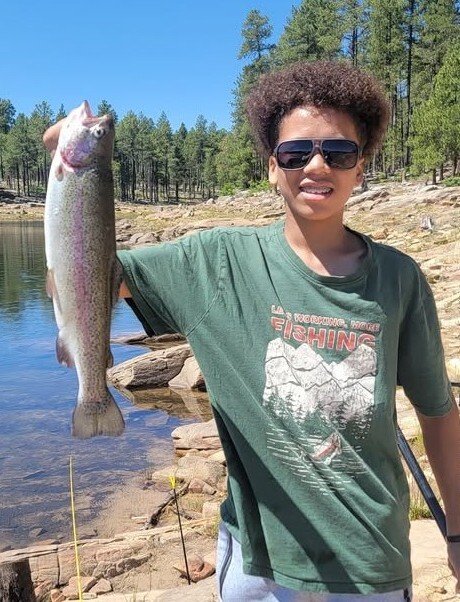
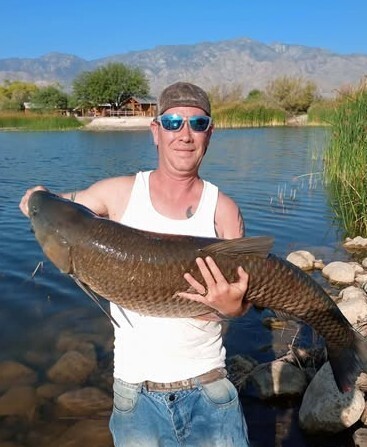
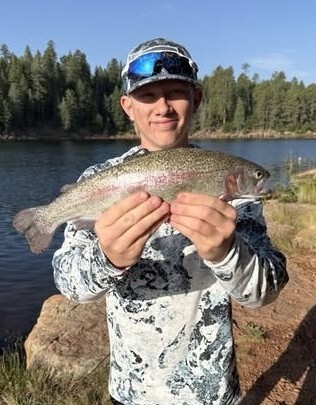
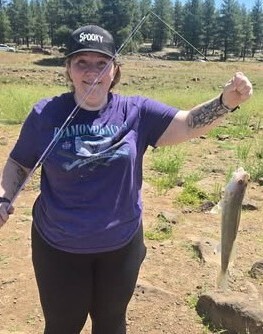
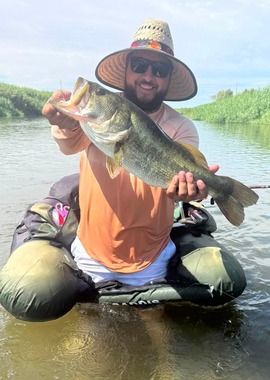
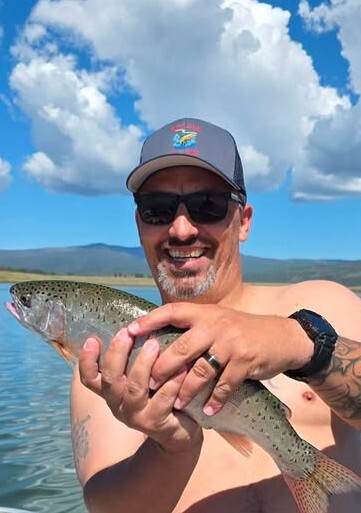
For each edition of the Fishing Report, we'll select some photos and reports submitted by members of the angling public either through the Fish AZ Facebook Group or through the bfishing@azgfd.gov email address. If you'd like your photo/report considered for publication here, please indicate the species, place, date, name (we only publish first name and last initial), and any other information you'd like to provide. For more photos (including new photos each day), visit the Fish AZ Facebook Group.
|