Trout stockings return to desert Community Fishing Program waters in December
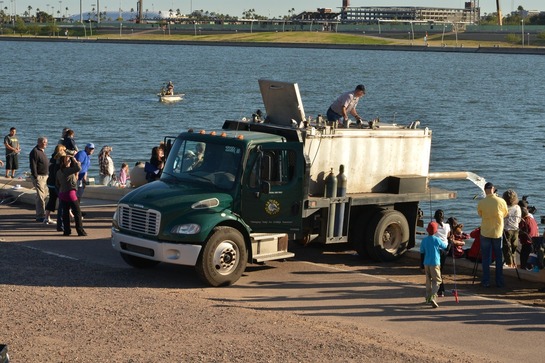
Trout will be returning to Community Fishing Program (CFP) waters in Phoenix, Tucson, Gila Bend, Yuma, and Safford starting in December. The online stocking calendar has been updated.
Trout stocking in upper elevation CFP waters began in October and included waters in Payson, Prescott Valley, Show Low, and St. Johns.
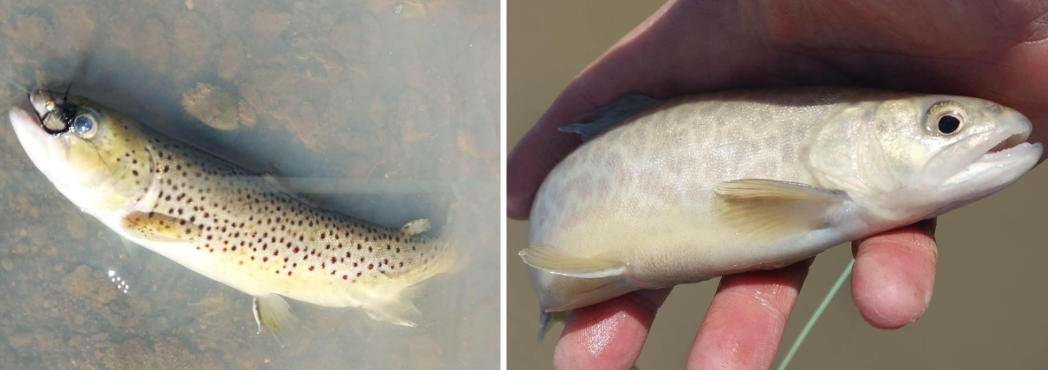
There was a special super-stocking of Gila trout in Payson's Green Valley Lakes on Nov. 6. That stocking came from our Canyon Creek Hatchery and was three times larger than a normal/routine stocking of rainbow trout, so people have a wonderful opportunity to catch a unique trout species that is native to Arizona and New Mexico.
Becker and Luna lakes restocked as weather conditions improve
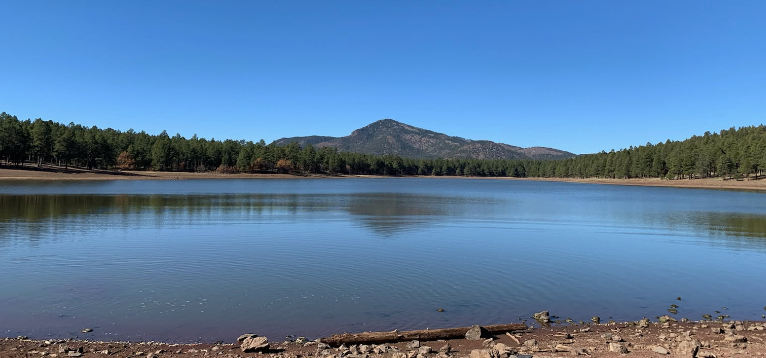
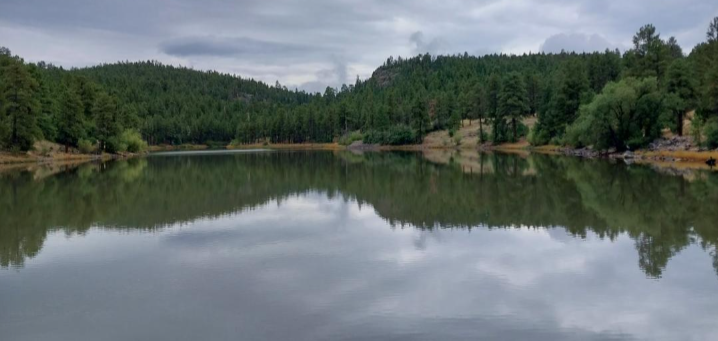
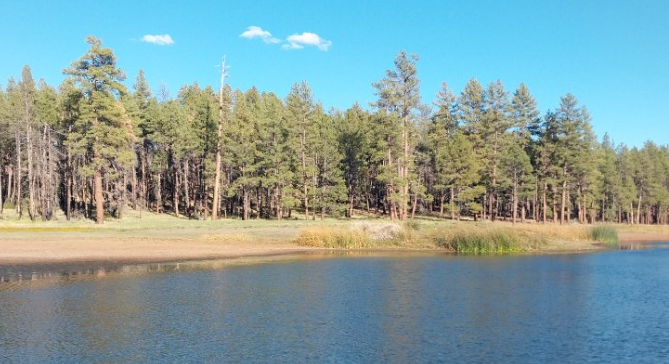
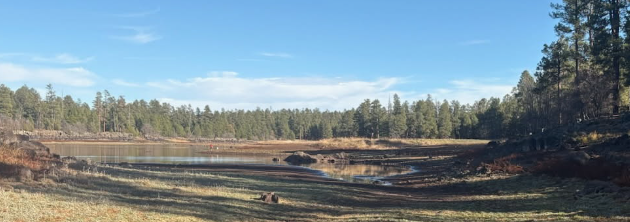
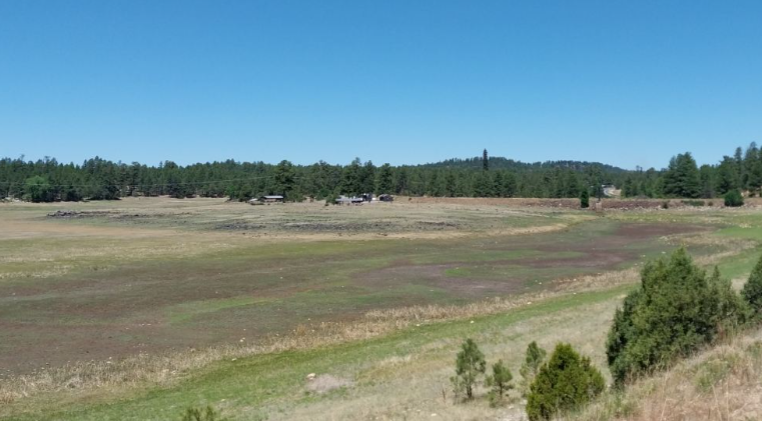
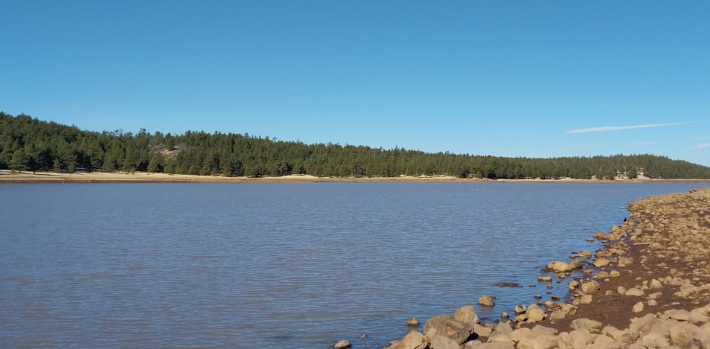
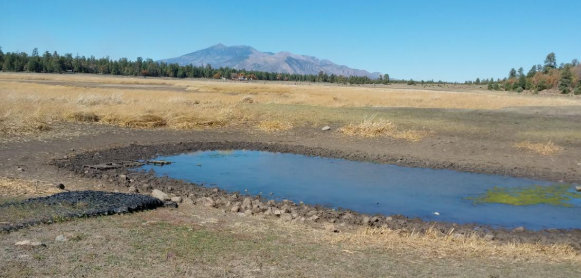
There is good news for anglers regarding Becker Lake and Luna Lake in the White Mountains after both lakes experienced significant fish kills over the summer that were related to low lake levels and poor water quality.
The good news is that water quality improved greatly due to cool fall conditions in October. Each lake was restocked from Arizona Game and Fish Department (AZGFD) hatcheries in an effort to provide fishing opportunities. Becker Lake received a little over 3,000 trout, including a small number of large rainbow trout (4.75 pounds on average) and Apache trout (1.75 pounds on average).
At Luna Lake, roughly 45,000 trout were stocked in several different size classes to restart the fishery, but most relevant to anglers is that these included 5,500 catchable Gila trout and 850 catchable rainbow trout. Department staff fully expect fishing to be good at each water from now until at least June.
Luna Lake in particular should be excellent fishing, and department staff highly recommend anglers head over there to either start or complete your Arizona Trout Challenge by catching a native Gila trout!
Fishing tips and upcoming events
By Chase Newlon, AZGFD Fishing R3 Coordinator
With winter fast approaching and cooler temperatures, coldwater fishing opportunities are abundant. Whether you are targeting rainbow trout, brook trout, or one of our native species of trout, the Apache or Gila trout, I am here to give you some tips and tricks to increase your success on the water.
Let’s talk about lures and baits. This time of year trout can be aggressive and hungry. My favorite lures for trout in the winter are silver Kastmasters in a variety of sizes, 3- to 4-inch jerkbaits, and ⅛ oz black or white Marabou jigs. In the rivers the trout will be moving into the deeper, slower-moving water. Fishing these lures slow and along the bottom in the deeper pools should yield the best results.
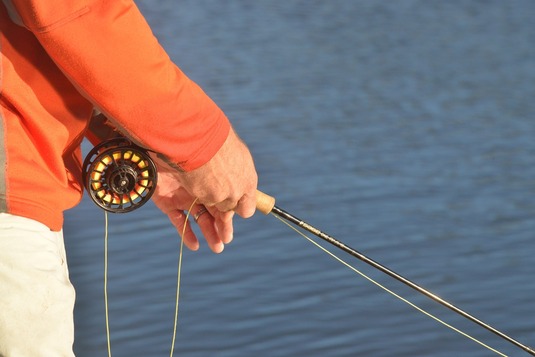
For the fly fisherman out there, midges and small mayfly patterns are on the menu this time of year. Miracle Midges, Black Beauty’s, Griffiths Gnats, and NO-SEE-UMs, all in a size 22-16, are my go-to flies in the winter.
The Salt River is one of my favorite local waters. You can catch trout and largemouth bass on a variety of different lures and flies. Try your luck at one of the many access points along the river. You will need a Tonto National Forest pass for these access points, so make sure to pick one up before heading out. You can find more information on where to purchase a pass here.
Speaking of the Salt River, our partners over at Trout Unlimited are hosting Salt River Saturday River Cleanups every other Saturday. This is a great event if you are looking to help promote conservation and keep our waterways clean. After a few hours of picking up trash, you can relax and wind down with some fishing on the Salt River. This is a great opportunity if you are new to fly fishing, as there will be tons of experienced fly anglers who are willing to help. To find more information, check out the FishAZ Network at the link below.
The FishAZ Network is filled with great events for all skill levels by a variety of great partners. For a full list of up-to-date events, visit https://register-ed.com/programs/arizona/239-fishaz-network. Here is one upcoming event:
Saturday, Dec. 13, 9-11 a.m. - Salt River Saturdays River Cleanup, Trout Unlimited Zane Grey Chapter, Blue Point Recreation Area- Salt River, Fort McDowell. Zane Grey Chapter is presenting Salt River Saturdays this month. We are continuing our conservation efforts by asking everyone to collect a net full of trash. #cleanmywater. What to bring: rod, waders, net* and flies (Green Weenie's, small black Zebra Midges, Pheasant Tails, green, black and yellow Wooly Worms and Wooly Buggers). Make sure you have a Tonto National Forest pass, as well as a valid Arizona fishing license. You can get an Arizona fishing license at www.azgfd.gov. You can register for the event here.
Public comment sought on two proposed changes to Arizona fishing regulations
AZGFD is seeking public input on two proposed changes to the 2025-26 Arizona fishing regulations. The proposed changes are:
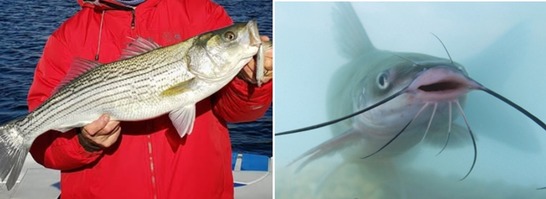
- Change the daily bag limit to unlimited striped bass and 25 catfish at Lake Mead.
- Change the daily bag limit to unlimited striped bass and 25 catfish at Lake Mohave.
Proposed striped bass regulation change:
Effective Jan. 1, 2026, Nevada Department of Wildlife (NDOW) regulations will remove the 20 daily bag limit on striped bass over 20 inches at both Lake Mead and Lake Mohave. The proposed regulation changes in Arizona are to ensure the regulations are the same in both lakes.
NDOW’s research suggests that removing the 20-fish limit on striped bass will have no negative impact on population size or growth, as striped bass growth is more dependent on food availability than harvest rates. Surveys also show most anglers rarely harvest the previous 20-fish limit, supporting the decision to simplify the rule.
Proposed catfish regulation change:
Arizona’s current catfish limit of 10 at Lake Mead and Lake Mohave differs from NDOW’s 25 daily bag limit. In 2015, AZGFD changed the statewide regulation for catfish to 10. This resulted in a different daily bag limit for Lake Mead and Lake Mohave for Arizona and Nevada. The proposed change will standardize regulations, simplifying enforcement and reducing confusion among anglers.
Data from both states show no evidence that striped bass or catfish populations will be negatively affected by the regulation change. See more detail about the proposed changes and rationale behind them HERE.
Written comments can be submitted by email to fishregscomments@azgfd.gov through Dec. 18, 2025. Comments also can be submitted by U.S. mail to Arizona Game and Fish Department, Attn: Amberle Jones, 5000 W. Carefree Highway, Phoenix, AZ 85086.
The proposed regulation changes are scheduled to be presented to the Arizona Game and Fish Commission at its public meeting Jan. 16, 2026, in Phoenix. An agenda will be posted in advance of the meeting at www.azgfd.gov/Agency/Commission.
Important items
Recent stockings
Week of 11/17 to 11/21/25
Stocked with rainbow trout.
Central Arizona: Salt River.
North Central Arizona: Dead Horse Lake, Goldwater Lake (upper), Verde River (middle).
Flagstaff/Williams: Frances Short Pond.
White Mountains: Luna Lake.
Southern Arizona: Cluff Reservoir 3, Dankworth Pond, Parker Canyon Lake, Roper Lake.
Community Fishing Program:
Prescott area: Fain Lake, Yavapai Lakes.
Show Low area: Show Low Creek.
St. John's area: Patterson Ponds (upper and lower).
Week of 11/10 to 11/14/25
Stocked with rainbow trout unless otherwise indicated.
Central Arizona: Salt River.
North Central Arizona: Beaver Creek (Verde River), Verde River (middle), West Clear Creek.
Flagstaff/Williams: Kinnikinick Lake (brown trout).
White Mountains: Nelson Reservoir, River Reservoir.
Southern Arizona: Patagonia Lake.
Community Fishing Program:
Yuma area: Redondo Lake, Fortuna Pond.
Reports
NORTHERN ARIZONA
The forecast for Flagstaff, Williams, and the Mogollon Rim calls for partly sunny skies into the weekend. Highs will be in the 50s and lows will be in the mid to high 20s. Water temperatures will be in the 40s to low 50s. Lower elevations around the Verde Valley will see highs in the mid to upper 60s and lows in the upper 30s.
Fall is a great time to pursue one of AZGFD's Trout Challenges. This is the time of year when campgrounds start to close; check with the appropriate forest before planning your next trip for updates. Colder water temperatures mean that fish are no longer limited to deeper water. In the fall cold (trout) and tepid (walleye and pike) water species will often come close to shore in shallow water searching for food (lethargic baitfish and crayfish). A successful fall technique is to cast, or troll, parallel to the shoreline in shallow water. Fan casting is also a successful fall technique. Lure and fly anglers try various retrieval speeds and depths. Once you find what is working, stick with it.
Bait Anglers: Worms, corn, and PowerBait will be your best bet for trout this week. Nightcrawlers are a good bet for walleye, and anchovies are a good approach for northern pike. Catfish are commonly caught on worms, hot dogs, and anchovies. Small pieces of nightcrawlers and mealworms on small hooks are a good approach for panfish (bluegill, black crappie, yellow perch, and yellow bass). Reminder, the use of live minnows and fish as bait is not allowed on any waters in Coconino County including all of the bodies of water listed below.
Lure Anglers: Lures with flash and vibration such as Joes’ Flies, Panther Martins, Mepp’s spinners, Kastmasters, Rooster Tails, crayfish imitations, Pistol Pete’s, and Dare Devils are good choices. Think small for trout, 1/8 – 1/12-ounce lures are best (silver, gold, or copper). For warmwater species, crankbaits, soft plastics, and spinnerbaits have been working well. Pay attention to what is working and duplicate that presentation. Soft plastics are working on some waters.
Fly Anglers: Producing flies this week include #10 bead-headed Simi-seal leeches (brown, black, olive, and wine), #10 bead-headed Wooly Buggers (brown, black, olive, and wine), #10-12 Zug Bug, #12-10 Dragonfly Larvae (olive), #18-16 Zebra Midge, #16-#12 Pheasant Tail, #12-14 Prince Nymph, #12-14 San Juan worm, hoppers, damselfly, stonefly, mayfly, hopper, and caddis fly patterns.
Check the fishing regulations before heading out as many of the lakes around Williams and Flagstaff have special regulations. Remember, your licenses pay for the fish you catch; poachers are stealing from YOU. It is illegal to transport and release live fish in Arizona including all of the waters listed below; the illegal introduction of unwanted species is costly and diminishes the quality of our fisheries. If you observe a violation, please report it to the Operation Game Thief Hotline (OGT) at 1-800-352-0700.
WILLIAMS LAKES (Kaibab National Forest):
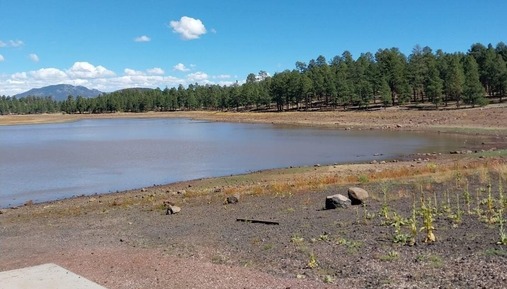
Kaibab Lake - The Kaibab Lake campgrounds are closed for the winter season. The day use and boat launch will remain open. The limit is 2 bass minimum size 13 inches, the limit is 4 channel catfish, the limit is 4 trout. Only boats with a single 10-horsepower motor (or less) or single electric motor are allowed on Kaibab Lake. The lake is very low and launching a boat is challenging. Surface temperature 54.18 F, pH 8.39, dissolved oxygen (D.O.) 8.29 mg/l, and turbidity 67.98 NTU on 10/28/2025.
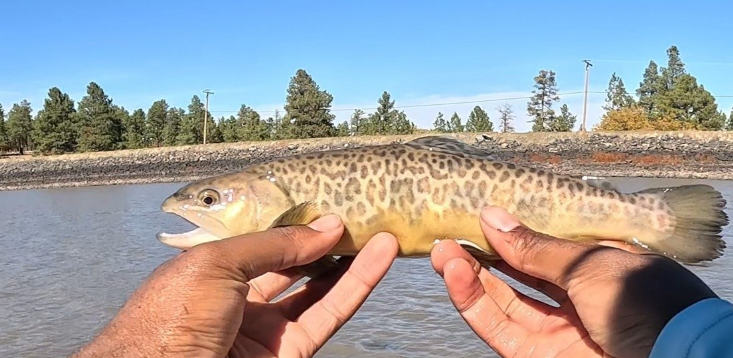
Cataract Lake - Both the County and Forest Service day use areas are open. Only boats with a 10-horsepower motor (or less) or single electric motor are allowed on Cataract Lake. The limit is 2 bass minimum size 13 inches, the limit is 4 channel catfish, the limit is 4 trout. Surface temperature 52.52 F, pH 8.33, D.O. 7.88 mg/l, and turbidity 46.97 NTU on 10/28/2025. Anglers have been catching some of the recently stocked tiger trout. Flies and small lures are a good choice.
City Reservoir (Buckskinner Park) - Buckskinner Park and access to City Reservoir are open. The limit is 2 bass minimum size 13 inches, the limit is 4 channel catfish, the limit is 5 sunfish, the limit is 4 trout. Surface temperature 51.57 F, pH 8.44, D.O. 7.87, and turbidity 16.14 on 10/28/2025.
Dogtown Lake - The Dogtown Lake campground has closed for the winter season. The day use and boat launch will remain open. Only boats with a single electric motor are allowed on Dogtown Lake. No gas-powered motors. The limit is 2 bass minimum size 13 inches, the limit is 4 trout. Fishing has been good and anglers are catching trout, bluegill, black crappie, and largemouth bass. Surface temperature 52.85 F, pH 8.46, D.O. 7.93 mg/l, and turbidity 17.96 NTU on 10/28/2025.
Santa Fe Reservoir - Only boats with a single electric motor are allowed on Santa Fe
Reservoir. No gas-powered motors. The limit is 2 bass minimum size 13 inches, the limit is 4 channel catfish, the limit is 4 trout. Rainbow trout have been biting on #10 bead-headed, black, Simi Seal leeches, #12 Prince Nymphs, and small lures. Surface temperature 56.22 F, pH 8.46, D.O. 7.56 mg/l, and turbidity 0.87 NTU on 10/28/2025.
JD Dam - JD Dam is catch-and-release only for trout; no trout may be kept; artificial fly and lure only; single-pointed, barbless hooks only. Only boats with a single electric motor are allowed on JD Dam. No gas-powered motors. JD is very low and weedy.
Whitehorse Lake - The White Horse Lake campground and access to the boat launch and day use area are closed for the winter season. Angling access is walk-in only. Only boats with a single electric motor are allowed on Whitehorse Lake. No gas-powered motors. The limit is 2 bass minimum size 13 inches, the limit is 4 channel catfish. The lake is very low. Walk-in anglers are still catching bluegill and black crappie on nightcrawlers.
Russel Tank - The limit is 4 trout. Access to Russel Tank is open. The water level of Russel Tank has dropped from last spring and will not be stocked at this time due to lower water levels and water quality issues.
FLAGSTAFF LAKES (Coconino National Forest):
Lower Lake Mary - The day use area is open daily from 7 a.m. to 7 p.m. Campgrounds along the Lake Mary Road corridor are open. When there is water, the daily bag limit is 4 trout per day and 4 channel catfish per day. Northern pike are unlimited, but must be immediately killed or released. Only boats with a single 10-horsepower motor (or less) or a single electric motor are allowed on Lower Lake Mary. The lake is currently dry.
Upper Lake Mary - Upper Lake Mary and Narrows boat launches are open. Statewide limits apply for the fish species in Upper Lake Mary, check your regulations (page 6). The lake level is low and launching a boat can be challenging at the current lake level.
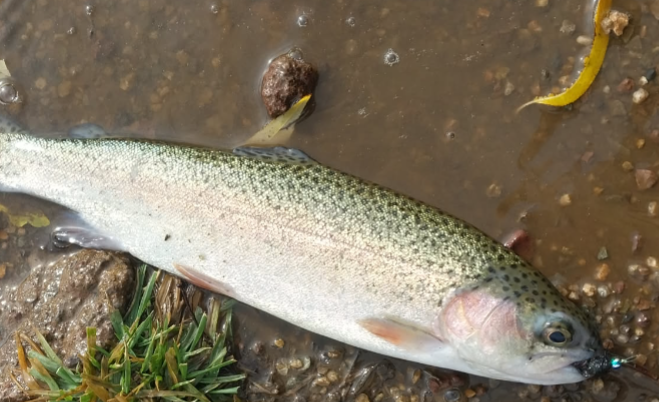
Frances Short Pond - The limit is 2 bass minimum size 13 inches, the limit is 4 channel catfish, the limit is 5 sunfish, the limit is 4 trout. Surface temperature 54.54 F, pH 7.96, D.O. 6.23 mg/l, and turbidity 6.70 NTU on 10/21/2025. Rainbow trout were stocked last week. Anglers were finding success catching rainbow trout on worms, inline spinners, and flies (#10 black bead-headed Simi Seal leech and #10 black and brown Wooly Bugger patterns).
 |
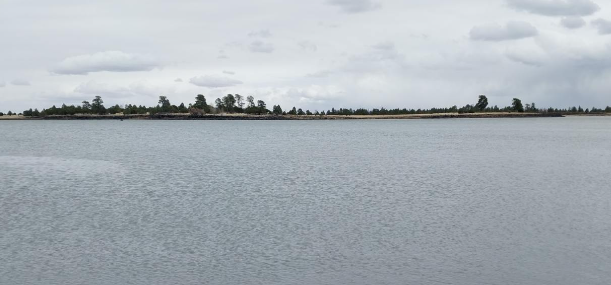
Ashurst Lake - The campgrounds at Ashurst Lake are closed for the winter season. Access to the boat launch and day use areas will remain open. Only boats with a single 10-horsepower motor (or less) or a single electric motor are allowed on Ashurst Lake. The limit is 4 trout. Northern pike and green sunfish were illegally introduced and are not managed for in Ashurst Lake. Northern pike and green sunfish are unlimited in Ashurst Lake, please kill any northern pike and green sunfish caught. The lake is low and the boat launch is challenging, be cautious when launching trailered boats. Surface temperature 51.56 F, pH 8.72, D.O. 7.71 mg/l, and turbidity 22.87 NTU on 10/27/2025.
 |
Kinnikinick Lake - Only boats with a single 10-horsepower motor or single electric motor are allowed on Kinnikinick Lake. Please do not put rocks on the boat launch; as the lake levels rise, the rocks become hazards for boats and trailers and block access to the lake for boat anglers. Surface temperature 52 F, pH 8.40, D.O. 7.74 mg/l, and turbidity 77.05 NTU on 11/14/2025. Fall is a good time of year to target the brown trout and tiger trout that reside in Kinnikinick Lake. Brown trout and a few tiger trout have been active, biting on # 10 Simi Seal leech patterns and inline spinners. Brown trout were stocked last week.
Marshall Lake - Only boats with a single 10-horsepower motor or single electric motor are allowed on Marshall Lake. The lake has been reduced to a small puddle at the boat launch that is only 3-4 inches deep and the lake is currently fishless.
VERDE VALLEY STREAMS (Red Rock Ranger District, Coconino National Forest)
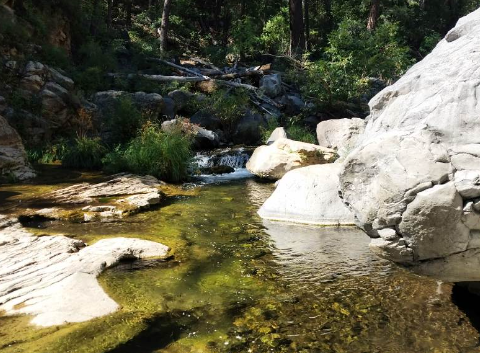
Oak Creek - As of Jan. 1, 2023, the catch-and-release section on Oak Creek has been expanded to include Oak Creek from the Highway 89A bridge at Slide Rock State Park upstream to the Sterling Springs Fish Hatchery property boundary including the West Fork Oak Creek. This section will be catch and release only for trout, artificial fly and lure only, barbless hooks only. Oak Creek peaked at 2,430 cfs on 11/23/2025 @ 10 a.m. from the recent storms. The current stream flow is still high but receding with a recent reading of 460 cfs, stream temperature 44.1-46.1 F, turbidity 26.0-29.3 FNU @ 8:15 a.m. on 11/24/2025. Banjo Bill picnic area is closed for repairs. The leaves are changing colors, that means the busy tourist season is in full swing as the leaf peeper crowd descends upon the upper canyon. To beat the crowds, try fishing early in the morning and during the week. Anglers are finding success on inline spinners and flies. Hellgrammite, Simi Seal leech, midges, elk hair caddis, hoppers, and mayfly patterns are a good bet. Anglers are catching Gila, rainbow, and brown trout. With higher flows and increased turbidity still present, fishing may be a little challenging until flows return to base flow conditions.
 |
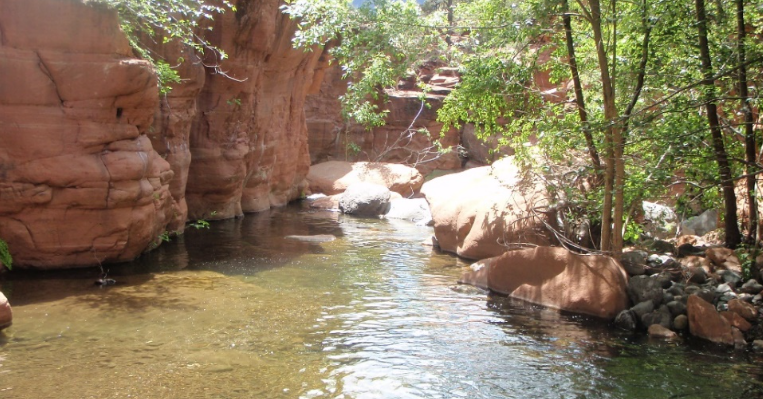
West Clear Creek - Smallmouth bass are unlimited harvest in West Clear Creek. Roundtail chub are often caught in sections of West Clear Creek; please release them unharmed. The limit is 4 trout. West Clear Creek peaked from recent storms at 2,770 cfs on 11/23/2025 @ 2:00 p.m. Stream flow is receding with a recent reading of 1,120 cfs and stream temperature 44.2-45.0 F @ 8:15 a.m. on 11/24/2025. Base flow is 12-15 cfs. With higher flows and increased turbidity still present, fishing may be a little challenging until flows return to base flow conditions. Rainbow trout will be stocked this week.
 |
Wet Beaver Creek/Beaver Creek - Bass are unlimited harvest in Wet Beaver and Beaver Creeks. There is the potential to catch a native sucker or roundtail chub; please release them unharmed. The limit is 4 trout. Wet Beaver Creek peaked from recent storms at 2,130 cfs on 11/23/2025 at 8:30 a.m. Stream flow is receding with a recent reading of 369 cfs @ 8:15 a.m. on 11/24/2025. Average base flow is ~4-9 cfs for Wet Beaver Creek. With higher flows and increased turbidity still present, fishing may be a little challenging until flows return to base flow conditions. Rainbow trout will be stocked this week.
CENTRAL ARIZONA
At Lake Pleasant (report courtesy of Sportsman's Warhouse), stripers are hitting shad / perch jerk baits and 8-inch spoons and anchovies. Bass are shallow in the morning; chasing baitfish buzz baits might be good in the morning and poppers also using 6th sense Flow Glider 130. Bass are moving into deeper water. Try Texas rig with 1/4-ounce bullet weight and peg the weight. Effective techniques include drop shotting, using Senkos, and throwing skirted jigs or jerkbait. The catfish bite has continued to remain strong. The catfish have been hitting on nightcrawlers and stink baits. If you're looking to do more active fishing, then Senkos, drop shots, Ned Rigs and skirted jigs for the bass. As for crappie, the bite has started with anglers having the best success on 2-inch grubs bounced off the bottom. Crappie fishing in the Agua Fria arm and Cottonwood Creek has been good; try shad or minnows at night around submerged trees and brush. Check water temperatures and conditions that may affect fish habits.
At Bartlett Lake, pro angler Gary Senft and his fishing partner were recently at the lake on a “bluebird day” (the day after all the rain hit). They caught 12 bass. The jig bite wasn’t there; they only caught one on a jig, three on a spinnerbait, and the rest on drop shot and Texas rig. Most fish were caught in 15-25 feet of water, some in 10-12 feet. See the video.
NORTH CENTRAL ARIZONA
Deadhorse State Park Lagoons - With the cooler weather rolling in, the trout fishing will pick up. Anglers typically do well with PowerBait, small in-line spinners, or nightcrawlers when specifically targeting trout. The largemouth bass will still be catchable, but they will be slower moving with dropping water temperatures. Fishing finesse presentations slow would be a good starting point if targeting bass. The channel catfish bite should be slowing down, but they can still be caught. Cut-up hot dogs, nightcrawlers, and chicken livers are some typical bait choices for catfish. Deadhorse was last stocked with rainbow trout the week of 11/3 and channel catfish the week of 9/22. Special Regulations: The limit is 2 bass, 4 catfish, and 10 sunfish. For species not listed, or bodies of water without special regulations, refer to the statewide fishing regulations.
Goldwater Lake (Upper) - The trout bite has definitely picked up at upper Goldwater Lake. Anglers are able to target both rainbow trout and Gila trout. Trout anglers do well with PowerBait, Power Eggs, and inline spinners. Channel catfish and largemouth bass can still be caught this time of year. If targeting bass, slow finesse presentations would be a good place to start. The typical go-to baits for catfish are cut-up hot dogs, nightcrawlers, and chicken livers. Upper Goldwater Lake was last stocked with rainbow trout the week of 10/20, Gila trout the week of 10/13, and channel catfish the week of 9/22. Special Regulations: The limit is 1 bass; minimum of 13 inches. Single electric motor only. For species not listed, or bodies of water without special regulations, refer to the statewide fishing regulations.
Goldwater Lake (Lower) - Artificial Fly and Lure Only. Similar to the upper lake, the trout fishing is picking up with these lower temperatures. Trout anglers typically do well on inline spinners like Panther Martins or Mepps. Largemouth bass can still be caught as the water temperatures cool, but anglers may want to use smaller and slower moving presentations as the fish slow down before the winter months. Lower Goldwater Lake was last stocked with rainbow trout the week of 10/20 and with Gila trout the week of 10/6. Special Regulations: Catch and release only, artificial flies and lures only. Float tube only watercraft restriction. For species not listed, or bodies of water without special regulations, refer to the statewide fishing regulations.
Mingus Lake - Anglers are reporting large numbers of trout being caught out of Mingus. Anglers may want to try PowerBait, inline spinners, or small soft plastic tubes when trout fishing. Mingus Lake was last stocked with rainbow trout the week of 10/20. Special Regulations: None. For species not listed, or bodies of water without special regulations, refer to the statewide fishing regulations.
Watson Lake - This colder weather means that trout fishing will be picking up on Watson Lake. Trout anglers typically do well with PowerBait, Power Eggs, and inline spinners. Watson Lake was last stocked with rainbow trout the week of 11/3. Special Regulations: None. For species not listed, or bodies of water without special regulations, refer to the statewide fishing regulations.
Yavapai Lakes - Anglers are catching largemouth bass, channel catfish, bluegill, and rainbow trout out of the Yavapai Lakes. If targeting largemouth bass, small plastics would be a good place to start with the dropping water temperatures. The go-to baits for channel catfish are nightcrawlers, cut-up hot dogs, and chicken livers. If targeting bluegill, small plastic jigs or nightcrawlers would be a good starting point. Trout are caught well with PowerBait, Power Eggs, and inline spinners. The Yavapai Lakes were last stocked with rainbow trout the week of 10/20. Special Regulations: The limit is 2 bass: minimum of 13 inches, 4 catfish, 10 sunfish, and 4 trout. For species not listed, or bodies of water without special regulations, refer to the statewide fishing regulations.
MOGOLLON RIM LAKES
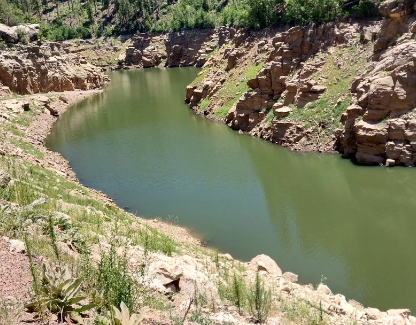
Blue Ridge/C.C. Cragin Reservoir - Blue Ridge campground is closed for the winter season. Only boats with a single 10-horsepower (or less) motor or a single electric motor are allowed on C.C. Cragin Reservoir. Green sunfish and golden shiner are unlimited and invasive; please remove them if caught. The recent storms have helped to increase the water level of the reservoir; however, the lake is still low and boating access is limited. Reservoir elevation 6,680.92 feet, current volume is at 6,713 acre feet or 45% full and rising on 11/24/2025. The gate at the top of the boat launch is locked. Boaters can hand carry or drag small watercraft the ~100-200 yards down the boat launch to the water. Launching a boat becomes more difficult as the lake drops. Launching a trailered boat is not feasible at this time due to the locked gate. Check with the Mogollon Ranger district of the Coconino National Forest for updates on access.
 |
Knoll Lake - Knoll lake is currently fishless following AZGFD's efforts to remove illegally
stocked green sunfish. The department plans to restock Knoll Lake in the spring of 2026.
The illegal stocking of unwanted fish diminishes the quality of our fisheries, costs the
department time and money, and in some cases restricts public access to fisheries while
removal efforts are being conducted. If you see anyone illegally stocking fish into any of the
state's fisheries, please contact the Operation Game Thief Hotline at 1-800-352-0700. Only
boats with a single electric motor are allowed on Knoll Lake. The lake level is low and the boat launch is out of the water, making launching a boat difficult. No gas-powered motors. Reminder, the statewide limit is 4 trout per licensed angler per day. The campground is closed for the winter season.
Huffer Tank - Huffer tank is likely fishless following very low conditions this summer.
MOGOLLON RIM STREAMS
November is a great time to get out and fish the Mogollon Rim creeks. At this point, fall colors are still in full bloom but not for too much longer as we get closer to December. Ambient daytime highs for the Payson and surrounding areas are in the mid-50s to mid-60s with lows in the high 20s and 30s, creating pleasant times to fish during the warmer parts of the day. Water flows have decreased from last month’s hurricane rains; however, recent weather systems have provided much needed rain to the landscape and regional creeks. Fall is a great time to target wild brown trout in a few of creeks. Anglers are having success on a variety of tactics from bait to fly fishing. This time of year is also unique due to the leaves that accumulate in the back of pools. This creates a sort of seasonal habitat for the fish that use it for cover and shade as well as potential spots to ambush prey. It is not uncommon to have fish investigate flies or bait worked along the leaf edges. Give it a try!
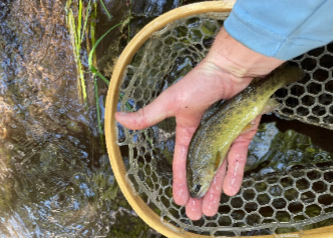
*Special Bonita Creek stocking - On Oct. 22, Bonita Creek was stocked with 1,000 Main Diamond lineage Gila trout upstream of the Bonita Creek Estates. These Gila trout averaged around 4 inches long and came from Mora National Fish Hatchery in New Mexico. Fish were loaded into insulated 5-gallon buckets and strapped to frame packs to be carried upstream to stocking locations. Fourteen volunteers assisted with the stocking effort and worked hard to get these fish into their native range.
Bonita Creek - This Rim stream has been managed as a recreational Gila trout fishery since November 2024. Access to the creek is provided by entry on the Tonto National Forest using FR144, which is east of the drainage and following the Highline Trail over to the west. Please do not use Bonita Creek Estates, as that is private land. Please respect private property. Small stream fly fishing tactics such as dabbing and bow-n-arrow casting are essential on this small, brushy creek. Himalayan blackberries choke a few areas of the creek out. Eager Gila trout will eat a variety of flies, including dries, nymphs, and streamers. They have not been very picky as long as it is presented in front of them. Foam ants and beetles have been working despite the cooler weather, and black and brown mini leeches also seem to be the ticket. Target plunge pools, undercuts, logs, and other fish holding habitat and you should have success.
 |
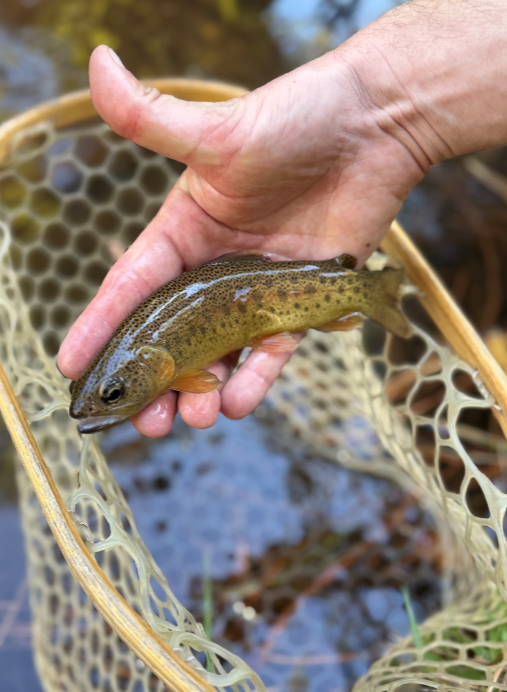
Dude Creek - Dude Creek is a special regulation water that is managed as a Gila trout recovery stream. This is catch-and-release only for trout; no trout may be kept; artificial fly and lure only; single-pointed barbless hooks only. Now is a great time to fish this creek whether you are working on your Arizona Wild Trout Challenge or the Western Native Trout Challenge for a Gila. The creek is fishing better now that stream and ambient temperatures are coming down after a long summer. Wild Gila trout in Dude Creek seem to orient to in-stream cover such as boulders, large woody debris and undercuts but will come out to investigate a well-presented fly. Hot head leeches seem to be the ticket as they are worked along cover.
 |
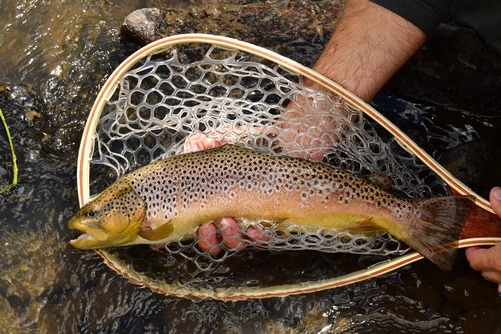
Canyon Creek - Canyon Creek is split into two sections, with the upper Canyon Creek being managed as a put-and-take fishery that gets stocked with rainbows once a week during the summer months until the end of September, while the “Lower Canyon Creek” is managed as a catch-and-release wild brown trout population. The sections are divided by the OW Bridge, with water downstream being designated catch-and release and upstream being put-and-take. Brown trout inhabit both sections of the creek, with a majority being in this lower section. Brown trout are fall spawning fish and are currently in the process of making their redds and other spawning activities. Please take great care to be on the lookout for these structures so as not to step on them if wading. Also, staying away from targeting active spawning fish will ensure better success for the future of this population. Note that spawning active browns will be more active as we continue the fall season with fish chasing small streamers such as Wooly Buggers and leeches, with some fish still being caught on ants and other terrestrial bugs that are falling into the creek.
Please remember, Lower Canyon Creek is under special regulation. This is catch-and-release only for trout; no trout may be kept; artificial fly and lure only; single-pointed barbless hooks only. New Zealand mudsnails are also prevalent in the Lower Section. Please take great care not to transfer this harmful species to other bodies of water by properly disinfecting gear. Anglers who wish to fish both sections should either consider fishing the upper section first, or have a second clean set of gear if they wish to fish the lower section first and then the upper. Actions you can take to prevent the spread of New Zealand mudsnails can be found on our AIS site: https://www.azgfd.com/fishing-2/aquatic-invasive-species/new-zealand-mudsnails/.
Horton Creek - Horton Creek is catch-and-release only for trout; no trout may be kept; artificial fly and lure only; single-pointed, barbless hooks only. This is one of the more popular fisheries for wild brown trout. There is great fishing to be had throughout the creek, with fish inhabiting pools under waterfalls, small plunge pools, boulders, large woody debris, and undercuts. Anglers have been having success on black foam ants and various dry flies in the afternoon when conditions warm up, and small streamers have been working in the morning and the evening. Brown trout are fall spawning fish and are currently in the process of making their redds and other spawning activities. Please take great care to be on the lookout for these structures so as to not step on them if wading. Also, staying away from targeting active spawning fish will ensure better success for the future of this population. Note that spawning active browns will more active as we continue the fall season, with fish chasing small streamers such as Wooly Buggers and leeches and some fish still being caught on ants and other terrestrial bugs that are falling into the creek.
East Verde River - Upper East Verde River has been fishing well for wild rainbow trout with a handful of bugs working well. The fish here (and other wild trout in the region) are very opportunistic and have been still eating the dry fly. Mini hoppers and other dry flies have been working well in the late mornings to early evening, whereas a more subsurface presentation will be better in the morning as it warms up. Various small nymphs presented well around habitat will entice these fish to come out to eat. Try Pheasant Tails, Hares Ears, or Prince Nymphs as well as leeches (black or olive). Please remember, this is a special regulation water upstream of the Pumphouse. This is catch-and-release only for trout; no trout may be kept; artificial fly and lure only; single-pointed barbless hooks only.
Recreation sites along Houston Mesa Road such as 1st Crossing, Waterwheel, 2nd Crossing, and 3rd Crossing still have holdover rainbow and Gila trout in the stocking pools. Various techniques have been effective at catching these fish such as nightcrawlers, PowerBait, spinners, and flies.
LEES FERRY/LAKE POWELL
Lees Ferry - Water Temperature: 58.6-59.4 F; D.O.: 6.5-7.5 mg/l; pH: 8.0-8.2 std units; Discharge Rate: 6,650-9,880 cfs; Turbidity: 13.6-16.1 FNU as of 11/24/2025. See the Lees Ferry Anglers River Report at https://leesferry.com/river-report/.
Lake Powell - Water surface temperature (Wahweap Bay) 48.0-53.2 F. Lake Elevation 3,543.93 MSL (and dropping) as of 11/24/2025. Report by Dan Keller (https://wayneswords.net/forums/dwr-dans-updates.43/):
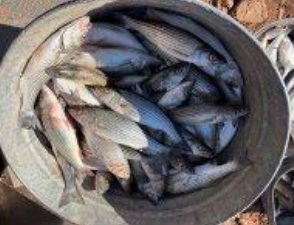
I wanted to share a quick update on the Utah Division of Wildlife Resources (UDWR) gillnetting survey we complete each November. We know years with poor spring runoff results in low shad survival due to less nutrients to support zooplankton populations and a lack of flooded vegetation for young shad to hide and escape predation. Due to poor spring runoff, shad spawning and survival was diminished in 2025; the older age classes of striped bass have been dying off since early spring; they simply can't find enough shad to survive. Fortunately, young striped bass eat zooplankton their first year in the lake, so they survive better than older fish and are in a good position to grow quickly after competition decreases post recent die offs of older age striped bass. Our fall gillnets found a robust population of 1.5- to 3.5-year-old striped bass, and not surprising, a very apparent lack of older fish. Below is a picture of the typical striped bass catch in a gillnet, you can see the three age classes most represented in the lake currently.
 |
We did get a few older fish. Many were in good condition, indicating that the die-off of skinny striped bass we observed over the summer is over. We checked stomach contents of all sport fish and found many are still feeding heavily on crayfish. We see higher crayfish predation when shad numbers are down.
Walleye had a higher percentage of bluegill and green sunfish in their diet than we typically observe. During these low shad conditions, anglers might catch a few more fish by using colors and lures that imitate sunfish and crayfish. Our nets at Red Canyon had the highest percentage of walleye, with 14% of the total catch being walleye. The San Juan had the second greatest number of walleye, representing 13.6% of the total catch.
We also finished our 7-month angler survey that was conducted at Bullfrog and Wahweap. I’m sure many of you saw us on the boat ramps and took the time to be interviewed and answer our questions about your fishing trip. Thank you very much to all those that participated in the angler survey. The data greatly helps us understand how anglers are experiencing the lake and if management strategies are working or need to be modified. I will share more results of the angler survey when I have the data organized, however one quick finding of interest is that while total angler effort was lower this year compared to previous years, the catch rates of many species were greater than average. September was the best month for catch rates; during that month, anglers reported catching an average of 4.6 fish per hour. Fishing for all species will remain good for several more weeks. After that, cold temps will slow down warmwater species' metabolisms. You can still catch them, but they will be deeper and less active. Catching good numbers of striped bass is possible all winter by located schools holding in deep water and vertical jigging with spoons or soft plastic swimbaits. Trolling diving crankbaits over points during November can also be effective for stripers, walleye, and smallmouth bass. If you have never made a late season / winter trip to Lake Powell, give it a try. it’s a fantastic time to visit the lake!
WESTERN ARIZONA
Colorado River below Davis Dam - The trout fishing will be picking up once stocking begins again soon. Trout anglers typically do well on PowerBait, Power Eggs, and inline spinners. Anglers targeting striped bass may want to start with swimbaits in either white or trout color patterns. Special Regulations: From Separation Canyon to Hoover Dam (including Lake Mead): The limit is 20 striped bass: minimum of 20 inches, unlimited striped bass under 20 inches, 5 trout, and 15 crappie. From Hoover Dam to Davis Dam (including Lake Mohave and Willow Beach): The limit is 20 striped bass: minimum of 20 inches, unlimited striped bass under 20 inches, and 5 trout in any combination. Striped bass may be taken by spear or spear gun from that portion of Lake Mohave between Hoover Dam and Cottonwood Landing. From Davis Dam to the California-Nevada boundary: The limit is 6 bass; minimum size 13 inches, and 5 trout in any combination. For species not listed, or bodies of water without special regulations, refer to the statewide fishing regulations.
Lake Mead - Lake Mead has historically fished well this time of year. Striped bass are being found largely by trolling. Main lake points would be a good spot to start until a school is found. Swimbaits in white color schemes and anchovies seem to be the crowd favorite when targeting striped bass. Anglers are also reporting success with different small jigs in white color schemes. Special Regulations: The limit is 20 striped bass: minimum of 20 inches (see article in this Fishing Report about proposed regulation change to unlimited striped bass for Lake Mead), unlimited striped bass under 20 inches, 5 trout, and 15 crappie. For species not listed, or bodies of water without special regulations, refer to the statewide fishing regulations.
Lake Mohave - Striped bass anglers are reporting success when trolling swimbaits, jigs, and when fishing with anchovies. Sticking to shad imitations for your swimbaits would be a good place to start if trolling. Largemouth bass should be up shallow in the coves during the early morning hours and at night. Finesse presentations while the bass are up shallow in cover may be a good starting point. Smallmouth bass can also be caught this time of year. Similar to the largemouth bass, smallmouth bass will also key in on these finesse presentations. Soft plastic crayfish and small jigs may produce well. Special Regulations: The limit is 20 striped bass: minimum of 20 inches (see article in this Fishing Report about proposed regulation change to unlimited striped bass for Lake Mohave), unlimited striped bass under 20 inches, and 5 trout in any combination. Striped bass may be taken by spear or spear gun from that portion of Lake Mohave between Hoover Dam and Cottonwood Landing. For species not listed, or bodies of water without special regulations, refer to the statewide fishing regulations.
Willow Beach on Colorado River - The fishing at Willow Beach is going to be picking up now that trout are being stocked again. Those targeting trout do well with PowerBait, Power Eggs, and inline spinners. Those chasing striped bass are likely to have the best success with swimbaits and plugs in white or trout color schemes. Special Regulations: The limit is 20 striped bass: minimum of 20 inches, unlimited striped bass under 20 inches, and 5 trout in any combination. Striped bass may be taken by spear or spear gun from that portion of Lake Mohave between Hoover Dam and Cottonwood Landing. For species not listed, or bodies of water without special regulations, refer to the statewide fishing regulations.
Angler posts
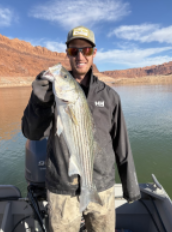
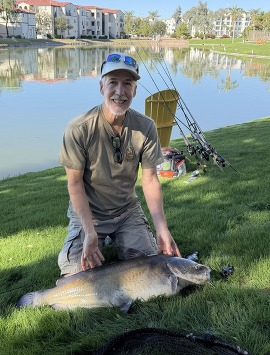
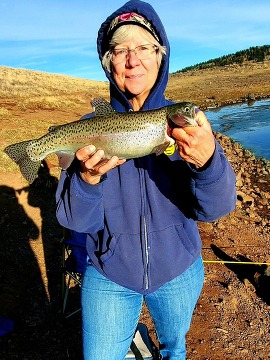
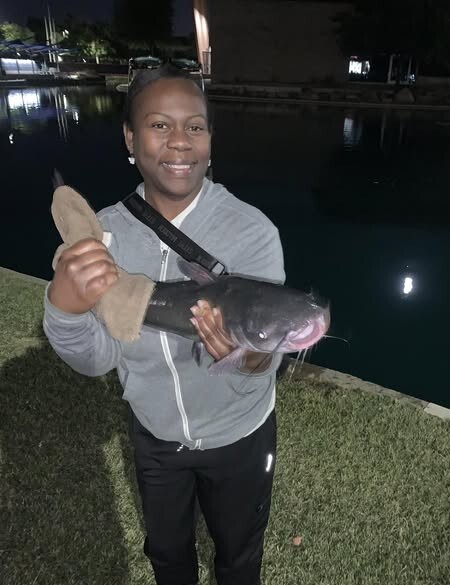
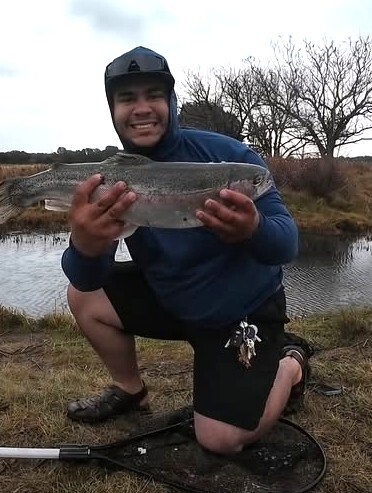
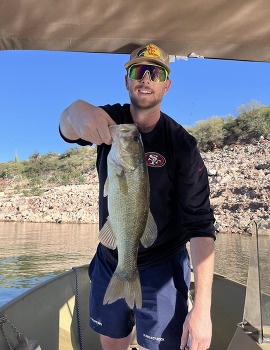
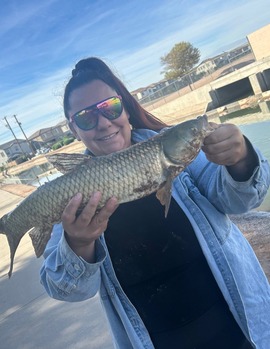
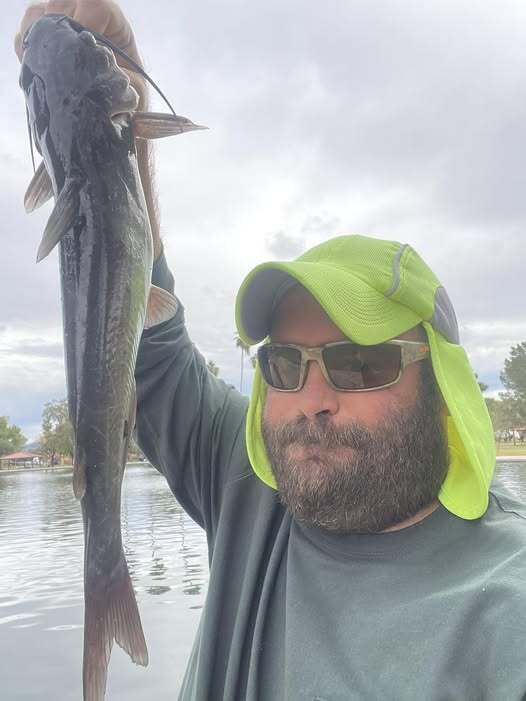
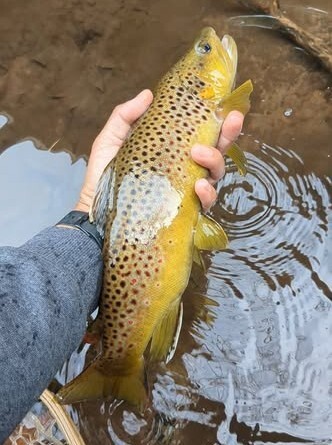
For each edition of the Fishing Report, we'll select some photos and reports submitted by members of the angling public either through the Fish AZ Facebook Group or through the bfishing@azgfd.gov email address. If you'd like your photo/report considered for publication here, please indicate the species, place, date, name (we only publish first name and last initial), and any other information you'd like to provide. For more photos (including new photos each day), visit the Fish AZ Facebook Group.
|