Take the Western Native and Arizona Trout Challenges
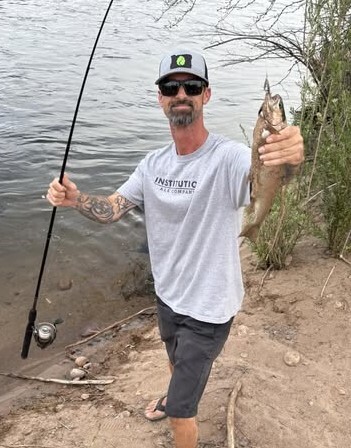
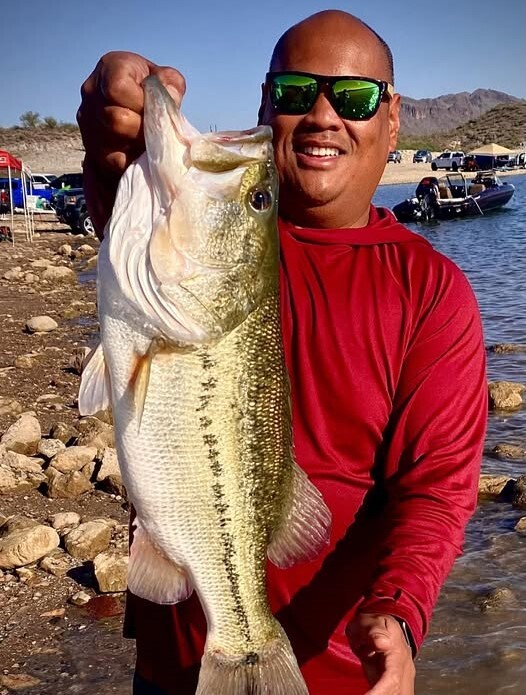
Looking for a great way to get out and see some new places, while also getting to wet a line? Then check out the "Western Native Trout Challenge" (WNTC), a multi-state challenge hosted by the Western Native Trout Initiative.
The Western Native Trout Initiative is one of 20 nationally recognized National Fish Habitat Partnerships that works collaboratively across 12 Western states to conserve (protect, restore, and enhance) 21 native trout and char species. Check out the great work of the Fish Habitat Partnerships here.
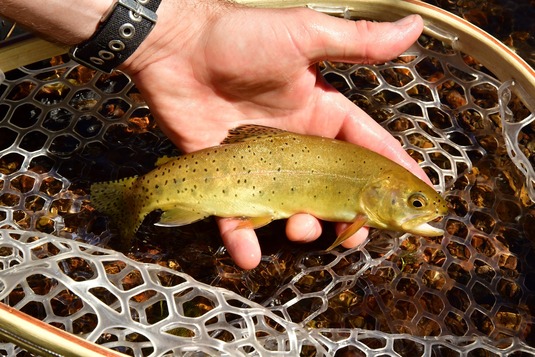
The WNTC challenges anglers to catch 18 native trout and char species across the 12 Western states. When you register for the challenge you are also supporting on-the-ground conservation work for native trout habitat across the West, as $23 of your $25 registration fee goes directly back into habitat conservation projects. Arizona has two native trout species eligible for the challenge: Apache trout and Gila trout. But in order to complete the lowest level of the challenge, you’ll need to catch at least six native trout species from four different states. Here is a great story following some of the anglers completing the challenge.
For rules and more information about the Western Native Trout Challenge, visit the website.
While you're working on your Western Native Trout Challenge, you can also complete your Arizona Trout Challenges. The "Arizona Trout Challenge" and "Arizona Wild Trout Challenge" are two fun ways to explore Arizona and catch trout species in the Grand Canyon state. As Arizona’s resident native trout species, Gila and Apache trout feature in both challenges and there are ample opportunities to fish in places with both wild and stocked populations of these unique trout.
In addition to our native trout, Arizona has six other trout species total and three that have wild populations across the state. Catch all five wild species and six of eight total species to complete both challenges and win some cool prizes!
For rules and more information on the Arizona Trout Challenge, visit the website.
Fishing tips and upcoming events
By Chase Newlon, AZGFD Fishing R3 Coordinator
Hot temperatures in our desert areas shouldn’t prevent you from getting out on the water and catching some fish. Be sure to bring plenty of water and wear appropriate clothing. Long-sleeve sun shirts with a hood are great to keep the sun off of you. You can also wear sun gaiters and hats to protect your skin.
Similar to the last two months, carp fishing and bass fishing can still be extremely productive this time of year. Carp and bass can be found in almost all of the ponds and lakes found in the Phoenix and Tucson areas.
For the conventional tackle angler, you can target carp by using corn on a slip sinker rig with a size 4 or 6 octopus hook. Bread can also be productive bait for carp. Some of my favorite lures for bass fishing this time of year include a Texas-rigged Senko, a drop shot, and ned rigs. Click here to learn more about some of these rigging techniques.
For the fly fisherman, using clown eggs, damsel , and worm patterns work well to target carp. Make sure to lead the fish by 5-10 feet and be stealthy when casting to these elusive fish. To target bass, you can use streamers and baitfish flies. I also like to try poppers and topwater flies when there is a bit of overcast or early in the mornings. A few of my favorite flies for bass are Clouser minnows, Baby Fat minnows, and Slump Busters.
The FishAZ Network is filled with events for all skill levels by a variety of great partners. For a full list of up-to-date events, visit https://register-ed.com/programs/arizona/239-fishaz-network.
Saturday, Sept. 20, 4-8 p.m. - Fishing Gear for Beginners, Peoria Park Rangers, Rio Vista Park, Peoria. Learn the basics of fishing gear in this beginner-friendly class. Perfect for those new to fishing or looking to build confidence before their first trip. Each participant receives a small tackle box with starter gear to take home. Fee-based event for ages 5-17. For more information and to register, click here.
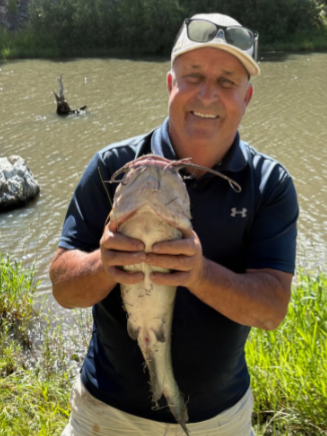
Saturday, Sept. 27, 8 a.m. to noon - Verde River Day at Dead Horse Ranch State Park, Cottonwood. Hosted by the Arizona Game and Fish Department (AZGFD). Free admission to Dead Horse Ranch State Park for the annual Verde River Day festival. Waters sill be freshly stocked with channel catfish. No fishing license required from 8 a.m. to noon. Bring your own equipment, or loaner rods and reels will be provided. Instruction available and bait provided. For more information and to register, click here.
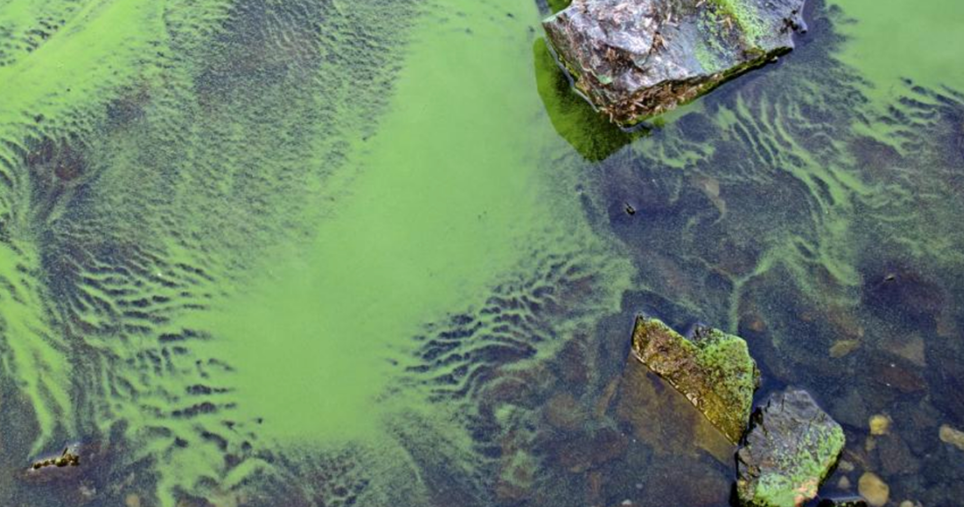
Photo of algae bloom courtesy of Arizona Department of Environmental Quality.
Increase in algae blooms seen across the state
AZGFD staff have seen an increase in algae blooms in waters across the state this summer. Algae blooms can appear to look like spilled green paint or pea soup, green globs or dots floating on the surface, discoloration, and floating mats or scum.
Per the Arizona Department of Environmental Quality's (ADEQ) website (https://azdeq.gov/AZHABs/faqs), when algae is present, keep children, pets, and people away from the water and shore, do not drink the water or use it for cooking, and avoid eating fish from the water. When in doubt, stay out.
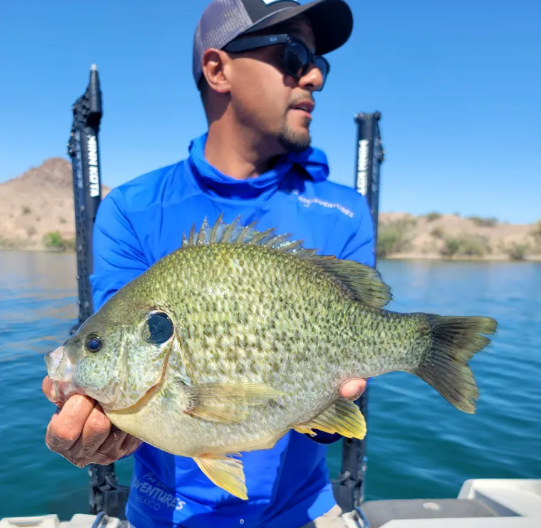
Joshua Daniels with the new state-record redear sunfish he caught and released on Lake Havasu. Photo courtesy of Joshua Daniels and Outdoor Life.
New "catch and release" record redear sunfish caught at Lake Havasu
Joshua Daniels was recently fishing on Lake Havasu with his fiancé, Sarah Harris, and had moved about 100 yards off the bank. They were looking for fish along structure and near drop-offs with their forward-facing sonar. Daniels noticed a large fish close to a creek mouth, holding on a flat near a sunken tree in 15 feet of water.
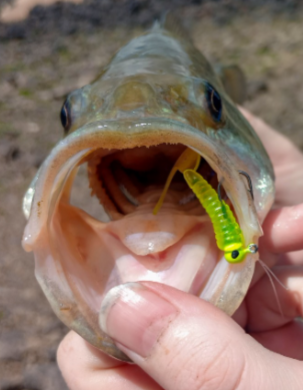
“It was a big sonar mark in deep water that I figured was a smallmouth bass,” explained Daniels in an interview with Outdoor Life. “I cast a micro jig with a small piece of earthworm attached to it with ultralight tackle. I let it sink to the bottom where the fish was holding, but nothing happened … then I twitched the 1/32-ounce chartreuse-colored Berkley ‘Atomic Tube’ lure once, and the fish took it.”
After a hard fight, Daniels landed his catch and saw it was a big redear sunfish. He keeps certified scales and a length measuring board in his boat and saw that the redear measured 16 inches long with an 18-inch girth, and was 4 pounds, 12 ounces.
Daniels released the redear and submitted the required paperwork to the Arizona Game and Fish Department to have it certified as a record in the “Colorado River Waters – Catch and Release” category. The record was approved by AZGFD fisheries staff on June 19.
Read the full Outdoor Life article.
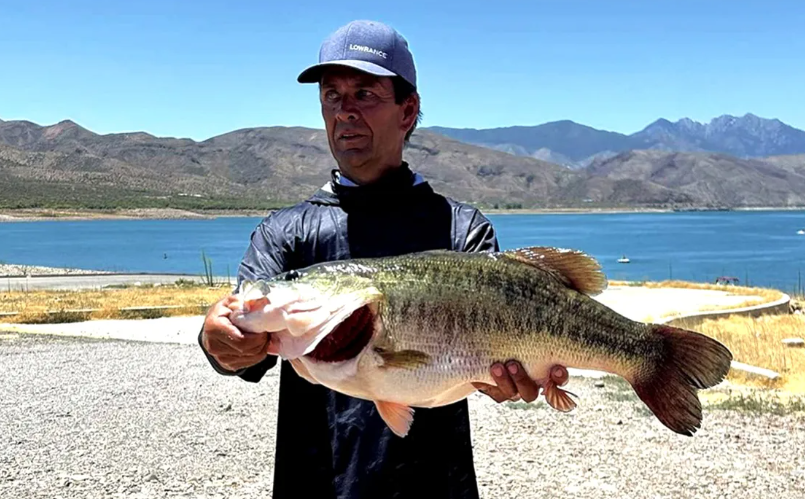
Steve Jenkins with the 16.57-pound largemouth bass he caught from Roosevelt Lake on Aug. 2. Photo courtesy of Southwest Custom Tackle & Tournaments and Outdoor Life.
Big bass caught at Roosevelt Lake tournament but not certified as a record
Arizona bass angler Steve Jenkins was fishing a local tournament on Roosevelt Lake earlier this month when he caught and released a largemouth bass that weighed 16.57 pounds.
Jenkins and his tournament partner, Mike Selvage, marked a few fish on his forward-facing sonar when they first pulled up, he told Outdoor Life. It was a flat spot with some structure near a drop-off, and some time around 7 a.m. he hooked and broke off a huge fish on a ¼ oz. dropshot rig. He tied on a fresh one, using a 7-pound leader and a 6-inch roboworm rigged on a thin-wire 1/0 hook.
“It was down there for maybe 30 seconds, and I just felt weight," he said. "I never even felt the fish bite, but as soon as I set the hook, it started ripping drag.”
The two anglers chased the fish with their trolling motor, and when the fish jumped, they could just make out its giant profile in the sun. After a few more deep runs, Jenkins fought the fish to the net.
Jenkins told Outdoor Life that, because he was more concerned with keeping the fish alive than certifying a record, he released the monster bass right after the weigh-in.
AZGFD maintains fish records in "Kept" and "Catch and Release" categories, and this fish may have been eligible for a "Catch and Release" record. Unfortunately, the fish was not measured at the tournament (only weighed), and the scale that it was weighed on was not certified. Jenkins would have had to bring the fish to a certified scale for a certified weight, and to a department office for inspection by a biologist as required in the Fishing Regulations. So it can't be considered an official record.
Jenkins says the important thing is that the fish is still alive and kicking somewhere in Roosevelt Lake. “The intention was always to release it," he said. "I would have hated to kill that fish. And it was good . . . she swam off strong.”
Read the full Outdoor Life article.
High summer temps are still with us: Please observe best practices when fishing for trout
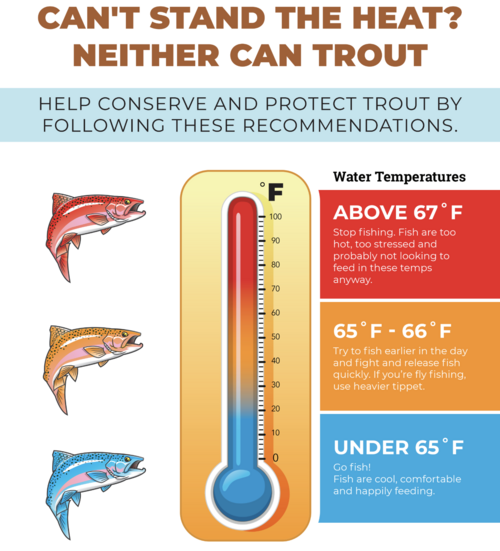
Because of continued above-average heat and elevated water temperatures this summer, anglers are reminded to continue to observe best practices when fishing for trout.
Trout thrive in cool (below 68 degrees), clean, well-oxygenated water. During the summer months, when water levels and flows decrease due to lack of rainfall, water temperatures rise and dissolved oxygen decreases, which in turn causes additional stress on trout.
Anglers are reminded to consider these conditions and take some personal responsibility when fishing for trout during these periods of stress. AZGFD recommends the following practices:
- Fish early in the morning when water temperatures are cooler.
- Land a hooked fish quickly – do not “play” the fish.
- After landing a fish, release it as quickly as possible without removing it from the water.
- Avoid fishing when water temperatures are above 67 degrees. This is especially important at special regulation waters (such as Becker Lake) that rely on low fishing-related mortality to maintain populations due to the limited number of trout that are stocked each year (in the hopes of growing trout as large as possible). Even a limited number of mortalities related to fishing during high water temperatures at Becker Lake could harm the fishery for years, because larger fish are generally more sensitive to increased temperatures than smaller fish.
- When fishing for stocked trout in waters with a temperature greater than 67 F, plan to keep the first four fish that are caught (check the 2025/2026 Fishing Regulations before heading out).
- Anglers seeking to catch Apache or Gila trout in recovery streams are advised to avoid the summer months of June, July and August, as elevated stream temperatures can create stressful conditions for trout and poor conditions for angling.
- Check with the appropriate AZGFD regional office for the latest fishing conditions before heading out.
AZGFD appreciates anglers for taking responsibility when fishing for trout during the summer months. The proper handling and care of trout can greatly reduce their stress and the potential for post-release mortality.
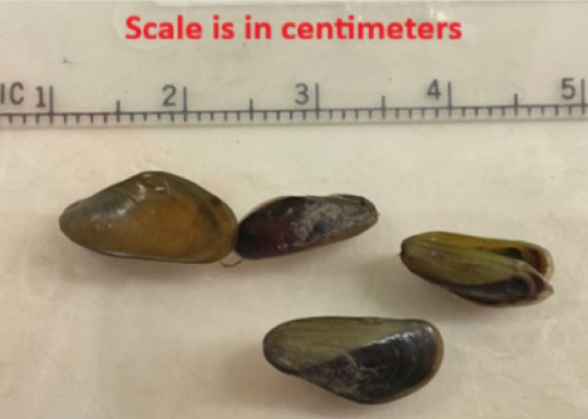
Golden mussels collected in California.
Please clean, drain and dry your boat to help the spread of aquatic invasive species
Golden mussel veligers detected in California's Lake Palmdale
Boaters and anglers are urged to do their part to help prevent the spread of aquatic invasive species (AIS) such as quagga mussels, New Zealand mudsnails, and the recently discovered (in California) golden mussels.
Update on golden mussels in California: On July 15, California Fish and Wildlife Department staff detected three suspected golden mussel veligers in plankton tow samples collected at Lake Palmdale. Also known as Harold Reservoir, Lake Palmdale is a freshwater storage reservoir located near the City of Palmdale in the Antelope Valley in Los Angeles County. The lake receives water from the State Water Project’s East Branch and this is the first detection of golden mussels on the East Branch. Multiple detections of golden mussels have been observed upstream of Lake Palmdale in the California Aqueduct.
Please clean, drain and dry your watercraft (and pull your plug) before launching in ANY Arizona waterbody.
Please contact the Arizona Game and Fish Department Aquatic Invasive Species (AIS) Program at 623-236-7608 if you have any questions or would like to schedule an inspection. For more information on the golden mussel detections in California, visit the California Department of Fish and Wildlife website.
For more information on aquatic invasive species in Arizona, including links to Director's Order #1 (list of aquatic invasive species of Arizona), Director's Order #2 (list of AIS-affected waters in Arizona), and Director's Order #3 (mandatory conditions for movement of watercraft, conveyances and equipment from affected waters), visit
https://www.azgfd.com/fishing-2/aquatic-invasive-species/.
In addition to the general AIS decontamination requirements and protocols described above, anglers should take note of the New Zealand Mudsnail Decontamination Options and Angling Recommendations.
Anglers reminded to not transport live fish from one water body to another
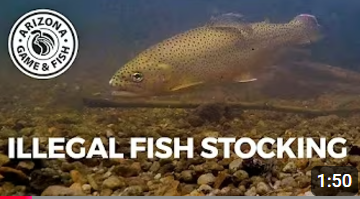
The video above is a good reminder to anglers that stocking or moving unauthorized fish from one water body to another is illegal and can harm existing native fish populations and sport fisheries. Following illegal stocking, fish can move on their own to other locations from where they were introduced and establish new populations.
Colorado River states have spent nearly $100 million to deal with illegally introduced fish – money that could have been better spent providing more angling opportunities. If you see anyone illegally stocking fish into our lakes or rivers, please report it to Operation Game Thief at 1-800-352-0700.
Recent stockings
Week of 8/18 to 8/22/25
Stocked with rainbow trout unless otherwise indicated.
North Central Arizona: Deadhorse Lake (channel catfish), Goldwater Lake (upper - channel catfish), Watson Lake (channel catfish).
Flagstaff/Williams: Santa Fe Reservoir (channel catfish).
Mogollon Rim: Tonto Creek, Willow Springs Lake, Woods Canyon Lake.
White Mountains: Cow Punch (channel catfish).
Western Arizona: Colorado River.
Community Fishing Program: Patterson Ponds (St. Johns - channel catfish), Show Low Creek (Show Low - channel catfish).
Week of 8/11 to 8/15/25
Stocked with rainbow trout unless otherwise indicated.
North Central Arizona: Oak Creek.
Flagstaff/Williams area: Ashurst Lake.
Mogollon Rim: Tonto Creek, Willow Springs Lake, Woods Canyon Lake.
White Mountains: Silver Creek.
Southern Arizona: Rose Canyon Lake.
Reports
NORTHERN ARIZONA
After the monsoon activity early this week, high country weather will be drying out some going into the weekend and early next week. Highs will be in the low to mid 80s and lows will be in the high 40s to mid 50s for Flagstaff, Williams, and the Mogollon Rim. Water temperatures will be in the high 60s to 70s this week. Lower elevations around the Verde Valley will see highs in the 90s to 100s and lows in the 60s to 70s. During the hot summer days, trout fishing slows down considerably as trout move deeper to find cooler temperatures. The summer months are a great time to pursue warmwater species (bass, bluegill, and catfish) and attempt the department’s new Arizona Bass Challenge (https://www.azgfd.com/fishing-2/fishing-
challenges/arizona-bass-challenge/). Due to high risk of forest fires, fire restrictions and closures are in effect for some areas. Check with the appropriate forest prior to planning your next fishing trip for the most up-to-date details and information..
Bait Anglers: Worms, corn, and PowerBait will be your best bet for trout this week. Nightcrawlers are a good bet for walleye, and anchovies are a good approach for northern pike. Catfish are commonly caught on worms, hot dogs, and anchovies. Small pieces of nightcrawlers and mealworms on small hooks are a good approach for panfish (bluegill, black crappie, yellow perch, and yellow bass). Reminder, the use of live minnows and fish as bait is not allowed on any waters in Coconino County including all of the bodies of water listed below.
Lure Anglers: Lures with flash and vibration such as Joes’ Flies, Panther Martins, Mepp’s spinners, Kastmasters, Rooster Tails, crayfish imitations, Pistol Pete’s, and Dare Devils are good choices. Think small for trout, 1/8 – 1/12-ounce lures are best (silver, gold, or copper). For warmwater species, crankbaits, soft plastics, and spinnerbaits have been working well. Pay attention to what is working and duplicate that presentation. The topwater bite is happening at some lakes; frog, grasshopper, and mouse imitations can be a productive and fun way to catch bass this time of year.
Fly Anglers: Producing flies this week include #10 bead-headed Simi-seal leeches (brown, black, olive, and wine), #10 bead-headed Wooly Buggers (brown, black, olive, and wine), #10-12 Zug Bug, #12-10 Dragonfly Larvae (olive), #18-16 Zebra Midge, #16-#12 Pheasant Tail, #12-14 Prince Nymph, #12-14 San Juan worm, hoppers, damselfly, stonefly, mayfly, hopper, and caddis fly patterns.
Check the fishing regulations before heading out as many of the lakes around Williams and Flagstaff have special regulations. Reminder, the use of live minnows and fish as bait is not allowed on any waters in Coconino County including all of the bodies of water listed below. Your licenses pay for the fish you catch; poachers are stealing from YOU. It is illegal to transport and release live fish in Arizona including all of the waters listed below; the illegal introduction of unwanted species is costly and diminishes the quality of our fisheries. If you observe a violation, please report it to the Operation Game Thief Hotline (OGT) at 1-800-352-0700.
WILLIAMS LAKES (Kaibab National Forest):
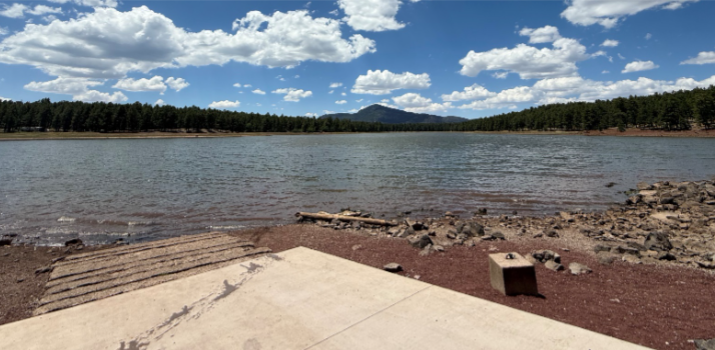
Kaibab Lake - The Kaibab Lake campground, boat launch, and day use areas are open. The limit is 2 bass minimum size 13 inches, the limit is 4 channel catfish, the limit is 4 trout. Only boats with a single 10-horsepower motor (or less) or single electric motor are allowed on Kaibab Lake. The lake is very low and launching a boat is challenging. Surface temperature 70.61 F, pH 8.63, dissolved oxygen (D.O.) 7.14 mg/l, and turbidity 62.82 NTU on 8/18/2025.
Cataract Lake - Both the County and Forest Service day use areas are open. Only boats with a 10-horsepower motor (or less) or single electric motor are allowed on Cataract Lake. The limit is 2 bass minimum size 13 inches, the limit is 4 channel catfish, the limit is 4 trout. Surface temperature 72.88 F, pH 8.68, D.O. 7.07 mg/l, and turbidity 60.56 NTU on 8/18/2025.
City Reservoir (Buckskinner Park) - Buckskinner Park and access to City Reservoir are closed due to wildfire concerns. The limit is 2 bass minimum size 13 inches, the limit is 4 channel catfish, the limit is 5 sunfish, the limit is 4 trout. Surface temperature 69.13 F, pH 8.86, D.O. 6.96, and turbidity 31.31 on 8/18/2025.
Dogtown Lake - Dogtown Lake Campground, day use area, and boat launch are open. Only boats with a single electric motor are allowed on Dogtown Lake. No gas-powered motors. The limit is 2 bass minimum size 13 inches, the limit is 4 trout. Fishing has been good and anglers are catching trout, bluegill, black crappie, and largemouth bass. Surface temperature 77.70 F, pH 9.54, D.O. 7.78 mg/l, and turbidity 28.61 NTU on 8/18/2025.
Santa Fe Reservoir - Only boats with a single electric motor are allowed on Santa Fe
Reservoir. No gas-powered motors. The limit is 2 bass minimum size 13 inches, the limit is 4 channel catfish, the limit is 4 trout. Surface temperature 73.83 F, pH 9.56, D.O. 8.00 mg/l, and turbidity 22.63 NTU on 7/18/2025. An algae bloom is present, limiting fishing success. Try fishing 10-15 feet deep to find the fish.
JD Dam - JD Dam is catch-and-release only for trout; no trout may be kept; artificial fly and lure only; single-pointed, barbless hooks only. Only boats with a single electric motor are allowed on JD Dam. No gas-powered motors. Water clarity has improved dramatically since the spring. However, water temperature and pH levels at the surface are high enough to be incredibly stressful to fish, and in the case of pH levels, lethal to fish.
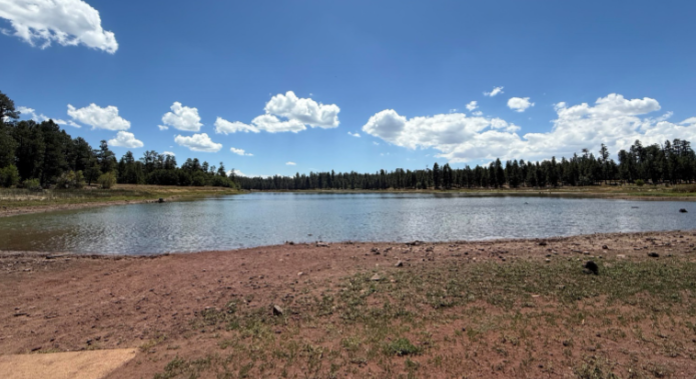
Whitehorse Lake - The Whitehorse Lake campground, day use areas, and boat launch are open. Only boats with a single electric motor are allowed on Whitehorse Lake. No gas-powered motors. The lake level is low and launching a boat is difficult. Fishing has been excellent for bass, bluegill, and channel catfish. The limit is 2 bass minimum size 13 inches, the limit is 4 channel catfish. Surface pH levels are high. Surface temperature 76.60 F, pH 10.00, D.O. 7.71, turbidity 80.5 on 8/6/2025.
Russel Tank - The limit is 4 trout. Access to Russel Tank is open. The water level of Russel Tank has dropped from last spring and will not be stocked at this time due to lower water levels and water quality issues.
FLAGSTAFF LAKES (Coconino National Forest):
Lower Lake Mary - The lake is currently dry. The day use area is open daily from 7 a.m. to 7 p.m. Campgrounds along the Lake Mary Road corridor are open. When there is adequate water, the daily bag limit is 4 trout per day and 4 channel catfish per day. Northern pike are unlimited, but must be immediately killed or released. Only boats with a single 10-horsepower motor (or less) or a single electric motor are allowed on Lower Lake Mary.
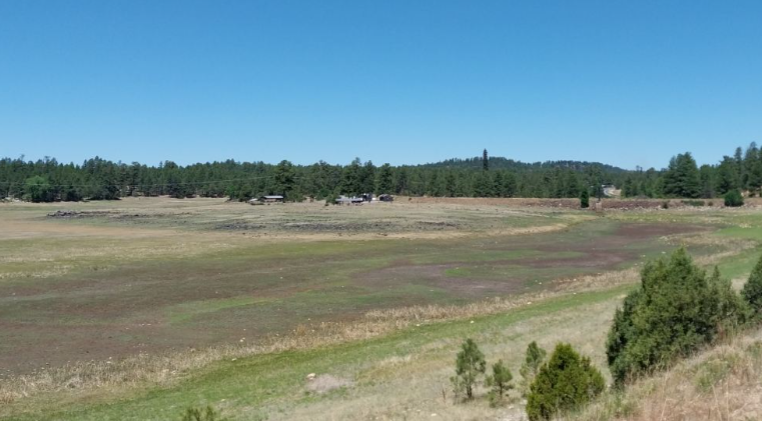
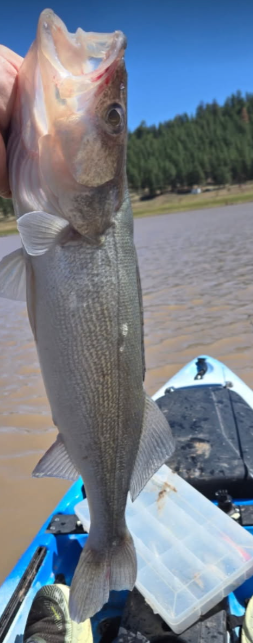
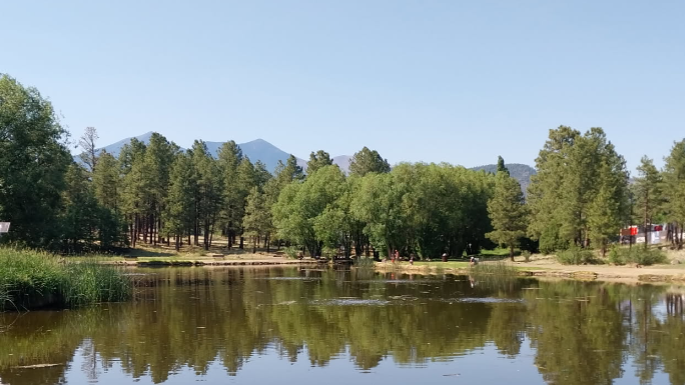
Upper Lake Mary - Upper Lake Mary and Narrows boat launches are open. Statewide limits apply for the fish species in Upper Lake Mary, check your regulations (page 6). The lake level is low and launching a boat can be challenging at the current lake level. Anglers have been catching some nice walleye on lures and nightcrawlers.
Frances Short Pond - The limit is 2 bass minimum size 13 inches, the limit is 4 channel catfish, the limit is 5 sunfish, the limit is 4 trout. Surface temperature 71.42 F, pH 9.04, D.O. 8.43 mg/l, and turbidity 26.33 NTU on 8/18/2025. Frances Short Pond suffered a fish kill on 7/16/2025 due to low dissolved oxygen levels. AZGFD will likely not stock the pond again until the fall or when water quality parameters improve and stabilize.
 |
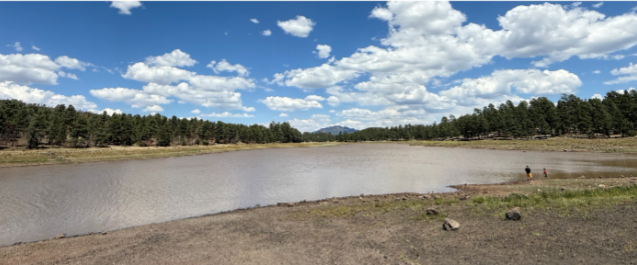
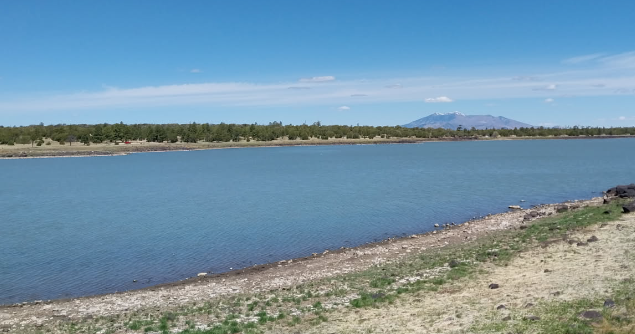
Ashurst Lake - The Ashurst Lake and Forked Pine Campgrounds are open. Only boats with a single 10-horsepower motor (or less) or a single electric motor are allowed on Ashurst Lake. The limit is 4 trout. Northern pike and green sunfish were illegally introduced and are not managed for in Ashurst Lake. Northern pike and green sunfish are unlimited in Ashurst Lake, please kill any northern pike and green sunfish caught. The lake is low and the boat launch is challenging, be cautious when launching trailered boats. Surface temperature 67.14 F, pH 8.75, D.O. 7.23 mg/l, and
turbidity 40.30 NTU on 8/18/2025. Rainbow trout will be stocked this week.
 |
Kinnikinick Lake - Only boats with a single 10-horsepower motor or single electric motor are allowed on Kinnikinick Lake. Please do not put rocks on the boat launch: As the lake levels rise, the rocks become hazards for boats and trailers and block access to the lake for boat anglers. Surface temperature 71.18 F, pH 8.72, D.O. 7.13 mg/l, and turbidity 79.68 NTU on 6/18/2025.
Marshall Lake - Only boats with a single 10-horsepower motor or single electric motor are allowed on Marshall Lake. The lake is very weedy, making fishing challenging. Surface pH levels are high enough to kill fish.
VERDE VALLEY STREAMS (Red Rock Ranger District, Coconino National Forest)
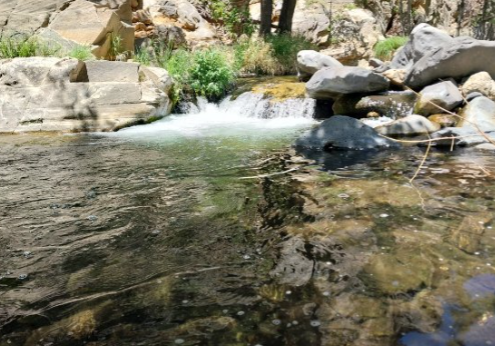
Oak Creek - As of Jan. 1, 2023, the catch-and-release section on Oak Creek has been expanded to include Oak Creek from the Highway 89A bridge at Slide Rock State Park upstream to the Sterling Springs Fish Hatchery property boundary including the West Fork Oak Creek. This section will be catch and release only for trout, artificial fly and lure only, barbless hooks only. Stream flow (near Sedona) is at base flow conditions with a recent reading of 28.6 cfs, stream temperature 66.9-71.4 F, turbidity 1.9 FNU @ 6:45 a.m. on 8/25/2025. Cave Springs Campground will remain closed for repairs. Access to the Cave Spring area opened April 11 for walk-in and angling access. The Banjo Bill picnic area is closed for repairs. The busy tourist season is in full swing. To beat the crowds, try fishing early in the morning. Anglers are finding success on inline spinners and flies. Hellgrammite, Simi-seal leech, midges, elk hair caddis, hoppers, and mayfly patterns are a good bet. Anglers are catching Gila, rainbow, and brown trout. Oak Creek was stocked with rainbow trout last week.
 |
West Clear Creek - Smallmouth bass are unlimited harvest in West Clear Creek. Roundtail chub are often caught in sections of West Clear Creek; please release them unharmed. The limit is 4 trout. Stream flow (near Camp Verde) is at base flow (12-15 cfs) with a recent reading of 16.7 cfs and stream temperature 73.8-78.3 F @ 8:45 a.m. on 8/25/2025. Be cautious of the potential for flash flooding from monsoon storms, particularly in the canyon-bound sections of the stream.
Wet Beaver Creek/Beaver Creek - Bass are unlimited harvest in Wet Beaver and Beaver Creeks. There is the potential to catch a native sucker or roundtail chub; please release them unharmed. The limit is 4 trout. Stream flow (near Rimrock) is stable with a recent reading of 7.66 cfs @ 6:45 a.m. on 8/25/2025. Average base flow is about 4-9 cfs for Wet Beaver Creek. Be cautious of the potential for flash flooding from monsoon storms, particularly in the canyon-bound sections of the stream.
CENTRAL ARIZONA
Pro Angler Gary Senft was out on Bartlett Lake on 8/20/25. He said it's tough launching your boat. They were catching some nice bass in 30-35 feet of water, most in the 1-1/2 pound range, some 2 pounds. They were catching fish on Money Shot worms, pink with chartreuse tail. Dragging off points down by the dam. See the video.
NORTH CENTRAL ARIZONA
Deadhorse State Park Lagoons - The fishing at Dead Horse continues to impress. Largemouth bass, bluegill, and channel catfish are all being caught in decent numbers. Anglers are finding good success with worms when focusing their attention on bluegill and catfish. The bass are a bit more difficult to track down, but anglers are reporting success with finesse set ups; the more realistic the better. Those targeting bass would be likely to see more activity focusing their efforts in the early morning
hours and hours right before dusk. Special Regulations: The limit is 2 bass, 4 catfish, and 10 sunfish. For species not listed, or bodies of water without special regulations, refer to the statewide fishing regulations.
Goldwater Lake (Upper) - With water temperatures rising, the catfish bite should be the most prominent. Nightcrawlers, cut hot dogs, and anchovies are always a good bet. Bass anglers may want to stick with finesse patterns and focus their attention on shallow shaded structures. High water temperatures will decrease the trout bite, but they are still catchable. The key to catching lake dwelling trout in the heat is all about getting your lure to the right depth. Anglers that find the colder oxygenated water are more likely to find the suspended trout. Special Regulations: The limit is 1 bass;
minimum of 13 inches. Single electric motor only. For species not listed, or bodies of water without special regulations, refer to the statewide fishing regulations.
Goldwater Lake (Lower) - This lake is artificial fly and lure only. Trout anglers are mainly seeing rainbows coming out of lower Goldwater Lake. Targeting the colder oxygenated water with sinking lures or flies would be a good place to start for anglers new to the lake. We are also receiving reports of good-sized bass being caught out of the lower lake. Finesse lures around the weed lines and shallow cover would be a good starting point, as the bass will push shallow this time of year. Special Regulations: Catch and release only, artificial flies and lures only. Float tube only watercraft restriction. For species not listed, or bodies of water without special regulations, refer to the statewide fishing regulations.
MOGOLLON RIM LAKES
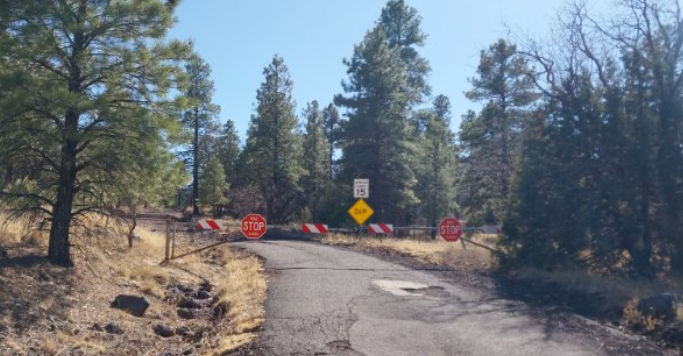
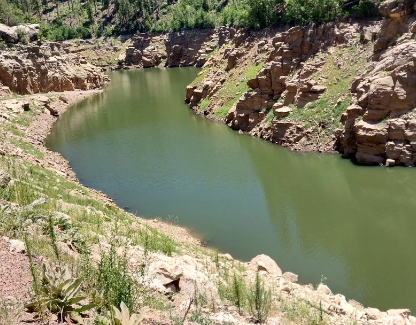
Blue Ridge/C.C. Cragin Reservoir - The Blue Ridge Campground is open. Only boats with a single 10-horsepower (or less) motor or a single electric motor are allowed on C.C. Cragin Reservoir. Green sunfish are unlimited and invasive; please remove them if caught. Reservoir elevation 6,649.18 feet, current volume is at 2,769 acre feet or 18% full and stable on 8/25/2025. The gate at the top of the boat launch is locked. Boaters can hand carry or drag small watercraft the approximately 100-200 yards down the boat launch to the water. Launching a boat becomes more difficult as the lake drops. Launching a trailered boat is not feasible at this time due to the locked gate. Check with the Mogollon Ranger District of the Coconino National Forest for updates on access.
 |
Knoll Lake - Only boats with a single electric motor are allowed on Knoll lake. The lake level is low and the boat launch is out of the water, making launching a boat difficult. No gas-powered motors. Green sunfish were illegally stocked into the lake, please lethally remove all green sunfish caught. Reminder, the statewide limit is 4 trout per licensed angler per day. Anglers have been catching rainbow trout on garlic PowerBait.
Huffer Tank - Huffer tank is very low and likely fishless.
LEES FERRY/LAKE POWELL
Lees Ferry - Water Temperature: 57.0-60.6 F; D.O.: 5.7-11.3 mg/l; pH: 7.8-8.2 std units; Discharge Rate: 11,500-17,300 cfs; Turbidity at 7.1 FNU as of 8/25/2025. See the Lees Ferry Anglers River Report at https://leesferry.com/river-report/.
Lake Powell - Water Temperature (Wahweap Bay) 78-84 F, Lake Elevation 3,549.53 MSL (and dropping) as of 8/25/2025. Latest report Aug. 13 courtesy of Dan Keller (www.wayneswords.net): The lake is still quite busy. However, crowds have thinned out significantly now that school is back in session. With any luck we will soon get rainstorms to moderate the hot / dry air and bring some relief to the many large wildfires. Fish respond well to cooler cloudy days and drops in barometric pressure associated with passing rainstorms. It can be tricky, but if you can time a late summer trip just prior to approaching storms, you will likely be rewarded with fantastic fishing; just be prepared to deal with the storm if you get caught in it!
Stripers are still feeding on the surface lakewide. Based on recent reports, some good areas to target include Padre Bay, mile marker 25, and 39A (on the south end). Most of the stripers in boils will be 14-15 inches in good condition. The older stripers are in poor condition and have been experiencing die-offs lakewide, especially on the south end where shad numbers are very low. I have read reports of striper boils at Padre Bay mid-day, Hansen Creek in the evenings, and Iceberg Canyon in the mornings. No pattern there, so my recommendation is focus on bass fishing that has been consistent for this time of year and be ready for striper boils, as they could fire up anytime.
Tim Patrick recently reported good fishing along rocky shorelines for smallmouth and largemouth bass using a jig head and swimbait. Tim mostly used the 6th Sense divine swimbait in any variety of shad colors, but the color "Shad Scream" out-produced other colors 2 to 1. Tim also caught fish on topwater with a Yo-Zuri pencil bait, gold buzz baits and a Whopper Plopper. If launching from Bullfrog, the debate often is should you head north or south? Well, you can’t go wrong either way, good fishing can be found in the north including Forgotten, Smith Fork, Hansen Creek, Crystal Spring, Knowles, Cedar Canyon, or anywhere in the Good Hope Bay area. South of Bullfrog consider Halls Creek, Lost Eden, Iceberg, Rincon, Escalante.
Bass fishing will remain fair to good for the rest of August and get better when temperatures cool down in September. We will be doing electrofishing surveys in mid-September, and I will be sure to report back on what we find. We know shad numbers are down; however, sunfish populations are trending up and that has really helped bass in the absence of shad.
WESTERN ARIZONA
Colorado River Below Davis Dam - More good fishing to report along the Colorado. Striped bass can be found in the cooler water hitting baits like swimbaits or anchovies. Anglers are finding the small striped bass on smaller lures and anchovies, while the majority of the big striped bass are keying in on the larger swimbaits and plugs. Trout patterns for these larger baits would be a good place to start when selecting lures. Some smallmouth bass can be found mixed in with all of the striped bass. They can be found more prominently on smaller jigs and plastics. Catfish are also being caught out of the river and can be targeted with nightcrawlers and chicken livers. The catfish bite should be picking up soon as we are nearing the end of the catfish spawning period, which can decrease the bite. Special Regulations: From Separation Canyon to Hoover Dam (including Lake Mead): The limit is 20 striped bass: minimum of 20 inches, unlimited striped bass under 20 inches, 5 trout, and 15 crappie. From Hoover Dam to Davis Dam (including Lake Mohave and Willow Beach): The limit is 20 striped bass: minimum of 20 inches, unlimited striped bass under 20 inches, and 5 trout in any combination. Striped bass may be taken by spear or spear gun from that portion of Lake Mohave between Hoover Dam and Cottonwood Landing. From Davis Dam to the California-Nevada boundary: The limit is 6 bass; minimum size 13 inches, and 5 trout in any combination. For species not listed, or bodies of water without special regulations, refer to the statewide fishing regulations.
Lake Mead - Lake Mead has been fishing well. Similar to Lake Mohave, the larger striped bass and smallmouth bass are suspended out in the deeper water above the thermocline. Smallmouth are being caught mainly on finesse presentations, while striped bass anglers are reporting the most success on swimbaits. Largemouth bass are up shallow and can be caught in various ways, but efforts are best focused during the early morning and right before sundown. Channel catfish are also being caught well this time of year. Cut-up hot dogs, anchovies, chicken livers, and nightcrawlers are go-to baits. Special Regulations: The limit is 20 striped bass: minimum of 20
inches, unlimited striped bass under 20 inches, 5 trout, and 15 crappie. For species not listed, or bodies of water without special regulations, refer to the statewide fishing regulations.
Lake Mohave - The traditional summer trends are holding true on Lake Mohave currently. Both the large striped bass and smallmouth bass are suspended in the deeper water. Smallmouth bass are keying in on the more finesse presentations like small plastics and jigs, while the striped bass are largely being found on big swimbaits. Smaller striped bass can be found in shallower water on smaller swimbaits. Largemouth bass have pushed up into the shallows for the summer and are feeding on bluegills. Moving baits, jigs, and plastics in the shallows are a good way to target them. Largemouth will be most active during the early morning hours and just before dusk, but can still be caught during the mid-day hours. If you’re fishing during the mid-day hours, more finesse presentations might be the way to go. Special Regulations: The limit is 20 striped bass: minimum of 20 inches, unlimited striped bass under 20 inches, and 5 trout in any combination. Striped bass may be taken by spear or spear gun from that portion of Lake Mohave between Hoover Dam and Cottonwood Landing. For species not listed, or bodies of water without special
regulations, refer to the statewide fishing regulations.
Willow Beach on Colorado River - Temperatures reaching over 110 F isn’t slowing down the fishing at Willow Beach. Good-sized striped bass are being caught consistently with plenty of smaller ones mixed in. Bigger fish are mainly being caught on large swimbaits and plugs in trout patterns. The trout fishing is best the couple of days following these stockings and the go-to tactics are PowerBait and nightcrawlers.
Special Regulations: The limit is 20 striped bass: minimum of 20 inches, unlimited striped bass under 20 inches, and 5 trout in any combination. Striped bass may be taken by spear or spear gun from that portion of Lake Mohave Between Hoover Dam and Cottonwood Landing. For species not listed, or bodies of water without special regulations, refer to the statewide fishing regulations.
Angler posts
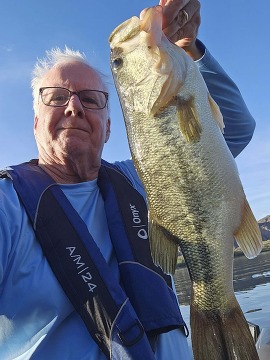
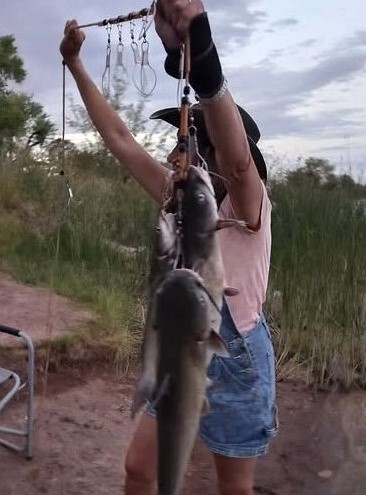
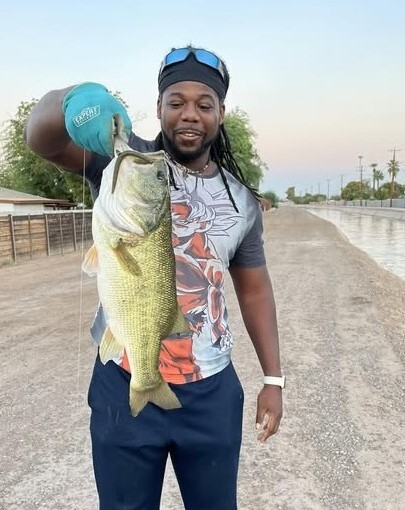
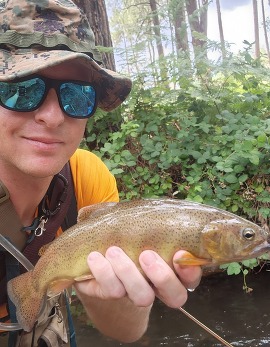
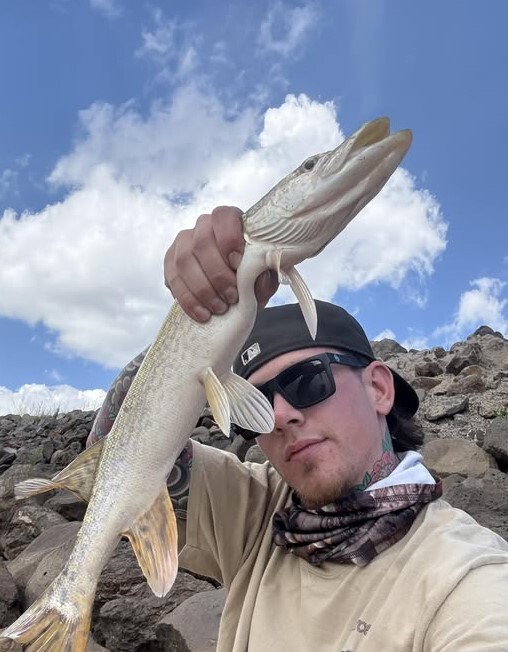
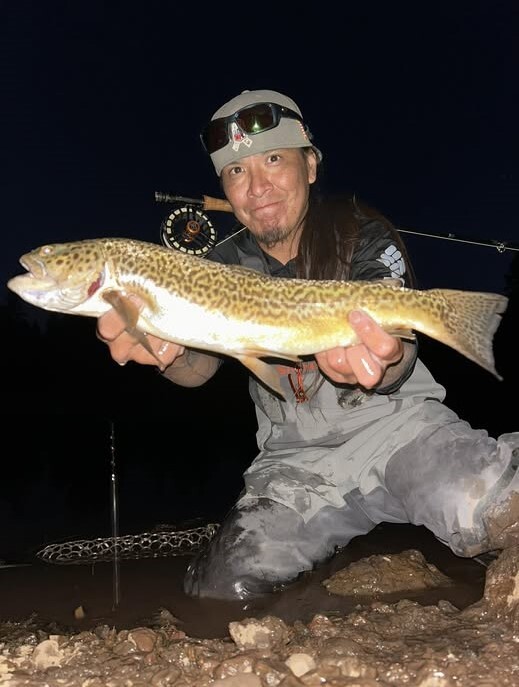
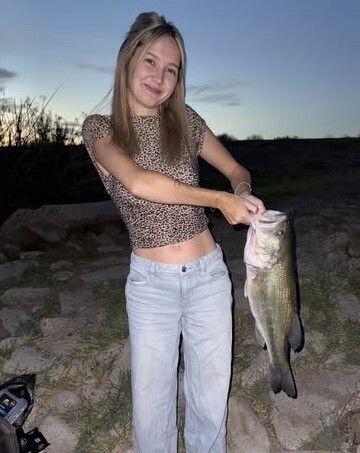
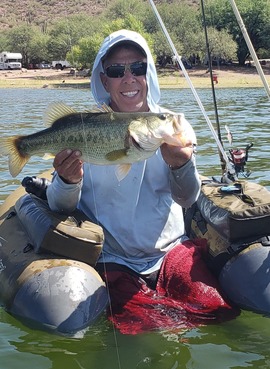
For each edition of the Fishing Report, we'll select some photos and reports submitted by members of the angling public either through the Fish AZ Facebook Group or through the bfishing@azgfd.gov email address. If you'd like your photo/report considered for publication here, please indicate the species, place, date, name (we only publish first name and last initial), and any other information you'd like to provide. For more photos (including new photos each day), visit the Fish AZ Facebook Group.
|