|
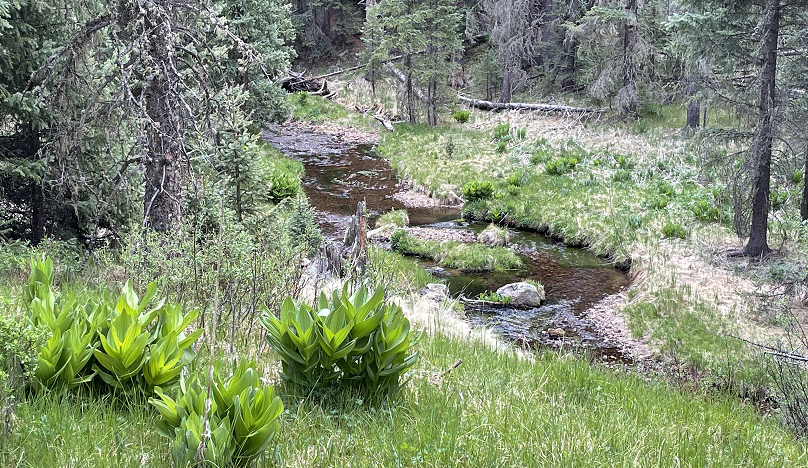
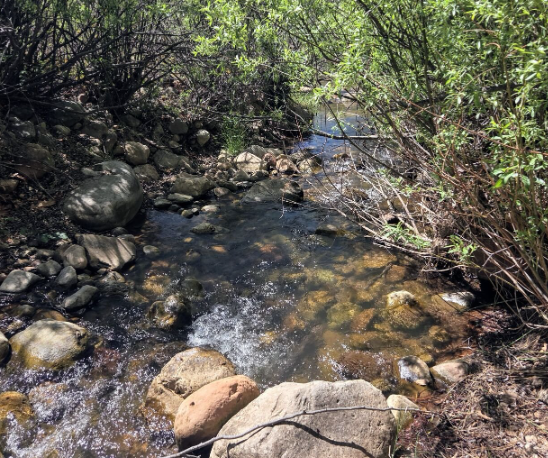
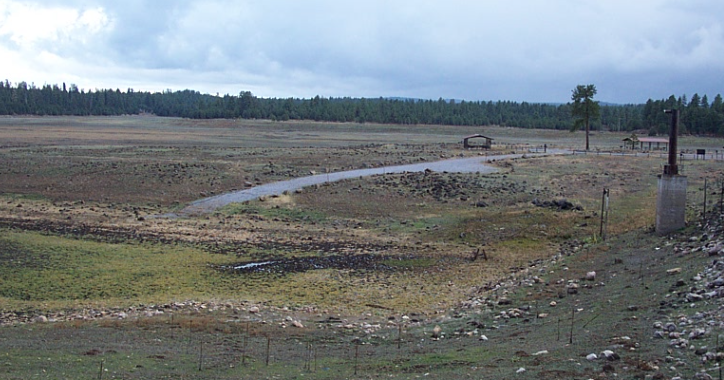
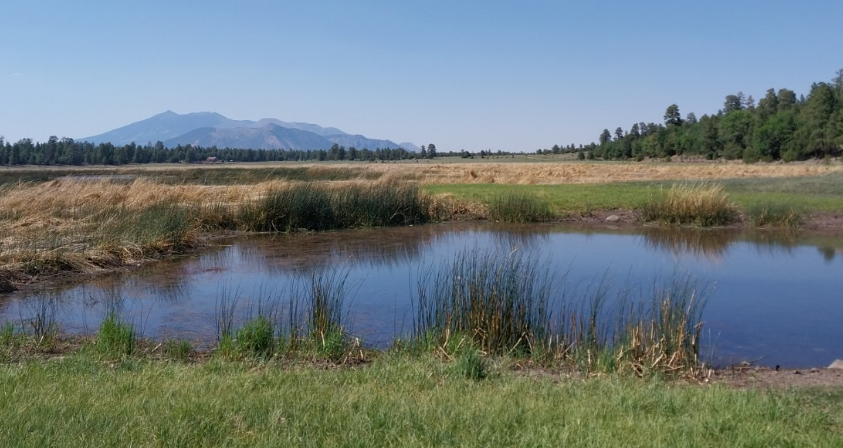
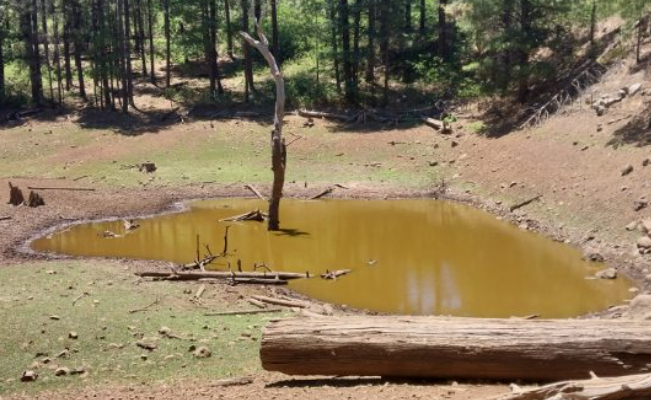
West Fork of Little Colorado River near Sheep's Crossing in mid June 2025.
Stockings at some White Mountains waters modified due to low water levels / flows
The Arizona Game and Fish Department advises anglers that stockings have been modified or canceled at the following locations due to low water levels or stream flows that are the result of a lack of snowfall during the winter of 2024-25:
Canceled
Black Canyon Lake
Carnero Lake
Stocked, but fewer fish than planned
Nelson Reservoir
Scott Reservoir
West Fork Little Colorado - Sheeps Crossing
West Fork Little Colorado River - Greer
May be stocked if conditions improve
Show Low Creek below Show Low Lake
Stocking at the West Fork Little Colorado River may be resumed, but all other waters will be considered for stocking again in spring 2026. No other modifications of the department's Spring/Summer Stocking Schedule (found here) are planned at this time. However, each fishery is continuously monitored and changes may be made if water levels and water quality change over the next month.
Anglers asked to observe best practices when fishing for trout during high temperatures
Because of high water temperatures similar to summer heat conditions the last two years, trout anglers are advised to observe best practices when fishing for trout during this period of the summer.
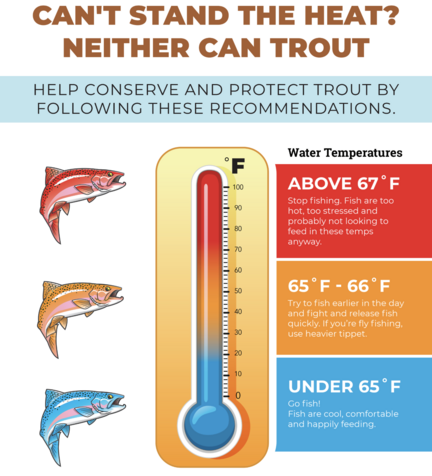
Trout thrive in cool (below 68 degrees), clean, well-oxygenated water. During the summer months, when water levels and flows decrease due to lack of rainfall, water temperatures rise and dissolved oxygen decreases, which in turn causes additional stress on trout.
Anglers are reminded to consider these conditions and take some personal responsibility when fishing for trout during these periods of stress. AZGFD recommends the following practices:
- Fish early in the morning when water temperatures are cooler.
- Land a hooked fish quickly – do not “play” the fish.
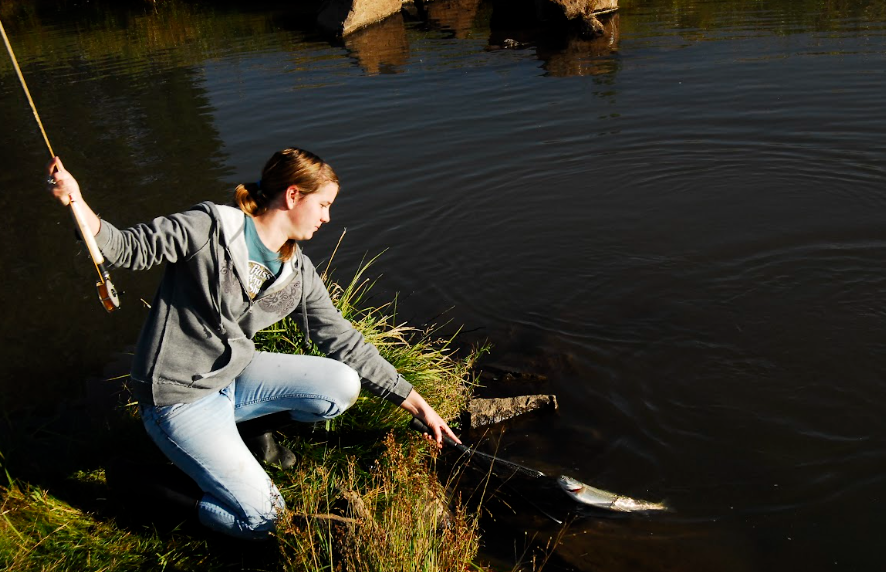
- After landing a fish, release it as quickly as possible without removing it from the water.
- Avoid fishing when water temperatures are above 67 degrees. This is especially important at special regulation waters (such as Becker Lake) that rely on low fishing-related mortality to maintain populations due to the limited number of trout that are stocked each year (in the hopes of growing trout as large as possible). Even a limited number of mortalities related to fishing during high water temperatures at Becker Lake could harm the fishery for years, because larger fish are generally more sensitive to increased temperatures than smaller fish.
- When fishing for stocked trout in waters with a temperature greater than 67 F, plan to keep the first four fish that are caught (check the 2025/2026 Fishing Regulations before heading out).
- Anglers seeking to catch Apache or Gila trout in recovery streams are advised to avoid the summer months of June, July and August, as elevated stream temperatures can create stressful conditions for trout and poor conditions for angling.
- Check with the appropriate AZGFD regional office for the latest fishing conditions before heading out.
AZGFD appreciates anglers for taking responsibility when fishing for trout during the summer months. The proper handling and care of trout can greatly reduce their stress and the potential for post-release mortality.
Results from AZGFD Yuma region's Aquatics Program electrofishing surveys
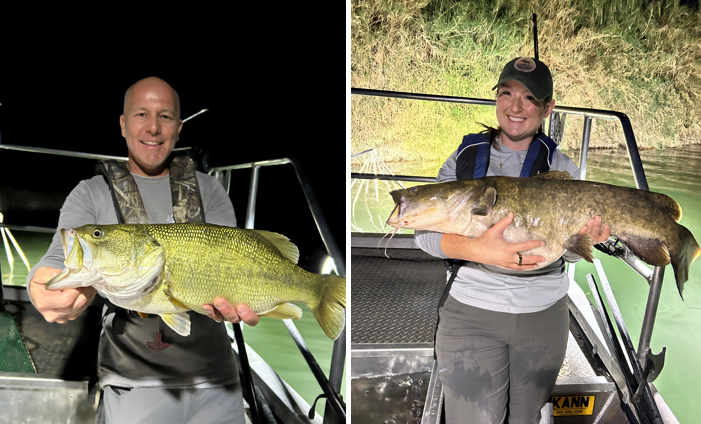
The Arizona Game and Fish Department's Yuma region Aquatics Program recently completed its largemouth bass electrofishing surveys at Alamo Lake and Lake Havasu, as well as in the Laguna Division and backwaters of the Palo Verde/Cibola divisions of the Colorado River. Though this survey was focused primarily on catching bass, AZGFD nets and measures all species that come to the surface to get a better picture of the fish community as a whole at each waterbody.
At Alamo Lake, biologists captured a total of 757 largemouth bass, which represented about 51% of the total catch. The largest bass was 22 inches long and 5.8 pounds. Alamo Lake is producing large numbers of largemouth bass and is an excellent option for anglers seeking a beautiful fishing destination in southwestern AZ.
Lake Havasu is world famous for its redear sunfish, and this year it did not disappoint! In early April, biologists caught 404 redear sunfish, with the largest fish measuring 14.5 inches long and weighing 2.6 pounds. Redear are considered premium-sized at 13 inches, and 25 of the redear that were captured were in this range. Biologists also caught 254 largemouth bass, the largest of which was 21 inches long and 4.7 pounds.
If you haven't checked out Cibola Lake, you are missing out. Located on the edge of the Colorado River within the boundaries of the Cibola National Wildlife Refuge, this backwater is a quiet place to relax and spend some time fishing. Closer to Blythe, the A-7 and A-10 backwaters offer opportunities to catch lots of bluegill and redear sunfish. In total, biologists caught 109 largemouth bass and 224 sunfish in these backwaters in late April. Also seen were several endangered razorback suckers -- be careful not to keep these guys as they are protected under federal law.
There is excellent news for those who fish the Colorado River between the Imperial and Laguna Dams, including Betty's Kitchen (known as the Laguna Division). In early May, biologists captured 259 largemouth bass and 616 sunfish (including redear, bluegill, and warmouth). The largest bass was 22.9 inches long and 6.4 pounds. This section of the Colorado River offers largemouth bass anglers the opportunity to catch healthy bass of varying sizes, plus it's close to Yuma and all its local amenities.
Many thanks to AZGFD staff, partners (Arizona State Parks, Bureau of Land Management, California Department of Fish and Wildlife, US Fish and Wildlife Service, US Marine Corps), and volunteers for making this a successful largemouth bass survey season. We hope these results "shock" you into getting out there to fish Arizona's southwestern waters.
Fishing tips and upcoming events
By Chase Newlon, AZGFD fishing R3 coordinator
Summer is here! With temperatures well into the 100s, now is a good time to head up north to escape the heat. You aren’t the only ones feeling the heat, some fish are sensitive to warmer temperatures as well. Be sure to check the water temperature before fishing for trout. If the water temperature is above 67 degrees (see article above), it is best to fish elsewhere with cooler water temperatures or switch to fishing for a warmwater species.
The creeks along the Mogollon Rim and throughout the White Mountains host a wide range of different trout species; brown trout, Apache trout, tiger trout, rainbow trout, Gila trout and brook trout. A few of my favorites are the West Fork of the Little Colorado River for Apache trout and Tonto Creek for rainbow trout and brown trout. Because of fire conditions this time of year, be sure to check with the local land management agency for information on conditions before heading out.
I have found fly fishing to be an extremely effective way to fish the small pools in these creeks and rivers. A dry dropper rig with a size 12 Chubby Chernobyl and a Pheasant Tail or Perdigon continues to produce fish for me. Small leeches and streamers can also be effective in targeting some bigger fish out of the creeks.
For the conventional gear angler, small Kastmasters, Blue Foxes and Marabou Jigs fished in the larger pools can be productive on these creeks. A 6- to 7-foot light or ultralight action spinning rod with 4- to 6-pound test works great for the small creeks.
The FishAZ Network is filled with great events for all skill levels by a variety of great partners. For a full list of up-to-date events, visit: https://register-ed.com/programs/arizona/239-fishaz-network.
Learn more about AZGFD’s fish hatcheries in May-June issue of Arizona Wildlife Views magazine
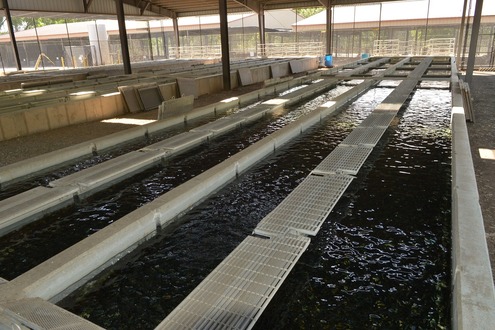
For more than a century, the Arizona Game and Fish Department has reared fish to support angling in the state and conserve and protect native species. This important work started in the early 1900s with a single hatchery on the Little Colorado River and today consists of six hatcheries located throughout the state — each having a dedicated source of natural spring water.
Each year hundreds of thousands of pounds of fish — 400,000 pounds on average — are stocked into more than 100 locations throughout Arizona. Hatcheries play a vital role in maintaining the quality of sportfishing in the state, and the behind-the-scenes work that goes into the spark of excitement when an angler has a fish on the line is immersed in both history and biology.
In the May-June issue of Arizona Wildlife Views magazine (our “Water” issue), we have a story for each fish hatchery shared by hatchery staff members. Each provide an overview of the facility and insight into their operations.
The Water issue is chock full of other interesting stories about water and its critical role in wildlife conservation. A one-year subscription to the bi-monthly Arizona Wildlife Views only costs $12 and includes the annual wildlife photography calendar that is published in the November-December issue. To subscribe, click here.
Check for fire restrictions or closures before heading out
Outdoor recreationists are encouraged to check with the agency that has jurisdiction over the area you wish to visit before heading out. Many national forests, state trust lands and some counties are in Stage 2 Fire Restrictions. While these restrictions vary by location and agency, they generally include prohibitions on campfires, open flames and certain types of outdoor recreation. In the Apache-Sitgreaves National Forest, temporary area closures recently went into effect in the Mount Baldy Wilderness and Greer areas due to high fire danger. Be sure to check before your visit.
AZGFD receives 2.3 million walleye sac-fry from Iowa
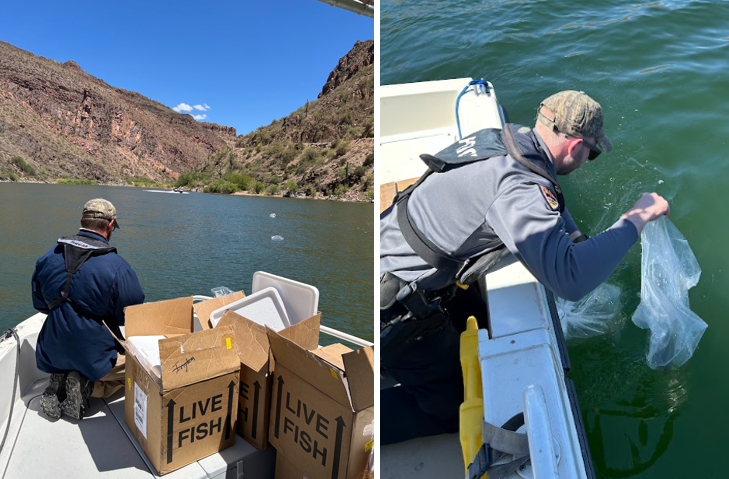
The Arizona Game and Fish Department received a generous donation of 2.3 million walleye sac-fry from Iowa DNR's Spirit Lake Fish Hatchery. These walleye sac-fry were shipped overnight via FedEx and then stocked throughout Apache, Canyon, and Saguaro lakes on May 9.
This is the fourth year in a row sac-fry were donated by Iowa and stocked into these particular lakes.
Section of Tonto Creek (photo courtesy of Jim Strogen and Payson Roundup).
Mastering the art of flycasting in tough waters
Payson angler Jim Strogen recently had a nice article in the Payson Roundup about how to target trout that have selected the most challenging spots to call home. Even on days when catching is slow, the challenge of making precise casts to tough spots makes for a fun fishing trip. Adding that skill to your fishing toolbox is certainly worth the practice and effort.
Read Jim's tips here.
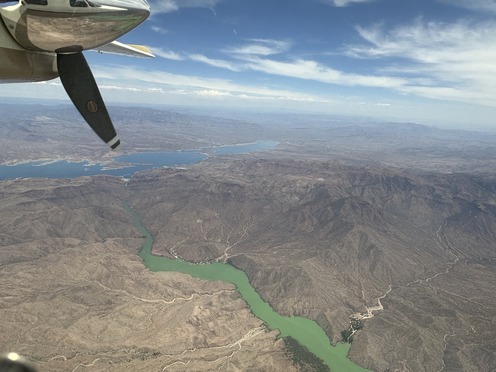
Aerial view of Apache Lake algae bloom
O.G. Wiseman of Wiseman Aviation took these aerial photos on the way to Tucson at the end of May. The contrast in water color between Apache and Roosevelt lakes is pretty dramatic.
The bloom has been identified in the upper riverine section of Apache Lake only, just south of Roosevelt Lake Dam, and as of June 6 was not affecting the entire waterbody. This could change, which is why recreators are advised to stay vigilant. Recreational activities such as boating and catch-and-release fishing can continue in bloom areas, but consuming fish from algal bloom waters is not recommended until after the bloom dissipates. It is recommended that swimmers, pet owners, and children stay clear of the bloom-affected zones for the time being.
It is not known at this point how long the bloom will affect the lake; previous blooms have lasted for a few weeks. It's possible that the algae may dissipate once it reaches the deeper, colder part of the greater Apache Lake.
More information on the naturally occurring algae bloom is on the Tonto National Forest's Facebook page at https://www.facebook.com/TontoNationalForest/posts/%EF%B8%8Fupdate-june-6-2025we-would-like-to-clarify-to-the-public-that-a-naturally-occur/1045509521011539/. The Arizona Department of Environmental Quality also has an FAQ on harmful algae at https://azdeq.gov/AZHABs.
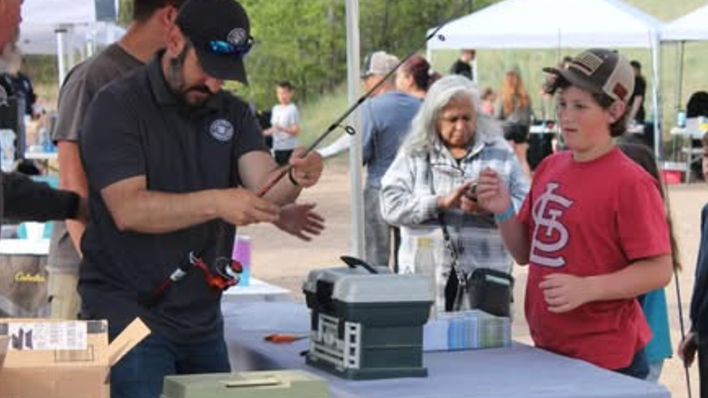
Williams "Badges and Bobbers" event a success
The Arizona Game and Fish Department was proud to support the 4th annual Badges and Bobbers youth fishing event, held May 31 at Buckskinner Park and hosted by the Williams Police Department.
This special event brought together local law enforcement and families from the community to share in the joy of fishing and outdoor recreation. AZGFD is grateful to the Williams Police Department for organizing such a meaningful day, and we appreciate the opportunity to help inspire the next generation of outdoor enthusiasts.
Help stop the spread of aquatic hitchhikers
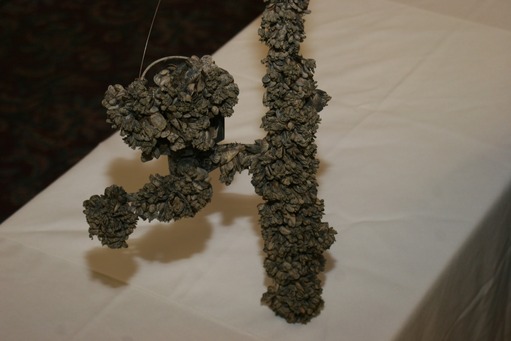
Boaters and anglers are urged to do their part to help prevent the spread of aquatic invasive species (AIS) such as quagga mussels, New Zealand mudsnails, and the recently discovered (in California) golden mussels. Please clean, drain and dry your watercraft (and pull your plug) before launching in ANY Arizona waterbody.
Please contact the Arizona Game and Fish Department Aquatic Invasive Species (AIS) Program at 623-236-7608 if you have any questions or would like to schedule an inspection. For information on the golden mussel detections in California, visit the California Department of Fish and Wildlife website.
For more information on aquatic invasive species in Arizona, including links to Director's Order #1 (list of aquatic invasive species of Arizona), Director's Order #2 (list of AIS-affected waters in Arizona), and Director's Order #3 (mandatory conditions for movement of watercraft, conveyances and equipment from affected waters), visit
https://www.azgfd.com/fishing-2/aquatic-invasive-species/.
In addition to the general AIS decontamination requirements and protocols described above, anglers should take note of the New Zealand Mudsnail Decontamination Options and Angling Recommendations.
Anglers reminded to not transport live fish from one water body to another
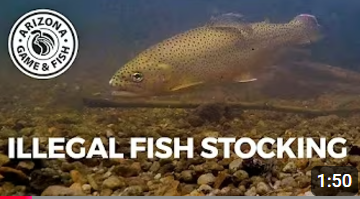
The video above is a good reminder to anglers that stocking or moving unauthorized fish from one water body to another is illegal and can harm existing native fish populations and sport fisheries. Following illegal stocking, fish can move on their own to other locations from where they were introduced and establish new populations.
Colorado River states have spent nearly $100 million to deal with illegally introduced fish – money that could have been better spent providing more angling opportunities. If you see anyone illegally stocking fish into our lakes or rivers, please report it to Operation Game Thief at 1-800-352-0700.
Recent stockings
Week of 6/16 to 6/20/25
Stocked with rainbow trout unless otherwise indicated.
Central Arizona: Salt River.
North Central Arizona: Goldwater Lake (upper).
Flagstaff/Williams area: Ashurst Lake, Dogtown Lake.
Mogollon Rim: Bear Canyon Lake, Christopher Creek, East Verde River, Haigler Creek, Knoll Lake, Tonto Creek, Willow Springs Lake (tiger trout), Woods Canyon Lake (tiger trout).
Southern Arizona: Rose Canyon Lake.
Week of 6/9 to 6/13/25
Stocked with rainbow trout unless otherwise indicated.
North Central Arizona: Mingus Lake, Oak Creek.
Flagstaff/Williams area: City Reservoir, Dogtown Lake, Frances Short Pond.
Mogollon Rim: Christopher Creek, East Verde River (Gila trout), Haigler Creek, Knoll Lake, Tonto Creek, Willow Springs Lake, Woods Canyon Lake.
White Mountains: East Fork Black River (Apache trout), River Reservoir, Silver Creek (Apache trout), Tunnel Reservoir, West Fork of the Black River (Apache trout).
Community Fishing Waters:
Prescott area - Fain Lake (rainbow trout).
Week of 6/2 to 6/6/25
Stocked with rainbow trout unless otherwise indicated:
Central Arizona: Salt River.
North Central Arizona: Deadhorse Lake (channel catfish), Goldwater Lake (lower - brown trout), Goldwater Lake (upper - rainbow trout and channel catfish), Oak Creek.
Flagstaff/Williams area: Ashurst Lake, Dogtown Lake, Stone Dam Lake (channel catfish).
Mogollon Rim: Bear Canyon Lake, Canyon Creek, Chevelon Canyon Lake, Christopher Creek, East Verde River (Gila trout), Haigler Creek, Tonto Creek, Willow Springs Lake, Woods Canyon Lake.
White Mountains: East Fork Black River (Apache trout), Silver Creek (Apache trout), West Fork Black River (Apache trout).
Community Fishing Waters (stocked with channel catfish unless otherwise noted):
Eagar area - Cow Punch Pond.
Prescott area - Fain Lake.
Show Low area - Show Low Creek.
St. John's area - Patterson Ponds (lower).
Reports
NORTHERN ARIZONA
This week’s forecast for the high country calls for sunny, clear, and breezy. Highs will be in the high 70s to 80s and lows will be in the 40s to 50s for Flagstaff, Williams, and the Mogollon Rim. Water temperatures will be in the 60s to 70s this week. Lower elevations around the Verde Valley will be sunny and hot this week. Highs will be in the 90s to 100s and lows in the 50s to 60s. As the summer progresses and water temperatures continue to rise, trout fishing will slow down considerably as trout move deeper to find cooler water. The summer months are a great time to pursue warmwater species (bass, bluegill, and catfish) and attempt the department’s new Arizona Bass Challenge https://www.azgfd.com/fishing-2/fishing-
challenges/arizona-bass-challenge/. Due to dry conditions and high risk of forest fires, fire
restrictions and closures are in effect for some areas. Check with the appropriate forest prior to planning your next fishing trip for the most up-to-date details and information.
Bait Anglers: Worms, corn, and PowerBait will be your best bet for trout this week. Reminder, the use of live minnows and fish as bait is not allowed on any waters in Coconino County including all of the bodies of water listed below. Nightcrawlers are a good bet for walleye and anchovies are a good approach for northern pike. Catfish are commonly caught on worms, hot dogs, and anchovies. Small pieces of nightcrawlers and mealworms on small hooks are a good approach for panfish (bluegill, black crappie, yellow perch, and yellow bass).
Lure Anglers: Lures with flash and vibration such as Joes’ Flies, Panther Martins, Mepp’s spinners, Kastmasters, Rooster Tails, crayfish imitations, Pistol Pete’s, and Dare Devils are good choices. Think small for trout, 1/8 – 1/12-ounce lures are best (silver, gold, or copper). For warmwater species, crankbaits, soft plastics, and spinnerbaits have been working well. Pay attention to what is working and duplicate that presentation. The topwater bite is happening at some lakes; frog, grasshopper, and mouse imitations can be a productive and fun way to catch bass this time of year.
Fly Anglers: Producing flies this week include #10 bead-headed Simi-seal leeches (brown, black, olive, and wine), #10 bead-headed Wooly Buggers (brown, black, olive, and wine), #10-12 Zug Bug, #12-10 Dragonfly Larvae (olive), #18-16 Zebra Midge, #16-#12 Pheasant Tail, #12-14 Prince Nymph, #12-14 San Juan worm, hoppers, damselfly, stonefly, mayfly, hopper, and caddis fly patterns.
Check the fishing regulations before heading out as many of the lakes around Williams and Flagstaff have special regulations. Reminder, the use of live minnows and fish as bait is not allowed on any waters in Coconino County including all of the bodies of water listed below. Your licenses pay for the fish you catch; poachers are stealing from YOU. It is illegal to transport and release live fish in Arizona including all of the waters listed below; the illegal introduction of unwanted species is costly and diminishes the quality of our fisheries. If you observe a violation, please report it to the Operation Game Thief Hotline (OGT) at 1-800-352-0700.
WILLIAMS LAKES (Kaibab National Forest):
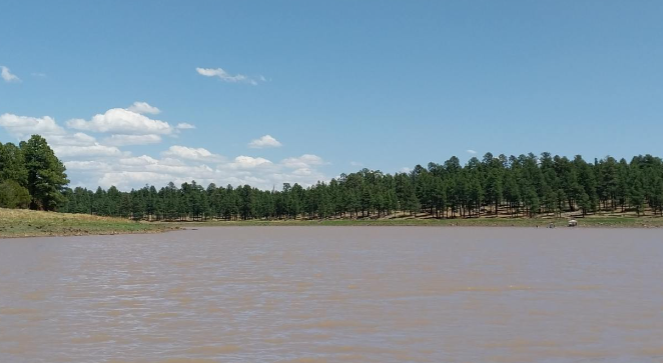
Kaibab Lake - The Kaibab Lake campground, boat launch, and day use areas are open. The limit is 2 bass minimum size 13 inches, the limit is 4 channel catfish, the limit is 4 trout. Only boats with a single 10-horsepower motor (or less) or single electric motor are allowed on Kaibab Lake. The lake is very low and launching a boat is challenging. Surface temperature 70.10 F, pH 8.81, dissolved oxygen 6.95 mg/l, and turbidity 133.50 NTU on 6/20/2025. Rainbow trout will be stocked this week.
 |
Cataract Lake - Both the County and Forest Service day use areas are open. Only boats with a 10-horsepower motor (or less) or single electric motor are allowed on Cataract Lake. The limit is 2 bass minimum size 13 inches, the limit is 4 channel catfish, the limit is 4 trout. Fishing has been good for channel catfish, bluegill, black crappie and largemouth bass. Soft plastics, worms and hot dogs are a good bet. Surface temperature 68.35 F, pH 8.60, dissolved oxygen 6.95 mg/l, and turbidity 71.12 NTU on 6/20/2025.
City Reservoir (Buckskinner Park) - Buckskinner Park and access to City Reservoir are closed due to wildfire concerns. The limit is 2 bass minimum size 13 inches, the limit is 4 channel catfish, the limit is 5 sunfish, the limit is 4 trout. Surface temperature 69.36 F, pH 8.59, dissolved oxygen 7.36 mg/l, turbidity 36.39 NTU on 6/20/2025. Rainbow trout were stocked last week.
Dogtown Lake - Dogtown Lake Campground, day use area, and boat launch are open. Only boats with a single electric motor are allowed on Dogtown Lake. No gas-powered motors. The limit is 2 bass minimum size 13 inches, the limit is 4 trout. Fishing has been good and anglers are catching trout, bluegill, black crappie, and even a few bass. Surface temperature 70.91 F, pH 9.65, dissolved oxygen 8.17 mg/l, and turbidity 3.80 NTU on 6/20/2025. Rainbow trout were stocked last week.
Santa Fe Reservoir - Only boats with a single electric motor are allowed on Santa Fe
Reservoir. No gas-powered motors. The limit is 2 bass minimum size 13 inches, the limit is 4 channel catfish, the limit is 4 trout. Surface temperature 69.04 F, pH 9.66, dissolved oxygen 8.20 mg/l, and turbidity 23.71 NTU on 6/20/2025.
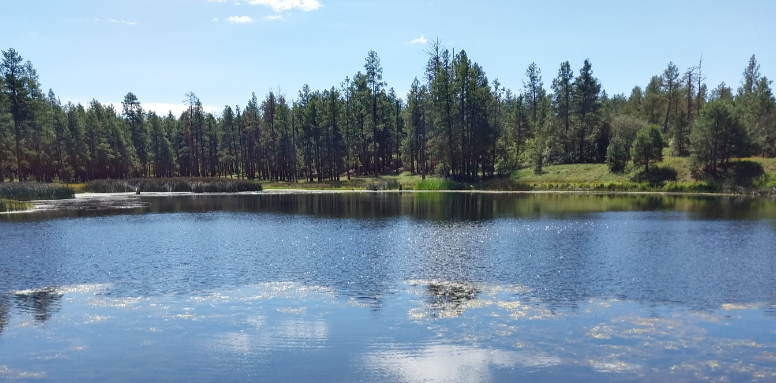
JD Dam - JD Dam is catch-and-release only for trout; no trout may be kept; artificial fly and
lure only; single-pointed, barbless hooks only. Only boats with a single electric motor are
allowed on JD Dam. No gas-powered motors. Anglers are starting to catch a few tiger trout. The tank remains low and the water is murky, making fishing difficult.
 |
Whitehorse Lake - The Whitehorse Lake campground, day use areas, and boat launch are
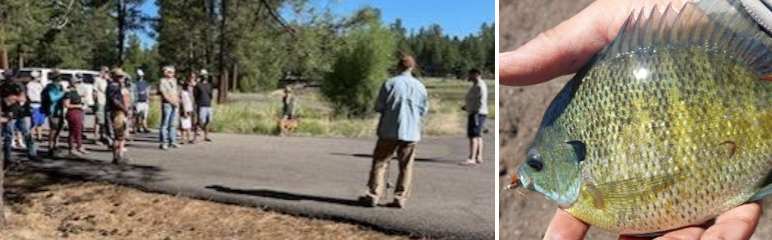
open. Only boats with a single electric motor are allowed on Whitehorse Lake. No gas-powered motors. The lake level is low and launching a boat is difficult. The limit is 2 bass minimum size 13 inches, the limit is 4 channel catfish. Fishing is good for bluegill, black crappie, largemouth bass, and channel catfish. AZGFD thanks everyone who came out to the Fly Fishing Clinic at Whitehorse Lake on June 14. Flagstaff regional Public Affairs/Community Liaison Stevie Kelso said, "The participants had a great time at the lake sharing learning new skills, and even catching a few fish. They got hands-on experience with casting techniques, setting up a fly line, and tying some knots. The instructors were especially impressed with how quickly everyone improved their casting." Many thanks to the instructors and to all the folks who lent a hand to make the day such a success. We’re looking forward to seeing our new fly fishers out at the lake utilizing their new skills.
 |
Russel Tank - The limit is 4 trout. Access to Russel Tank is open. The water level of Russel Tank has dropped from last spring and will not be stocked at this time due to lower water levels and water quality issues.
FLAGSTAFF LAKES (Coconino National Forest):
Lower Lake Mary - The day use area is open daily from 7 a.m. to 7 p.m. Campgrounds along the Lake Mary Road corridor are open. The daily bag limit is 4 trout per day and 4 channel catfish per day. Northern pike are unlimited but must be immediately killed or released. Only boats with a single 10-horsepower motor (or less) or a single electric motor are allowed on Lower Lake Mary. The lake is currently dry.
Upper Lake Mary - Upper Lake Mary and Narrows boat launches are open. Statewide limits apply for the fish species in Upper Lake Mary, check your regulations (page 6).
Frances Short Pond - The limit is 2 bass minimum size 13 inches, the limit is 4 channel catfish, the limit is 5 sunfish, the limit is 4 trout. An algae bloom has slowed fishing considerably. Surface temperature 73.21 F, pH 9.46, dissolved oxygen 8.68 mg/l, and turbidity 105.90 NTU on 6/20/2025.
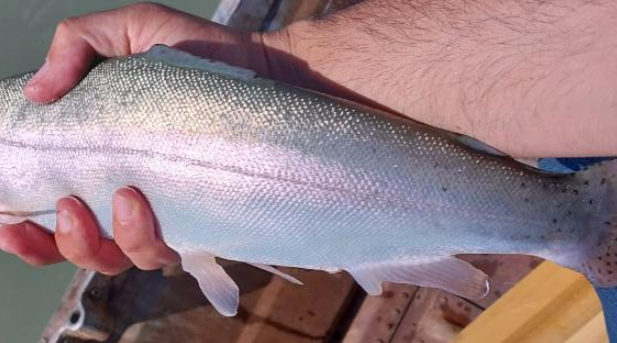
Ashurst Lake - The Ashurst Lake and Forked Pine Campgrounds are open. Only boats with a single 10-horsepower motor (or less) or a single electric motor are allowed on Ashurst Lake. The limit is 4 trout. Northern pike and green sunfish were illegally introduced and are not managed for in Ashurst Lake. Northern pike and green sunfish are unlimited in Ashurst Lake, please kill any northern pike and green sunfish caught. The lake is low and the boat launch is challenging, be cautious when launching trailered boats. Surface temperature 66.19 F, pH 8.96, dissolved oxygen 7.21 mg/l, and turbidity 33.72 NTU on 6/20/2025. Rainbow trout were stocked last week.
 |
Kinnikinick Lake - Only boats with a single 10-horsepower motor or single electric motor are allowed on Kinnikinick Lake. Please do not put rocks on the boat launch: As the lake levels rise, the rocks become hazards for boats and trailers and block access to the lake for boat anglers. Surface temperature 71.18 F, pH 8.72, dissolved oxygen 7.13 mg/l, and turbidity 79.68 NTU of 6/18/2025.
Marshall Lake - Only boats with a single 10-horsepower motor or single electric motor are allowed on Marshall Lake. The lake is very weedy, making fishing challenging. Surface temperature 65.34, pH 10.73, dissolved oxygen 12.02 mg/l, and turbidity 54.51 NTU on 6/20/2025.
VERDE VALLEY STREAMS (Red Rock Ranger District, Coconino National Forest)
Oak Creek - As of Jan. 1, 2023, the catch-and-release section on Oak Creek has been
expanded to include Oak Creek from the Highway 89A bridge at Slide Rock State Park
upstream to the Sterling Springs Fish Hatchery property boundary including the West Fork
Oak Creek. This section will be catch and release only for trout, artificial fly and lure only,
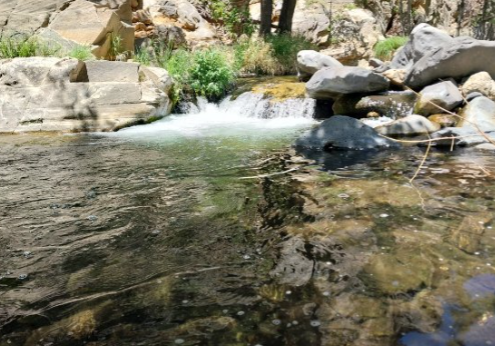
barbless hooks only. Stream flow is at base flow conditions with a recent reading of 28.0 cfs, stream temperature 63.0-70.0 F, turbidity 0.9 FNU @ 6:45 a.m. on 6/16/2025. Cave Springs Campground will remain closed for repairs. Access to the Cave Spring area opened April 11 for walk-in and angling access. The Banjo Bill picnic area is closed for repairs. The busy tourist season is in full swing. To beat the crowds, try fishing early in the morning. Anglers are finding success on inline spinners and flies. Hellgrammite, Simi-seal leech, midges, elk hair caddis, hoppers, and mayfly patterns are a good bet. Anglers are catching Gila, rainbow, and brown trout. Rainbow trout will be stocked this week.
 |
West Clear Creek - Smallmouth bass are unlimited harvest in West Clear Creek. Roundtail
chub are often caught in sections of West Clear Creek; please release them unharmed. The limit is 4 trout. Stream flow is at base flow with a recent reading of 10.1 cfs and stream temperature 69.4-74.5 F on 6/23/2025 @ 6:45 a.m.
Wet Beaver Creek/Beaver Creek - Bass are unlimited harvest in Wet Beaver and Beaver
Creeks. There is the potential to catch a native sucker or roundtail chub; please release them unharmed. The limit is 4 trout. Stream flow is stable with a recent reading of 6.52 cfs @ 6:45 a.m. on 6/23/2025. Average base flow is about 4-9 cfs for Wet Beaver Creek.
CENTRAL ARIZONA
At Bartlett Lake (report courtesy of pro angler Gary Senft), on 6/21 his group started out on topwater Ricos but only caught a couple of fish. They switched to 2.8-inch Beasty Bugs and had better luck, caught 16 overall. Water temp started at 79 F around 5 a.m., was about 81 F when they finished up around 11:15 a.m. Fish were caught 10-25 feet deep. See the video.
At Roosevelt Lake (report courtesy of pro angler Gary Senft), his party got on the lake at 5:30 a.m. on 6/10. They fished for five hours; water temperature was 74 when they got there, 79 F when they left, no wind the entire time they were there. They worked hard to get their 29 fish. Only got one on topwater. The best bait for catching that day was the pink 5150 curly tail. The fish wouldn't bite on a straight tail this particular day. See the video.
MOGOLLON RIM LAKES
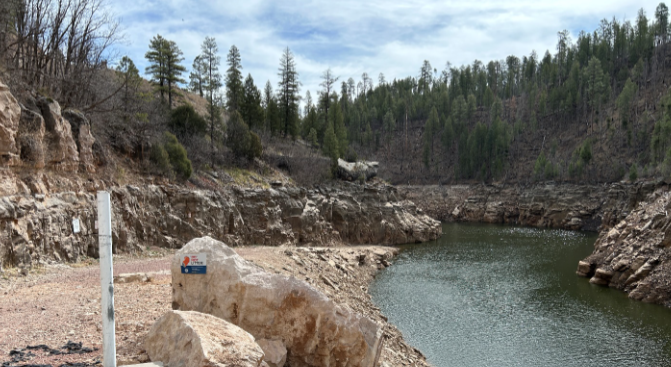
Blue Ridge/C.C. Cragin Reservoir - The Blue Ridge Campground is open. Only boats with a single 10-horsepower (or less) motor or a single electric motor are allowed on C.C. Cragin Reservoir. Green sunfish are unlimited and invasive; please remove them if caught. Reservoir elevation is 6,651.14 feet, current volume is at 3,034 acre feet or 20% full and dropping on 6/23/2025. The gate at the top of the boat launch is locked. Boaters can hand carry or drag small watercraft the approximately 100-200 yards down the boat launch to the water. Launching a boat becomes more difficult as the lake drops. Launching a trailered boat is not feasible at this time due to the locked gate. Check with the Mogollon Ranger District of the Coconino National Forest for updates on access.
 |
Knoll Lake - Only boats with a single electric motor are allowed on Knoll lake. The lake level is low and the boat launch is out of the water, making launching a boat difficult. No gas-powered motors. Green sunfish were illegally stocked into the lake, please lethally remove all green sunfish caught. Reminder, the statewide limit is 4 trout per licensed angler per day. Rainbow trout were stocked last week.
Huffer Tank - Huffer tank is very low and likely fishless.
LEES FERRY/LAKE POWELL
Lees Ferry - Water Temperature: 52.9-55 F; Dissolved Oxygen: 7.8-9.7 mg/l; pH: 7.9-8.2 std units; Discharge Rate: 9,770-13,600 cfs; Turbidity at 0.4 FNU as of 6/23/2025. See the Lees Ferry Anglers River Report at https://leesferry.com/river-report/.
Lake Powell - Water Temperature (Wahweap Bay) 78 F, Lake Elevation 3,561.80 MSL (and rising) as of 6/232025. New (June 23) report courtesy of Dan Keller (www.wayneswords.net). Topwater bite is on! The early summer pattern is in full swing, with active surface action happening during the first two hours of daylight and again during the evening on days the wind calms down.
Striped bass (striper)
Early morning slurps are increasing, especially near the mouth of major canyons. Striper slurps have been reported around Moki and Bullfrog. Stripers scare easily in the calm water, be stealthy when approaching and use long casts and downsized topwater lures to catch more fish. Baits similar to Heddon Super Spook Jr, J-Walker 100, and flutter spoons (Kastmaster) are good for striper fishing on the surface. Shad-colored Mooch Minnow or any soft jerk bait resembling a baitfish / shad will work well when stripers won't hit larger baits. Cast in front or over the school to avoid spooking fish then retrieve the bait into the school.
Largemouth & smallmouth bass
Bass are feeding in shallow rocky coves and around submerged brush. The post-spawn topwater bite is hot early and late right now. Start early morning with a Whopper Plopper 90 or other topwater bait, target shaded banks as the sun rises. Fish move deeper by mid-morning, so switch to soft plastics, crankbaits, spinnerbaits, or a football jig with a crawfish trailer when topwater slows down. Wind can quickly kill plans for topwater fishing, fortunately most mornings provide some reprieve from the wind. When camping on the lake, be sure to rig up several rods with a variety of topwater baits before you go to sleep so you can be ready to take advantage of whatever topwater window you get.
Bluegill
Bluegill are doing very well lakewide, right now you can find them shallow near vegetation, around rock transitions, or in shaded area later in the day. Bluegill are perfect for beginners and young anglers. Use a small bobber and adjust depth to keep bait just above bottom or near submerged structure. After casting, don’t reel in too soon, let the bait sit. Bluegill often inspect before biting; once you get one to bite, the others get interested and the school gets more active. Avoid heavy rods and tackle, light gear (2- to 4-pound line with lite spinning rod) is more fun and increases catch rates. Use small 1/64 – 1/16-ounce jigs (Trout Magnets, small tube jigs, or Gulp Minnows). Tipping with a small piece of worm will increase bites.
Walleye
Last week we caught six walleye while fishing for bass. Walleye will be in the mix like this for a few more weeks until warmer water (deeper thermocline) sets up in July. During the heat of the summer, you can catch walleye by slow trolling bottom bouncing / spinner rigs or deep crankbaits early morning and evening.
If you haven’t experienced topwater fishing, now is the time to make it happen. Get out and enjoy prime summer fishing at Lake Powell.
WESTERN ARIZONA
See article further up in this newsletter about the electrofishing surveys at Alamo, Havasu, Cibola, and Colorado River between the Laguna and Imperial dams.
At Lake Mead (report courtesy Nevada Department of Wildlife), triple-digit temperatures have arrived which means most anglers are fishing between dusk and dawn. Striped bass in the 2- to 3-pound range were hitting topwater lures and cut anchovies. Crankbaits and jigs are tempting largemouth bass in the coves of Boulder Basin. Bluegill and catfish action has been good near 33-Hole for anglers using night crawlers and hot dogs.
At Lake Mohave (report courtesy of Nevada Department of Wildlife), rainbow trout were stocked once again by the hatchery. Anglers were able to catch many rainbows using night crawlers and glitter PowerBaits. Tube jigs and spinners landed some bigger trout and feisty stripers. Striped bass are cruising the deeper water waiting for the perfectly presented swimbait in the early morning hours. Black bass are active again from Cottonwood to Davis Dam. Soft plastics, like chigger craws and spider jigs, are landing smallies in the 3- to 5-pound range.
At Willow Beach, staff from the Willow Beach National Fish Hatchery stocked 1,000 rainbow trout at the Willow Beach fishing pier on June 18.
Angler posts
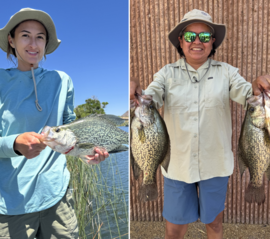
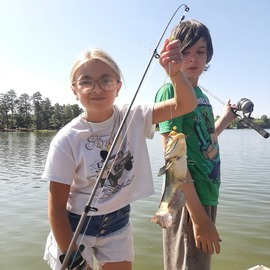
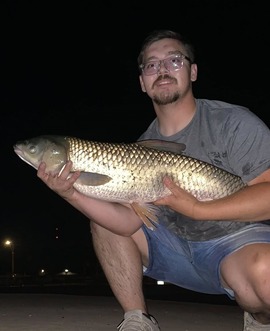
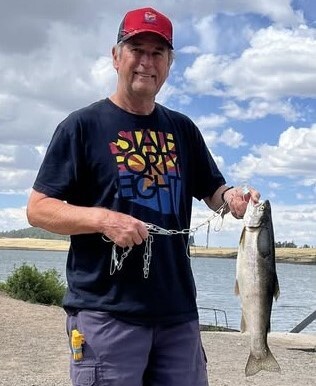
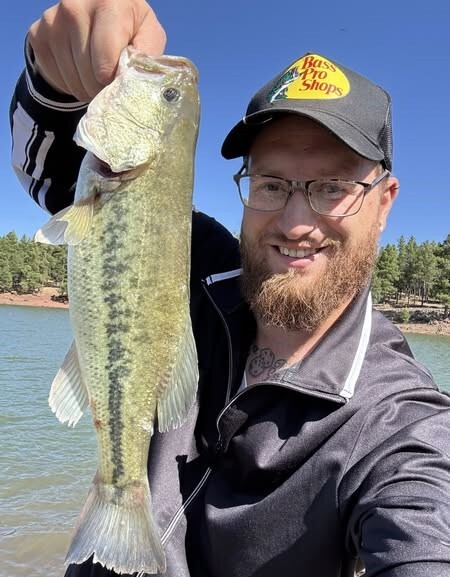
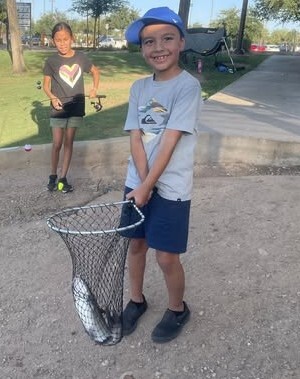
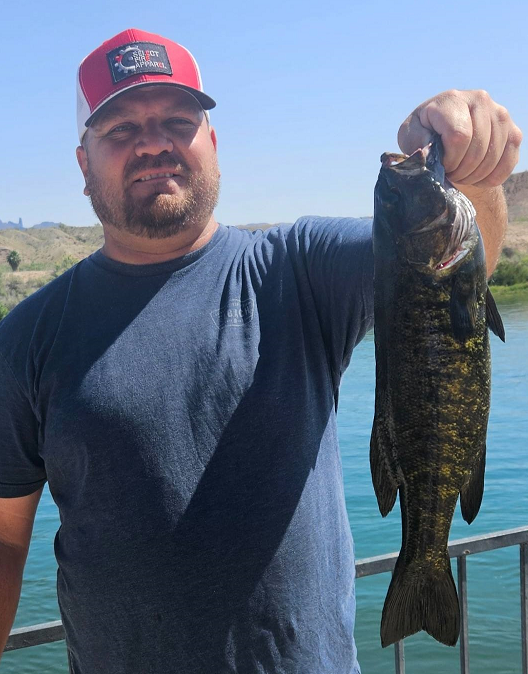
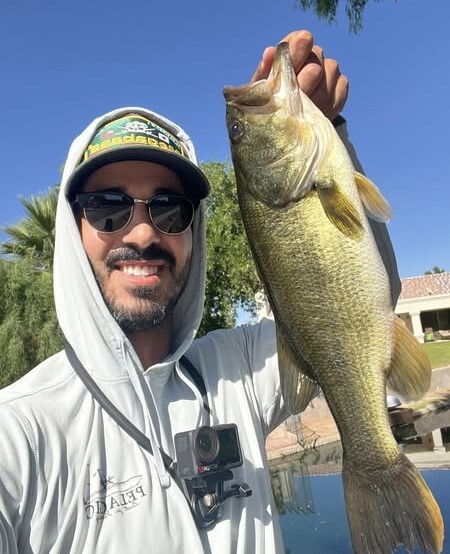
For each edition of the Fishing Report, we'll select some photos and reports submitted by members of the angling public either through the Fish AZ Facebook Group or through the bfishing@azgfd.gov email address. If you'd like your photo/report considered for publication here, please indicate the species, place, date, name (we only publish first name and last initial), and any other information you'd like to provide. For more photos (including new photos each day), visit the Fish AZ Facebook Group.
|