Angling to catch a catfish?
Community Fishing Program waters teeming with scrappy fighters
It doesn’t have to be Friday to enjoy a good, old-fashioned fish fry.
Cole slaw. French fries. Red beans and rice. Oh, and don’t forget the hush puppies. All are perfect complements to a pile of fresh-caught catfish filets, fried in a savory cornmeal batter until crisp and golden-brown.
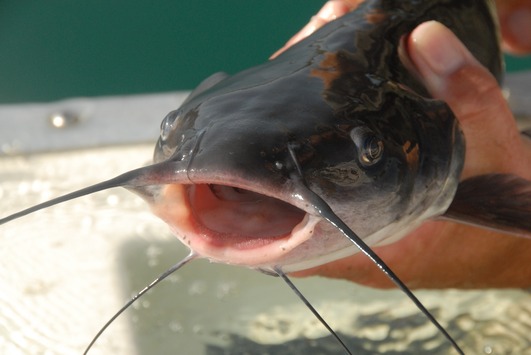
Whatever your choice of side dishes, leave the main course up to the Arizona Game and Fish Department (AZGFD), which is preparing to stock Community Fishing Program waters with tons of channel catfish just waiting to get caught.
And “tons” is not an exaggeration.
At more than 50 city park lakes and ponds across Arizona, AZGFD expects to stock between 210,000 and 220,000 pounds — more than 100 tons — of channel catfish in two-week intervals (approximately) over the course of the spring and fall seasons this year.
The lower elevation waters, located in metro Phoenix and Tucson, Yuma, and Safford, will be stocked through May. The higher elevation waters, in places like Prescott Valley, Ash Fork, Show Low, and St. Johns will receive fish from late May through mid-September.
In addition to Community Fishing Program waters, AZGFD also has plans to stock these locations: Deadhorse Ranch State Park, Lynx Lake, Watson Lake, Goldwater Lake, City Reservoir, Santa Fe Reservoir, Frances Short Pond, Woodland Lake, Scotts Reservoir, and Cluff Ranch. A set stocking schedule has yet to be determined.
Anglers who hook into one of these stockers can expect a tussle. AZGFD has a contract with an Arkansas-based supplier that ensures the fish being delivered mostly weigh between 1 ½ and 2 pounds apiece, with some tipping the scales at 5 pounds or more.
One of those would make for quite the meal. Or even two.
“Catfish are an excellent species for stocking into recreational fishing waters, as they are scrappy, omnivores — which means they will eat almost anything,” said Scott Gurtin, who manages the Community Fishing Program. “They’re also exceptionally delicious when fried. If you haven’t tried deep-fried catfish, give it a try.”
In addition to channel catfish, Gurtin said AZGFD recently stocked more than 6,000 pounds of bluegills in Community Fishing Program waters in the Phoenix, Tucson and Yuma areas, as well as Show Low, St. Johns, Eagar, and Safford.
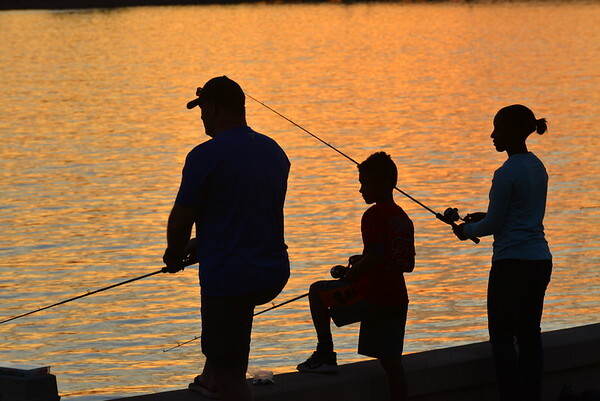
The Community Fishing Program was established to provide fun, family-friendly opportunities close to home for all anglers, hence the motto: “If people can’t get to the fish, we’ll bring fish to the people.” It’s estimated that more than four million Arizona residents live within 20 minutes of one of these stocked waters.
Anglers are advised that a valid license is still needed (for those 10 and older) to fish these waters. Valid licenses include general fishing, youth combination hunt and fish (10 to 17), combination hunt and fish (18 and over), or pioneer, blind, disabled veteran (one day), and youth group licenses.
Anglers also should know the difference between waters that have been designated as either a “lake” or a “pond,” and have been named accordingly. Community “lakes” are larger bodies of water, generally over three acres, and have higher daily bag limits. Community “ponds” have daily bag limits that are only one-half that of lakes.
Limits are reduced at the smaller bodies of water to avoid overcrowding and overfishing, while still providing a quality angling experience. Once a daily bag limit is reached, an angler must stop fishing for that species.
The best method for channel catfish is to use a hook-and-sinker setup fished on the bottom. Anglers should use an 8- to 12-pound test line with a No. 2 to No. 6 baitholder hook. Typical baits include worms, stink baits, hotdogs, liver, and shrimp. Fish the deepest spots during the daytime and shallower areas after dark.
For more information about the Community Fishing Program, including a stocking schedule, visit www.azgfd.gov/community.
Sport Fish Restoration Act celebrates 75th anniversary
The Sport Fish Restoration Act turns 75 years old this year. It has been a cornerstone in ensuring that America’s sportfish populations and aquatic habitats are healthy, sustainable and accessible for all.
The Sport Fish Restoration Act ensures that a 10 percent federal excise tax collected on most fishing equipment, paid by tackle manufacturers, is annually distributed to state and territorial fish and wildlife agencies to manage and enhance sportfish populations, provide aquatic education to the public, increase fishing participation, and provide safe boating and fishing access.
This partnership between excise tax-paying manufacturers and fish and wildlife agencies, including the Arizona Game and Fish Department, has proven to be one of the most successful conservation models in the world.
In Arizona, Sport Fish Restoration funds support numerous programs and initiatives, including:
- The monitoring, management and enhancement of wild self-sustaining populations of cold and warmwater fish species.
- Supports stocking more than 700,000 pounds of cold and warmwater sportfish species into lakes, ponds, streams and rivers throughout the state.
- Operating department hatcheries that raise multiple species of trout to stock throughout the state.
- Angler survey efforts for the department to monitor and improve angler satisfaction rates and angler catch rates.
- Conservation efforts that led to the delisting of Apache trout from Endangered Species Act protections in 2024.
- Reservoir habitat projects to create better angling opportunities and provide more cover and habitat for warmwater fish species.
- Projects that develop or renovate existing facilities to improve access for boaters to Arizona’s waters.
- A fishing program focused on recruitment, retention and reactivation that provides education and events that foster the development of lifelong anglers. Last year, 38 FishAZ Network partners helped conduct 167 events in 25 communities across the state. Visit www.azgfd.gov/FishAZ for information and a list of upcoming events.
The 75th anniversary will be celebrated all year, so we'll have more information in future editions of the Fishing Report.
Earth Day volunteer opportunity: Fishing line cleanup at Woods Canyon Lake, April 22
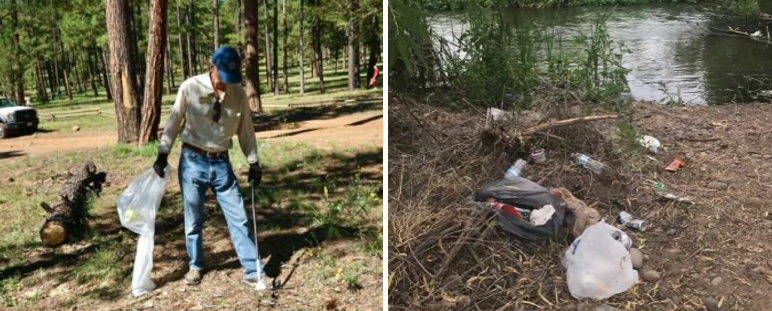
What: Join APS and the Arizona Game and Fish Department at Woods Canyon Lake on Tuesday, April 22, 9-11 a.m., for a cleanup event in celebration of Earth Day. The lake is located about 35 miles east of Payson. Volunteers will be walking around the beach area and hiking along the trail picking up trash and fishing line.
Why: Improperly disposed fishing line can be consumed by, or entangle, many animals including mammals and migratory birds. Regular cleanups can prevent ospreys, bald eagles, waterfowl, and pets from encountering dangerous and often lethal entanglement. After needing to rescue an eagle nestling last year, which required months of rehabilitation prior to release back to the wild, APS has volunteered to work with AZGFD on coordinating a fishing line cleanup event. Woods Canyon and Willow Springs lakes both have nesting bald eagles.
Details:
- Tools, bags and gloves will be available; bring your own work gloves if you have them.
- Wear proper attire for being outdoors and in the sun (i.e., hat and sunscreen).
- Some water and snacks will be provided, please bring lunch or additional food you may want.
- Minor children must be accompanied and supervised by a parent or guardian throughout the project.
Register: Please register online by visiting https://volunteer.azgfd.gov/need/detail/?need_id=1072226 and select "Respond" on the right side of the page. Follow the prompts to "Login" (or "Sign Up" to create a free volunteer account). If the event needs to be rescheduled or canceled due to inclement weather, registered participants will be notified via email.
To get there: From Payson, head east on AZ-260 29 miles toward the Mogollon Rim. Turn left onto Rim Road/FR 300 (signs for Woods Canyon Lake) for 4 miles. Turn right at the sign for Woods Canyon Lake, follow the road for 1 mile to the marina parking lot. Look for the Arizona Game and Fish Department tent.
Questions? Contact volunteer@azgfd.gov or 602-526-2004.
Read more about AZGFD's Monofilament Recovery Program here.
Volunteer opportunity: Aquatic habitat build at Peña Blanca Lake, May 10
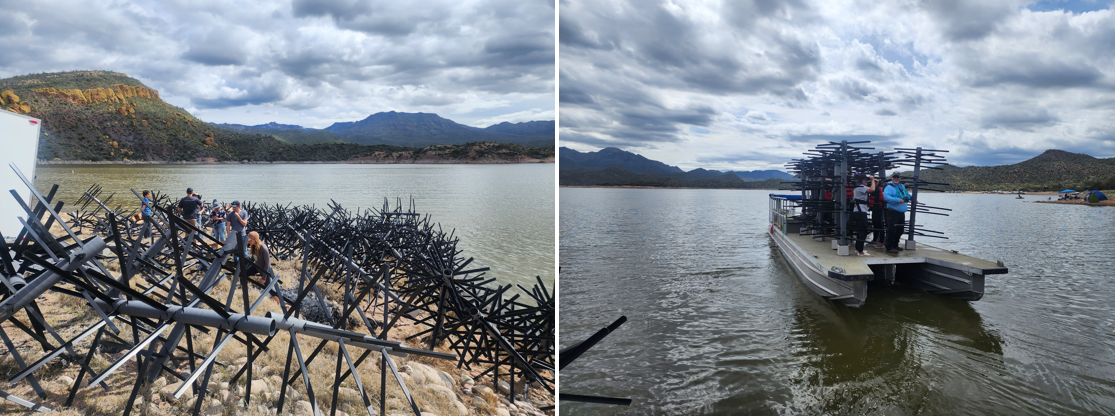
What: Join us to build and place mossback safe haven fish habitat structures into Peña Blanca Lake on Saturday, May 10, 2025. We will meet at the boat ramp at 8:30 a.m. and will work until all the habitat is in place, or about 4 p.m.
Why: This habitat project will add some much-needed structure to Pena Blanca Lake. Diverse bottom structure is a key component of a thriving warmwater fishery. This structure will have numerous benefits for fish species in the lake, helping to improve sizes of largemouth bass and recruitment of bluegill and redear sunfish. They will also provide locations around which fish will congregate, likely leading to improved catch rates and angler satisfaction.
Details: Volunteers should bring their own water, snacks, food and appropriate sun protection: sunscreen, hat, sunglasses, etc. Closed toed shoes and clothes appropriate for May weather in this area are required.
Register: Please register online by visiting https://volunteer.azgfd.gov/need/detail/?need_id=1074372 and select "Respond" on the right side of the page. Follow the prompts to "Login" (or "Sign Up" to create a free volunteer account). If the event needs to be rescheduled or canceled due to inclement weather, registered participants will be notified via email.
Questions? Contact sdeery@azgfd.gov.
Golden algae update for central Arizona reservoirs
Arizona Game and Fish Department biologists have continued to monitor water quality at Saguaro, Canyon and Apache lakes for golden algae.
In early February, AZGFD confirmed the presence of golden algae in Saguaro Lake after a minor fish kill was observed. Primarily threadfin shad were affected at the time. Recent water quality samples have confirmed an increased abundance of golden algae in Canyon Lake as well. It is common for golden algae to spread to other lakes in the Salt River chain once it has been detected.
As of today, Apache Lake water quality samples have not detected the presence of golden algae. It is likely fish kills will continue in Saguaro and Canyon lakes over the next month or two ranging in severity.
Golden algae can produce toxins harmful to gill-breathing animals, such as fish. Similar golden algae-related fish kills have occurred in Saguaro, Canyon and Apache lakes since 2003. To date, no adverse health impacts have been noted for humans or non-gill-breathing wildlife that have come in contact with waters experiencing a golden alga toxin bloom. AZGFD will provide updates as needed.
Reminder: AZGFD announces new AZ Bass challenge
In case you missed last month's announcement, the temperatures are heating up and so is the bass fishing. The Arizona Game and Fish Department is excited to announce the launch of the AZ Bass Challenge, a new program designed to give anglers an opportunity to explore Arizona’s diverse bass fishing waters and earn recognition for their efforts. Whether you're a seasoned pro or a newcomer to the sport, the AZ Bass Challenge invites all anglers to take on the ultimate bass fishing adventure and pursue the state’s five signature bass species.
Catch 'em all: The five species challenge
The AZ Bass Challenge is simple: catch all five species of bass found in Arizona waters. These include:
- Largemouth bass
- Smallmouth bass
- Striped bass
- White bass
- Yellow bass
Each of these species can be found across various lakes and rivers in Arizona, providing an exciting challenge for anglers of all skill levels.
How to participate:
-
Catch all five species of bass in Arizona.
-
Submit a completed application with details of the species caught, including the location and date.
- Include photographs of each species caught.
-
No more than two species can come from the same water body.
- Fish must be caught legally within Arizona waters.
Where to find your fish:
-
Striped bass: Lake Powell, Lake Mead, Lake Mohave, Lake Havasu, Lake Pleasant, and the Colorado River.
-
Yellow bass: Apache Lake, Canyon Lake, Roosevelt Lake, Saguaro Lake, and upper Lake Mary.
-
White bass: Lake Pleasant and the Agua Fria River upstream of Lake Pleasant.
-
Largemouth bass: Found statewide.
-
Smallmouth bass: Apache Lake, Roosevelt Lake, Lake Powell, Lake Mead, Lake Mohave, Lake Havasu, Colorado River, Show Low Lake, Fool Hollow, Black River, and Verde River above Horseshoe Reservoir.
Submit your challenge entry:
- Email applications and photos to: azbasschallenge@azgfd.gov
- Or mail your entries to: Arizona Game and Fish Department, 5000 W. Carefree Highway, Phoenix, AZ 85086, Attn: WMAQ, Sport Fish Program.
Recognition for completing the challenge:
Successful anglers who complete the AZ Bass Challenge will receive a special certificate featuring color images of the species they caught, a limited-edition Arizona Bass Challenge sun shirt, and an Arizona Bass Challenge sticker to commemorate their accomplishment.
Don’t miss out on the action!
Ready to take on the challenge? Head out to Arizona’s world-class bass fishing waters and see how many species you can catch! Whether you’re a seasoned angler or just starting, the AZ Bass Challenge is your ticket to discovering the thrill of bass fishing in Arizona.
For more information, including official rules and further details on where to find each species, visit the Fish and Boat AZ website or contact a Regional Biologist.
Contact information
Phone: 623-236-7259
Email: azbasschallenge@azgfd.gov
Silver Creek update
April 1 was the opener of the “catch-and-keep” season at Silver Creek, located about 5 miles east of Show Low. Although flooding has decreased angler success for the opener in recent years, the “stars aligned” just right this year.
AZGFD modified stocking strategies and stocked the largest trout Silver Creek has seen, just over a 3.5-pound average. There also were no flooding or aquatic disease outbreaks. Despite April 1 being a Tuesday, with temperatures in the 30s with 60-mph wind gusts, 36 vehicles packed full of excited anglers were waiting for the gate to open at 5:30 a.m.
Silver Creek did not disappoint them. Stringers of limits of large trout were abundant along with huge smiles. Some anglers even quit before they had their limit, stating they kept only what they could eat. As the day went on, the parking lot remained fairly full and lots of anglers went home with their biggest Arizona trout to date.
Only the lower section of Silver Creek is open to the public, and standard statewide regulations apply. Silver Creek will be getting stocked weekly with Apache trout starting the week of April 16.
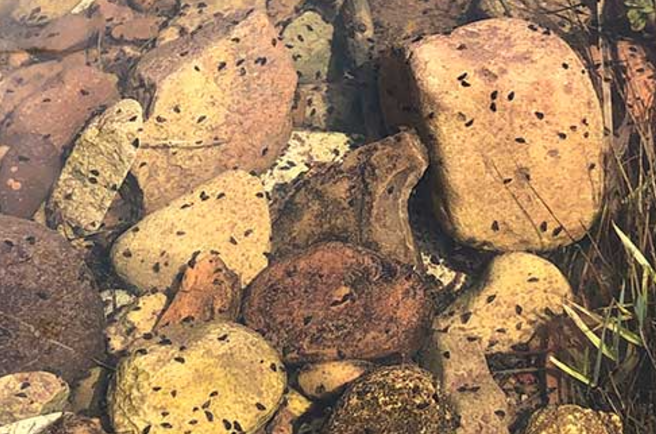
Above: New Zealand mudsnails.
Pitch in to prevent the spread of aquatic invasive species
Boaters and anglers are urged to do their part to help prevent the spread of aquatic invasive species (AIS) such as quagga mussels, New Zealand mudsnails, and the recently discovered (in California) golden mussels. Please clean, drain and dry your watercraft (and pull your plug) before launching in ANY Arizona waterbody.
Please contact the Arizona Game and Fish Department Aquatic Invasive Species (AIS) Program at 623-236-7608 if you have any questions or would like to schedule an inspection. For information on the golden mussel detections in California, visit the California Department of Fish and Wildlife website.
For more information on aquatic invasive species in Arizona, including links to Director's Order #1 (list of aquatic invasive species of Arizona), Director's Order #2 (list of AIS-affected waters in Arizona), and Director's Order #3 (mandatory conditions for movement of watercraft, conveyances and equipment from affected waters), visit
https://www.azgfd.com/fishing-2/aquatic-invasive-species/.
In addition to the general AIS decontamination requirements and protocols described above, anglers should take note of the New Zealand Mudsnail Decontamination Options and Angling Recommendations.
Recent stockings
Week of 3/31 to 4/4/25
Stocked with rainbow trout unless otherwise indicated.
Central Arizona: Salt River.
North Central Arizona: Goldwater Lake (lower), Lynx Lake, Mingus Lake, Oak Creek, Watson Lake.
Flagstaff/Williams area: Ashurst Lake, Cataract Lake, Dogtown Reservoir, Frances Short Pond, Kaibab Lake.
Mogollon Rim: Bear Canyon Lake, Canyon Creek, Christopher Creek, C.C. Cragin Reservoir, East Verde River (Gila trout), Haigler Creek, Long Tom Tank, Tonto Creek, Willow Springs Lake, Woods Canyon Lake.
White Mountains: Luna Lake, Rainbow Lake.
Southern Arizona: Rose Canyon Lake.
Community Fishing Waters:
Prescott area - Fain Lake.
White Mountains area (stocked with bluegill) - Cow Punch, Patterson Ponds (upper and lower), Show Low Creek.
Week of 3/24 to 3/28/25
Stocked with rainbow trout unless otherwise indicated:
Central Arizona: Salt River.
North Central Arizona: Dead Horse Lake.
Flagstaff/Williams area: Ashurst Lake, City Reservoir, Frances Short Pond, Upper Lake Mary.
Mogollon Rim: Canyon Creek, Christopher Creek, East Verde River, Haigler Creek (Gila trout), Tonto Creek.
White Mountains: Big Lake, Fool Hollow Lake, Hulsey Lake, Show Low Lake.
Southern Arizona: Parker Canyon Lake, Pena Blanca Lake.
Community Fishing Waters (stocked with bluegill unless otherwise noted):
Casa Grande area - Dave White Regional Park Pond.
Payson area - Green Valley Lake 2 (stocked with rainbow trout).
Phoenix area - Alamar Park Pond, Alvord Lake, Bonsall Park, Chapparal Lake, Copper Sky Lake, Desert Breeze Lake, Desert West Lake, Discovery Ponds, Eastmark Pond, Encanto Lake, Evelyn Hallman Pond, Festival Fields Pond, Freestone Pond, Friendship Pond, Gilbert Regional Park Pond, Greenfield Park Pond, Kiwanis Lake, Mansell Carter Oasis Lake, McQueen Pond, Pacana Pond, Paloma Lake, Papago Ponds, Pioneer Lake, Red Mountain Lake, Rio Vista Pond, Riverview Lake, Roadrunner Pond, Steele Indian School Pond, Sundance Park Lake, Surprise Lake, Veterans Oasis Lake, Water Ranch Lake.
Safford area - Graham County Fairground Pond.
Tucson area - Kennedy Lake, Lakeside Lake, Sahuarita Lake, Silverbell Lake.
Yuma area - Council Avenue Pond, Pacific Avenue Athletic Complex Pond, Yuma West Wetlands Pond.
Reports
NORTHERN ARIZONA
This week’s forecast for the high country calls for a cooling trend with chances of showers early and late this week and into the weekend. Highs will be in the high 40s to low 70s and lows will be in the 20s to 30s for Flagstaff, Williams, and the Mogollon Rim. Water temperatures will be in the 40s to 60s this week. Lower elevations around the Verde Valley will see a cooling trend this week with a chance of precipitation late in the week and into the weekend. Highs will be in the 60s to 80s and lows in the 30s to 40s. No campground hosts are currently present at the lakes with designated campgrounds on the Coconino and Kaibab National Forests; please check with the appropriate forest for specific dates that each campground will open. Spring fishing is here. Most of the waters in Region II have been stocked or will be stocked this week. Spring is a great time to get out and target larger fish.
Bait Anglers: Worms, corn, and PowerBait will be your best bet for trout this week. Reminder, the use of live minnows and fish as bait are not allowed on any waters in Coconino County including all of the bodies of water listed below. Nightcrawlers are a good bet for walleye and anchovies are a good approach for northern pike. Catfish are commonly caught on worms, hot dogs, and anchovies. Small pieces of nightcrawlers and mealworms on small hooks are a good approach for panfish (bluegill, black crappie, yellow perch, and yellow bass).
Lure Anglers: Lures with flash and vibration such as Joes’ Flies, Panther Martins, Mepp’s spinners, Kastmasters, Rooster Tails, crayfish imitations, Pistol Pete’s, and Dare Devils are good choices. Think small for trout, 1/8 – 1/12-ounce lures are best (silver, gold, or copper). For warmwater species, crankbaits, soft plastics, and spinnerbaits have been working well. Pay attention to what is working and duplicate that presentation.
Fly Anglers: Producing flies this week include #10 bead-headed Simi-seal leeches (brown, black, olive, and wine), #10 bead-headed Wooly Buggers (brown, black, olive, and wine), #10-12 Zug Bug, #12-10 Dragonfly Larvae (olive), #18-16 Zebra Midge, #16-#12 Pheasant Tail, #12-14 Prince Nymph, #12-14 San Juan worm, hoppers, damselfly, stonefly, mayfly, hopper, and caddis fly patterns.
Check the fishing regulations before heading out as many of the lakes around Williams and Flagstaff have special regulations. Reminder, the use of live minnows and fish as bait are not allowed on any waters in Coconino County including all of the bodies of water listed below. Your licenses pay for the fish you catch; poachers are stealing from YOU. It is illegal to transport and release live fish in Arizona including all of the waters listed below; the illegal introduction of unwanted species is costly and diminishes the quality of our fisheries. If you observe a violation, please report it to the Operation Game Thief Hotline (OGT) at 1-800-352-0700.
WILLIAMS LAKES (Kaibab National Forest):
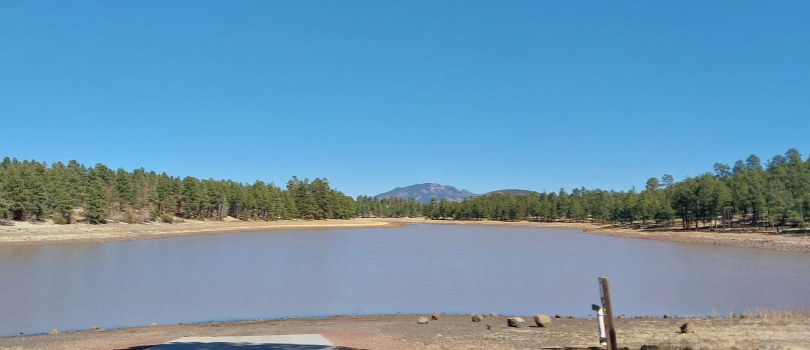
Kaibab Lake - The campground is closed for the winter season, but the boat launch and day use areas are open. The limit is 2 bass minimum size 13 inches, the limit is 4 channel catfish, the limit is 4 trout. Only boats with a single 10-horsepower motor (or less) or single electric motor are allowed on Kaibab Lake. The lake is very low and launching a boat is doable but challenging. Rainbow trout will be stocked this week.
 |
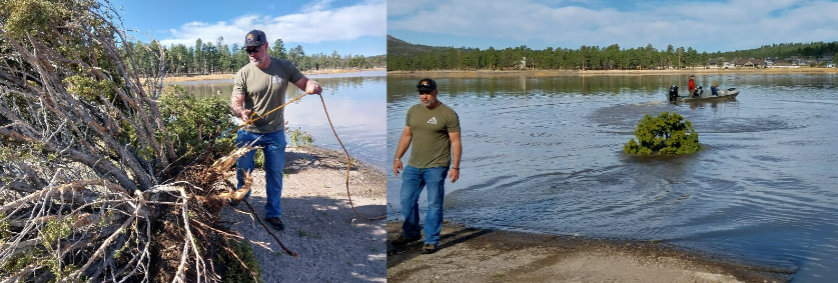
Cataract Lake - On April 11, the Arizona Game and Fish Department, in partnership with the Kaibab National Forest, deployed approximately 25 juniper trees in the lake as fish habitat to benefit warmwater species such as largemouth bass, bluegill, and black crappie. This was that last of the planned sportfish reservoir habitat projects for Region II. We now have added habitat to Kaibab Lake, Dogtown Lake, Whitehorse Lake and Kinnikinick Lake. Green junipers such as these can last for over 100 years if they remain submerged. Only boats with a 10-horsepower motor (or less) or single electric motor are allowed on Cataract Lake. The limit is 2 bass minimum size 13 inches, the limit is 4 channel catfish, the limit is 4 trout. Both the County and Forest Service Day Use Areas are currently open.
 |
City Reservoir (Buckskinner Park) - The lake is full. The limit is 2 bass minimum size 13 inches, the limit is 4 channel catfish, the limit is 5 sunfish, the limit is 4 trout. Rainbow trout were stocked last week.
Dogtown Lake - The campground is closed for the winter season, but day use access and boat launch are open. Only boats with a single electric motor are allowed on Dogtown Lake. No gas-powered motors. The limit is 2 bass minimum size 13 inches, the limit is 4 trout. Spring fishing is starting to kick off and anglers are catching trout and even a few bass. Rainbow trout will be stocked this week.
Santa Fe Reservoir - Only boats with a single electric motor are allowed on Santa Fe
Reservoir. No gas-powered motors. The limit is 2 bass minimum size 13 inches, the limit is 4 channel catfish, the limit is 4 trout. Rainbow trout were stocked last week.
JD Dam - JD Dam is catch-and-release only for trout; no trout may be kept; artificial fly and
lure only; single-pointed, barbless hooks only. Only boats with a single electric motor are
allowed on JD Dam. No gas-powered motors. Anglers are starting to catch a few tiger trout. The tank remains low and the water is murky, making fishing difficult.
Whitehorse Lake - The campground and access to the boat launch are closed as of
Sept. 30, 2024. Access to the lake is walk-in only. Only boats with a single electric motor are allowed on Whitehorse Lake. No gas-powered motors. The limit is 2 bass minimum size 13 inches, the limit is 4 channel catfish. Folks willing to walk in have been catching largemouth bass.
Russel Tank - The limit is 4 trout. Access to Russel Tank is open. The water level of Russel Tank has dropped from last spring and will not be stocked at this time due to lower water levels and water quality issues.
FLAGSTAFF LAKES (Coconino National Forest):
Lower Lake Mary - The day use area is closed for the winter season. Campgrounds along the Lake Mary Road corridor are open. The daily bag limit is 4 trout per day and 4 channel catfish per day. Northern pike are unlimited but must be immediately killed or released. Only boats with a single 10-horsepower motor (or less) or a single electric motor are allowed on Lower Lake Mary. The lake is very low.
Upper Lake Mary - Upper Lake Mary boat launch will remain open all year. The Narrows boat launch is closed for the winter season. Starting 10/19/2024, there will be no fees until April 2025. No trash services will be available during the off season, but one toilet will remain open. Statewide limits apply for the fish species in Upper Lake Mary, check your regulations (page 6). Northern pike and walleye are active along the shoreline and at the inflow areas of the lake.
Frances Short Pond - The limit is 2 bass minimum size 13 inches, the limit is 4 channel catfish, the limit is 5 sunfish, the limit is 4 trout. Fishing has been good for trout with anglers finding success using PowerBait, worms, in-line spinners like Joe’s flies, and flies like Prince Nymphs (#12), Zebra Midges (#16-14), and gold-ribbed Hares’ Ears (#16-14).
Ashurst Lake - The Ashurst Lake Road (Forest Road 82E) is open, but please stay on
maintained roads. Only boats with a single 10-horsepower motor (or less) or a single electric motor are allowed on Ashurst Lake. The limit is 4 trout. Northern pike and green sunfish were illegally introduced and are not managed for in Ashurst Lake. Northern pike and green sunfish are unlimited in Ashurst Lake, please kill any northern pike and green sunfish caught. This is a good time of year to target the large holdover trout that Ashurst Lake is known for. Rainbow trout were stocked last week.
Kinnikinick Lake - Only boats with a single 10-horsepower motor or single electric motor are allowed on Kinnikinick Lake. Please do not put rocks on the boat launch: As the lake levels rise, the rock become hazards for boats and trailers and block access to the lake for boat anglers.
Marshall Lake - Only boats with a single 10-horsepower motor or single electric motor are allowed on Marshall Lake. The lake is very weedy, making fishing challenging.
VERDE VALLEY STREAMS (Red Rock Ranger District, Coconino National Forest)
Oak Creek - As of Jan. 1, 2023, the catch-and-release section on Oak Creek has been
expanded to include Oak Creek from the Highway 89A bridge at Slide Rock State Park
upstream to the Sterling Springs Fish Hatchery property boundary including the West Fork
Oak Creek. This section will be catch and release only for trout, artificial fly and lure only,
barbless hooks only. Stream flow is at base flow with a recent reading of 31.9 cfs, stream
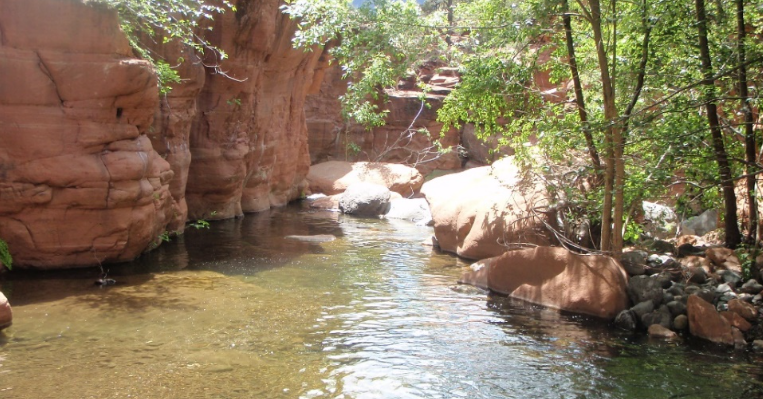
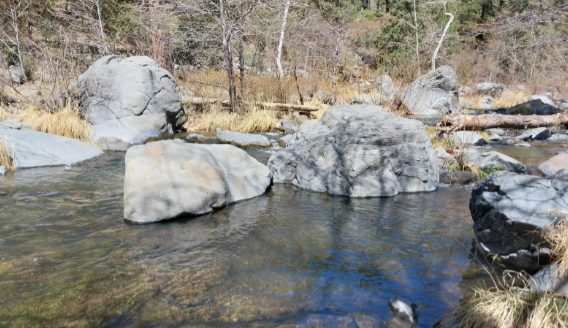
temperature 55.9-61.0 F, turbidity 1.7 FNU @ 8:45 a.m. on 4/14/2025. Cave Springs Campground will remain closed for repairs. Access to the Cave Spring area will open April 11 for walk-in and angling access. The Banjo Bill picnic area is closed for repairs. The window to fish Oak Creek before the busy tourist season is rapidly closing. Anglers are finding success on inline spinners and flies. Hellgrammite, Simi-seal leech, midges, elk hair caddis, hoppers, and mayfly patterns are a good bet. Anglers are catching Gila, rainbow, and brown trout. Rainbow trout will be stocked this week.
 |
West Clear Creek - Smallmouth bass are unlimited harvest in West Clear Creek. Roundtail
chub are often caught in sections of West Clear Creek; please release them unharmed. The limit is 4 trout. Stream flow is at base flow with a recent reading of 11.9 cfs and stream temperature 60.1-64.0 F on 4/14/2025 @ 8:45 a.m. Rainbow trout will be stocked this week.
Wet Beaver Creek/Beaver Creek - Bass are unlimited harvest in Wet Beaver and Beaver
Creeks. There is the potential to catch a native sucker or roundtail chub; please release them unharmed. The limit is 4 trout. Stream flow is stable with a recent reading of 6.84 cfs @ 8:45 a.m. on 4/14/2025. Average base flow is about 4-9 cfs for Wet Beaver Creek. Rainbow trout will be stocked this week.
CENTRAL ARIZONA
At Bartlett Lake (report courtesy of pro angler Gary Senft) - Gary and his group caught 31 bass pretty evenly between drop shot and Texas rig on April 4. Drop shot performed best for the bigger fish later in the day. Air temp was about 43 degrees at start, water temp about 57 F. Used small worms, 5150s, Curley Tails. Cloudy conditions, barometer was falling. Fish were caught mostly in 12-20 feet.
Lake Pleasant (report courtesy of Sportsman's Warehouse) - Striped bass are actively feeding on shad and perch jerk baits, 8-inch spoons, and anchovies. Bass are currently shallow, chasing baitfish and poppers, with water temperatures around 55 F. Catfish are biting on nightcrawlers and stink baits. For more active fishing, anglers can use Senkos, drop shots, Ned rigs, and skirted jigs for bass. Crappie fishing has also improved, with success using 2-inch grubs bounced off the bottom. Fishing in the Agua Fria arm and Cottonwood Creek has been productive, especially at night around submerged trees and brush using shad or minnows. In early March, the water temperature was reported at 73 F. Bass were found in shallow areas, with anglers stripping minnows and small leeches. Carp were abundant, with catches using carp craws stripped slowly in muddy areas.
Lower Salt River (report courtesy of Sportsman's Warehouse) - The Lower Salt River offers diverse fishing opportunities and fishing has been rated as very good. Anglers have reported success catching trout, bass, and catfish. Water levels have been high since early February, but fishing remains productive. Trout fishing: The Arizona Game and Fish Department stocks the river with catchable-size trout from late October through April. Effective techniques include using worms, PowerBait with garlic scent, Panther Martin spinners, Rooster Tails, and Joe's Flies. Bass fishing: Largemouth bass are present year-round. As of mid-March, bass are moving to depths of 15-20 feet near structures and submerged trees. Recommended lures include Berkley soft baits and large Yamamoto Senko worms. Fly fishing: Fly anglers have found success with streamer and leech patterns, particularly those with hot head variations. Small red or black zebra midges are also productive. A suggested rig is a hot head pheasant tail as the point fly with a small red zebra midge as the dropper.
At Roosevelt Lake (report courtesy of Sportsman's Warehouse), fishing is rated good. Bass are moving to depths of 15 to 20 feet, favoring structures and trees. Effective lures include Berkley soft baits, Yamamoto large Senko worms (4.5 to 7 inches) in Wacky, Carolina, and Texas rigs, Robo Worms for drop shots, Z-Man chatter baits, Strike King spinnerbaits, Keitech swim baits, and Missile flipping jigs. Topwater options like Spooks, Whopper Ploppers, and Ricos are also productive. In deeper waters, consider Strike King and Rapala crankbaits and jerk baits. Catfish are biting well on bottom worms, stink baits, minnows, and chicken liver. Crappie fishing is improving, with success reported using Crappie Magnet white/chartreuse minnows or grubs around trees. Catfish are biting on stink baits (dips and nuggets) and punch baits, using circle and treble hooks.
NORTH CENTRAL LAKES
Goldwater Lake (upper), Watson Lake, and Lynx Lake were stocked with rainbow trout last week.
MOGOLLON RIM LAKES (Mogollon Rim Ranger District, Coconino National Forest)
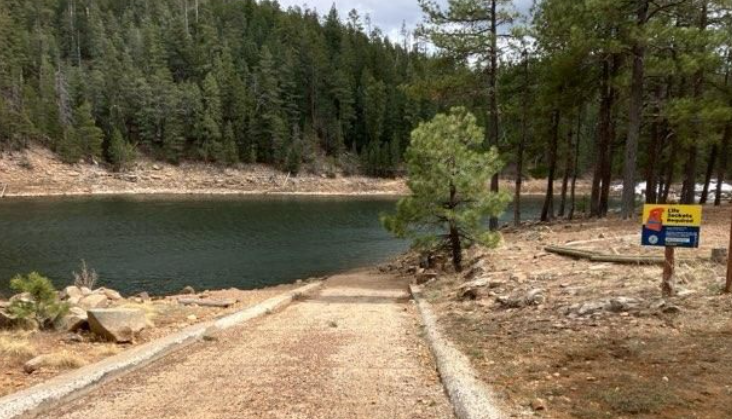
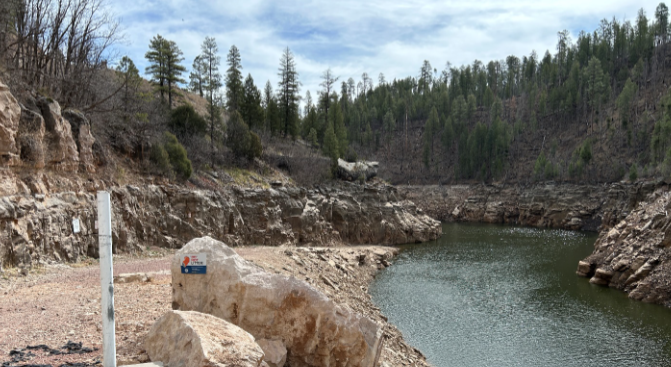
Blue Ridge/C.C. Cragin Reservoir - Only boats with a single 10-horsepower (or less) motor or a single electric motor are allowed on C.C. Cragin Reservoir. Green sunfish are unlimited and invasive; please remove them if caught. Reservoir elevation 6,658.19 ft, current volume is at 3,739 acre feet or 25% full and stable on 4/14/2025. The gate at the top of the boat launch is locked. Boaters can hand carry or drag small watercraft the ~100 yards down the boat launch to the water. Launching a boat becomes more difficult as the lake drops. Launching a trailered boat is not feasible at this time due to the locked gate. Check with the Mogollon Ranger District of the Coconino National Forest for updates on access. Rainbow trout were stocked last week.
 |
Knoll Lake - Knoll Lake Campground is closed for the winter. Only boats with a single electric motor are allowed on the lake. The lake level is low and the boat launch is out of the water, making launching a boat difficult. No gas-powered motors. Green sunfish were illegally stocked into the lake, please lethally remove all green sunfish caught. Reminder, the statewide limit is 4 trout per licensed angler per day.
Huffer Tank - The tank is full. The limit is 4 trout.
WHITE MOUNTAINS
Fool Hollow Lake, Hulsey Lake and Scott Reservoir were stocked with rainbow trout this past week.
LEES FERRY/LAKE POWELL
Lees Ferry - Water Temperature: 49.1-51.1 F; Dissolved Oxygen: 7.7-10.5 mg/l; pH: 7.9-8.3 std units; Discharge Rate: 8,310-10,800 cfs; Turbidity at 1.1 FNU as of 4/14/2025. Upriver fly-fishing report, walk-in report and spin report are at https://leesferry.com/river-report/
Lake Powell - Water Temperature (Wahweap Bay) 57 F, Lake Elevation 3,558.62 MSL (and dropping) as of 4/14/2025. Report courtesy of Dan Keller (www.wayneswords.net). At the end of March, the lake elevation was holding around 3,559 feet. This elevation is very similar to this time last year, so with that in mind, areas that fished well last spring should also provide good fishing this year. Beginning in mid to late April, water levels will start to rise.
Morning water temperature is holding around 52 degrees, with afternoon water temperature exceeding 60 degrees (south end of the lake). Expect water temperature to consistently reach mid 60s by the second week of April. That temperature really wakes up Lake Powell fish. Here is what to expect for each species this April.
Largemouth bass: Bass seek out and reside in cover, this can take the form of brush, tumbleweed piles, and trees. Bass share cover and space with sunfish. As the water temperature warms, bass will begin chasing sunfish, so if largemouth bass is your quarry, be on the lookout for cover and sunfish schools. Doing so you will put you in the right areas to catch largemouth bass. It’s still too cold for fast-moving presentations, so the lure must be placed in or really close to cover. A weedless presentation is often best. Use a slow retrieve to allow more time to entice fish to bite.
Black crappie: Thanks to all the vegetation that was submerged in 2023, it won’t be difficult to find potential cover; however, it likely will take some time to find a good concentration of black crappie. Search the backs of canyons where water depth is 12-25 feet with nearby submerged trees or large boulders providing cover. Try using an eighth ounce jig (hair jig or plastic grub), or Gulp Minnow to target black crappie in the backs of canyons. I like to use a slip bobber rig. Adjusting the bobber stop allows suspending the jig right over the brush, maximizing the jig's time in the “strike zone” and avoiding snagging up in the cover. I often tip the jig with a red wiggler worm (or small piece of nightcrawler) to increase bites from both black crappie and bluegill sunfish.
Smallmouth bass: Smallmouth bass prefer rock structure for cover, so it is easier to locate them with plastic baits fished on rocky shelves, in boulder fields, or at the edge of drop-offs and other shallow areas from 30 feet deep to the shallow shoreline. The key to springtime bass fishing is to find the warmest water available. Often a tall rock, facing the mid-day sun, will heat a cove slightly warmer than the surrounding water. Fishing in that cove will be better than a cove in the shade or without a warming rock. Pay close attention to water temps as you move around a cove or work along a shoreline. Locating even slightly warmer water can make a big difference in the number of fish you catch.
Walleye: Walleye fishing at Lake Powell picks up in April, when walleye are post spawn and ready to feed. Start your search by looking for green to muddy water in the backs of canyons. If shad are present and swimming in open water, bigger walleye can be caught trolling deep divers, and casting shad-size baits (jerkbaits, lipless crank baits). The last few weeks of April and all of May is one of the best times to target walleye. When trolling for walleye, it is best to fish at a water depth where the lure occasionally hits bottom. The most effective trolling method may be a bottom bouncer that can hit bottom at various depths. Walleye are bottom oriented, so a very effective technique is to simply hook a piece of worm to a curly tail grub, tube jig, or Ned rig, and slowly work that along the bottom structure. If you randomly catch a walleye while bass fishing, mark the location and return at
dusk, as walleye are more active during low light.
Striped bass (stripers): You often will need to cover lots of fishless water before locating a school, so get comfortable behind your sonar and spend the required time locating a big school before working too hard at enticing them to bite. In springtime, stripers can often be caught in the backs of canyons chasing lures or in deeper water of the main channel using spoons or anchovies as cut bait. So far this spring, bait has been more effective on the south end of the lake as shad numbers are on the decline. Many stripers caught this spring have been eating crayfish. Stripers prefer shad; however, shad numbers are at a low point coming out of winter and hungry stripers will move shallow searching for crayfish. Anglers are finding success from Bullfrog up to Good Hope Bay with various methods, including spoons, jigs, trolling, and cut bait. Anglers fishing at the south end should try the back of Navajo Canyon, Warm Creek, and cliff walls around mile marker 25. Striper fishing with
anchovies at the dam is also picking up. The condition of stripers is mixed right now, with about half being in good condition and half in poor condition. Catching and keeping stripers helps to maintain forage fish at Lake Powell, so bring an ice chest, fillet knife, and be ready to fill up bags of fresh striper fillets.
WESTERN ARIZONA
Along the Colorado River near Bullhead City, Bill McMillen of the Mohave Daily News has a good column, "Hit-and-miss fishing requires patience, flexibility." He interviews Rusty Braun, proprietor of Riviera Marina in Bullhead City. Read the article.
At Alamo Lake (report courtesy of Sportsman's Warehouse), fishing is rated as good. Bass fishing: Bass are currently found at depths of 15 to 20 feet, particularly around structures and submerged trees. Effective techniques and baits include: Soft Plastics: Utilizing Crush City soft baits and Yamamoto large Senko worms (4.5 to 7 inches) rigged in Wacky, Carolina, or Texas styles. Drop Shot Rigs: Employing Robo Worms for drop shot setups. Reaction Baits: Using Z-Man chatter baits, Strike King spinner baits, and Keitech swim baits. Jigs: Effective techniques include using poppers, jerk baits resembling shad or perch, and 8-inch spoons. Crappie fishing is also productive, especially during the spring season when they move into shallower areas to spawn. Targeting vertical timber in depths of 10-20 feet can yield good results. Additionally, Alamo Lake supports healthy populations of channel catfish, tilapia, and sunfish, providing diverse angling opportunities. Please note that construction is currently in progress on the main side of the park, with machinery and personnel working from 6 a.m. to 4 p.m. Visitors should plan accordingly and exercise caution in construction areas.
At Willow Beach, staff at the Willow Beach National Fish Hatchery stocked 800 rainbow trout at the Willow Beach fishing pier on April 3.
SOUTHERN ARIZONA
Rose Canyon Lake was stocked with rainbow trout last week.
Angler posts
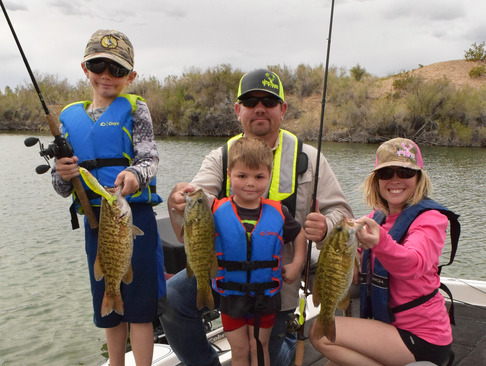
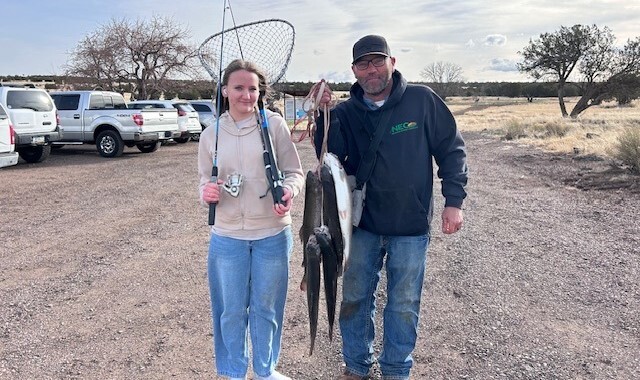
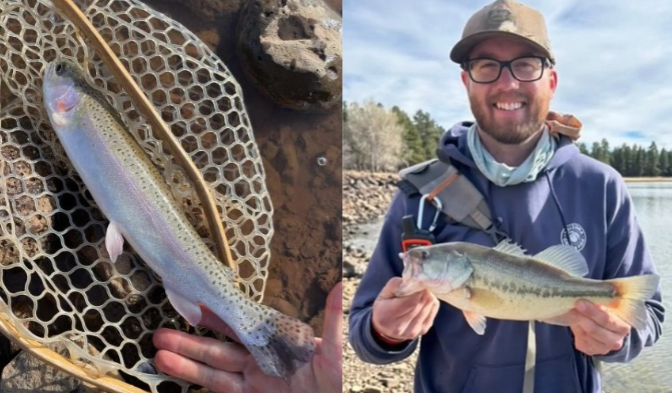
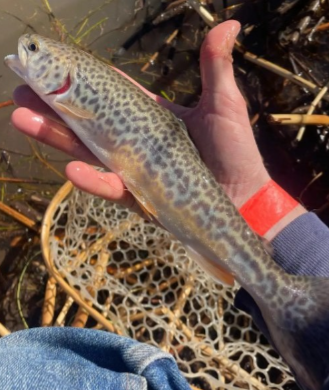
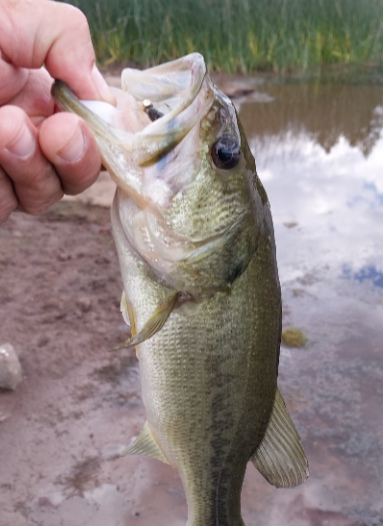
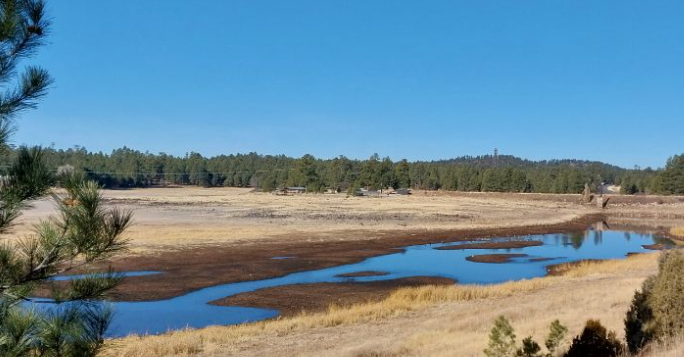
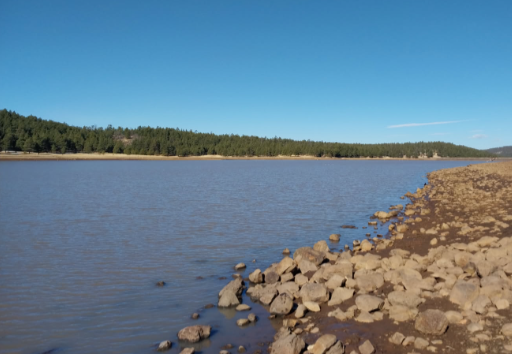
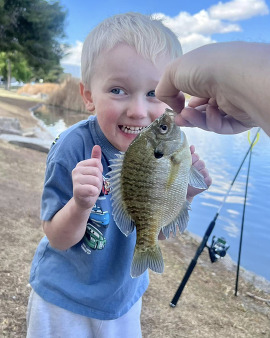
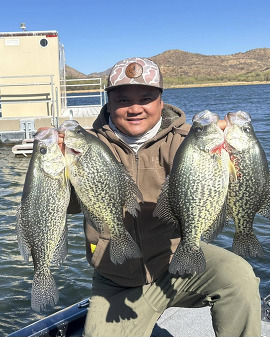
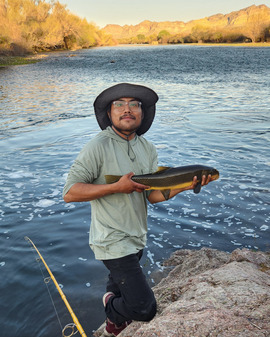
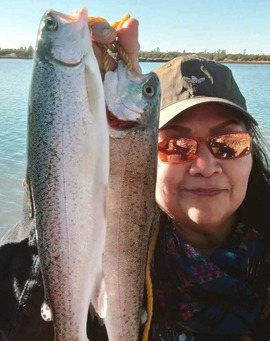
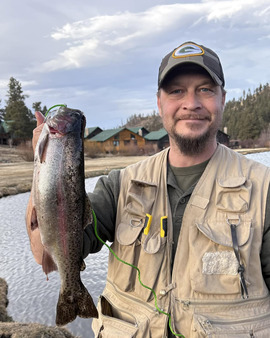
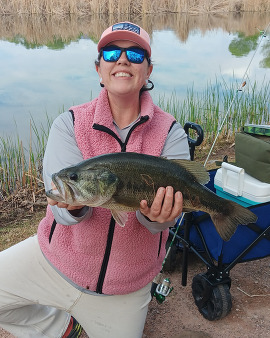
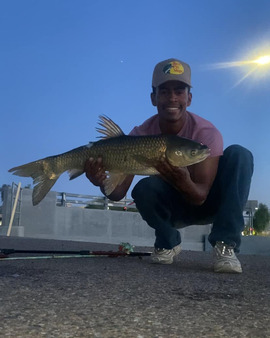
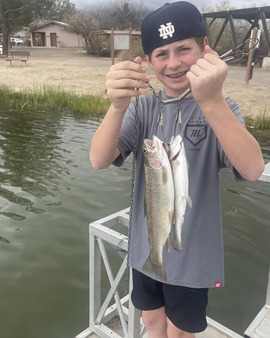
For each edition of the Fishing Report, we'll select some photos and reports submitted by members of the angling public either through the Fish AZ Facebook Group or through the bfishing@azgfd.gov email address. If you'd like your photo/report considered for publication here, please indicate the species, place, date, name (we only publish first name and last initial), and any other information you'd like to provide. For more photos (including new photos each day), visit the Fish AZ Facebook Group.
|