|
FOR IMMEDIATE RELEASE
CONTACT: Chris Powell | chris.powell@sos.arkansas.gov | (501) 683-0057
New State Capitol Exhibit Commemorates
Historic Integration of Hoxie Schools
(LITTLE ROCK, ARK.) – From its founding in the 1880s until ten years after the end of World
War II, the northeast Arkansas town of Hoxie was an agricultural town, a
railroad town, a cotton market town. Its
greatest assets were its location, at the junction of two railroads, the
fertile farmland around it and its children, served by a school system that was
a source of community pride.
In July 1955, however, Hoxie and its schools became objects of national
attention. After the local school board moved to end racial segregation, acting
on moral, legal and practical considerations, Hoxie became the object of
attempts by outside forces to influence its path. “Remember Hoxie” became a
rallying cry for proponents of states' rights and continued segregation: the
incident spurred a surge of white activism and helped boom the political career
of James D. “Justice Jim” Johnson. In the end, though, the Hoxie schools stayed
the course and remained integrated. Over
time, Hoxie’s notoriety faded, especially as the events of 1957 in Little Rock,
which had been foreshadowed by the Hoxie controversy, unfolded.
“Hoxie: Right in ’55,”
The Arkansas Capitol’s fall exhibit, recalls the saga of how this Arkansas town
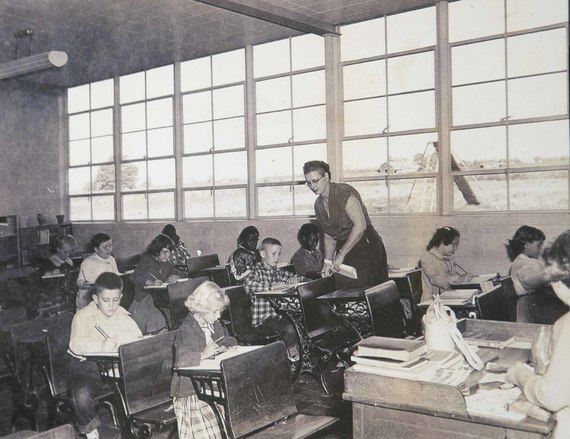
dealt with changing law and changing times, and what came of it. Vintage images and memorabilia of Hoxie and
its schools, as well as documentary materials from the Arkansas State Archives,
tell the stories of the town and the main actors in what one historian styled
“the Hoxie imbroglio.” The exhibit ends by suggesting some consequences,
including current efforts by Hoxie community members to preserve, interpret and
help spread understanding of what happened in their town.
Today, more than six decades and more since Hoxie’s minutes of fame, community
members of the Hoxie: The First Stand
committee are working to create a museum that will preserve memories of the
Hoxie desegregation and interpret the story for future generations. In 1955,
the Hoxie school board, students, staff and, ultimately, the town, chose the
right. That choice would create echoes
far beyond the bounds of the Hoxie school district. In “Hoxie: Right in ’55,” we remember
the events of 1955 and salute those who would preserve those memories as a
legacy for the Hoxie of days to come.
Hoxie: Right in ’55 is on display in the Arkansas State Capitol’s
first-floor galleries. The Capitol is
open on weekdays, 7 AM-5 PM and 10 AM-3 PM on weekends.
# # #
|