|
FOR IMMEDIATE RELEASE
CONTACT: Chris Powell | chris.powell@sos.arkansas.gov | (501) 683-0057
(LITTLE ROCK, ARK.) -- In most seasons, the Arkansas Capitol’s lower-level gallery
features selected images from the construction of the building. This summer, however, Capitol visitors can
enjoy a rediscovery of sorts: a well-remembered but long-unseen exhibit
documenting a distinctive public art form once found in every corner of the
state.
Beginning in the
mid-Nineteenth century and continuing into the Twentieth, a new kind of graphic
blossomed across America: outdoor advertising, in the form of signs painted on building
walls or roofs or even natural features.
Many of these advertised local concerns but also were “privilege”
signs—ones promoting regional or even nationally-branded products such as
Coca-Cola, patent medicines, tobacco products or cigars. Painted with care and stylistic
flair by lettering artists who earned the appellation “wall dogs,” these signs
boomed the products and enterprises of a growing, diversifying American
economy.
Such signs once covered almost
any flat building side. With the spread
of billboards and other advertising media, the vogue for wall signs faded; many
signs were obscured as new buildings went up, others were covered over with
paint or plaster and many were simply left to fade away. The wall dogs did good work, though; across
Arkansas and the nation, these graphics (many created using tenacious
lead-based paint) survive as “ghost signs,” persistent reminders of our
business past.
In the 1990s, the Arkansas Historic Preservation program, a
division of the Department of Arkansas Heritage, began documenting Arkansas’s
ghost signs. This project led to “Ghost
Signs of Arkansas: Off-The-Wall Relics,” an exhibit which made its debut at the
Old State House Museum in 1994. The
exhibit featured photographs by Jeff Holder and text by Cynthia Haas, both of
the Arkansas Historic Preservation Program.
The images recorded fading wall signage from Trumann, Fordyce, Conway,
Pine Bluff, Prescott and other towns across the state; many of the signs had
outlasted the products they publicized. In
1997, the University of Arkansas Press issued Ghost Signs of Arkansas, in which Haas and Holder expanded on the
exhibit. The exhibit itself graced the
offices of the Arkansas Senate for many years, then went into storage.
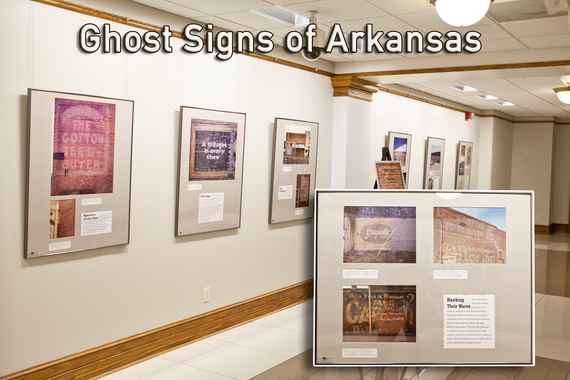
This summer, however, Capitol visitors will
be able to enjoy these “ghosts” once more; Ghost
Signs of Arkansas is on view in the Capitol’s lower-level gallery through
August. The images are more than two
decades old and the survival rate of the signs depicted is unknown, so for this
outing the exhibit is doubly “ghostly”: the signs recorded were shades of their
original selves, and their images may virtually preserve the shades of things
that have disappeared altogether.
# # #
|