Feedback and responses
Affordability of Special Rate Variation due to cost-of-living impact
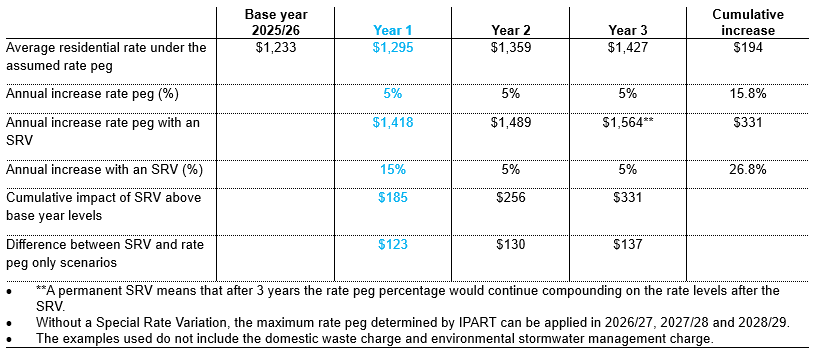
Blacktown City Council understands many residents are feeling cost-of-living pressures. Council has worked hard to minimise the proposed increase in the proposed Special Rate Variation. A permanent increase of 15% in 2026/27 would add $2.19 per week above the assumed rate peg amount of $1.10 for more than 70% of residents paying minimum rates.
Even with this increase, Blacktown will remain one of the lowest-rating councils in Sydney.
Each year, Council’s rates rise by the rate peg set by IPART - 5.9% for 2025/26 - and reflect updated NSW Valuer General land values, which all councils must use when setting rates.
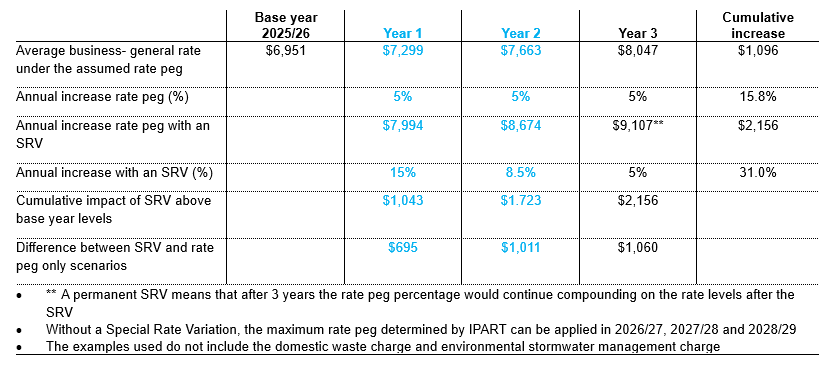
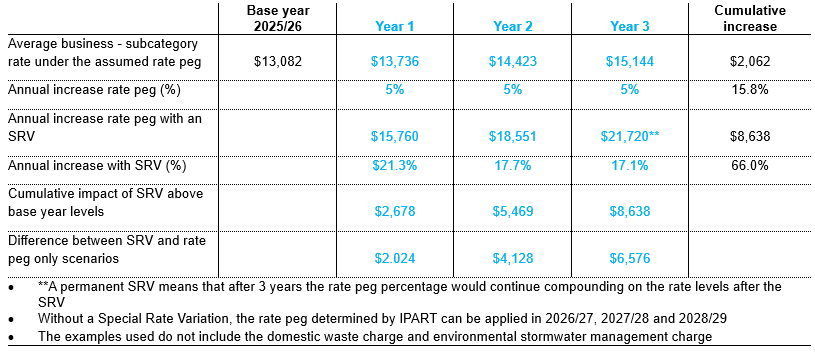
The proposed Special Rate Variation applies only to the Ordinary General rate on your residential or business property rates notice. It does not apply to the environmental stormwater management charge or domestic waste charges, which include the new food and garden waste service required by the NSW Government by 2030.
For residents who may need assistance to pay, Council has a rates hardship policy, including payment plans and deferrals. You can request help on our website, by phoning (02) 5300 6000, or emailing council@blacktown.nsw.gov.au.
Unhappy with current level of service provided by Council
Rapid population growth and rising costs have placed pressure on Council’s ability to maintain service levels. Decisions by State and Federal Governments have also reduced local funding, with cost shifting now exceeding $32 million per year.
Rates capped by the annual rate peg are not enough to cover the increased costs of renewing and maintaining over $7 billion in community assets. The Special Rate Variation will help close this gap.
About $10 million a year from the rate increase will go directly to maintaining and renewing roads, stormwater systems, parks, sports fields, playgrounds, and footpaths — helping limit the $108 million backlog in works and keeping community facilities safe and functional.
The $273 million provided by the NSW Government’s Western Sydney Infrastructure grants program will deliver much needed improvements to Blacktown and Mount Druitt swim centres, the PCYC at Shalvey and Mount Druitt Library and Community Hub, as well as a new Seven Hills Library and Community Hub, a First Nations Cultural Hub and a new Leo Kelly Blacktown Arts Centre.
The income of $28.15 million per year from the proposed Special Rate Variation will support the operation and maintenance costs of these facilities, enhancing services provided by Council.
Inequity of services and community facilities across the local government area
Rates income funds services and infrastructure for the whole City, not just individual suburbs. The proposed Special Rate Variation ensures the cost of growth is shared fairly and that all communities benefit.
Because Blacktown City is large and diverse, some areas are newer with newly built facilities, while others are older and need renewal. Council is committed to providing equitable, quality services across all 54 suburbs and to planning long-term investments that meet community needs.
Without the Special Rate Variation, Council would likely need to reduce existing service levels and have difficulty maintaining community assets to the standard residents expect and deserve.
Council should not fund 2 public administration centres
A portion of the Special Rate Variation will contribute to the overall funding of 2 new public administration centres. Council staff are currently spread across multiple outdated buildings that are costly to maintain and inefficient to operate.
The new plan will consolidate Council’s administration staff into 2 modern centres to serve the city’s growing population, improve accessibility for customers and deliver better services. The facilities will include customer experience centres, community meeting spaces, civic areas to boost local business activity and create vibrant precincts.
Detailed business cases for both projects are available at haveyoursay.blacktown.nsw.gov.au/srv.
Manage finances better and cut non-essential spending
Council has a strong track record of sound financial management, delivering balanced budgets and major community projects.
From 2014 to 2023, Blacktown’s population grew 28%, but staff numbers rose only 10%, reflecting Council’s commitment to doing more with less. Over the past decade, our ongoing service review program has identified more than 2,700 efficiency and service improvements, many focused on reducing costs and enhancing customer experience.
The Special Rate Variation is not about addressing waste or mismanagement — it’s about ensuring we can continue maintaining services, renewing assets, and support a growing community.
Council needs to find other income sources
Opportunities to permanently increase Council’s income are limited. The Federal Government’s Financial Assistance Grants - a key funding source - have been more than halved over time. For Blacktown, this equates to a total of around $13.5 million less income since 2012/13, even as our population continues to rise.
We continue to advocate to the Australian and NSW Governments to restore and reform local government funding and to remove restrictions that prevent developer contributions being used for building and maintaining community facilities.
Developer contributions and most grants can only fund new infrastructure, not ongoing administration, and operational costs such as staff, maintenance, materials, or utilities.
Whilst the NSW Government granted Council $273.1 million for the Western Sydney Infrastructure Grants program, they also imposed a condition that the funds were unable to be spent in the North West Growth Area.
Population growth should already fund new and additional services
Although new development increases the number of ratepayers, the income from growth does not keep pace with the costs of providing new infrastructure and maintaining existing assets.
Each new household adds to the wear and tear on local roads, parks, footpaths, and community facilities. Council must also fund new stormwater systems, libraries, and recreational spaces to meet community demand.
Most development approvals are controlled by the NSW Government, not Council. While we support well-planned growth, we continue to advocate for the State to provide the funding and infrastructure that match our city’s rapid expansion.
|