COVID-19 Alaska Clinical Update
Friday, January 14, 2022
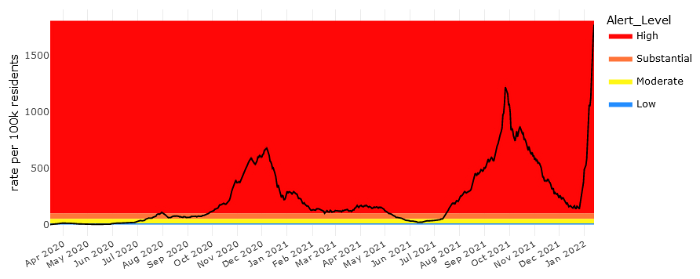
7-Day COVID-19 Case Rate – Statewide
Anchorage Concert Association offering free tickets to Alaska’s healthcare heroes
The Anchorage Concert Association is presenting The Second City, Chicago’s legendary sketch and improv comedy, on Saturday, January 15, at 7:30pm at the Atwood Concert Hall. Doing what they do best, The Second City finds laughs in everything from Anchorage’s history, events and hot button issues to headlines from the Anchorage Daily News and mixes these with a generous portion of classic Chicago-style sketch and improv.
The first 100 people to redeem the code HEALTHCAREHERO will receive a pair of complementary tickets to The Second City as a thank you for all you’ve done for our community. Enter the code HEALTHCAREHERO online in your CenterTix.com cart at final checkout or use the code over the phone at 263-ARTS. Follow this link to learn more about the theatre’s Covid-19 protocols.
Nationwide, Omicron accounts for more than 98% of total COVID infections; sequencing delays in Alaska but Omicron likely dominant in Anchorage/MatSu region
Based on the CDC’s published COVID variant reporting and mathematical modeling, as of January 8, the Omicron variant accounted for 98.3% of new SARS-CoV-2 infections reported from 1/1-1/8/22. Sequencing in Alaska was delayed the end of December due to inclement weather in Fairbanks where the sequencing is primarily occurring. Laboratory staff is sequencing specimens this week that represent the first week of January which puts us back on a 2-week lag schedule that is typical of sequencing turnaround in every state. The State Public Health Laboratories are sequencing positive specimens submitted by healthcare providers around the state, which is a voluntary program. We encourage providers to submit positives whenever possible. The Anchorage State Public Health Laboratory is the only lab in the state that has the ability to target specimens exhibiting S-gene target failures typical of the omicron variant. We are reporting these to State Epidemiology regularly to get ahead of the sequencing data delay. Because many of the specimens being tested in Alaska are done using antigen cards and home tests, we are unable to get better visibility of the variant without recollection and submission to the state public health labs. Currently, 100% of the positives we screen are largely from the Anchorage/MatSu region and have S-gene target failure. We assume that omicron is dominating this region while delta and omicron continues to co-circulate in smaller regions outside of the Anchorage/MatSu bowl. We expect datasets to continue to displace delta with omicron in the coming weeks, as predicted by the CDC and what we see happening in other states.
The most recent Genomic Surveillance data can be found on the “COVID-19 Variants” tab of the Cases Dashboard.
Health insurers required to cover 8 free over-the-counter at-home tests per insured individual per month
On January 10, the Biden-Harris Administration announced a new requirement for health insurers to cover the cost of over-the-counter, at-home COVID-19 tests, so people with private health coverage can get them for free starting January 15th. Insurers are required to cover 8 free over-the-counter at-home tests per covered individual per month. There is no limit on the number of tests, including at-home tests, that are covered if ordered or administered by a health care provider following an individualized clinical assessment, including for those who may need them due to underlying medical conditions. Follow this link for additional information.
CDC Health Advisory details “Using Therapeutics to Prevent and Treat COVID-19”
On December 31, the CDC published a Health Advisory to familiarize healthcare providers with available therapeutics, understand how and when to prescribe and prioritize them, and recognize contraindications. The alert addresses monoclonal antibodies, oral antivirals, and pre-exposure therapeutics for high-risk groups. It also recommends prioritizing high risk patients, particularly if therapeutics are in short supply, using NIH COVID-19 Treatment Guidelines when supply constraints exist.
Letter about COVID-19 Therapeutics from Alaska’s Chief Medical Officer, Dr. Anne Zink
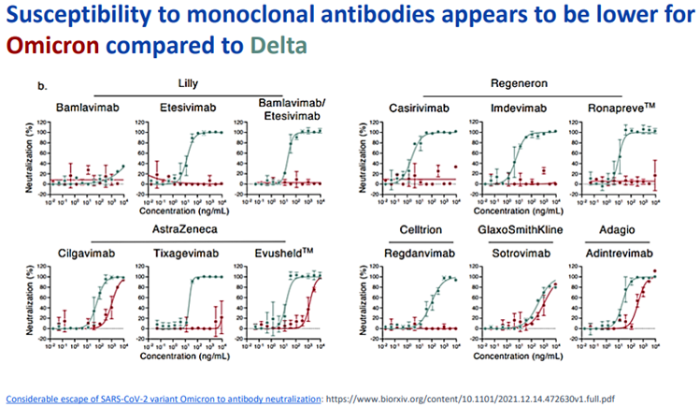
Similar to the CDC Health Alert above, on January 7, Dr. Zink and DHSS sent a letter to the state’s healthcare providers and tribal health partners detailing the current availability and indicated use for monoclonal antibodies, novel oral antiviral medications, and remdesevir for the treatment of COVID-19. Only one monoclonal antibody treatment, sotrovimab, has been shown to be effective against the Omicron variant. There are also two oral antiviral therapeutics available, paxlovid and molnupiravir. There is extremely limited supply, both nationally and in Alaska, of all three of these treatment options, and they are only indicated for those who are at risk for severe illness from COVID-19.
CDC – Updated Isolation and Quarantine Period for General Population
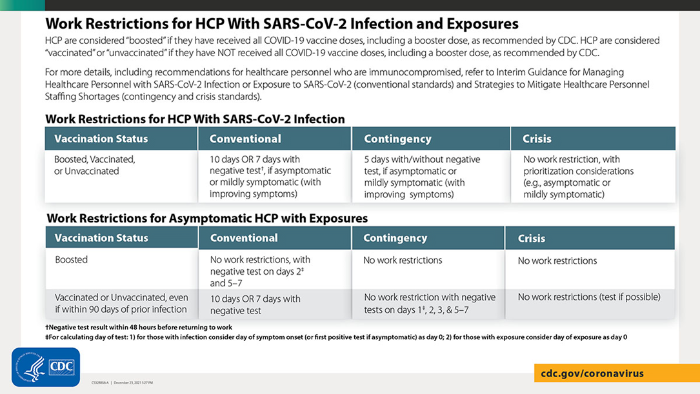
On December 27, the CDC released updated guidance for the isolation and quarantine periods for the public following SARS-CoV-2 infection or exposure. People with COVID-19 should isolate for 5 days and if they are asymptomatic or their symptoms are resolving (without fever for 24 hours), follow that by 5 days of wearing a mask when around others to minimize the risk of infecting people they encounter. The change is motivated by science demonstrating that the majority of SARS-CoV-2 transmission occurs early in the course of illness, generally in the 1-2 days prior to onset of symptoms and the 2-3 days after. For people who are unvaccinated or are more than six months out from their second mRNA dose (or more than 2 months after the J&J vaccine) and not yet boosted, CDC now recommends quarantine for 5 days followed by strict mask use for an additional 5 days. Individuals who have received their booster shot do not need to quarantine following an exposure, but should wear a mask for 10 days after the exposure. For all those exposed, best practice would also include a test for SARS-CoV-2 at day 5 after exposure. The date of exposure, onset of symptoms, or positive test (if asymptomatic) is considered day 0. Day 1 is the first full day after last contact with a person who has had COVID-19, the onset of symptoms, or after having a positive test.
CDC – Updated Guidance for Healthcare Personnel with SARS-CoV-2 Infection or Exposure
On December 23, the CDC released updated guidance for healthcare personnel with COVID infection or exposure, in part to address concerns about potential impacts on the healthcare system given a surge of COVID infections in addition to enhancing protection for workers, patients, and visitors. In general, asymptomatic healthcare workers who have had a higher-risk exposure do not require work restriction if they have received all COVID-19 vaccine doses, including booster dose, and do not develop symptoms or test positive for SARS-CoV-2. Healthcare workers who test positive for SARS-CoV-2 with mild to moderate illness may return to work at least 7 days after symptoms first appeared if a negative COVID test (either antigen or NAAT) is obtained within 48hrs prior to returning to work or 10 days after symptoms first appeared if testing is not performed, and at least 24 hours have passed since last fever, and symptoms have improved. Under contingency staffing standards, infected healthcare providers may return to work after 5 days if asymptomatic or mildly symptomatic with improving symptoms. Under crisis staffing standards, infected healthcare staff may be asked to work with prioritization considerations (e.g. asymptomatic or mildly symptomatic workers).
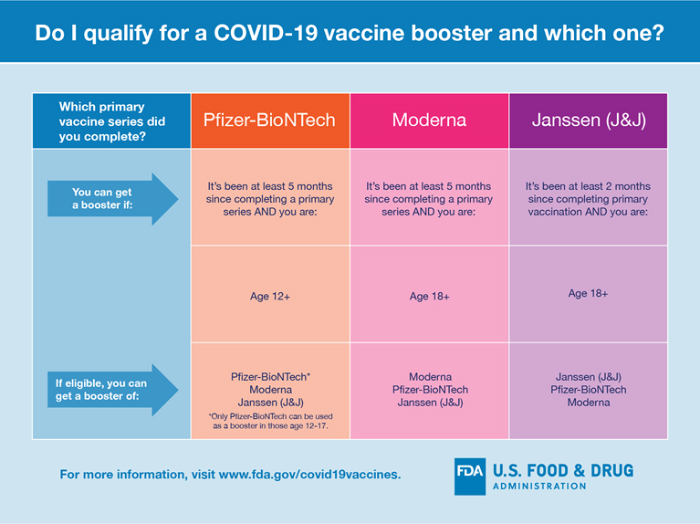
Pfizer and Moderna boosters recommended at 5 months
The CDC and FDA have recommended shortening the interval for when people can receive an mRNA booster shot from 6 months to 5 months. The CDC recommends receiving a Pfizer-BioNTech booster 5 months after completing the primary series. The FDA recommends receiving either the Pfizer-BioNTech or Moderna booster 5 months after completing the primary series. For those who initially received a Johnson & Johnson vaccine, both agencies still recommend obtaining a booster dose 2 months after the primary vaccine. Only the Pfizer-BioNTech vaccine booster is authorized for children aged 12-18. Any of the three available vaccines can be used as a booster, regardless of the primary series, for adults 18 years and older.
CDC expands booster shot eligibility and strengthens recommendations for 12–17-year-olds; recommends third vaccine for immunocompromised children
Following recommendations from its Advisory Committee on Immunization Practices (ACIP), the CDC now recommends that adolescents age 12 to 17 years old should receive a booster shot 5 months after their initial Pfizer-BioNTech vaccination series. Consistent with their prior recommendation for immunocompromised adults, the CDC also now recommends that moderately or severely immunocompromised 5–11-year-olds receive an additional primary dose of the Pfizer-BioNTech vaccine 28 days after their second shot.
Alaska Section of Epidemiology releases updated COVID-19 testing guidance
On January 7, the Alaska Section of Epidemiology released updated “Guidance for Coronavirus Disease 2019 (COVID-19) Testing in Alaska”, “Reporting COVID testing”, and new guidance for at-home COVID-19 tests. As of January 10, sites with a CLIA-waived status are required to report positive results only.
Alaska DHSS releases COVID-19 Update through November 2021
The most recent Alaska DHSS COVID-19 Update with information on “Hospitalizations, Deaths, Repeat and Vaccine Breakthrough Infections through November 2021” is available at the following link.
Updated Crisis Care Committee Recommendations for COVID-19 Therapeutics
The Alaska DHSS Crisis Care Committee has released updated therapeutics prioritization. This guidance is based on the NIH criteria but slightly modified for Alaska-specific considerations. The State is currently using tier 1a and 1b therapeutics.
Morbidity and Mortality Weekly Reports (MMWR)
Among children hospitalized with COVID-19 during Summer 2021, almost one-third of children <5 years-old had viral coinfection; nearly all of the hospitalized pediatric patients were unvaccinated
In this MMWR, authors report data from six children’s hospitals for patients aged <18 years with COVID-19–related hospitalizations during July–August 2021. During this period, the Delta variant of SARS-CoV-2 was the predominant circulating strain. As of May 12, 2021, CDC recommended COVID-19 vaccinations for persons aged ≥12 years. Among 915 patients aged <18 years, 713 (77.9%) were hospitalized for COVID-19, 177 (19.3%) had incidental SARS-CoV-2 infections, and 25 (2.7%) had MIS-C. Among all 915 patients, 22.5% were aged <1 year, 18.3% were aged 1–4 years, 21.5% were aged 5–11 years, and 37.7% were aged 12–17 years. Among the 713 patients hospitalized for COVID-19, approximately one half (373; 52.3%) were male, 210 (29.5%) were non-Hispanic White persons, 202 (28.3%) were non-Hispanic Black persons or African American persons (Black), and 211 (29.6%) were Hispanic persons. Among the 713 patients hospitalized for COVID-19, 32.5%, 51.3%, and 16.1% had zero, one or two, and three or more underlying medical conditions, respectively. The most common conditions were obesity (32.4%), asthma or reactive airway disease (16.0%), and feeding tube dependence (8.3%). Among patients aged 12–17 years, 61.4% had obesity (60.5% of whom had severe obesity). Among patients aged 5–11 years, 33.6% had obesity (60.4% of whom had severe obesity). Approximately one half (54.0%) of patients hospitalized for COVID-19 received oxygen support, 29.5% were admitted to the ICU, and 1.5% died; of those requiring respiratory support, 14.5% required invasive mechanical ventilation. Viral coinfection was common among patients aged <1 year (32.4%) and 1–4 years (36.1%); overall, approximately two thirds of viral coinfections were with RSV. Among 272 vaccine-eligible patients hospitalized for COVID-19, one (0.4%) was fully vaccinated and 12 (4.4%) were partially vaccinated with an mRNA COVID-19 vaccine at the time of hospitalization. Among pediatric patients with COVID-19–related hospitalizations, many had severe illness and viral coinfections, and few vaccine-eligible patients hospitalized for COVID-19 were vaccinated, highlighting the importance of vaccination for those aged ≥5 years and other prevention strategies to protect children and adolescents from COVID-19, particularly those with underlying medical conditions.
Vaccine effectiveness for Pfizer-BioNTech COVID mRNA vaccine among adolescents 12-17 years-old estimated to be 92% in July-December 2021
In this MMWR, authors report real-world vaccine efficacy of the Pfizer-BioNTech COVID mRNA for a prospective cohort of adolescents in Arizona from July-December 2021. This study included 243 adolescents aged 12–17 years who were tested for SARS-CoV-2 by RT-PCR each week, irrespective of symptoms, and upon onset of COVID-19–like illness during July 25–December 4, 2021; the SARS-CoV-2 B.1.617.2 (Delta) variant was the predominant strain during this study period. During the study, 190 adolescents contributed fully vaccinated person-time (≥14 days after receiving 2 doses of Pfizer-BioNTech vaccine), 30 contributed partially vaccinated person-time (receipt of 1 dose or receipt of 2 doses but with the second dose completed <14 days earlier), and 66 contributed unvaccinated person-time. Using the Cox proportional-hazards model, the estimated vaccine efficacy of full Pfizer-BioNTech vaccination for preventing SARS-CoV-2 infection was 92% (95% CI = 79%–97%), adjusted for sociodemographic characteristics, health information, frequency of social contact, mask use, location, and local virus circulation. These findings from a real-world setting indicate that 2 doses of Pfizer-BioNTech vaccine are highly effective in preventing SARS-CoV-2 infection among Arizona adolescents.
COVID-19 vaccine safety review in children aged 5-11 years shows local and systemic reactions after vaccination were commonly reported but <3% of reports were serious adverse events
In this study, authors report on the CDC’s review of vaccine safety and adverse events among children aged 5-11 years after receipt of Pfizer-BioNTech COVID-19 vaccine from November 3 – December 19, 2021. Approximately 8.7 million doses of Pfizer-BioNTech COVID-19 vaccine were administered to children aged 5–11 years during this period. Data were collected from the Vaccine Adverse Event Reporting System (VAERS), a passive vaccine safety surveillance system co-managed by CDC and FDA, and adverse events and health impact assessments reported to v-safe, a voluntary smartphone-based safety surveillance system for adverse events after COVID-19 vaccination. The preliminary safety findings are similar to those from preauthorization clinical trials. During this time, VAERS received and processed 4,249 reports of adverse events. The most commonly reported conditions and diagnostic findings among the 100 reports of serious events were fever (29; 29.0%), vomiting (21; 21.0%), and increased troponin (15; 15.0%). Among 15 preliminary reports of myocarditis identified during the analytic period, 11 were verified (by provider interview or medical record review) and met the case definition for myocarditis; of these 11 children, seven recovered, and four were recovering at time of the report. Among VAERS reports for children aged 5–11 years who received Pfizer-BioNTech COVID-19 vaccine, approximately 97% were nonserious. The most common adverse events reported to VAERS in the age group were related to administration error. This age group is the first to receive a smaller dosage of mRNA (10 μg) than that recommended for persons aged ≥12 years (30 μg), and administration errors are not unexpected. Most reports of administration errors often mentioned that no adverse event was associated with receipt of an incorrect dose.
During the study period, v-safe enrolled 42,504 children aged 5–11 years who received Pfizer-BioNTech COVID-19 vaccine; second dose information was available for 29,899 (70.3%) of these children. During the week after receipt of dose 1, local (23,290; 54.8%) and systemic (14,734; 34.7%) reactions were frequently reported; systemic reactions were more frequently reported during the week after dose 2 (12,223; 40.9%) than dose 1. The most frequently reported reactions after either dose were injection site pain, fatigue, and headache. Fever was more frequently reported after dose 2 (4,001; 13.4%) than dose 1 (3,350; 7.9%). Approximately 5.1% of parents reported that their child was unable to perform normal daily activities on the day after receipt of dose 1, and 7.4% after receipt of dose 2. Approximately 1% of parents reported seeking medical care in the week after vaccination. Local (57.5%) and systemic (40.9%) reactions after receipt of dose 2 of vaccination among v-safe registrants aged 5–11 years were less frequently reported than reactions reported among children and adolescents aged 12–15 years (local 62.4%; systemic, 63.4%).
RECURRENT TOPICS
Providing COVID-19 vaccinations
All Alaskans and people who work or live in Alaska who are aged 5 years and older are eligible for vaccination against COVID-19.
If you are interested in providing the COVID-19 vaccine in your office or clinic, please visit the COVID-19 Vaccination Program Provider Enrollment page. If you have additional questions, please email Matthew Bobo at matthew.bobo@alaska.gov
Oral COVID-19 Antivirals
In late December 2021, the FDA authorized two novel oral antivirals – Paxlovid and Molnupiravir - for the treatment of mild-to-moderate COVID-19 in adults and children 12 years and older who are at high risk for progression to severe COVID-19.
On January 12, there was a CDC COCA Call, “What Clinicians Need to Know About the New Oral Antiviral Medications for COVID-19.” The presentation describes the recent EUAs and NIH treatment guidelines, patient prioritization, and resources for healthcare providers. Subject matter experts will review when to prescribe antiviral medications including patient assessment, how to have a risk-benefit discussion to address patient questions or concerns, and how to prioritize patients if medications are in short supply.
Monoclonal Antibodies
With the rising predominance of the Omicron variant, only GlaxoSmithKline’s sotrovimab monoclonal antibody treatment shows high activity against this variant. Sotrovimab has been approved to treat mild-moderate COVID-19 in individuals who are at high risk for progression to severe COVID-19.
If you are interested in providing monoclonal antibody therapy for COVID-19 in your office or clinic, please refer to this guide from the U.S. DHSS, and then send an email to Coleman Cutchins (coleman.cutchins@alaska.gov) and CJ Kim (cj.kim@alaska.gov) for local assistance.
For the latest recommendations, check out the NIH COVID-19 Treatment Guidelines
Pregnancy
The CDC strongly recommends COVID-19 vaccination either before or during pregnancy because the benefits of vaccination outweigh known or potential risks.
For the latest recommendations, check out the CDC webpage on COVID in Pregnant and Recently Pregnant People and recommendations from the American College of Obstetrics and Gynecology. In addition, JAMA has published a one-page patient information sheet on COVID-19 and pregnancy.
Ivermectin
Current evidence does not support the use of ivermectin for the treatment or prevention of COVID-19.
CDC - Health advisory about ivermectin
Cochrane Review - COVID-19 and ivermectin
FDA - Why you should not use ivermectin to treat or prevent COVID-19
Infectious Disease Society of America (IDSA) guidelines do not recommend ivermectin
Post-acute Sequelae of COVID-19 (PASC)
For the latest recommendations, check out the CDC webpage on Post-COVID-19 Syndrome and Evaluating and Caring for Patients with Post-COVID conditions
Myocarditis
For the latest recommendations, check out the CDC webpage on myocarditis and COVID-19 vaccines
COVID-19 Speakers’ Bureau
Anyone can request a free presentation for a group interested in learning more about the COVID-19 vaccines available in Alaska.
Aside from COVID-19
Opioids in Alaska
DHSS OSMAP Project HOPE are conducting public naloxone trainings as a community outreach and to increase awareness and access. Email projecthope@alaska.gov.
The Alaska Native Tribal Health Consortium (ANTHC) HIV/STD Prevention and Substance Misuse Prevention programs host free virtual gatherings to discuss harm reduction strategies and resources in Alaska. Guest speakers are Alaska-based experts in the field of harm reduction. On December 1st, there will be a harm reduction training focused on polysubstance use. Other recordings of past harm reduction trainings can be found here.
Several useful materials specific to Alaska opioid safety are at the following webpage. Check it out and print out information to hang up in your community.
Upcoming Events/Conferences/Presentations
Drug Addiction Treatment Act (DATA) Waivers ECH
|
Date
|
Time
|
Session
|
| Feb 9 |
12:00 p.m. |
Successful strategies for buprenorphine home inductions |
| Feb 23 |
12:00 p.m. |
Using extended-release monthly buprenorphine |
| Mar 9 |
12:00 p.m. |
Microdosing/macrodosing buprenorphine |
| Apr 13 |
12:00 p.m. |
All things UDS/oral fluid tests for monitoring |
| May 11 |
12:00 p.m. |
Behavioral Health - Psychosocial adjuncts to MAT |
| Jun 8 |
12:00 p.m. |
Polysubstance use |
| Jul 13 |
12:00 p.m. |
Tapering or stopping buprenorphine treatment |
| Aug 10 |
12:00 p.m. |
Prenatal/OB MAT |
| Sep 14 |
12:00 p.m. |
Understanding and reducing buprenorphine diversion |
Registration link for DATA Waivers ECHO
Hosted and facilitated by UAA’S Center for Human Development Alaska ECHO Project in partnership with the State of Alaska Division of Behavioral Health. For questions, please contact echo@alaskachd.org
2022 Alaska Public Health Summit – January 18-20, 2022
Registration is now open for the 2022 Alaska Health Summit VIRTUAL conference taking place from Tuesday, January 18, 2022 to Thursday, January 20, 2022. The Summit theme will be The Intersection of Public Health and Public Safety, reflecting a wide range of issues and events facing us today. This is the first time ALPHA has created a Summit around a public safety theme that will feature keynote speakers and panels addressing policing across Alaska, corrections and reentry, drug overdose response, inequities in transportation, and other public safety issues, all from a public health perspective.
ANTHC Tribal Health Webinar Series
ANTHC Tribal Health Webinar Series
The ANTHC Tribal Health Webinar series occurs on Friday from 12-1pm on Zoom and is open to the public. Here is the upcoming schedule for the fall and the Zoom link.
|
Date
|
Session
|
| 01/21 |
Victoria Miller, MFA, LPC: Trauma Informed Care Mini-Series. Part 1: Early Life Adversity, Later Life Disease & Implications for Health Care |
| 01/28 |
Amber Frasure, MS: Trauma Informed Care Mini-Series. Part 2: A Deeper Dive into the Signs and Symptoms of Psychological Trauma and Specific Strategies to "Trauma Inform" your Medical Practice |
| 02/04 |
Amber Frassure, MS: Trauma Informed Care Mini-Series. Part 3: Effectively Communicating with Patients Using Motivational Interviewing |
| 02/11 |
Mary Schneider, BS, REHS: State of Alaska Lead Surveillance Program |
| 02/18 |
Vasisht Srinivasan, MD: Updates in Stroke Management |
Join Zoom Meeting
https://anthc.zoom.us/j/98667611681
Meeting ID: 986 6761 1681
One tap mobile
+16699006833,,98667611681#
CDC Clinical Support: There is a Clinician On-Call Center, a 24-hour hotline with trained CDC clinicians standing by to answer COVID-19 questions. Call 1-800-CDC-INFO (800-232-4636) and ask for the Clinician On-Call Center.
Alaska Responders Relief Line (844) 985-8275
Your well-being matters. Your behavioral health colleagues are standing by to talk 24/7: 844-985-8275
Recognizing the unique stressors that providers face, the Division of Behavioral Health has established a 24/7 support line, (844) 985-8275, for healthcare and behavioral professionals impacted by COVID personally and professionally. Staff supporting the call line recognize callers are often first responders and will allow callers to openly express their experiences and feelings serving Alaskans impacted by COVID.
This service is also available to immediate family members of first responders who may be experiencing stress, anxiety and other hard to label emotions as a result of their loved one engaging on the front lines.
AK Clinical Reminders — UPDATED January 14, 2022

These ECHO sessions are produced and facilitated by
UAA’s Center for Human Development Alaska ECHO project
in partnership with the State of Alaska, Department of Health & Social Services
Session information and recordings of previous ECHO sessions
subscribe to ECHO calendar updates | email: echo@alaskachd.org | website: akecho.org
Upcoming Session Highlights:
Special Pop-Up Session: Alaska Medical Provider ECHO
Tuesday, January 18th from 7-8pm
Join us for this special pop-up session of the Alaska Medical Provider ECHO featuring updates on COVID-19, including the Omicron variant and new Federal guidelines.
Alaska Perinatal ECHO
Monthly on 3rd Thursday from 6-7 p.m. Register
Next Session: Thursday, January 20th
Please join us for the next Perinatal ECHO on Newborn Hearing Screening January 20th from 6:00-7:00pm! The featured didactic presentation will be on Alaska Newborn Hearing Screening Updates and Recent Issues: Changes in the Statewide System of Care, by Annette Callies, BSW. As always, we will have ample time for case study presentations, audience Q&A, and discussion with presenters and the hub team.
Regular Series
Alaska Medical Provider ECHO (formerly COVID-19 for AK Healthcare Providers)
Monthly on the 1st Tuesday of the month from 7-8 pm
This ECHO aims to increase knowledge and share best practices among medical providers across Alaska as well as to increase access to information for those living in rural areas of the state.
School Health ECHO
Every Monday from 3:00-4:00 p.m Register
The School Health ECHO is a virtual learning network intended for professionals in the education setting (administrators, school-based nurses, etc.) to interface with a team of medical and education experts in Alaska.
Vaccine ECHO for Providers
Weekly on Tuesday from 2-3 p.m. Register
The Vaccine ECHO for providers provides planning and operation updates to vaccine providers across Alaska, while answering any questions you may have.
Palliative Care ECHO
Monthly on the first Tuesday from 12-1 p.m.
This monthly ECHO is for all Alaskan healthcare disciplines supporting patients with serious illness, and aims to provide support and up-to-date information regarding Palliative Care during this period of COVID-19.
Public Science ECHO
Weekly on Wednesday from 12-1 p.m. register via Zoom
The Alaska Public Health Science ECHO is a virtual learning network intended for the general public to interface with our Public Health Leadership Team to explore the science of the COVID-19 virus, other public health topics, and current best practices. Or view via concurrent livestream to Facebook: https://www.facebook.com/akechoprograms
Local Government Public Health ECHO
Monthly on the third Wednesday from 3-4 p.m. Register
The Local Government Public Health Analysis ECHO is a virtual learning environment intended for local Alaska government leaders to interact with the State Public Health Leadership team and focuses on pandemic mitigation tools available, and how to use them.
Long Term Care Facilities ECHO
Second Wednesday of the month from 4-5 p.m. Register
Please join other staff and administrators of Alaska’s assisted living homes and residential care facilities to gather, learn, share, and grow. COVID has disrupted the fabric of our daily life and we can always learn from each other as we adjust to the new normal.
Healthcare Specific Situational Awareness ECHO
Weekly on Thursday from 12-1 p.m. Register
The Healthcare Specific Situational ECHO is a virtual learning network intended for healthcare professionals to interface with our Public Health Leadership Team to explore current best practices and the most recent information related to Public Health.
Perinatal ECHO
Monthly on 3rd Thursday from 6-7 p.m. Register
The Alaska Perinatal ECHO is a virtual learning network intended for medical providers caring for pregnant patients and their newborns.
EMS ECHO
Monthly on the 1st and 3rd Wednesday 1-2 p.m Register
The EMS ECHO is a virtual learning network intended for Emergency Medical Services and related personnel in Alaska to amplify best practices. Sessions are topic-driven and typically include a guest presenter or a brief lecture with an interactive case or process discussion.
Co-Occurring Behavioral Health, Opioid and Stimulant Use Disorders ECHO
1st & 3rd Wednesdays from 12:00pm-1:00pm, November 3, 2021 - April 20, 2022
The Co-Occurring Behavioral Health (COBH), Opioid and Stimulant Use Disorders ECHO facilitates a virtual network for behavioral health providers to learn best practice care through real-time access to experienced subject matter experts and their peers. Each session includes a brief lecture, de-identified case presentation for participants to receive feedback on complex cases, and open discussion facilitated by an interdisciplinary team.
Data Waivers ECHO New ECHO!
2nd Wednesdays from 12:00pm-1:00pm, November 10, 2021 - September 14, 2022
The Data Waivers ECHO facilitates a virtual network for clinical providers to learn and implement best practices for offering buprenorphine and other medically assisted treatment (MAT) services under a data waiver. Each session includes a brief lecture, de-identified case presentation for participants to receive feedback on complex cases, and open discussion facilitated by an interdisciplinary team.
|
COVID-19 testing guidelines and test site locator
AK COVID-19 clinical hotline for physicians: 833-751-4212. Staffed 24/7.
8PM-8AM is for urgent/emergent questions only.
AK Responders Relief Line: 24/7 behavioral health for everyone working in healthcare
during the COVID-19 pandemic: 1-844-985-8275
|




