
COVID-19 Alaska Daily Clinical Update, April 27
Alaska Department of Health sent this bulletin at 04/27/2020 05:47 AM AKDT
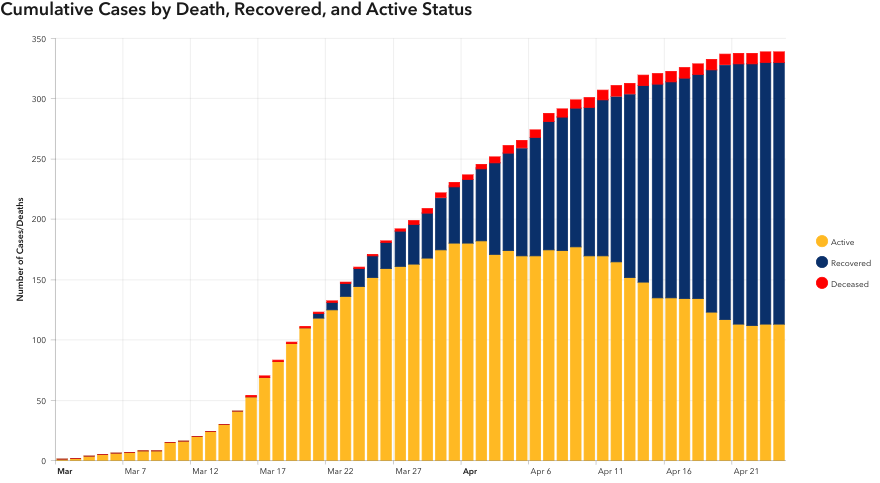
Nearly 65% of Alaskans diagnosed with COVID-19 have already recovered. |
|
FAQ from the Tuesday evening ECHO sessions:
Should we recommend against using ibuprofen for symptomatic management in COVID-19?
There is no evidence that ibuprofen, naproxen or other NSAIDs worsens outcomes in COVID-19. Because NSAIDs increase the risk of acute kidney injury and, at high doses, are associated with an increased AKI risk even in healthy people, underlying renal function should be considered before recommending these medications and they should be used for the shortest duration possible.
Is the virus affected by high or low temperatures? UV? Chlorine dioxide?
Heat affects the virus. In viral culture media, SARS-CoV-2 is stable for weeks at 4 degrees Celsius (~39F), but at 22C (~72F) it only lasts a week. It lasts around one day at 37C(98.6F), less than 30 minutes at 56C(~133F) and less than five minutes at 70C(158F). The same study also tested household bleach, 70% ethanol and other disinfectants, finding most to be effective against the virus within five minutes of exposure. While using chlorine dioxide, which is known to be bactericidal, on surfaces may be helpful against viruses, it has not been tested specifically for SARS-CoV-2. Chlorine dioxide should not be ingested.
UV light is also used against viruses and may be helpful for the disinfection of surfaces. The International Ultraviolet Association fact sheet notes that UV disinfection systems are dangerous to humans.
A panel of experts from the National Academies of Sciences, Engineering and Medicine addressed the question, will higher ambient temperatures or humidity meaningfully affect virus transmission? They found that although higher temperatures and humidity reduce survival of SARS-CoV-2 in the laboratory, weather changes alone are not likely to have as much effect on viral transmission as public health interventions. (The Rapid Expert Consultation is available free with registration.)
What is the incubation period of the virus?
The incubation period, or the period of time between exposure and developing symptoms, of SARS-CoV-2 and other coronaviruses ranges from 2-14 days according to CDC. An estimate from China data noted the most common incubation period was around 5 days and more than 97% of people who develop symptoms do so within 12 days.
Are asymptomatic people with the virus contagious? Can people be infectious before they start to have symptoms?
In a study done at a skilled nursing facility in Washington where they screened all consenting residents for SARS-CoV-2 that were not already known to have the virus, 63% tested positive. 56% of the nursing home residents who tested positive were asymptomatic at the time. Most (89%) later went on to develop symptoms. Viral growth was found in around two-thirds of samples from residents with symptomatic infection and around the same proportion of presymptomatic and asymptomatic residents. Transmission from asymptomatic and presymptomatic cases has been documented.
Is there a role for vitamin C in COVID-19 treatment or prevention?
There is no evidence that vitamin C supplementation helps prevent COVID-19. A Cochrane review found that vitamin C does not help prevent the common cold. Whether vitamin C supplementation has a beneficial effect in critical illness remains unclear. A randomized controlled trial of vitamin C in severe COVID-19 is ongoing in China but results are not yet available.
|
STAY CONNECTED:


SUBSCRIBER SERVICES:
Manage Preferences | Unsubscribe | Help
Update your subscriptions, modify your password or email address, or stop subscriptions at any time on your Subscriber Preferences Page. You will need to use your email address to log in. If you have questions or problems with the subscription service, please contact subscriberhelp.govdelivery.com.
This service is provided to you at no charge by the Alaska Department of Health and Social Services.
For general COVID-19 questions, email covidquestions@alaska.gov.