
6 everyday swaps to reduce single-use plastic
Reducing single-use packaging can start with small changes to everyday habits.
From takeaway drinks to food shopping, these 6 swaps can help you cut waste and make more use of items you already own.
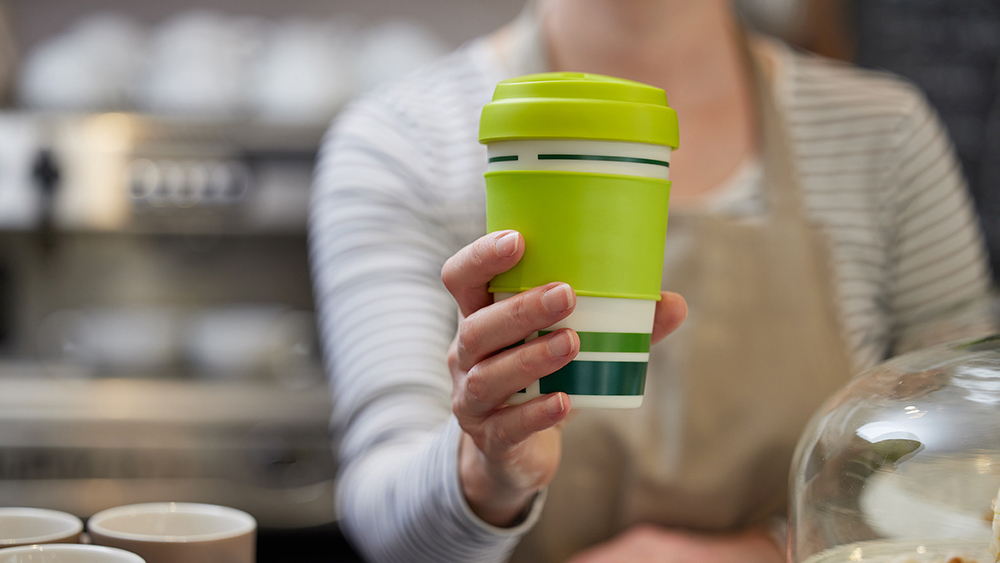
Coffee cups
Disposable coffee cups create waste and require resources to manufacture and transport. Many paper cups have a plastic lining that makes them difficult to recycle through ordinary paper collections.
Compostable cups may require industrial composting, so they are not necessarily suitable for a home compost heap. Check the packaging and local disposal guidance.
- Take a reusable cup with you and use it regularly.
- Ask whether the café offers a discount for bringing your own cup.
Shopping bags
Plastic bags can harm wildlife when they enter waterways. Whatever your bag is made from, use it repeatedly rather than buying a new one for each shopping trip.
Options include baskets and bags made from cloth, hessian, cotton, sisal or rope. You could also turn an old pillowcase into a bag. Look online or ask local groups, such as Sustainable Wells, for ideas using leftover fabric.
- Remember to take your reusable bags whenever you shop.
Drinks bottles
Single-use plastic bottles add to packaging waste and can pollute waterways if littered. Carrying a refillable bottle can reduce the number you buy.
- Take a refillable bottle with you; insulated versions can keep drinks hot or cold.
- Ask cafés, restaurants and other businesses whether they offer drinking-water refills.
Cling film
Cling film is convenient, but reusable food covers can help reduce single-use plastic in the kitchen.
- Cover a dish with a plate or store food in a reusable, food-safe container in the fridge.
- Consider reusable covers or beeswax wraps, following the manufacturer’s instructions. Do not use beeswax wraps for raw meat or fish.
Takeaway containers
Takeaway meals and restaurant leftovers often come in disposable packaging. Bringing your own container can help avoid it where the business accepts this.
- Ask in advance whether you can bring a clean, reusable food container.
- If not, ask about the packaging options available and how to dispose of them locally.
Meat, fish and deli counters
Shopping at a counter does not always mean avoiding plastic packaging. Some butchers, fishmongers and delicatessens accept customers’ own containers.
- Ask before shopping and take clean, food-safe containers if the retailer accepts them.
- Keep raw meat and fish separate from ready-to-eat food, and keep chilled food at the right temperature during transport and storage.
- If the retailer declines, ask about its policy and whether it offers alternatives.