
Future Homes Standard: solar and low-carbon heating set to become the norm in new builds
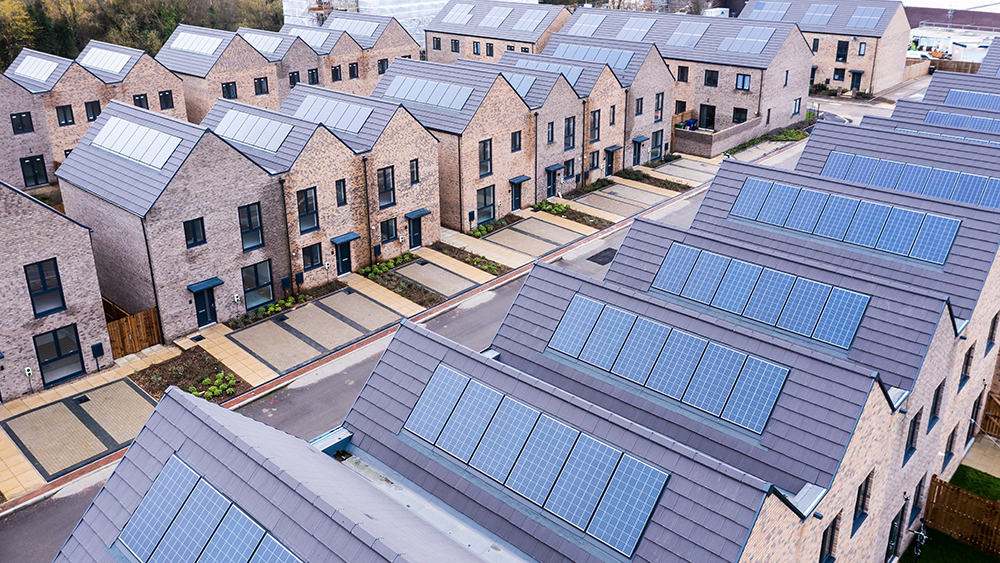
If you care about Somerset’s carbon footprint, it’s worth keeping an eye on a big change happening in the background: the Future Homes Standard.
It updates England’s building regulations so that new homes are built to a much higher energy-efficiency bar, with low-carbon heating and on-site renewable electricity expected to become standard, rather than optional extras.
What’s changing
- Much lower emissions from new homes: the Government has said the standard aims for new homes to emit, on average, at least 75% less carbon than homes built to 2013 standards.
- Heating goes low-carbon: new homes are expected to use low-carbon heating (such as heat pumps), rather than fossil-fuel boilers.
- Solar power becomes ‘baked in’: Rooftop solar for new builds is expected to mean solar panels on the majority of new homes, with a new approach to requiring on-site renewable electricity generation, and flexibility where it is not practical.
- When: the regulations were laid in March 2026 and are due to come into force on 24 March 2027 (with transitional arrangements).
- How compliance is assessed: in the near term, compliance is expected to start with SAP 10.3 (Standard Assessment Procedure), with the Home Energy Model (HEM) intended to replace SAP following a delayed launch and a period of ‘dual running’.
Why it matters for Somerset
New homes built to higher standards should be cheaper to heat, more comfortable year-round, and better aligned with our local ambition to cut emissions. For households, that can mean lower exposure to volatile fossil-fuel prices. For communities, it reduces the need for disruptive retrofit work later, because the carbon savings are designed in from day one.
What to look out for
If you’re buying a new-build, ask about the heating system, solar photovoltaic (PV) provision, and overall fabric performance (insulation, airtightness and ventilation). If you’re involved in local planning or community housing, the key question is how quickly supply chains and skills can scale up so that low-carbon homes are delivered well, not just delivered fast.