 DEQ NEWS
April 27, 2026 Vol. 5, No. 3
Data Center Air Monitoring Project
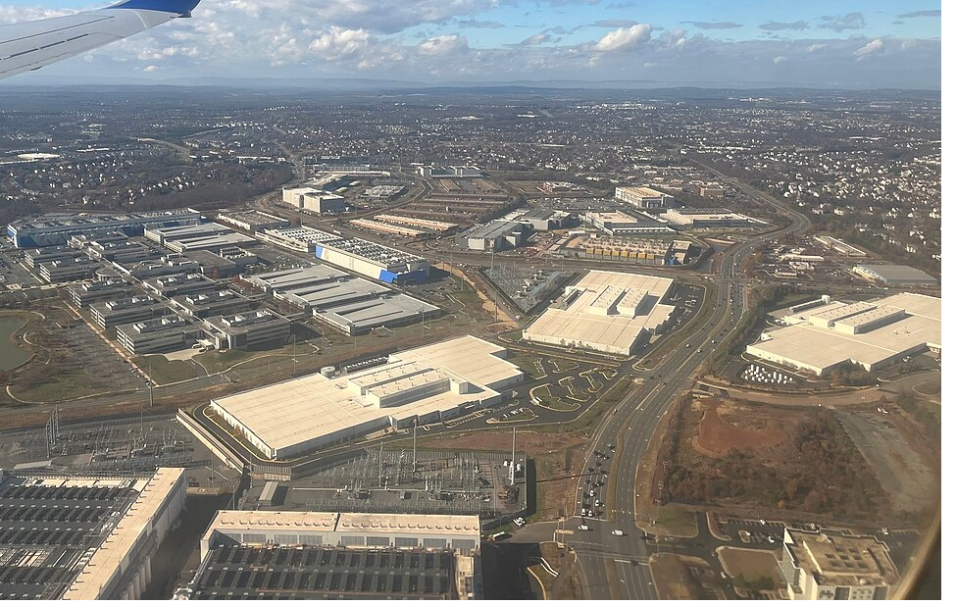 In response to the rapid growth of data centers in northern Virginia and citizen concerns for emissions from those data centers, DEQ is conducting a special data center air monitoring project. The goal of this EPA-funded special project is to determine if additional air monitoring is needed in and around areas containing high numbers of data centers in Loudoun and Prince William counties.
In the first phase of this project, DEQ installed air sensors in Loudoun County's "data center alley." The sensors, which are capable of transmitting near-real-time data, will be periodically moved to different locations in order for DEQ to determine if there are any areas showing elevated levels of emissions of carbon monoxide (CO), nitrogen dioxide (NO2), and particulate matter less than 2.5 microns in diameter (PM2.5). This near-real-time data is available on the Data Center Air Monitoring webpage.
If data from these sensors indicate one or more areas of elevated emissions, DEQ will deploy a mobile air monitoring station to gather further data. The data collected by a mobile air monitoring station would be used to determine whether the locations meet National Ambient Air Quality Standards. Once collected and analyzed, this data will help DEQ determine if permanent air monitoring stations are needed and where they should be located.
Drought Advisory Update
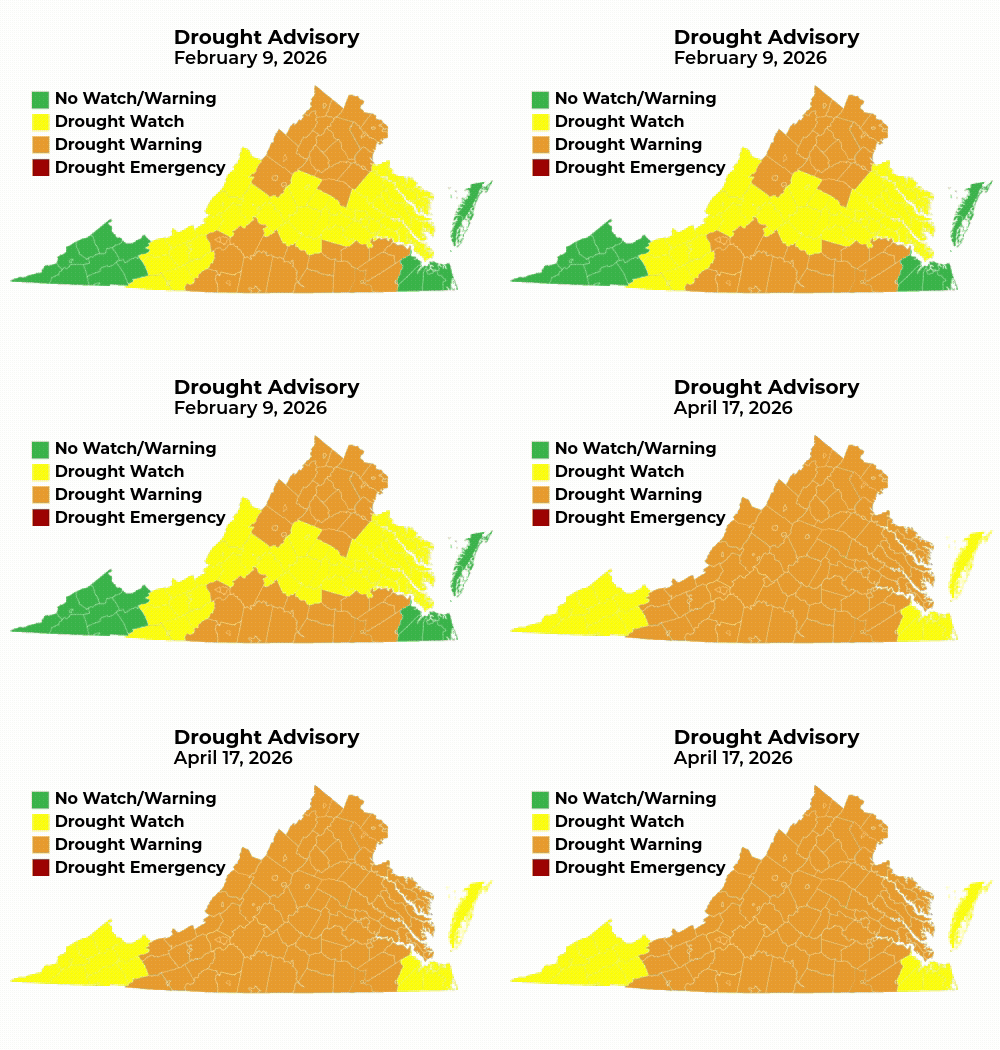 Virginia, typically a water rich state, is experiencing its worst drought in 20 years. Parts of the state have more than a 10" deficit of rain just since October. As a result, DEQ, in coordination with the Virginia Drought Monitoring Task Force, has expanded the drought warning advisory to now include 83 counties and 31 cities, and has established new drought watch advisories in 12 counties and 7 cities in Virginia. At this time, all localities within the Commonwealth are under drought watch or warning advisories. As a result of these dry conditions, agricultural impacts are widespread and there is increased danger of wildfires. Additionally, the expansion of the drought declarations is consistent with the designations of the U.S. Department of Agriculture, through which farmers may be eligible for Farm Service Agency emergency loans.
DEQ is working with local governments, public water works, and water users in the affected areas to ensure that conservation and drought response plans and ordinances are followed. All Virginians are encouraged to conserve water supplies by minimizing water use, monitoring drought conditions, and detecting and repairing leaks.
Read the full press release here.
DEQ Awards $8 million for Food Rescue and Composting Initiatives
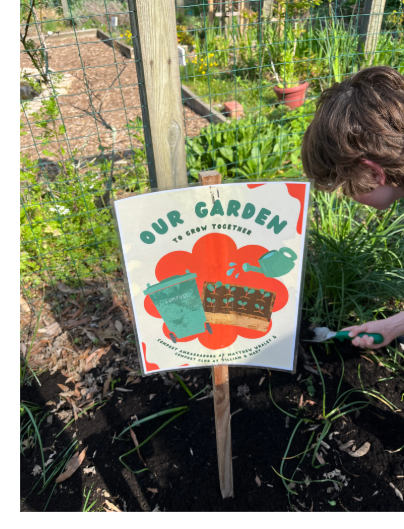 DEQ is excited to announce nearly $8 million in funding to 12 Virginia higher education institutions for food waste reduction efforts. The projects were funded in support of efforts to reduce methane pollution in the Commonwealth with funding support from the Environmental Protection Agency’s Climate Pollution Reduction Grant program. Projects will support a wide variety of food waste prevention, food rescue, and composting initiatives.
Below is the full list of colleges and universities that received awards, you can read our full press release here.
· Christopher Newport University was awarded $176,000. This award includes support for an in-vessel composting system and additional supplies and equipment that will support food waste diversion.
· College of William & Mary was awarded $41,121. This award includes funding support for the purchase and installation of an industrial blast chiller to freeze excess food for repurposing.
· George Mason University was awarded $1,062,825. This award includes support for creating a dedicated food rescue hub, piloting waste tracking software in dining operations, and creating a new full-time compost coordinator position.
· James Madison University was awarded $243,387. This award includes support for the expansion of compost collection at catered events, the purchase of a dedicated food recovery vehicle, and funding support for student interns who will focus on reducing food waste.
· Radford University was awarded $203,000. This award includes support for an in-vessel composting system and hiring students to assist with food recovery operations and training.· University of Mary Washington was awarded $432,215. This award includes support for food waste prevention education and outreach and the establishment of a campus-wide composting program in partnership with a new regional compost business.
· University of Mary Washington was awarded $432,215. This award includes support for food waste prevention education and outreach and the establishment of a campus-wide composting program in partnership with a new regional compost business.
· University of Virginia was awarded $536,539. This award includes support for food storage equipment, funded student positions for food rescue and composting operations, and new community compost drop-off locations to increase access to composting for Charlottesville residents.
· Virginia Commonwealth University was awarded $1,045,196. This award includes support for a coordinated university-wide initiative focused on food waste reduction and diversion on both VCU’s main campus and within the university’s hospital system.
· Virginia Institute of Marine Science was awarded $232,969. This award will help expand the diversion of research fish for composting, and support for staff and students who will focus on food waste prevention education and outreach.
· Virginia Tech was awarded $3,530,497. This award will support the construction of an industrial scale composting facility with an intended yearly processing capacity of 2,700 tons, processing campus food waste and improving VT’s manure management practices.
· Virginia Wesleyan University was awarded $140,000. This award includes support for compost collection, and a subscription to Free Food Alert, an app-based system that prevents food waste by alerting students when there is available food left at the end of an event.
· Washington and Lee University was awarded $324,829. This award includes support for expanding the capacity of food rescue and composting efforts and providing training and resources to event hosts that will focus on food waste prevention and diversion.
Visit DEQ's website to learn more about food waste reduction efforts.
2026 Citizen Monitoring Grant Awardees
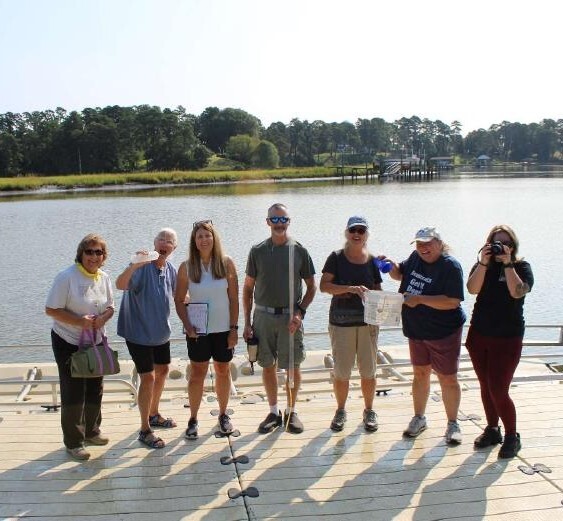 As part of the agency's ongoing commitment to supporting robust water quality monitoring and community involvement, DEQ has awarded grant funds to 17 volunteer water quality monitoring organizations in Virginia. Volunteer monitoring groups submit data on a wide range of chemical and biological measurements taken at almost 2,000 locations across the Commonwealth.
DEQ is pleased to announce the 2025 Citizen Water Quality Monitoring Program grantees:
2026 Coordination Grantees (up to $11,000)
- Izaak Walton League of America (Virginia Save Our Streams)
- Lake Anna Civic Association
- Potomac Riverkeeper Network
- Prince William Soil and Water Conservation District
- Smith Mountain Lake Association
2026 Regular Grantees (up to $5,000)
-
Chesterfield County Department of Environmental Engineering
(Chesterfield WaterTrends) - Goose Creek Association
- James River Association
- Nansemond River Preservation Alliance
- New River Conservancy
- Rivanna Conservation Alliance
- Semper Sky LLC
- The Mariners’ Museum and Park
- Virginia Master Naturalists Historic Southside Chapter
- Virginia Master Naturalists Peninsula Chapter
- Virginia State University, Department of Biology
2026 Mini Grantee (up to $1,000)
- Appomattox Regional Governor’s School
DEQ’s Citizen Water Quality Monitoring Grant program was established by a General Assembly budget amendment in 1999. In a typical fiscal year, the General Assembly will appropriate up to $88,000 in grant funds for eligible activities by volunteer monitoring organizations in Virginia.
The annual application period for these grants usually opens in late summer, with funded projects to begin early the following year. For more information on the Citizen Water Quality Monitoring Grant program, please visit our webpage.
Governor's Environmental Excellence Awards
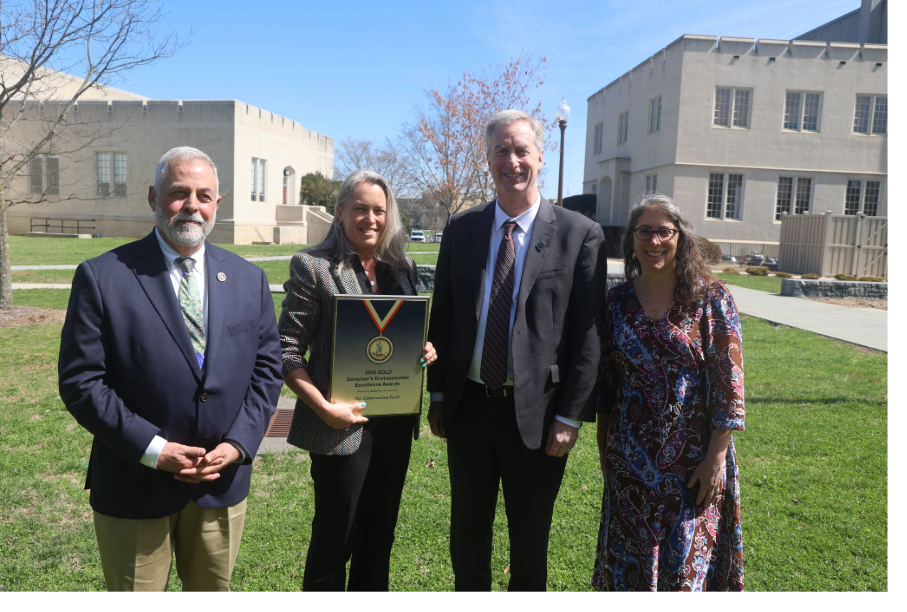 Recently announced at the Environment Virginia Symposium, the Virginia Governor’s Environmental Excellence Awards (VGEEA) recognize successful and innovative efforts that improve sustainability in the Commonwealth. A collaboration between DEQ and Department of Conservation and Recreation, there were five categories for awards: Environmental & Sustainability Program, Environmental & Sustainability Project, Land Conservation, Green Commonwealth, and implementation of the Virginia Outdoors Plan.
“Protecting Virginia’s environment and promoting stewardship across the Commonwealth have impacts that will last for generations,” said Governor Abigail Spanberger. “I am honored to recognize this year’s winners for their efforts to protect Virginia’s environment and for inspiring others to do the same."
You can read the Governor’s full press release on the award winners here.
Applications for the 2027 Governor’s Environmental Excellence Awards will be available in the fall of 2026. If you'd like to read more about these projects, you can access the 2026 VGEEA program here.
Governor’s Environmental Excellence Awards Gold Medal Winners:
• The Conservation Fund – Preserving James Monroe’s Oak Hill: The Conservation Fund (TCF) permanently preserved James Monroe’s Oak Hill Farm, the presidential home of James Monroe, in Loudoun County. Prior to its conservation, this 1200-acre property was at risk of development. As careful stewards of the estate, the DeLashmutt family worked diligently with TCF to develop a plan that will eventually see the property open to the public as a Virginia State Park.
• Four Mile Run Conservancy – Water Access for All at Four Mile Run: Through its Water Access for All project, Four Mile Run Conservancy established a public kayak and canoe launch at lower Four Mile Run in Alexandria, featuring a 187-foot raised boardwalk ramp. The launch is part of the City’s 49-acre Four Mile Run Park and is the first of its kind in the DC metro area.
• Lancaster County – Windmill Point County Maritime Recreational Campus: Lancaster County’s Windmill Point project transformed a severely eroded shoreline into a premier public recreational campus, restoring natural resources while expanding public access to the Chesapeake Bay. Years of careful planning efforts ensured Lancaster was able expand public beach access, restore dunes, install a 450-foot pier, and more.
• Piedmont Housing Alliance – Kindlewood Community Redevelopment: The Piedmont Housing Alliance’s redevelopment of the Kindlewood Community in Charlottesville has allowed the 12-acres of Section 8 homes to become one of Virginia’s largest climate-resilient, net-zero-ready, affordable housing communities, all while ensuring no residents were displaced.
• Prince William County Public Schools – Energy & Sustainability Program: Prince William County Public School’s Energy & Sustainability Program provides strategic leadership to advance environmental and fiscal stewardship across the school division. The comprehensive approach integrates energy infrastructure, building performance, and waste reduction, while resilient operations result in healthier learning environments, long-term cost savings, and the development of future-ready students and facilities.
• Rappahannock Tribe, Inc. – Rappahannock Tribe Return to the River Restoration Initiative: The Rappahannock Tribe’s Return to the River Restoration Initiative conserved over 900 acres of the tribe’s ancestral homelands along the Rappahannock River at Fones Cliffs. Beyond ecological benefits, the project reconnects the Tribe to its historic river-based traditions through educational programs like “Return to the River,” fostering cultural healing and environmental stewardship.
• Rockfish Valley Foundation – ENLIT (environmental literacy): The Rockfish Valley Foundation’s Environmental Literacy (ENLIT) project is a multi-year initiative designed to enhance environmental education along the South Rockfish River Trails in Nelson County, Virginia. ENLIT has become a unique educational asset in Virginia, offering self-guided learning, structured walk-talks, and new opportunities for school field trips, community programs, and environmental stewardship.
Governor’s Environmental Excellence Awards Silver Medal Winners:
• Fairfax County Park Authority – Spring Hill Recreation Center Energy Upgrades: Fairfax County Park Authority completed energy updates at its Spring Hill Recreation Center which reduced annual greenhouse gas emissions by 36 percent. The upgrades included rooftop mounted solar photovoltaic, geothermal heat pumps and a heat pump water heater, natatorium HVAC units, hot water plant upgrades, building controls, and lighting upgrades.
• InBio – Environmental Sustainability Program: InBio, a biotechnology company in Charlottesville, has made environmental sustainability an integral part of the company’s management and culture. Initiatives included in the Environmental Sustainability Program range from 17,000 square feet of new energy efficient laboratory space to an innovative Green Benefits program that provides financial incentives to employees.
• Prince William Soil and Water Conservation District – Water Quality Program: The Prince William Soil and Water Conservation District’s Water Quality Program promotes water quality awareness across Prince William County and educates the community on how local waterways connect to the Occoquan Reservoir and the Potomac River. The program includes chemical monitoring of over 80 sites and biological monitoring of over 15 sites in Prince William County.
Governor’s Environmental Excellence Awards Bronze Medal Winners:
• Sewing Lab LLC – Circular Fashion Education & Textile Waste Reduction Program: Sewing Lab LLC is a circular fashion education program based in Herndon, that keeps textiles in use and out of landfills while teaching people how to sew, repair, and upcycle.
Governor’s Environmental Excellence Awards Honorable Mention Recipients:
• Tree Fredericksburg – Canopy Restoration in the City of Fredericksburg: Tree Fredericksburg, a non-profit organization founded to restore the tree canopy in the City of Fredericksburg, it is responsible for over 45 percent of the current tree canopy on public lands in the city.
• Fairfax County Public Library Department of Procurement and Material Management – Library Book Reuse & Recycling Project: Fairfax County Public Library’s Department of Procurement and Material Management launched an innovative pilot project to resell or recycle withdrawn print materials.
Food Waste: Student Design Competition
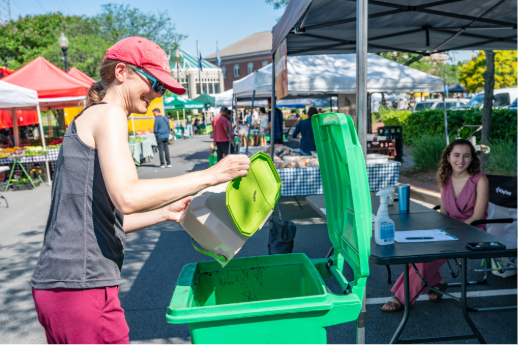 Are you a college student passionate about stopping food waste? DEQ is launching a statewide consumer education campaign to prevent food waste, and you could help shape it!
The Environmental Protection Agency estimates that up to 40% of food is wasted. This waste accounts for nearly a quarter of all landfilled material and is responsible for 58% of landfill methane emissions. DEQ is now accepting submissions from Virginia college students who are interested in designing an impactful logo and slogan that inspires Virginians to waste less food. Selected artists will be featured by DEQ across our website, social media, and more. The deadline is June 15. For more information about the competition, eligibility, and the application, please visit our webpage.
Virginia Master Naturalist - 2025 in Review
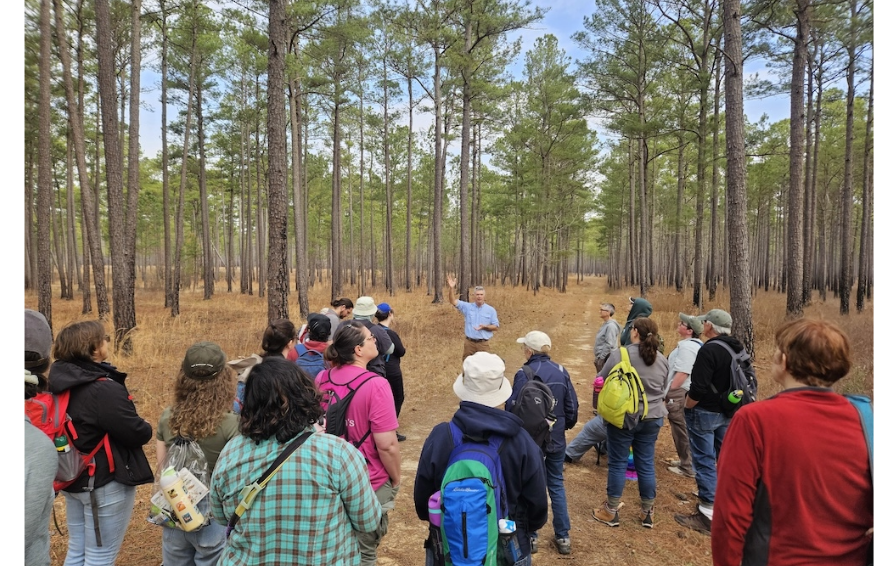 The Virginia Master Naturalist (VMN) program is a statewide corps of volunteers who provide education, outreach and service that benefit the management of natural resources and natural areas in their communities. Organized into thirty chapters across the Commonwealth, the VMN program expands the capacity of state and local agencies, and partner organizations to achieve their missions, reach new audiences and engage residents in conservation.
DEQ has been a sponsor of the program since 2011 and provides resources for training volunteers, leading projects, and advising chapters. Volunteers work in four primary service areas: education and outreach, stewardship, participatory science, and chapter leadership. In its 2025 report to DEQ, VMN noted its volunteers assisted the agency with several efforts, including water quality monitoring (7,899 hours), litter cleanups (2,326 hours), Plant Virginia Natives campaigns (1,893 hours), building riparian buffers (1,405 hours) and ozone monitoring (107 hours) for a total of 13,630 hours of service valued at $469,150.
Thank you to the more than 3,500 VMN volunteers across Virginia.
You can read the full VMN 2025 report here.
Ozone Forecasting Season
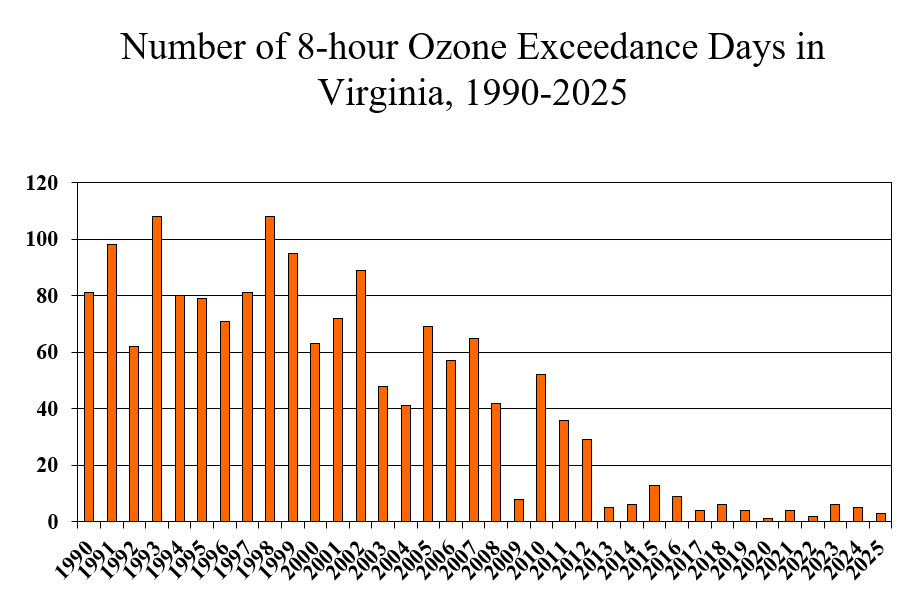 Virginia’s ozone forecasting season began Monday, April 13. DEQ monitors air quality at dozens of locations throughout the state and provides air quality forecasts to help Virginians enjoy clean air. Ozone, a colorless gas that forms when chemicals in the atmosphere react on hot, sunny days, is most often caused by vehicle exhaust, power plants, industrial emissions, and solvents.
By checking the air quality forecast, people who may be at risk of health effects due to poor air quality such as children, the elderly, and those with respiratory or heart issues, can reschedule outdoor activities until air quality improves.
Ozone levels have dropped markedly since ozone monitoring began in the 1970s. This is due largely to stricter regulations on emissions from vehicles, power plants, and industrial facilities. In 1993, Virginia experienced a high of 108 high ozone days in at least one locality. In comparison, there were only three high ozone days in 2025.
Sign up for DEQ’s air quality forecasts for real-time air quality information and forecasts. Both forecasts and alerts are customized to regions of the state. Northern Virginia residents should sign up for air quality forecasts through Enviroflash.
Wetlands After Sackett
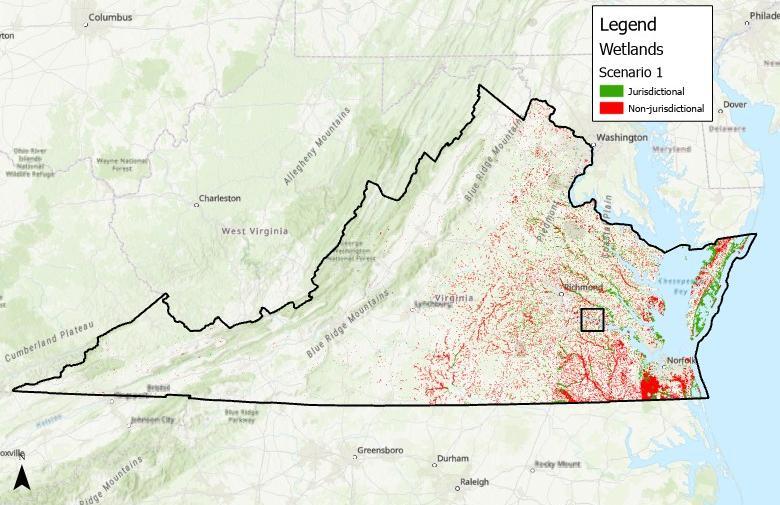
Through an EPA Wetlands Development Grant, the Virginia Institute of Marine Science (VIMS), in conjunction with DEQ, produced a scenario-based approach for spatial analysis of wetlands. The analysis was designed to address uncertainties in the Sackett decision and Waters of the United States (WOTUS) potential rulemaking.
This study enhances the analysis of wetlands in Virginia conducted by VIMS in 2023. The primary objective was to refine earlier methods, integrate updated datasets, and provide improved guidance for policymakers and resource managers. In the 2026 study, A Scenario-Based Review of Wetlands After Sackett, three scenarios were developed for vegetated wetlands in Virginia, as well as vegetated wetlands along the Virginia-North Carolina and Virginia-West Virginia borders which could have potential jurisdictional issues. Scenario 1 is the most conservative (least amount of federal jurisdictional wetlands). The wetlands border analysis is ongoing.
At the statewide scale, Scenario 1 yields the highest estimated proportion of non-jurisdictional wetlands, with approximately 80% of the non-tidal wetland resource falling outside federal jurisdiction under that interpretation. For additional information, visit our wetlands permitting webpage under Program News.
New Mobile Inspections Tool for Enhanced Efficiency
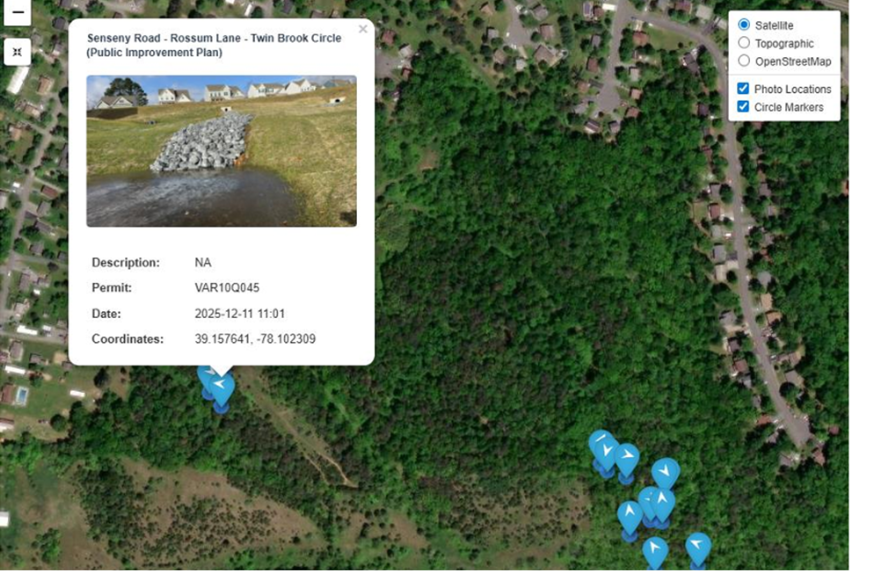 Erosion and sediment control (ESC) and stormwater construction inspections just received a major upgrade in efficiency with the recent addition of the Esri ArcGIS Survey 123. This mobile tool empowers staff to collect inspection data quickly, accurately and directly from the field using a mobile phone.
This powerful change has already resulted in high quality inspection data, more consistency across regions, and faster information transfer to site operators.
With the added efficiency of Esri ArcGIS Survey123, stormwater and ESC inspectors are able to focus on what matters most – ensuring strong compliance across the Commonwealth. Read more about our Mobile Data Collection process on our webpage. On this webpage, DEQ is providing, at no cost, information for government agencies, and private companies to access the DEQ tool and make their inspections more effective.
PFAS Testing and Fish Consumption Advisory Updates
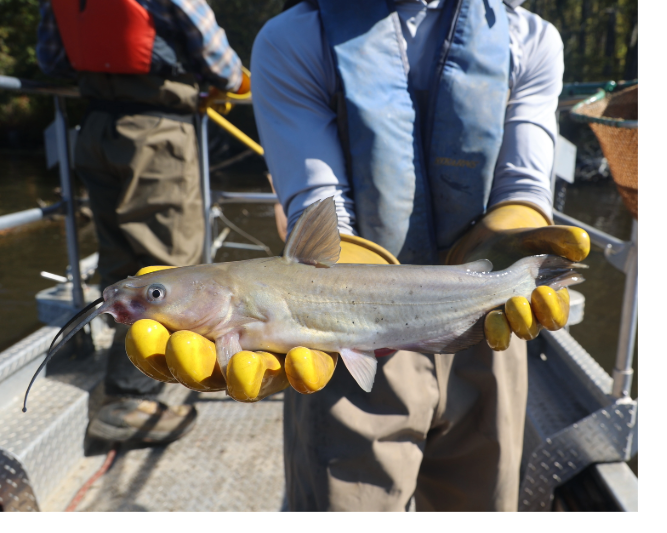 DEQ has begun its annual fish tissue sampling, which runs from spring through fall. Each year, DEQ collects fish tissue samples from waters across Virginia and analyzes them for chemicals that can accumulate as they move up the food chain. DEQ shares data from these samples with the Virginia Department of Health (VDH) which evaluates the results to determine whether fish consumption advisories are needed to protect public health.
Based on DEQ fish tissue data, VDH recently issued fish consumption advisories for specific fish species in the Flanagan Reservoir as well as in the Potomac/Occoquan and Chickahominy River watersheds.
VDH found that several fish species in the Flannagan Reservoir in Dickenson County had unacceptably high levels of PCBs, a legacy “forever chemical.” The fish consumption advisories in the Potomac/Occoquan and Chickahominy River watersheds were issued due to elevated levels of perfluorooctane sulfonate (PFOS) in some fish species. PFOS is part of a larger group of chemicals called per- and polyfluoroalkyl substances (PFAS).
In light of increasing interest in and understanding of PFAS pollution, Virginia has been gearing up for increased demand for PFAS testing at its labs. As part of this effort, Virginia Tech’s Occoquan Watershed Monitoring Laboratory (OWML) recently gained certification from the Virginia Department of Laboratory Services for PFAS testing using EPA method 1633. This makes OWML one of just two labs in Virginia certified to perform PFAS testing with this method.
Assistance for Limiting Liability at Brownfield Sites
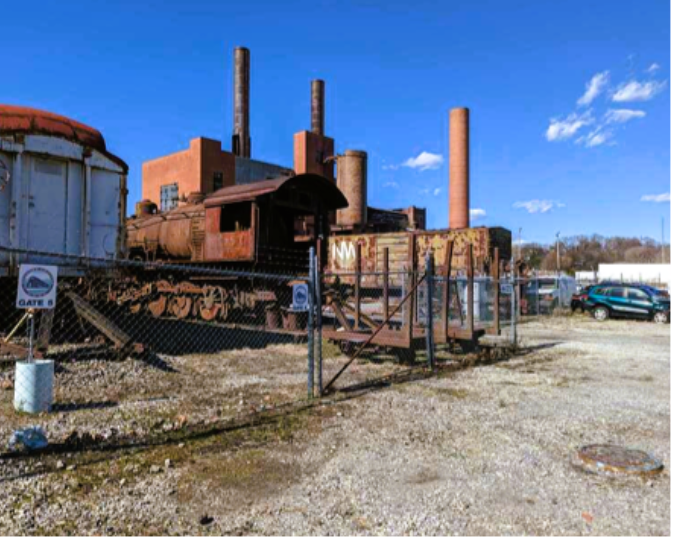 DEQ helps protect the environment by encouraging assessment and/or cleanup of brownfields—properties where redevelopment or reuse may be complicated by the presence or potential presence of contamination.
Through the issuance of Brownfield Liability Limitation (BLL) letters, formerly referred to as “comfort letters,” liability can often be limited for purchasers, owners, tenants, lenders, and contiguous property owners if they meet specific criteria, such as not causing or contributing to further contamination, conducting appropriate due diligence, or cooperating with remediation efforts.
Although liability limitation is generally self-implementing under Virginia law, parties may request a formal Brownfield Liability Limitation Letter from DEQ for added assurance. For more information, see the BLL application, FAQs and flowchart in the Resources box of the DEQ brownfields webpage.
Become a VEEP Sustainability Partner
Is your organization committed to efficiency through sustainability? Is protecting the environment at the forefront of your business decisions? Have you implemented sustainability practices such as energy efficiency, water conservation, and waste reduction? Would you like others to learn from your successful sustainability efforts?
If this describes your organization, join the Virginia Environmental Excellence Program (VEEP) Sustainability Partners. VEEP Sustainability Partners are recognized with other environmentally conscious organizations for their commitment to continuous environmental improvement. Submit your application by June 30, 2026 to be a 2026 Sustainability Partner. Please contact Morgan Goodman at Morgan.Goodman@deq.virginia.gov with questions.
If you’d like to check out VEEP in-person, the upcoming Blue Ridge Region VEEP Workshop on May 14 is the perfect opportunity to speak with environmentally-minded businesses and government leaders. What to expect:
- Insights from Leading Experts: Hear from subject matter experts on greening fleet vehicles.
- Interactive Workshop: Participate in hands-on sessions designed to equip you with actionable strategies.
- Networking Opportunities: Connect with fellow environmental leaders, share ideas, and explore collaborative initiatives.
- Case Studies: Learn from the success of your peers.
- Compliance Assistance: Speak directly with DEQ's Blue Ridge Region staff about your compliance questions.
You can register here.