
China’s emissions data show good sign of reduction
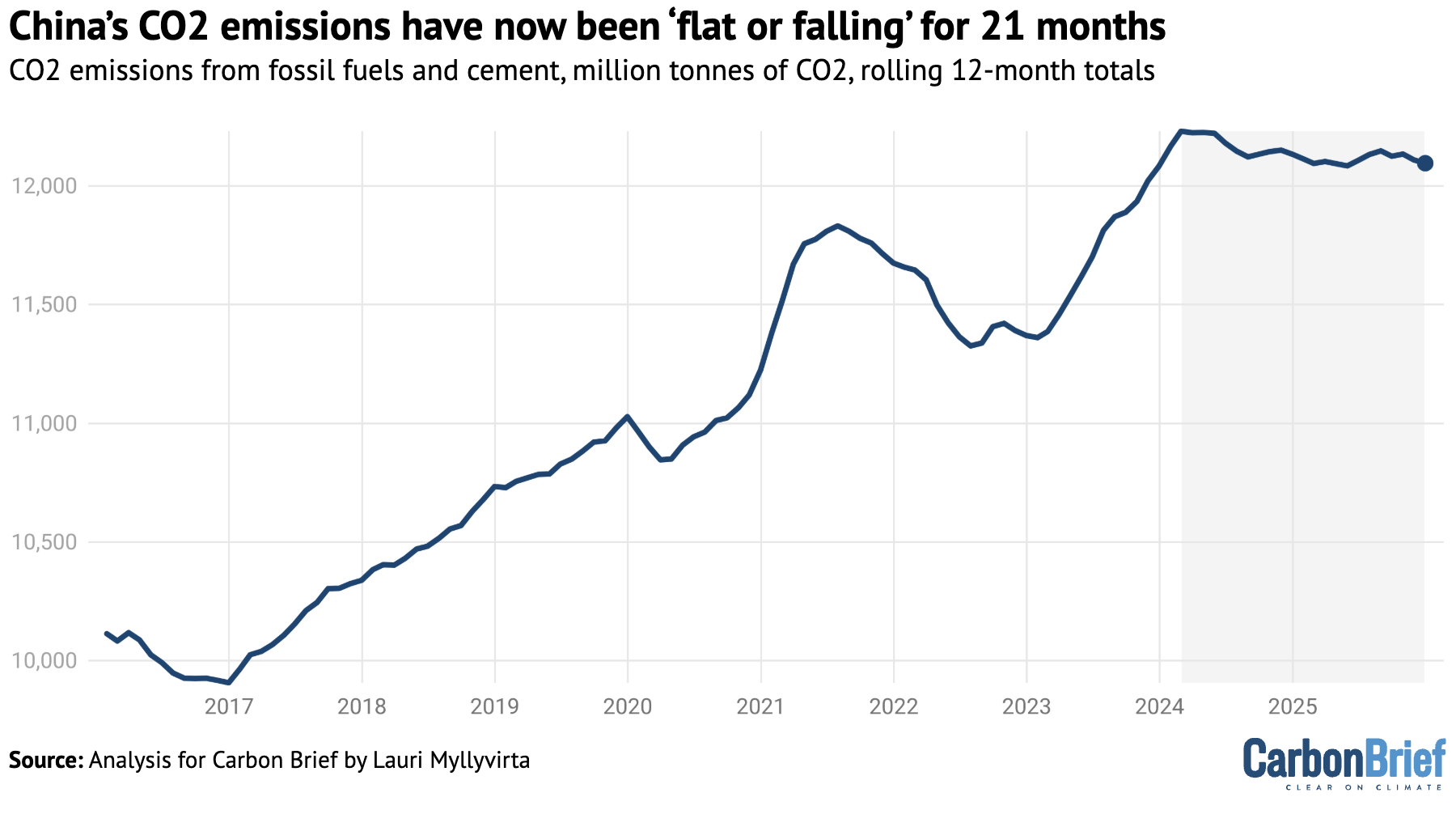
As of early 2026, driven by record renewable energy growth, China’s aim to peak carbon emissions before 2030 and achieve carbon neutrality by 2060, have moved forward as CO₂ emissions have fallen flat having fallen for 21 months. The nation targets a 7 to 10% reduction in total greenhouse gases by 2035 from their peak, focusing on upgrading its national Emissions Trading Scheme (ETS) to cover major industries.
Key emission reduction drivers
- Renewable energy surge: Rapid deployment of solar and wind power has brought emissions to a plateau, with renewables potentially providing almost 40% of power generation, notes Climate Action Tracker.
- Industry and technology: Declining emissions are reported in steel, cement, and transportation, alongside a massive expansion of Electric Vehicle (EV) adoption and the world’s largest renewable energy infrastructure.
- National ETS expansion: The national emissions trading scheme, covering the power sector since 2021, is expanding to include high-emission sectors like steel, aluminium, and cement by 2026 to 2027.
Challenges and trends
- Coal dependence: While non-fossil energy consumption is increasing, coal power remains significant, though its role is facing structural decline.
- Economic transition: The slowdown in real estate has reduced demand for carbon-intensive cement and steel, contributing to a temporary dip in emissions.
- Sector shifts: Increased production of chemicals and plastics has caused a rise in oil demand, highlighting a shift in emission sources.
China’s climate actions include a 50% reduction in average air pollution while maintaining economic growth.
To find out more:
- read Carbon Brief’s article, Analysis: China’s CO₂ emissions flat or falling for 21 months,
- visit Climate Action Tracker’s Country summary page for China, and
- watch the BBC World Service’s YouTube Short: Can China reduce its emissions quickly enough?