
Rewilding an ancient woodland Copse in South Somerset
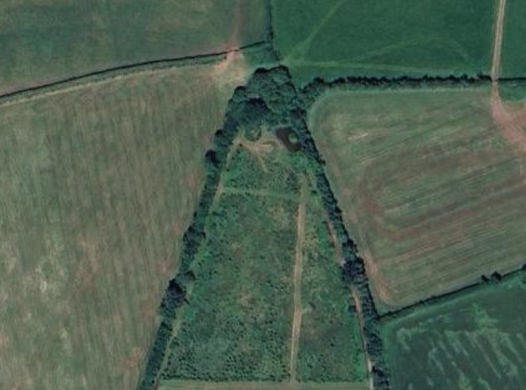
The story of a family's journey to rewild their land, told by Simon Barfoot
"It was the late Summer of 1991 when we moved to the area, to take over a disused small holding with stables and land, but no dwelling and in need of renovation, to get up and running to become our dream of owning and running our own horse stud and equestrian centre.
We parked a couple of old caravans on site, one for cooking and living in, with a wood burner stove and the other for the sleeping quarters, cold and damp with a couple of fan heaters which, as we would later learn as autumn turned to winter, were far too small for the task.
The long summer days should have been tranquil and idyllic but instead were a flurry of hustle and bustle as we needed to prepare for winter and set about painting, fencing, clearing and prepping for the imminent arrival of our horses which would be needing clean, dry, warm stabling as well as turnout and exercise areas.
Despite this, it was clear we were the guests of the local wildlife as the hundreds of resident house martins and swifts flitted and chirped above our heads each day, the local foxes checked our chicken runs each night and the geese, swans and starlings passed over in their pairs and squadrons between the levels and wetlands of the area.
And so it was for the next 26 years of running an equestrian facility, developing the property, raising a family and learning the annual cycle of “life on clay” in Somerset. The fabulous soil that every year is concrete hard for five and a half months, impossible to drive on for five and a half months and absolutely perfect for all fencing, tractor, land management, hedge cutting, harrowing, rolling and seeding for two weeks every late spring and late autumn. Just hard enough for tractors to get over, just soft enough to be able to make changes. They say that the name Somerset means Summer-Settlement and I believe it – I don’t think we are supposed to live here in the winter!
A few things coincided that made us rethink our relationship with the land and the wildlife. Over the years we had tried everything to get the most out of the land. We initially used it for grazing horses but the grass did not give the lush, thick green pasture that our neighbours seemed to enjoy. So we let it grow and made hay from it but modern farming machinery meant that our small plot was hardly even worth turning the machines on for. We gave the land to local dairy farmers in exchange for hay but the cows soon cleared the nutrition and just trampled the life out of the plot.
This all changed one day, during one of my many chats with neighbours, which could be over a meal, a cuppa or a good old fashioned lean across the gate between the hedgerows during a chance synchronisation of our dog walks or boundary checking. On this occasion, I bumped into old Edward, the dairy farmer whose land joined to our northerly border, who, at the age of about 85, had recently retired from full time farming and, with the help of his children, was now in semi-retirement. He was walking the fields with his dogs and happened to pass our shared gate at the same moment as me. I remember it well as, after the normal pleasantries and observations about the weather and the state of the clay, I commented how I just could not get my land to do anything good. Edward laughed a big belly laugh, showing the few peggy teeth he had left and told me it is because the land never had been farmland and never wanted to be. He went on to explain that when he was a child the land was actually a copse – a small stand of trees - and had multiple uses to the local area. Children, like Edward, were sent into the copse to gather wood or went there to play, climb and explore.
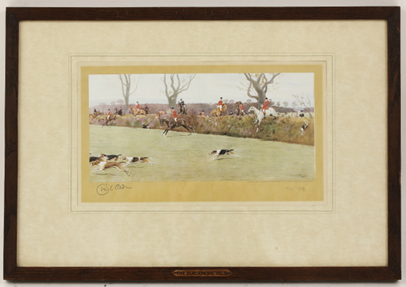
Also the local hunt, the Blackmore and Sparkford Vale, used to hunt in it. In fact there is a famous painting by Cecil Aldin (1870 – 1935) depicting huntsmen, other riders and hounds jumping a hedge with large oaks and a woodland in the background. And naturally it was the home of a huge variety of wildlife living in the safety and protection of the cover and branches afforded by the ancient trees, shrubs, bushes and thorns. There is also the claim of a photo taken in 1936, which is similar to the Aldin picture, called “A view of the copse with the hunt in progress”
So I asked Edward what happened, where did the trees go. Edward went on to explain that in the latter part of the 2nd World War the Army came one day and cut it all down “for the war effort”. I said I realised how that was needed but could not believe there as nothing left to see, such as old mature tree stumps, where had they gone? Edward let out another belly laugh and show of gums and teeth, as he explained how well he remembered the thunder of dynamite as the stumps were blown out of the ground.
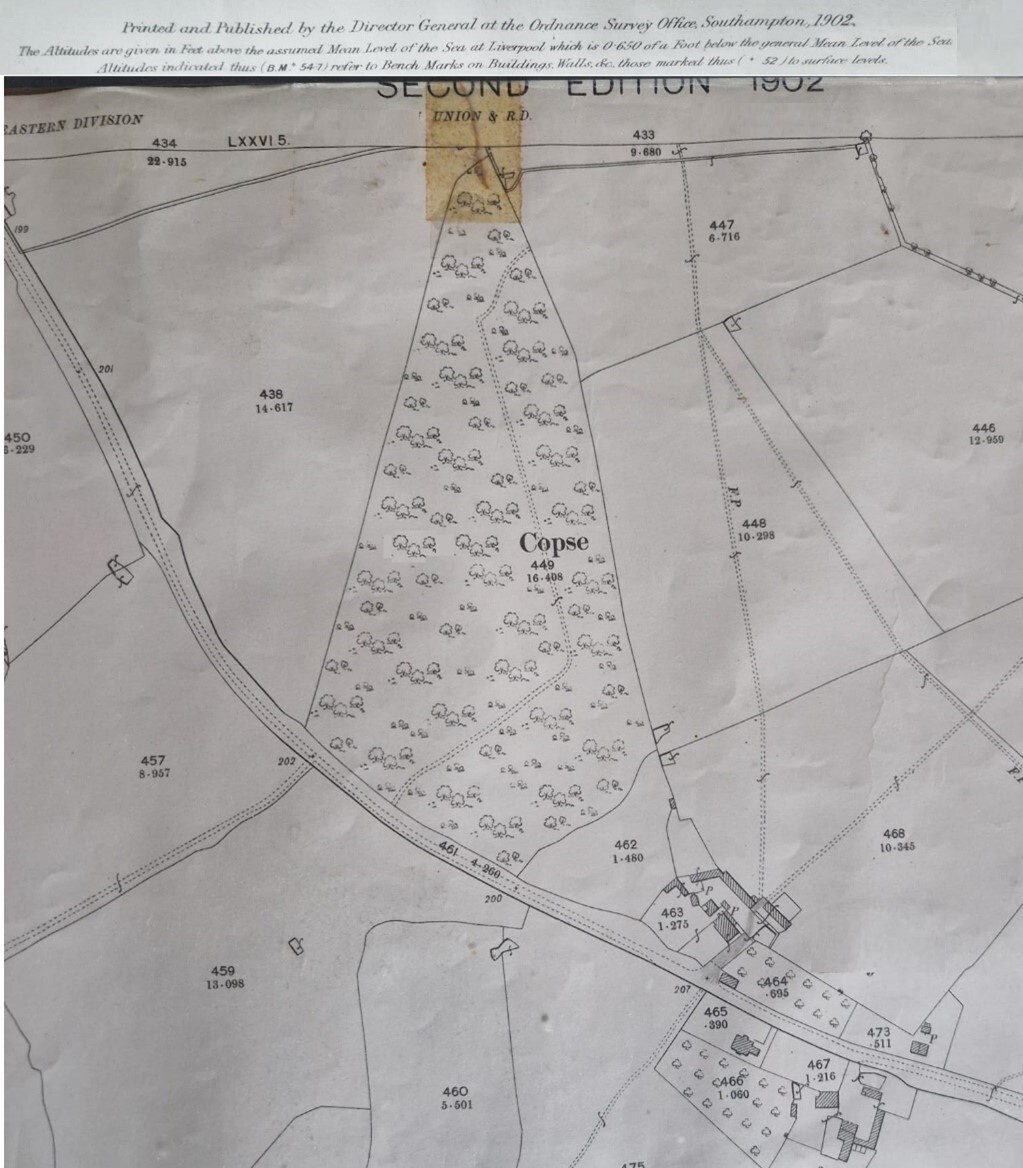
This got me interested and I managed to find a 1902 Ordnance Survey map which indeed showed the exact plot we owned as having been completely covered in non-coniferous trees. There we have it – having been woodland since forever, just 80 years ago, we removed every bit of it. So I decided to restore it, give it back to nature, stop trying to make it something it never was and never wanted to be.
I approached the Woodland Trust who visited to consult on what could be done and came back with a recommendation to replant a particular mix of 3,000 UK-indigenous species. Over two weekends in March 2017, a group of about 30 press-ganged neighbours, friends and volunteers came together to plant 3,000 saplings back into the land to begin the rewilding of the old copse.
We had a lot of fun designing the copse with the help of the Woodland Trust and some influence from famous local landmarks. There are 3 straight line paths through it that meet in the middle. The main path runs north-south, following the old 1902 path that was mapped out, and, looking north, in the distance is Alfreds Tower where King Alfred gathered his army on Kingsettle Hill before defeating the Danes. King Alfred lit beacons to send a message to all local militia and able-bodied labourers to go back their families, kiss them good bye, gather their weapons, go to their local Clergyman for a blessing and head up to the muster point. Should the Danes ever return, the workers in this Copse will be able to see the burning beacons.
The other two paths cross in the middle through the lines of the sunrise and sunset of the summer solstice where in the centre is a clearing ringed by 12 sarsen standing stones and – our own Henge.
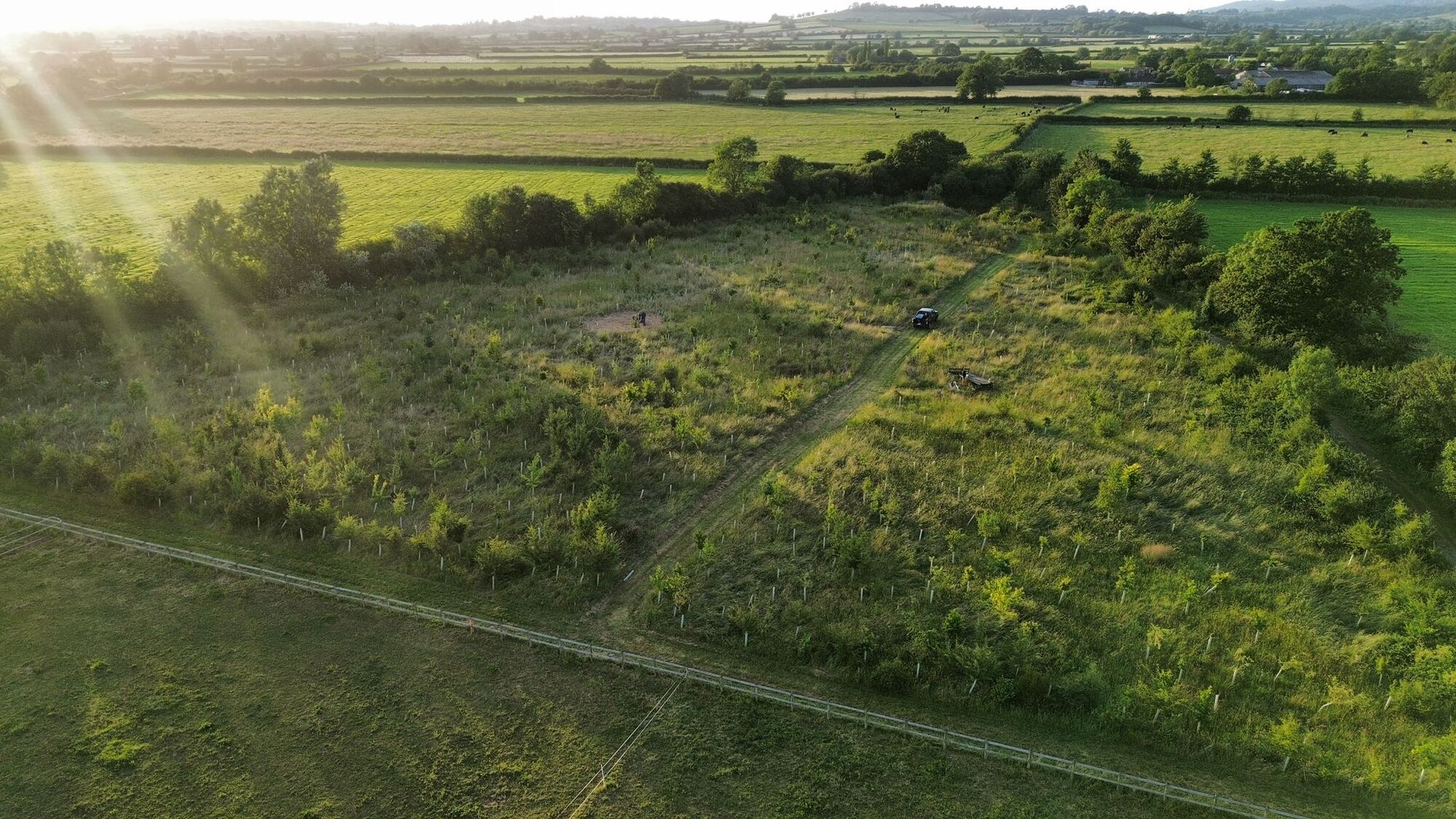
There are 2 small ponds near the far end and thickly planted area which, when mature, will hide a secret glade. The excavation earth from one of the ponds has been piled up to create a raised mound – our Tor. And more recently we planted 50 willow whips in a large circle to start a willow dome.
The rule of the copse is that humans only enter once or twice a day on horseback or on foot, with any dogs on close control or leads. We have installed some wildlife cameras and frequently discover roe deer, badgers, foxes, barn owls, kestrels, hare, coots, ducks, pheasants and countless butterflies, dragonflies, wild birds, wild bees, and who knows what else.
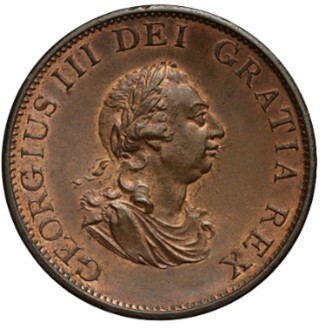
In April 2023 an old friend of mine, who had become a keen detectorist, asked if he could sweep the land. Down by the gate where I met Edward, where the copse ends and Edward’s pasture land started, he found a coin. This is exactly where the old 1902 map path enters and leaves the copse and likely always was the path through. The coin is a George III half-penny c. 1760-1820 – to this day we wonder who dropped it and why – a hole in a pocket, someone in a hurry, someone climbing a gate and … are there any more nearby?
It is a pleasure and a privilege to able to restore and rewild an old copse and watch nature move back in and enjoy a peaceful, untouched and safe place to establish again. Every year we see the trees grow stronger and taller, the fruit trees (cherry, apple, pear, plum) come into flower and fruit, and the native flora and fauna repopulate the space.
One day, we will be able to harvest the wood as they used to, and as we replant any trees that die or we cut down, have it as a sustainable supply of wood to heat our home. As well as a place for children to play and learn to live and thrive with nature."