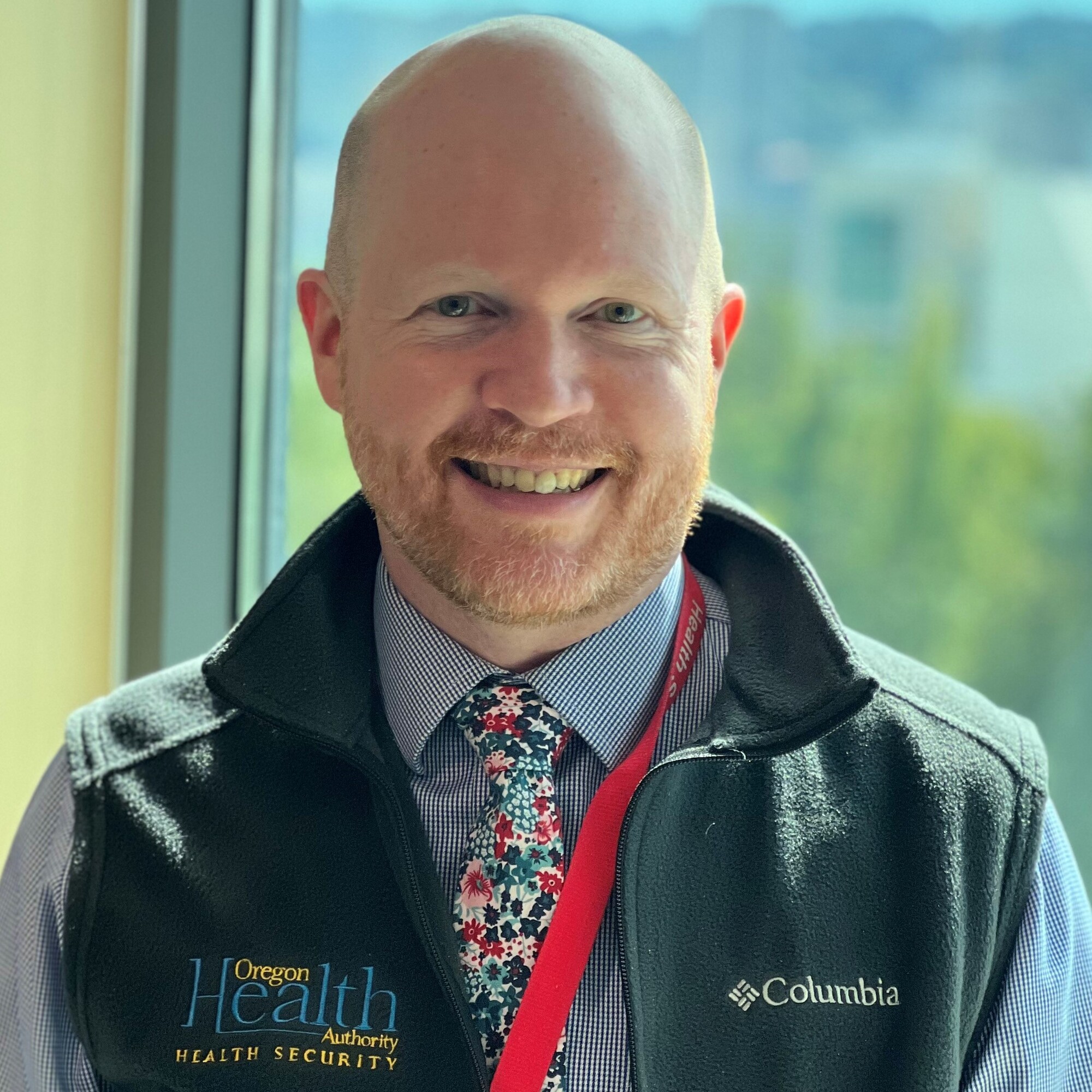
Introducing the Oregon Health Authority’s New Permanent Director of Emergency Operations, Eric Gebbie, DrPH
The Oregon Health Authority has welcomed Dr. Eric Gebbie, DrPH, permanently to the role of Director of Emergency Operations in the Health Security, Preparedness and Response (HSPR) Program at the Public Health Division. As Director, Eric will be managing and leading Oregon’s public health preparedness and response work, such as analysis and implementation of policies and new legislation, strategic operational planning, and overseeing the federal grants our state receives which drive local and tribal public health and hospital preparedness work.
Growing up in Portland, Eric’s passion for public health was baked-into his family history. As an adult, Eric gained international experience while living and studying in St. Andrews, Scotland, where he studied for four years. In the late 90s, Eric made the move to New York city to attend Columbia University, where he studied international affairs. He recalls it was during this time in NYC, and after the 2001 terrorist attacks, where his interest in a career in public health and emergency preparedness began. He returned to Portland 13 years ago in 2011 to begin his tenure with the Oregon Health Authority. He began in a position very familiar to us – as the SERV-OR Systems Coordinator! Later roles also included the responsibilities of serving as the MRC State Coordinator and manager of the AmeriCorps VISTA partnership program.
In 2016 Eric was promoted to the Planning Section Chief in the HSPR program; a role he held for nearly 5 years before taking on Interim Director of Emergency Operations during the unprecedented challenges of the COVID-19 pandemic. In January of this year, we were happy to see his successful hiring bid to the become permanent Director at HSPR.
Reflecting on pivotal moments that shaped his professional path, Eric is excited about transitioning the program to the post-pandemic phase and bringing much-needed stability to the team after familiar levels of turnover that many public health programs experienced during the pandemic. He hopes to enact dynamic transformation within the program in this new role, include addressing the intersections of climate change, cyber threats, and the enduring challenges posed by emerging and evolving emergencies in spite of limited funding.
In our interview, Eric described to me the value of volunteerism during response as vital contributions to community resilience. He appreciates healthcare volunteers, whose unwavering commitment and enthusiastic service empowered critical efforts, such as staffing vaccination clinics during the pandemic in ways that nobody else could. He recalled one day of MRC pride: It was a long wait for his elderly father, who lived in an adult foster under tight lockdown, to get his first COVID-19 vaccination. This population was one of the most vulnerable but hard to vaccinate because of their isolation and small numbers in each home, making it logistically hard for EMS or vaccination teams to reach. As mass vaccination sites took off, every county struggled to figure out how to vaccinate this homebound population. As both a family member and part of the state response, it was hard to watch and be patient. One day out of the blue, the adult foster home texted that a nurse practitioner showed up and vaccinated him. On the photo of the vaccination card was “Multnomah County MRC”! Their dedication to volunteering in adverse conditions have a profound impact in bolstering public health resilience.
Congratulations, Eric!