
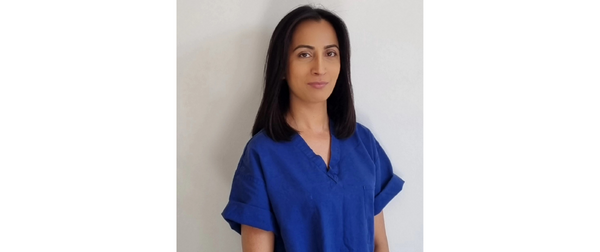
 Sabina Patel is our Neurosurgery Lead Physician Associate (PA) here at King’s, and was recently appointed as a Physician Associate Ambassador by Health Education England to help raise awareness of the role, and to support PA colleagues across London.
We spoke to Sabina to learn more about the important work our PAs do here at King’s, as well as her new ambassador role.
Tells us about your background?
I was one of the first Physician Associates to join King’s nine years ago after completing the PA programme at St George’s University. The PA profession has grown a lot since I first started when there were only a handful of PA programmes offered across the UK. Now there are over 25 universities offering a course at MSc level and at King’s, we estimate that there will be around 25 PAs working across both the Denmark Hill and PRUH sites by the end of August.
What do Physician Associates do here at King’s?
Physician Associates are trained to carry out a wide range of duties, from taking medical histories and carrying out physical examinations to performing specialist diagnostic and therapeutic procedures such as lumbar punctures and CSF sampling. Although we work under the supervision of a doctor, we can also work independently with appropriate support from our medical colleagues.
The PA programme focuses on general medical conditions in primary and secondary care settings, which means we can work across any speciality.
What do you think are some of the benefits that PAs bring to the NHS?
We complement the medical workforce and bring continuity of care for patients. PAs are based in a speciality full-time, so we can get to know patients and the wider MDT and become a familiar face for everyone on the ward. We work alongside doctors to effectively manage the clinical workload.
PAs don’t specialise in one particular field, which offers flexibility around where we can work, however we do inevitably end up picking up valuable experience after working in one speciality for a period of time.
The consultants in Neurosurgery have always been incredibly supportive of PAs and our career development. Currently, the senior PAs in Neurosurgery all run their own clinics that they manage independently but with support from our seniors. One particularly successful project has been the introduction of an ambulatory care clinic, run by my colleague Damilola Shodipe, which provides a streamlined pathway to review patients who have recently been discharged or who require an urgent review and can’t be seen in a general clinic.
I’m also very proud of the work I’ve done with our Transcranial Magnetic Stimulation (TMS) clinic, which now has the largest cohort of patients in the UK. Our work helps to identify areas of the brain that control motor and language functions prior to them having surgery.
What does your new ambassador role involve?
We want to raise awareness of the PA role and be advocates for our profession as well as improve learning opportunities for PAs across different trusts and practices.. We are a relatively new addition to the workforce so it’s important to develop a professional support network so that the next generation of PAs have the opportunity to undertake student placements and receive the support they need.
It’s exciting to be able to represent my fellow PAs, and to help raise the profile of our profession.
Please note that all links to Kwiki, Kingsweb and Kingsdocs are internal links and are only accessible from a networked PC.
 |
