Organizational Change:
4 Models for Success

By ELINOR OZIEL
OIT Communications Team
Development and deployment of effective organizational change modeling is a critical element of OIT’s strategic goals of fostering innovation, skill growth, and staff development.
An effective change model provides detailed guidance and a plan to ensure that changes are successfully implemented in an organization.
While models vary in terms of approach, organizational change typically involves these critical steps:
- Prepare for change
- Create a plan
- Implement the change
- Integrate changes
- Review and analyze results
Here are four common models of organizational change. The first three are the most commonly used models, while the fourth model is applied here within OIT.
A good understanding of these models will positively impact your ability to recognize the organizational change process within OIT.
1. Lewin’s Model
Kurt Lewin was a social psychologist who noticed that people resist change and stay where they are comfortable.
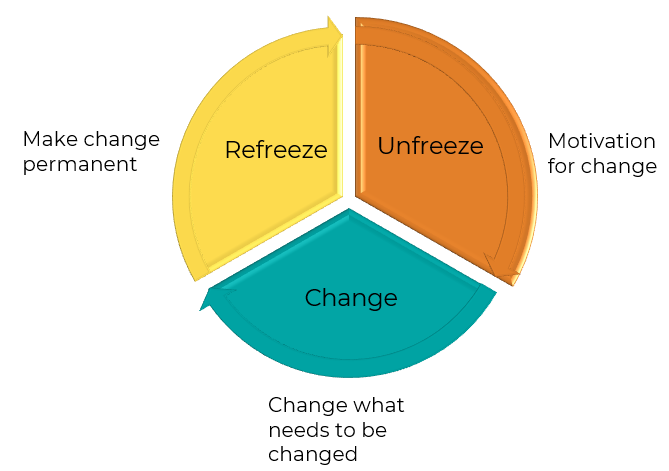
Lewin's simple model helps you visualize organizational change with these three stages:
- Unfreezing: Ensures that employees are ready for the change
- Changing: Implement the intended change
- Refreezing: Reinforce and make the change permanent
In the first stage, leaders must explain why adjustments are needed for employees. In the second stage, employees and leaders must take an active role in implementing changes.
The last stage helps ensure that modifications are reinforced by providing employees with the tools to succeed.
Overall, this model is beneficial for an organization that wants to elicit one change at a time rather than multiple organizational transformations.
2. Kotter’s 8-Step Change Model
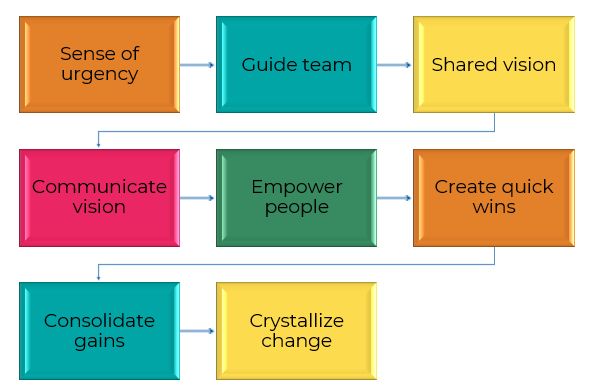
John Kotter is a Harvard Business School professor. He developed an 8-Step Change Model from his research of 100 organizations going through the change process.
Kotter's model focuses on employees' responses to new circumstances. His model incorporates steps managers can follow to be successful:
- Create a sense of urgency for change.
- Put a team together
- Develop a vision and a strategy for the change.
- Communicate the change vision to the organization
- Remove obstacles and empower employees
- Create short-term wins with sprints
- Build on the change
- Execute the change
Unlike Lewin's model, this model includes essential elements to create an effective communication plan and prepare employees to cope with the changes.
This model generally benefits organizations that want employee involvement and acceptability of new process changes.
3. McKinsey’s 7-S Model
Two McKinsey & Company business consultants, Robert Waterman and Tom Peters, developed McKinsey's 7-S model. This organizational tool assesses an organization's well-being and future success.
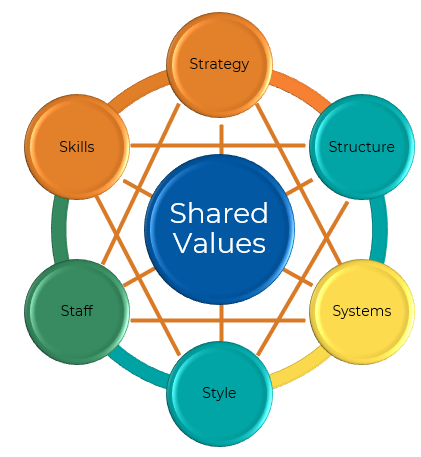
This model looks at seven strategic factors that impact an organization. Each factor needs to change and align to ensure a smooth organizational transformation for this model to work.
These include:
- Strategy: Plan to enhance competitive advantage
- Structure: Organizational structure and hierarchy
- Systems: Procedures, processes, and routines of staff that characterize how the job is done
- Style: Typical behavior patterns of groups such as managers and other professionals
- Shared values: Core values that are reflected in the organization and individual work ethic
- Staff: The employees and their general capabilities
- Skills: The employees' core and distinctive capabilities
This model works best when there is a need to align an organization's processes, systems, people, and values.
4. Compass for Agility
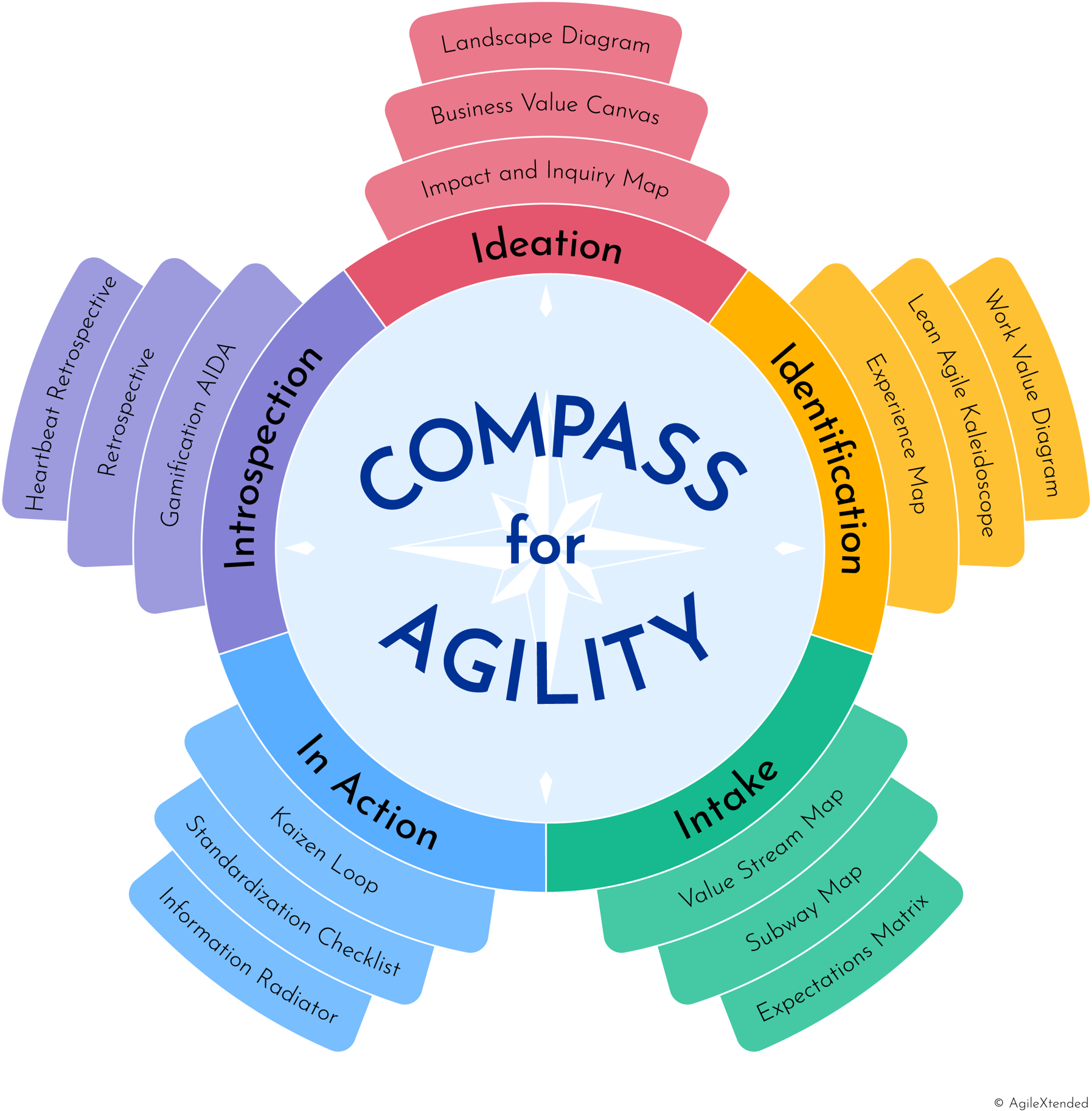
Organizational Change Consultant and Lean/Agile Expert Leila Rao developed the Compass for Agility model. This model helps organizations understand and address current and unforeseen challenges using a customized approach to implement practical changes.
The model consists of three techniques and five phases which include:
- Ideation: Visualize the change and outcomes
- Identification: Provide a vision and readiness to change
- Intake: Review the vision and current state of the organization
- In Action: Implement the change
- Introspection: Assess the changes that have been made and improved
The first three phases help discover the changes needed for an organization.
The last two phases focus on delivering effective change. Only one technique is selected per phase.
Overall, this model benefits OIT because it helps leaders realize the needs of the people and the organization. Also, it focuses on putting people first, facilitating engagement, and allowing for the most transparency among staff and leadership.