
Priority one: ASB including drugs and alcohol
Tower Hamlets drug and alcohol treatment services for adults and supporting offenders with substance misuse issues
The Drug and Alcohol Action Team (DAAT) secured £615k in funding from the Rough Sleeping Drug and Alcohol Treatment grant scheme, which is part of the £262m central government funding specifically for residents that are homeless and have drug and alcohol issues. In Tower Hamlets this funding will be used to deliver a ‘trauma informed’ treatment pathway that will include outreach, treatment, psychology interventions and ‘recovery’ activity for the homeless population.
Drug Intervention Programme (DIP)
The DIP Team aims to reduce drug and alcohol related crime in the borough by working closely with criminal justice partners, treatment and support services. They are responsible for issuing Drug Rehabilitation Requirement orders (DRRs) and Alcohol Treatment Requirement orders (ATRs); community sentences mandating engagement with drug/alcohol treatment services served at court, instead of custodial sentences. This makes it compulsory for individuals to engage with treatment and support services as a result of criminal behaviour they have been convicted of. If they fail to engage, they could be recalled to prison and given further penalties.
Face to face appointments were offered in this period (although staff have now moved back to working virtually in line with Covid-19 guidance). Clients will continue to be assessed and supported over the phone until it is safe to go back in the office. Results from this period included:
- Nine court orders applied for which included five ATRs and four DRRs. Five ATRs and two DRRs were successfully granted at court
- 52 individuals were taken onto their caseload, with 25 starting structured treatment
- 74 Tower Hamlets residents left prison in need of substance misuse support, of which 25 attended their appointment with DIP
- 25 of those individuals started treatment with the borough’s Adult Drug and Alcohol Treatment Service RESET
If you are concerned about your drug or alcohol use or affected by someone else’s substance misuse issues, make a referral to RESET:
- Phone: 0203 889 9510 (9am – 5pm, Mon-Fri). If you call outside of these hours, leave a message and a member of staff will get back to you as soon as possible
- Email: Resettreatment.th@cgl.cjsm.net
Tower Hamlets Enforcement Officers (THEOs) - responding to ASB and supporting the police to detect crime
Action taken by the THEOs to support residents in the borough:
Test Purchasing operation with Trading Standards
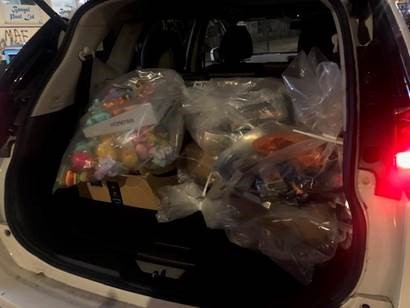
Nitrous oxide (NOX) use is a serious issue in Tower Hamlets, which we are currently reviewing as part of a Public Spaces Protection Order (PSPO) consultation and the impact it has on residents. The THEOs conducted joint patrols with Trading Standards officers, as part of an operation to crack down on the sale of nitrous oxide used for psychoactive effects. During this operation, items were seized from three premises including 4,000 NOX canisters and 8,500 illegal cigarettes and tobacco. All three traders were prosecuted, sending out a strong message to other shops whilst also disrupting the sale of these products and reducing the resulting negative impact on local communities.
Drug and alcohol use in Hermitage Memorial Gardens, E1W
This area is regularly patrolled by the THEOs due to ongoing and historical complaints about groups causing drugs and alcohol related ASB. As a result of working with the local community to gather intelligence, the THEOs identified repeat offenders who were issued with ASB Warnings and asked to surrender their alcohol (under the PSPO rules). The group were also informed of the next steps around enforcement if they continue to cause ASB. These actions disrupted the offenders with local residents later reporting that the ASB issues had reduced.
Evidence shared on suspected drug dealer
The THEOs provided an intelligence report to the local Safer Neighbourhood Team (SNT), which supported an application to conduct a warrant on a premise linked to a suspected drug dealer. During the raid, a quantity of heroin was found including equipment used to supply drugs. A suspect was arrested for possession with intent to supply and issued with a Community Protection Warning (CPW).
Response to road traffic incident involving a cyclist – New Road, E1
The THEOs were the first officers on the scene following a serious accident where a car struck a cyclist. The officers acted quickly to control the scene and preserve evidence, whilst also administering first aid to the cyclist. The driver of the vehicle appeared very agitated, however the THEOs acted professionally to prevent a breach of the peace. Details were exchanged and the cyclist was escorted to the hospital.
Partnership Task Force - increased police through council funded officers
The Tower Hamlets funded Police Partnership Task Force (PTF) are deployed on a weekly basis to problem locations, focusing on drugs and violence. Despite the challenges of Covid-19, the team have continued to be deployed and successfully:
- Conducted 285 stop and searches (274 for drugs)
- Made 96 arrests which included a drunk driver who was also found with Class A drugs and driving whilst disqualified
- Another male was arrested after being found with 20 wraps of Class A drugs. He pleaded not guilty at a Magistrates Court and remanded to appear at a Crown Court on 23 December. He pleaded guilty on this occasion and sentenced to four years in prison for possession with intent to supply
- Issued 141 ASB warnings and 8 Community Protection Warnings (CPWs) which prevent people from committing persistent ASB
- Seized £8,815 cash under the Proceeds of Crime Act, which included one arrest for drugs and cash seized during an intelligence led warrant executed at a property in Bow, E3
- Seized eleven vehicles associated with drugs
- Referred three people to Drug and Alcohol Treatment Service
Council ASB Team - Tackling ASB in public spaces
The ASB team support victims on cases with complex on-going antisocial behaviour reports, which require partnership intervention. They gather intelligence to build an effective response to dealing with these issues to support and safeguard some of our most vulnerable residents. Some examples of how the team supported residents in this period included:
Closure of Unlicensed Music Events premises - 193 A & B Whitechapel Road, E1
Residents and the police reported a derelict Transport for London (TfL) premises was being used for Unlicensed Music Events. The building was known to be hazardous, with exposed wiring, unsafe flooring, vermin and no fire exits. The ASB Team contacted TfL to obtain a closure order, however this was not initially supported due to Covid-19 risks and plans to conduct a mass eviction on squatters on all misused TfL sites in December. The THEOs were tasked to issue warnings to the squatters, explaining the dangers of staying there and potential closure order pending. The notices were ripped down and the squatters refused to leave. On 10 December, a three month closure order was granted at court. The ASB Team attended the premises along with TfL, THEOs, Police and security contractors. Two occupants were found on site including two DJ booths, music studio, several mattresses, bikes, entertainment and kitchen appliances. The premise was cleared, two entrances secured within an hour of entry and additional 24 hour security provided on the site by TfL.
Business causing ASB and noise nuisance
Residents reported a vehicle number plates company for allowing their customers to speed dangerously on the street, revving their cars causing noise nuisance and their employees for carrying out works on the road. The ASB Officer worked with the complainants to agree an action plan and an ASB Warning letter was served on the business. Following this intervention, residents reported an improvement and reduction in ASB concerns.
ASB and drug dealing in estate communal area
The ASB Officer agreed an action plan with a resident following reports of drug dealing, littering and intimidation in their communal space. The ASB Officer conducted a site visit and co-ordinated patrols by the local Safer Neighbourhood Team, THEOs and Partnership Task Force. This was done in order to provide reassurance, disperse suspects and take actions against offenders. Following this partnership approach, the resident reported the situation had improved.
Group of males causing ASB and intimidating residents in St Anne’s Row, E14
A resident contacted the ASB Team to report a problematic group, in particular one individual who was verbally abusive, threatening and intimidating towards local residents, THEOs and the Police. This was seriously impacting residents, resulting in some people moving out. The ASB Team successfully obtained an interim injunction order, which had the power of arrest against this individual and a requirement for him to work with a drug & alcohol service. Additional partnership patrols by the THEOs and the Mile End Safer Neighbourhood Team also disrupted the group, moving these individuals on from the area.
Group of males causing ASB in Bracken House, E3
Residents reported this group for loitering, drinking/smoking, being aggressive and verbally abusive towards residents. After gathering information on the suspects from the managing agent of the building and the victims of the ASB, the THEOs, Poplar Harca Parkguard and the local SNT were tasked to carry out targeted patrols to identify and disperse the suspects. As a result of this action, the group was disrupted and the ASB had stopped. Residents reported feeling safe and secure in their homes again.
Community Multi-Agency Risk Assessment Conference (CMARAC) - safeguarding vulnerable and high-risk victims affected by ASB
 The CMARAC works with Victim Support to identify and assist the most vulnerable people affected by ASB. Five emergency virtual meetings were held in this period with twelve new cases (two repeat referrals) discussed and shared between agencies. Two of our successful outcomes included:
Vulnerable male with drug and alcohol dependency causing ASB
The Registered Social Landlord (RSL) tenant had a long history of substance dependency and was suspected of being cuckooed (property taken over by drug dealers as a base for drug trafficking). The Police were constantly being called by neighbours reporting noise nuisance, groups gathering for parties and other ASB related matters. The tenant was referred to Social Services and a referral made to RESET to help support him with addressing his substance misuse issues. The police & RSL are now working together to issue a Partial Premises Closure Order to protect the tenant from unwanted visitors and reduce the impact of ASB on the wider community.
Vulnerable female placed in a hostel and causing persistent ASB
A case involving a former rough sleeper also known for aggressive begging and having drug and alcohol dependency was referred to the CMARAC. The Community Mental Health Team (CMHT) were aware of this resident, despite not having an open case with the service at the time. The Tower Hamlets Enforcement Officers had previously issued Community Protection Warnings, which the resident would repeatedly breach. As her ASB continued and breaches increased, the THEOs progressed this to a Community Protection Notice (CPN) with positive requirements attached, requiring her to be supported by RESET and the Drugs Intervention Programme (DIP) Team. Should the resident continue to cause ASB and breach the CPN, the police can consider a Criminal Behaviour Order (CBO).
Neighbourhood Management Project – working with residents and partners to address crime and ASB issues in the west of the borough
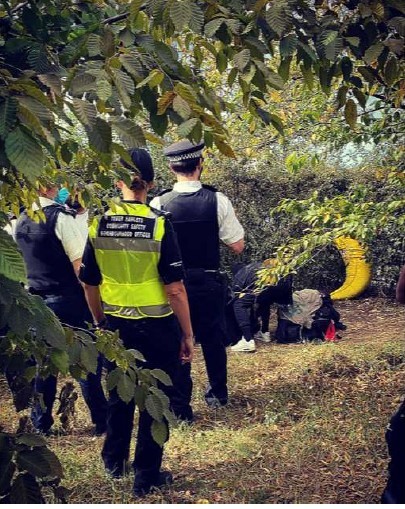
The Neighbourhood Management Team was set up in 2017, to respond to high volumes of ASB, drugs and crime in the areas with the highest number of 101 Police reports: Spitalfields and Banglatown, Weavers, Bethnal Green, St Peter's and Whitechapel wards. The team works with residents to encourage reporting and co-ordinate partners to resolve these issues. This includes gathering intelligence around drug dealing to share with the police and CCTV Team, who use Automatic Number Plate Reading (ANPR) technology to identify drug dealing cars.
The team also support people who buy drugs, that residents often complain about to the council and police. They use an escalating enforcement process which starts with engagement, advice and an offer of treatment. If the problems continue, enforcement escalates to Community Protection Notices, Injunctions or Criminal Behaviour Notices, which have positive requirements attached requiring individuals to accept support for their substance misuse.
In this period, the team conducted several patrols to help support rough sleepers into accommodation, considering the associated Covid-19 risks and the changing cold weather. There is no law against sleeping rough and not every rough sleeper wants to come inside, but with the current risks involved, these patrols have been more important than ever.
Nitrous Oxide Public Spaces Protection Order (PSPO) Consultation – ends 15 February 2021
From 20 October 2020, the Borough wide Responsible Drinking Public Spaces Protection Order (PSPO) was extended for a further three years. Consultation results showed 41 respondents asked for the new PSPO to be varied to include Nitrous Oxide use. We are now consulting on proposals to introduce a PSPO to tackle the issue of antisocial behaviour linked to the use of nitrous oxide. This will prohibit people from carrying out these activities in a specific area, including activity such as persistent and continued ASB.
We want to hear what you think about our proposals which will be presented to the Mayor and Cabinet. Share your views by completing our online consultation survey and select 'Take Survey'.
The consultation is running from Monday 4 January 2021 to Monday 15 February 2021. More information and details specific to this PSPO proposal and ASB linked to nitrous oxide use can be found online in the accompanying information pack. If you would like support or more information in a different format, email saferneighbourhoods@towerhamlets.gov.uk
To report ASB and get more information on other PSPOs currently in place in Tower Hamlets, visit the council’s ASB webpage.
To report crime and issues relating to rough sleepers, noise, licensing, trading standards, waste collections and street cleansing, please refer to our useful contacts section.
CCTV - supporting the police to make arrests and keep you safe
Our 24-hour CCTV network consists of 350 street cameras operating across the borough. We work with the police, housing landlords and other law enforcement agencies to prevent and detect street crime. The CCTV service also contributes to ensuring the borough is cleaner and safer through detection of environmental crimes, such as fly tipping. We also identify vehicles reported to be drug dealing and task council funded police officers to stop, search and make arrests where possible. In this period, the CCTV Team:
- Identified 309 incidents where a crime was detected
- Provided the police with images to support enquiries for 234 cases
- Supported 46 arrests by detecting offences or suspects
- Saved evidence against 195 incidents which can be used at court
- Identified nine wanted vehicles leading to eleven arrests
Some examples of how CCTV helped to detect crime this period included:
Drug dealing: In October, the CCTV Team spotted two males drug dealing to several users in Fournier Street. Descriptions of the suspects were given to Partnership Task Force (PTF) officers as they walked down Brick Lane. One of the suspects hid the drugs in his mouth which were later recovered by the police. Both males were arrested for possession with intent to supply.
Assault - Grievous Bodily Harm (GBH): In November, the CCTV Team monitored a call from Teviot Street reporting a fight and a person with a knife. A group of males were seen getting into a car and speeding away, which the CCTV Team followed and provided live updates to the police, which included the car jumping red lights and travelling at high speed. The car was stopped outside the Royal London Hospital and had a male inside with a stab wound. Police on scene at Teviot Street also had four victims with GBH injuries. Two people from the car and four victims were arrested for GBH.
Road related offence: In December a vehicle made off from police on Bow Road and crashed at the junction of Mile End and Harford Street. Five males abandoned the car. The CCTV Team were able to identity two of the male suspects who were arrested, and damage to traffic light reported to Transport for London.
Tower Hamlets Police – good news stories from local Safer Neighbourhood Teams and Neighbourhood Task Force
The council works closely with our local police teams to tackle crime in the borough. Some of their successes in this period included:
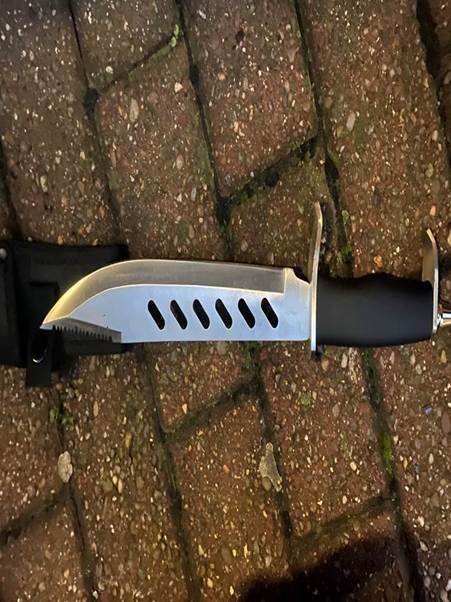
- Knife recovered – the Neighbourhood Task Force officers witnessed a suspicious male cycling through the Blackwall area. During a stop and search, a large hunting/rambo style knife was found and he was arrested for possession of an offensive weapon, possession of cannabis and handling stolen goods
- Operation Continuum – during their patrols, Lansbury and Whitechapel Safer Neighbourhood Team Officers spotted a male discard evidence on their approach. Following a stop and search, he was arrested for possession of drugs with intent to supply
- Closure Order extended – initially authorised in October on an estate in Bow East, suffering from on-going ASB, drug use and drug dealing. This extension enabled the Registered Social Landlord to install permanent security improvements, which was effective in decreasing the ASB and improve impact on residents.
The police welcome all information from local residents in relation to ASB, suspected crime and the use or supply of drugs. To make a report, call 999 in an emergency and 101 in a non-emergency. Details on your local Safer Neighbourhood Teams can also be found on the Metropolitan Police website.
Covid-19 is a serious health concern for Tower Hamlets and the rest of the UK. We must all play our part in reducing the transmission of this virus and keep our communities safe. Visit the police website for further advice or guidance on how to report suspected Covid-19 breaches.
Priority three: Reducing re-offending
Community Safety Response Team - supporting victims of violent crime
The Community Safety Response Team is a group of youth workers, deployed to areas to provide support and reassurance following serious violent incidents. The outreach team were back out in the community, conducting face to face engagements in this period (every weekday from 1pm-9pm) and also received training in trauma and first aid response in the event of a violent incident on the street.
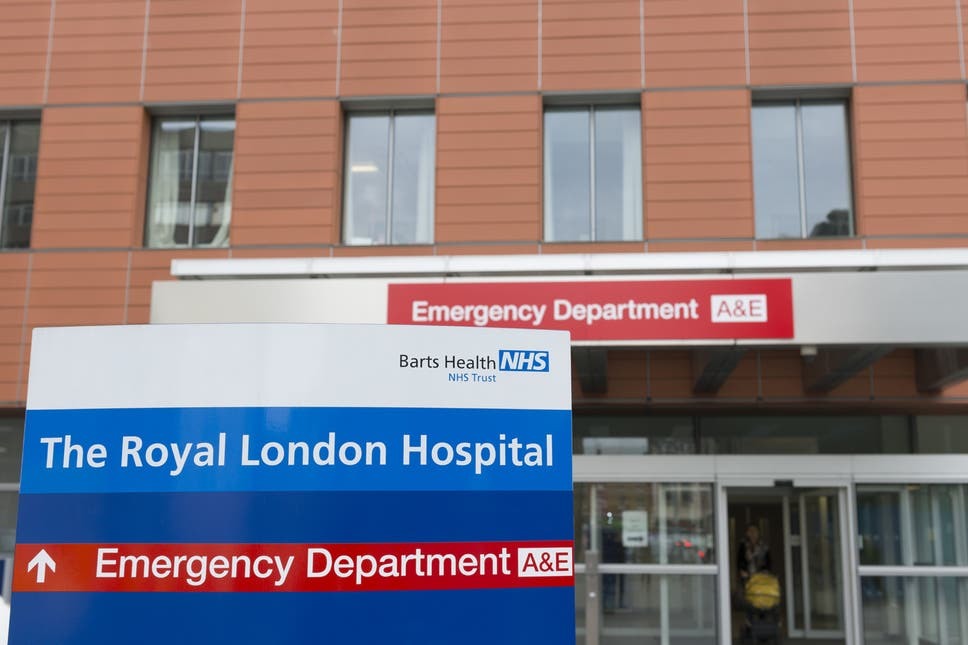
Violence Reduction Team (Engage) is embedded within the Emergency Department at the Royal London Hospital and supports victims of violent crime. They supported 50 victims of violence during this period (fifteen considered medium to high risk cases), by either hospital visits or through referrals made from health colleagues. This ensured a continuation of their care and links to appropriate services to manage their risks. The Violent Crime Reduction Officer also provided training to 25 medical staff on how to effectively support young people who are victims of violence.
Integrated Offender Management (IOM) - helping people who have been involved in crime

The key aim of IOM is to support offenders away from a life of crime by encouraging rehabilitation and reintegration back into society. Despite Covid-19 affecting most services the IOM engagement work continued with excellent results in this period, including:
- 66% of offenders did not get re-arrested
- 68% of offenders engaged with substance misuse services
- 100% of offenders maintained their existing accommodation, secured a place to live and not presenting as rough sleeping
- 50% of offenders addressed their Employment, Training and Education (ETE) needs
- 89% of offenders addressed their mental health needs
Priority four: Hate crime, community cohesion and extremism
Prevent and Protect - safeguarding vulnerable people from radicalisation and keeping our public spaces safe
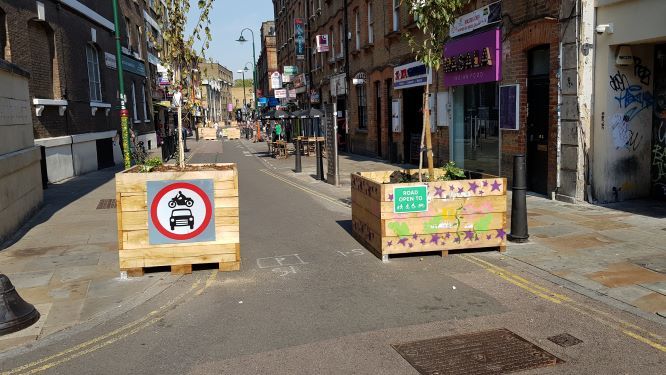 PREVENT is all about safeguarding and keeping people and our communities safe from the threat of terrorism. In this period the team continued to work remotely via virtual meetings and webinars and provided guidance on Prevent issues where necessary. This has included:
- Securing public spaces – worked with partners including the Markets Team, Town Centres and High Streets, City of London Council and Police to ensure safety and security is considered when accommodating social distancing measures in public places. As a result, several priority locations in the borough will benefit from long-term security installations that will act as a deterrent to a terrorist attack
- PREVENT e-learning training – reaching over 500 council staff on the Prevent corporate learning programme with more sessions planned throughout the year. Staff also requested further in-depth Prevent training which will be scheduled for delivery in 2021
- Working with schools – Prevent training materials were adapted so that they could be delivered virtually, socially distanced, and/or in person depending on each school’s needs. Ongoing support was also offered to schools to manage the safeguarding risks posed by increased time online by young people, including a monthly newsletter highlighting the Prevent resources
- Virtual schools project - funded by the Mayor of London’s Shared Endeavours Fund, the project aims to offer a positive alternative to the promotion of hateful, intolerant and extremist messages (online and offline) whilst raising awareness and empowering others to stand up against hate and intolerance. Our partner organisations include West Ham United FC, Naz Legacy Foundation, New Horizons and The Limehouse Project
- Working with Youth Centres – meetings conducted with Youth Hub managers to discuss Prevent training for staff and young people across centres in the borough. Training also delivered to staff in our Prevent funded projects including Chain Reaction and Women’s Inclusive Team, with more sessions planned in the coming months.
For more information on Prevent referrals, local Prevent Strategy and contacting the team, visit our Prevent webpage.
To find out more on how to deal with a terrorist attack and where to sign up to counter-terrorism training, visit our Protective Security webpage.
The Civil Protection Unit (CPU) – responding to emergencies and major incidents
 The CPU provides a 24/7 response service to all emergencies and major incidents in the borough. The service also manages all emergency plans and staff training to maintain essential services and business continuity. This includes the local Covid-19 Outbreak Plan, which sets out a guide on how services should respond to outbreaks in places like care homes, public settings and workplaces. They also work closely with the British Red Cross, the local police and Registered Social Landlords, to conduct exercises and incident debriefs to ensure a more joined up response to major incidents. In this period the CPU work included:
- ACT Counter Terrorism training – online training for all council staff designed by Counter Terrorism Police and security experts, which provides guidance on how to understand and safeguard against terrorist threats. Currently all IDEA Stores are actively participating to upskill their front-line staff to identify terrorist threats and help to provide a safer environment for residents accessing these buildings. The training is also available to residents and the general public.
- Expanded the On-call Resilience Team – to enhance emergency support during a major incident, a Local Authority Liaison Officer (LALO) and Senior Humanitarian Assistance Officer (SHAO) were recruited. The LALO will work on the scene of an incident, supporting impacted residents, coordinating appropriate services to respond to the needs of the residents and bringing the response to a close. The SHAO will access databases to identify residents who may have existing vulnerabilities, identifying any additional care needs and buildings that can be used as rest centres, coordinating staff volunteers and other services to assist with the post incident response.
For more information and advice on how we can support you during a major incident, visit our Emergencies webpage