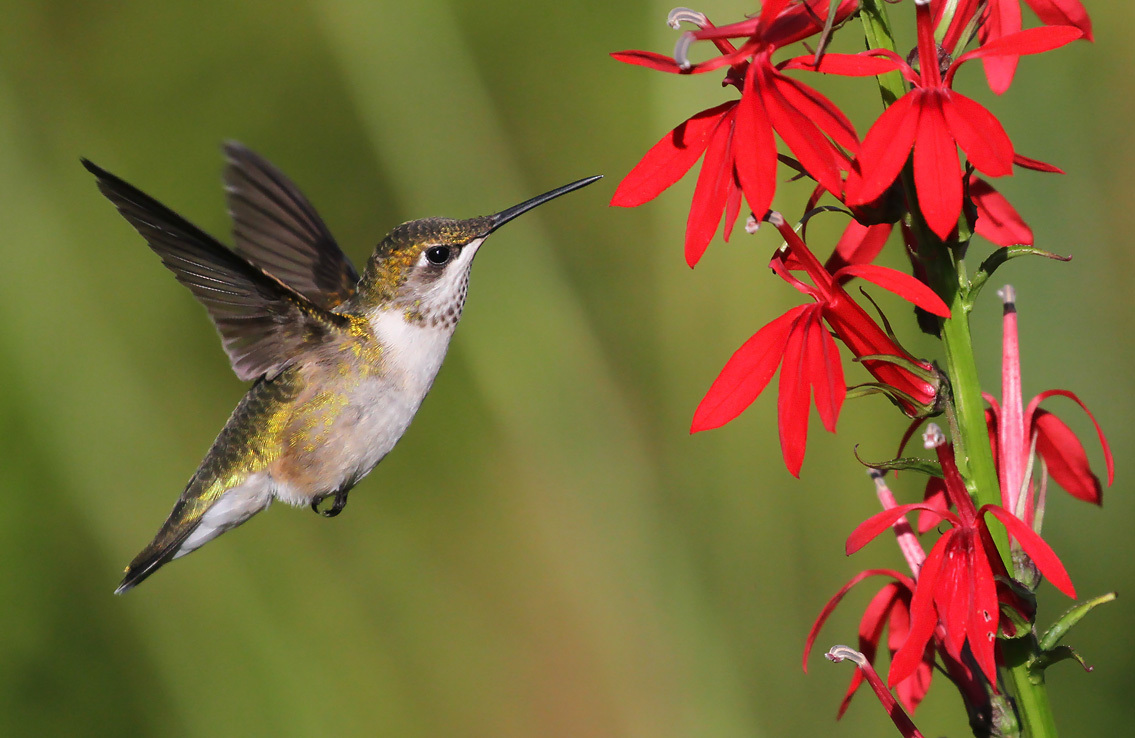
Ruby-throated hummingbirds are staging in good numbers now at backyard feeders and native plant sources like cardinal flower, spotted jewelweed, and more! Photo by Ryan Brady.
Birding Report as of Aug. 29, 2019
As September approaches the bird world is transitioning from breeding to migration mode. Common nighthawks began moving south in mid-August and will continue through mid-September in southern Wisconsin, although numbers this year have been lower than usual statewide.
Backyard feeders have been busy with Baltimore orioles and ruby-throated hummingbirds as many get ready to depart in the couple weeks ahead. Other favorites like rose-breasted grosbeaks, scarlet tanagers, indigo buntings, and a variety of warblers have also begun to leave the state. Peak migration for many of these species will occur no later than mid-month so enjoy them while you can!
Meanwhile, shorebird migration is already at or past peak for many species. September continues to provide good viewing opportunities, however, so check mudflats, flooded fields, and sandy beaches throughout the month.
Wetlands in general are good birding sites as many species congregate there this time of year. A few examples include great egrets, American white pelicans, swallows, blackbirds, and ducks. Building flocks of sandhill cranes are also being seen, and now is the time to witness the phenomenon of chimney swifts coming to roost at dusk in older chimneys amid urban areas.
Nesting season isn’t entirely done yet though. Notoriously late nesters like cedar waxwings, American goldfinches, mourning doves, northern cardinals, house finches, and red-eyed vireos continue to host nestlings or feed recently fledged young. Broods of ruffed grouse, wild turkeys, and mallards also remain evident, some not even half the size of adults at this late date.
Rare birds have been few of late, most notably including American avocets in Jefferson and Racine, loggerhead shrike in Milwaukee, and a continuing family group of glossy ibises at Horicon Marsh that furnished Wisconsin’s first-ever documented breeding record for the species. In the week ahead look for active migration conditions on the mornings of August 30 and September 4, with plenty of good birding in between.
- Ryan Brady, DNR Natural Heritage Conservation biologist