|
Thanks to Seattle voters and taxpayers, the 2020 Seattle Transit Measure has improved transit frequency, invested in new bus-only lanes to make taking the bus more reliable, made transit more accessible through our Transportation Access Programs, and more.
Use the links below to navigate directly to the section you are interested in:
You are receiving this email because you have expressed interest in projects and programs funded by the voter-approved Seattle Transit Measure. To sign up to receive this monthly newsletter in the future, please visit this link and select the “Seattle Transit Measure” topic.
Transit Service: More frequent, reliable service for those who rely on transit the most.
Over half of 2020 Seattle Transit Measure revenues are used to pay for more bus trips in Seattle, on top of what King County Metro provides. As of 2025, STM funds over 3,200 weekly bus trips, totaling 163,000 annual service hours.
----
STM Service Spotlight: Route 36
The Seattle Transit Measure funds over 120 trips each week on Route 36, making buses come every 10 minutes on weekends and during the mid-day on weekdays, an improvement from King County Metro’s baseline of every 12-15 minutes. This investment helps create consistent, frequent transit service that riders can rely on seven days per week. The Route 36 is a high priority for STM investment because it connects neighborhoods that have high proportions of people who depend on transit the most.
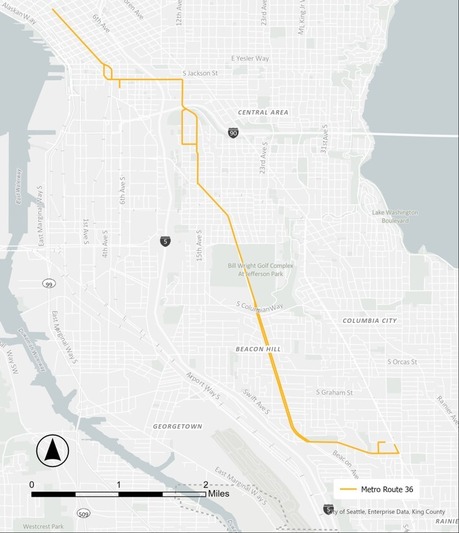
Route 36 is a fully electric trolley route that starts in Rainier Valley and connects communities along Beacon Ave S, the International District, and Downtown Seattle. Graphic: SDOT
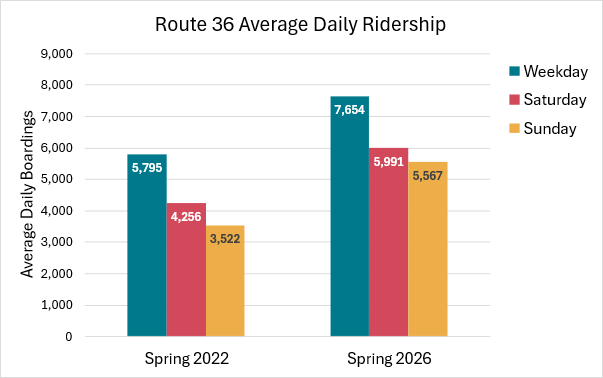
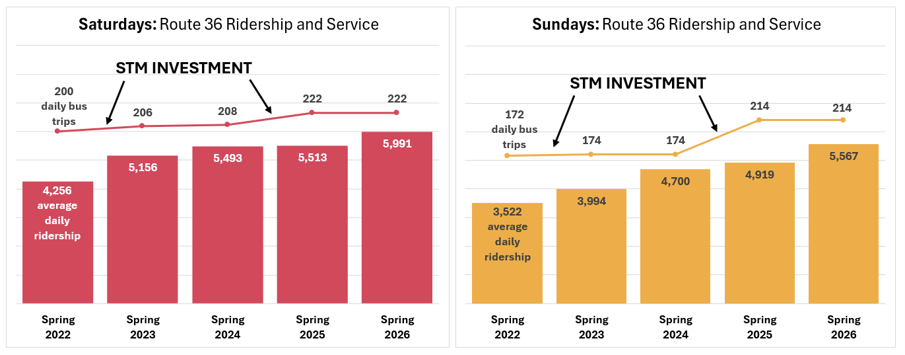
Over the last four years, weekly Route 36 ridership has grown by over 35%, and now ranks as one of the highest ridership routes in the city. This trend has been especially pronounced on weekends when STM has added the most trips, with 41% ridership growth on Saturdays and 58% on Sundays. Weekday ridership has also grown by 32%. .
Graphic: SDOT
The charts below show recent STM-funded service growth in daily bus trips and ridership growth over the same time frame.
Graphic: SDOT
----
Trailhead Direct Summer Service Wrap Up
Since 2018, SDOT has partnered with King County Metro to fund seasonal transit service from Seattle to some of the region’s most spectacular hiking trails in the Issaquah Alps and Mount Si. This service provides access to trailheads for folks living in Seattle without a car and an option to avoid the over-crowded parking at these popular trailheads. As in previous years, STM covered 50% of the operating costs of this transit service in 2026. Learn more here.
Trailhead Direct recorded more than 12,000 riders in 2025 and 2026, up 30 percent from 2024. The popularity of this service continues to grow and reach diverse populations through multi-lingual outreach and marketing that encourages people to take advantage of our nearby natural resources via transit.
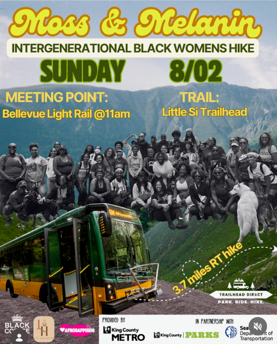
Part of our summer outreach included a partnership with Moss & Melanin, a Seattle-based, intergenerational outdoor and hiking community for Black Women, on a hiking trip to Little Si from the Bellevue Light Rail station stop. See more from their trip on their Instagram @moss.andmelanin.
 |
|
@moss.andmelanin hosted their 4th hike of the season in partnership with King County Parks, King County Metro and Seattle Department of Transportation to Little Si using Trailhead Direct🚍🛣️. |
The STM TAP program bridges transportation gaps for low and no-income residents, seniors and youth. In 2025, SDOT operated 10 Transportation Access Programs or initiatives providing subsidized ORCA cards, community education and engagement, transit access research, and the Easy Loop, formerly known as the Solid Ground Downtown Circulator.
SDOT Partners for the third year to provide free ORCA Cards to low-income Seattle Preschool Program Families!
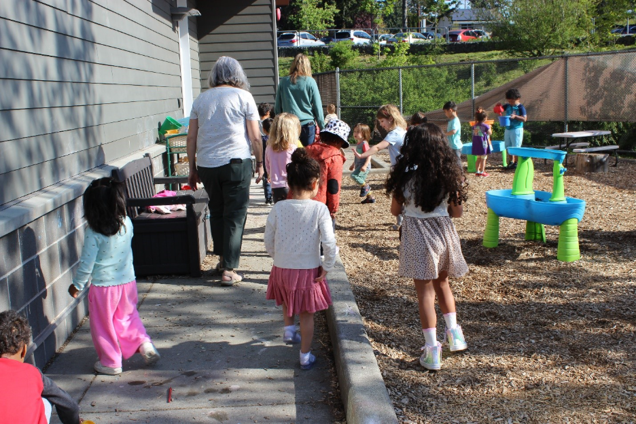
Seattle Preschool Program students led by their teachers during outdoor play time. Photo courtesy of the Seattle Department of Education and Early Learning
This school year, the Seattle Department of Transportation (SDOT) is partnering with the Seattle Department of Education and Early Learning (DEEL) and Seattle Public Schools (SPS) Head Start to give eligible Seattle Preschool Program (SPP) and SPS Head Start preschool families no-cost ORCA cards to help meet their transportation needs. The 2026 school year is the third year SDOT has partnered with DEEL and the first full year SDOT has partnered with SPS Head Start to offer this fully-subsidized transit pass.
During the 2026-2027 academic year, The SPP Transit Pass program is providing around 2,200 free ORCA cards to eligible, very low-income families. These cards offer unlimited rides on public transit, including King County Metro buses, Sound Transit buses and Link light rail, King County Water Taxi, Seattle Streetcar, and Seattle Center Monorail. Learn more about who qualifies through the SPP tuition calculator.
In 2025, 1,700 ORCA cards were distributed to SPP households, resulting in 131,000 free transit trips and $374,000 in savings, helping these families save more of their income for essential expenses. On top of helping preschool families complete daily activities, the Preschool Transit Pass program also increases access to the city with free trips to community events and spaces like local farmers markets, libraries, museums, and more.
“I was sent an ORCA card which was the greatest surprise and gift to us. My preschooler and I took the 65 bus to school regularly, and this summer I'll be staying home with him and exploring the city - in large part through public transit. I cannot tell you how many people I've told about the free access to public transit that comes with his school. It’s such a great way to encourage and instill public transit in a kid and the financial support of it being included is so completely appreciated. I hope this program can continue.” - Quote from Seattle Preschool Program family
If you have questions regarding program eligibility or SDOT’s ORCA card programs, email DOT_TAP@seattle.gov
Transit Capital Projects: Projects to improve transit reliability, accessibility, and safety
Seattle is actively improving its transit infrastructure with more STM funding dedicated to capital investments focused on improving transit safety, reliability, and accessibility. In 2025, STM investments supported construction on capital projects in 25 locations, and any more in planning and design stages.
----
Summer and Early Fall Highlights from our Community and Mobility Hubs Program
Community and Mobility Hubs bring together many pieces of work we already do – like seating, wayfinding, pedestrian lighting, crossing improvements, art, landscaping, and more – and work with community to demonstrate more dignified, joyful, human-centered spaces where everyone feels safe and comfortable getting to, from, and waiting for transit. Funding from the Seattle Transit Measure helps bring these projects to life.
A few recent project highlight include:
New bus shelter mural art installed at several stops in Mt. Baker
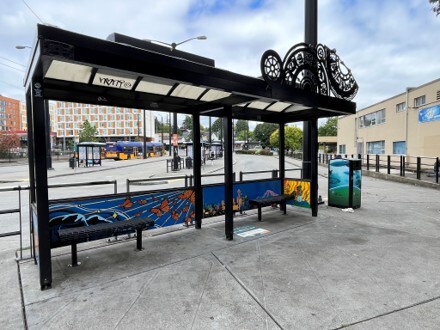
SDOT has been partnering with community organization ArtStation Mt. Baker to bring art and activations to the Mt. Baker light rail station area for the past year. Together, we selected Seattle artists (including past and present Franklin High School students) to paint murals for 7 area bus stop shelters, plugging into King County Metro’s Bus Shelter Mural Program. Adding art into these spaces deters graffiti, builds community and a sense of place, and supports a more safe and welcoming environment for people accessing transit. Metro installed 4 of the 7 shelter murals in June; artists are working on completing the remaining locations this fall.
Final pieces installed at Rainier Ave S and S Forest St, adjacent to the Mt. Baker Transit Center, designed and painted by Franklin High School’s Art of Resistance and Resilience Club. Photo: SDOT
Re-imagining public space with Mercer International Middle School Students
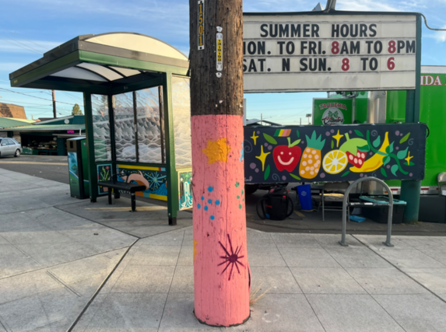
SDOT’s Safe Routes to School and Community and Mobility Hubs teams collaborated on an engagement with Mercer International Middle School students to reimagine a public space next to their new school campus on Beacon Hill - a plaza area with several nearby bus stops. This spring, students worked with teaching artist Nikita Ares to design and paint beautiful murals in bus shelters and on MacPherson’s produce boards, bringing a sense of place, joy, and care into the area. Additional art elements include a vinyl art wrap of a nearby signal box and colorful paint on the base of 5 Seattle City Light wood poles (another partnership!). Additional benches, color, and street trees will be added in late 2026 and 2027.
All of these elements stem from the bright minds of Mercer students, one of whom shared their experience engaging in mural design and painting: “My favorite part of this experience is that we get to create a space where students can hang out and have fun while feeling safe.”
Mercer International Middle School students helped design and paint several murals in the space, with more art elements, seating, and trees to come! Photo: SDOT
Sign up to receive updates about other projects happening in your area!
Thank you for your interest in the Seattle Transit Measure!
|