Route 40 Transit-Plus Multimodal Corridor Project - Learn how we’ve prioritized transit in Seattle!
We’re dedicated to keeping people and goods moving through the city. We know congestion and backups can be a headache. These quality street improvements will provide a safer place for people to get around and keep Route 40 reliable.
Learn about our transit lanes
Did you know that not all transit lanes are the same? Some transit lanes can only be used by transit 24 hours a day, while other transit lanes are only restricted to transit during specific times of the day or days of the week. Signs and markings on the street indicate if/when transit lanes can be used by other vehicles, including for parking. Most transit-only lanes allow people driving other vehicles to enter the lane to make right turns at intersections or to turn into driveways.
Transit only lanes on the Route 40 corridor
As part of this project, we will be installing business access and transit only lanes (BAT lanes) and freight-and-bus only lanes (FAB lanes) along select sections of the corridor, including:
-
A northbound FAB lane on Westlake Ave between Aloha St and where the Aurora Bridge crosses over Westlake Ave N
-
A southbound FAB lane on Westlake Ave N to a FAB lane between Blaine St and Aloha St
-
A southbound BAT lane on N 36th St in Fremont
-
A northbound BAT lane on a section of Leary Ave NW
-
A northbound and southbound BAT lane on NW Market St between 22nd Ave NW and 24th Ave NW
Visit our project website to see a map of where the BAT lanes, FAB lanes, and other improvements will be installed along the corridor! Want to learn more about FAB lanes? Check out our blog post!
Transit lanes have already shown success, right here in Seattle
Transit lanes make transit trips more reliable and consistent. Consistent and reliable travel times can make transit a better transportation option for more people. As more people shift more trips to transit, we can better manage congestion our streets. Less congestion means that it is easier for people using other modes to get around. When we use our streets more efficiently, more people spend less time stuck in congestion.
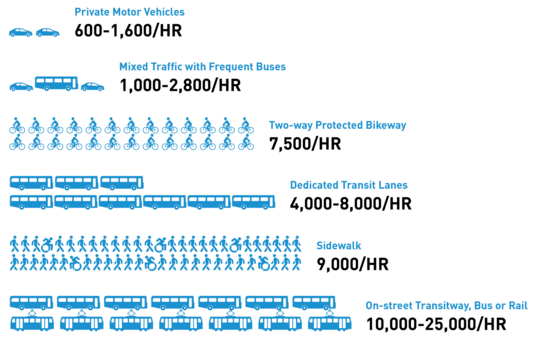
As Seattle continues to grow and we continue work toward our bold climate vision, it will become even more important to use limited road space more efficiently and equitably. Transit can move more people per hour compared to other modes of transportation.
In the last few years, we’ve installed BAT lanes on NE 45th St, 15th Ave NE, and Rainier Ave S. After a transit lane is installed, we monitor travel times along the corridor to evaluate how successful they are, and we have some early results to share!
The 24/7 BAT lane on NE 45th St runs in the eastbound direction between Roosevelt Way NE and 15th Avenue NE and benefits more than 20,000 weekday riders on 10 different routes. According to King County Metro, initial data show that bus travel times have improved by 13-14% during the midday and afternoon peak periods.
On 15th Ave NE, the BAT lane has improved travel time by 4-9% during the morning peak and midday time periods for over 20,000 bus riders on seven different routes.
On Rainier Ave S, initial results indicate that bus travel times where the BAT lanes have been installed have reduced by 6% during morning and afternoon peak periods.
Speed and reliability improvements for our transit system help reduce operating costs and small changes add up over time. Reducing travel times by even as little as 1 minute per trip results in hundreds of service hours that are saved, ensuring that our partners at King County Metro can reinvest the cost savings towards future service changes and other transportation programs.
As part of the Route 40 improvements, we expect to see transit travel times reduced by 8.7% during the peak periods, which equates to 5.7 minutes saved per trip. With nearly 180 trips planned for the Route 40 on any given weekday, those minutes saved each day add up to help increase reliability for the route. King County Metro estimates that this will result in saving approximately $475,000 in operating costs each year for this route alone.
Transit lanes are an effective tool to help increase reliability and enhance mobility for our communities, and we look forward to installing and evaluating these transit lanes on the project corridor soon!
Our preconstruction survey is still open!
Don't forget to check out our survey! We hope to understand how neighbors, visitors, and business owners get around their neighborhoods and see how we can coordinate with you during construction. We want to hear how we can work with you during construction!
|