|
|
PROJECT
|
STATUS
|
|
Administrative Code Update
|
Reviewing Feedback
|
|
Battery Energy Storage Systems (BESS)
|
Researching
|
|
Boundary Line Adjustment and Property Aggregation Ordinance
|
Adopted
|
|
Comprehensive Plan Remand
|
Adopted
|
|
Rural Lands Analysis and Salmon Recovery
|
Gathering Public Input
|
|
Silverdale Design Standards
|
Reviewing Feedback
|
|
Title 17 Definition Edits
|
Gathering Public Input
|
|
|
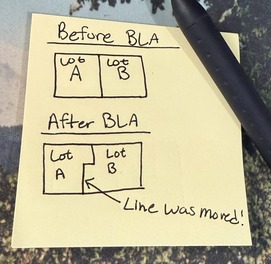
Boundary Line Adjustment and Property Aggregation Code
On June 22, the County Commissioners approved new rules for Boundary Line Adjustments (BLAs). A BLA is a way for property owners to move or change the boundary between properties. This can be something small, like moving a property line a few feet to match a fence, or something much more complicated involving several properties.
BLAs are often useful, but in some cases, they've created problems. Some property line changes have accidentally made lots violate county zoning rules, which can prevent them from being built on. Others have been used to avoid requirements that normally apply when developing new neighborhoods.
Until now, the county didn't have a formal process to review BLAs before they were recorded. Starting in January 2027, all BLAs in unincorporated Kitsap County will be reviewed by county planning staff and the Health District. Simple boundary changes (as defined in the ordinance) will qualify for a free, walk-in review. More complex changes will require a paid online permit application. Visit the Boundary Line Adjustment Code webpage for past meeting information and project documents including the final adopted ordinance.
If your BLA was recorded before these new rules take effect, the Department will still review whether your property is considered a legal lot before approving development.
|
|
|
Admin Code Edits 2026
The Kitsap County Community Development Department proposes administrative or “housekeeping” edits to the Kitsap County Code (KCC). Edits may be related to Titles 16, 17, 21, and 22.
Review the Admin Code Updates webpage
Title 17 Definition Edits
The County is proposing edits to Kitsap County Code (KCC) Title 17 (Zoning). In response to recent data center permitting activity and development occurring in other jurisdictions and around the Country, the County has identified a need to further clarify the definitions of "Research laboratories" (KCC 17.110.658) and "Warehousing and distribution" (KCC 17.110.743). The public comment period with the Planning Commission is open through July 21. Comments on the draft ordinance may be submitted through the project's public comment form.
Visit the Title 17 Definition Edits project webpage for more information.
|
|
PUBLIC WORKSHOPS
Read, Roam, Rules (RRR)
July 20, 2026
5:00 PM
Long Lake Park
5100 Long Lake Road SE
Port Orchard, WA
In partnership with Kitsap Public Health and
Kitsap Public Works Stormwater Division
RRR Book Club Workshop in partnership with Kitsap Regional Library
July 27, 2026
5-7 pm
Port Orchard Library
87 Sidney Ave
Port Orchard, WA
Register for RRR participation
SURVEY
Open now through July 31st, 2026
|
|
 |
|
|
|
July 21, 2026
5:30 pm
Commissioner's Chambers, Port Orchard
Agenda
Briefing - Housing Progress Update
Briefing - Legislative Process Code Update
Deliberations & Findings of Fact - Admin Code Edits 2026
T17 Definitions Update
|
|
Last month we discussed how public health was the biggest motivation for planning in the western world. This month, we’re diving into how government works in the planning world. The function of government in planning is to establish controls for the public good; controls that come from laws and lawsuits.
One of the first examples of this, is The Law of the Indies, created by King Phillip II of Spain in 1573 for its colonized territories in North America. These laws governed the location of settlements, roads, resources, and the ways land was used (e.g., farming vs housing).
 King Philip II seen here wearing his casual armor. Photo credit Encyclopedia Britanica accessed 06/26/26.
A more modern example comes from the Fifth and Fourteenth Amendments of the US Constitution. Here, citizens are protected from the government taking their property without compensation or legal review. It also protects against unreasonable searches and seizures. These are often referred to as the Takings clauses and give direction on how government can regulate land and land use in the pursuit of public interest.
It took a while to get a court ruling on what Takings meant, but in 1887, the US Supreme Court supported a Kansas prohibition law that forced a brewery to close, without the owners being compensated. How did this not violate the Fifth Amendment? Well, the Court reasoned that this was not a Taking under the Fifth Amendment, but a use of what it called "Police Powers", which allow states to protect public interest. "Public interest” means health, safety, and public welfare. So now, the government can regulate land use in the pursuit of public interest.
|
|
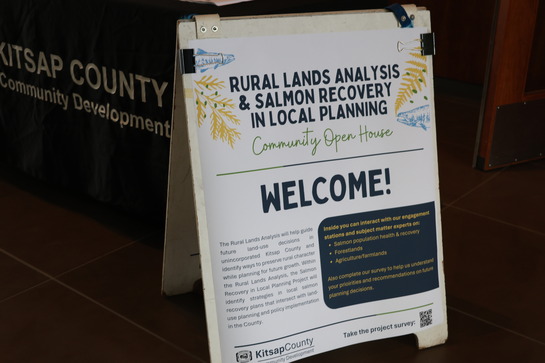 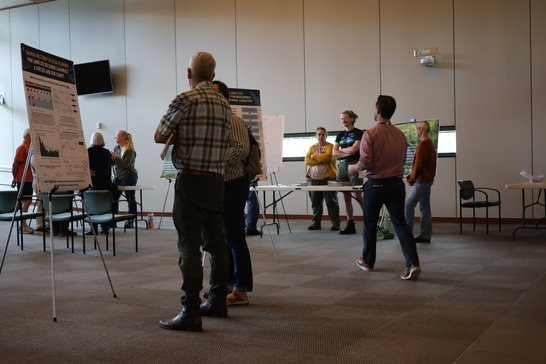
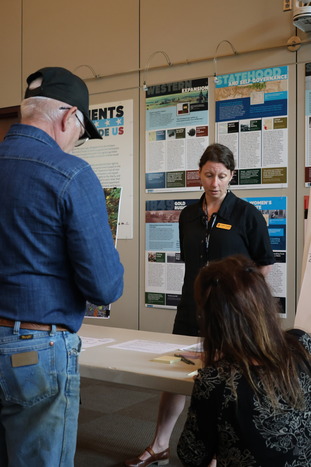
Thank you to everyone who attended the Rural Land Analysis (RLA) Open House on the evening of July 8th. We appreciated your questions, ideas, and participation. If you weren’t able to make it, there will be more opportunities—sign up for RLA news so you don’t miss out. And if you haven’t yet, be sure to complete the survey to share additional feedback. Check out photos from the event below.
|
|
|
Media Contact
Alicia Adler
Community Development
Communications & Outreach Coordinator
|
|
|
|