Community Development News - Burn Ban Lifted, Effectiveness Monitoring Permit, and more
Kitsap County sent this bulletin at 11/05/2022 09:00 AM PDT
November 2022
DAYLIGHT SAVINGS TIME REMINDER
Remember to "Fall Back" this Sunday at 2 am.
Kitsap Salmon Tours are Back!
Saturday, November 5th 10 am - 2 pm
WSU Extension Kitsap Salmon tours are back in person this year! Located at various stream sites across the county this is an opportunity to explore all things salmon with biologists, local environmental organizations, and trained docents. This FREE event offers exciting opportunities such as interactive activities through Kitsap Regional Library, guided walks at Keta Legacy's Rhododendron Preserve, and many more. You can discover local salmon species, their lifecycles, and the role you play in their survival. Bring your family, gather your friends, and prepare your questions.
It may be raining, but we'll be there rain or shine. Please dress for the weather, wear comfortable waterproof shoes, and exercise caution when parking and/or crossing roads. Some sites involve a hike to the stream (especially the Rhododendron Preserve).
Kitsap County representatives will be on site at Chico Salmon Park sharing information about West Sound Partners for Ecosystem Recovery (WSPER), Shore Friendly, and more. Come by and see us!
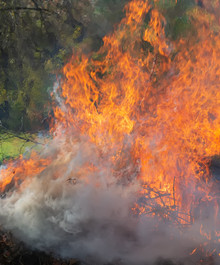
Burn Ban Lifted - General Outdoor Burning May Resume
The Kitsap County Fire Marshal announces that general outdoor burning may resume in unincorporated areas of Kitsap County effective immediately. The recent rainfall and anticipated wet weather patterns have significantly reduced the county's fire hazard and decreased the demand for fire resources across the state. With the return of burning, Kitsap County Fire Marshal David Lynam reminds people that extra safety is still required. "Lighter fuels are much wetter than before, but the heavy fuels are still quite dry – particularly for downed timber and those burn piles that have stacked up all summer," according to Lynam. "Please be extra careful as fires can easily get out of control and spread after such a long dry period," Lynam added.
All rules governing outdoor burning still apply:
A burning permit is required for all general outdoor burning.
Burning permits may be obtained online from your local fire district.
Burning is allowed only during daylight hours and must be attended to at all times.
Fires must be limited to no more than ten by ten in size, at least fifty feet from a structure, and a water supply and tools to control the fire must be available at all times.
General outdoor burning is prohibited within city limits.
Contact your local fire district for additional information.
The temperatures have finally come down, and soon we will see the start of freezing weather. If you are considering the installation of a woodburning stove or fireplace, here are some things to remember:
Woodstoves, fireplaces, solid-fuel-burning appliances, chimneys, hearths, and associated floor coverings require a mechanical permit and an inspection. Units designed for installation within a manufactured home require an alteration/installation permit from the Washington State Department of Labor and Industries Mobile Home Division.
All wood stoves and solid-fuel-burning appliances must be certified by the Environmental Protection Agency (EPA). It will also need to be “listed” by the Underwriters Laboratory (UL), International Code Council (ICC), or another nationally recognized testing agency.
No wood stove or fireplace shall be permitted for use as the sole source of heat in any new or remodeled structure or dwelling.
Wood stoves are NOT allowed to be installed in garages or accessory buildings.
You can only burn manufactured logs or wood seasoned for at least one year. You cannot burn plastic, foil, or any other garbage.
Please remember that a woodburning appliance or fireplace installed without a permit or inspection is a code violation and may invalidate your fire insurance policy. See our brochure for more details, including how to locate certification labels and other installation details.
Kitsap County Takes Strides to Improve Monitoring of Critical Areas and Shorelines
Mitigation and monitoring requirements are codified in Kitsap County Code (KCC) Title 19, Critical Areas Ordinance (CAO), and Title 22, Shoreline Master Program (SMP). The Kitsap County CAO regulates development affecting wetlands, fish and wildlife habitat conservation areas, streams, critical aquifer recharge areas, frequently flooded, and geologically hazardous areas. The Kitsap County SMP regulates development along marine shorelines, rivers, and streams with more than 20 cubic feet per second mean annual flow, lakes, reservoirs, twenty acres or greater, associated wetlands, and their buffers.
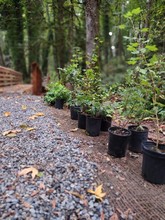
When activities impact critical areas, shorelines, or their buffers, development may be permitted under the condition of a mitigation plan designed by a qualified consultant or professional. A successful plan will result in no net loss of ecological functions. An approved plan becomes the basis for a Monitoring Covenant between the landowner and Kitsap County. Mitigation plans require monitoring for at least five years and do not expire if the property changes ownership. Monitoring ensures sufficient and effective implementation of mitigation that maintains ecological functions and processes. You can view more detailed information on monitoring requirements in KCC Sections 19.200.230(E) 22.400.110(C)(2).
Beginning January 1, 2023, applicants whose permits are issued under the condition of a mitigation and monitoring plan will be required to
1) Pay a Monitoring Permit Fee,
2) Record a Monitoring Covenant with Kitsap County and,
3) Submit annual monitoring reports, due no later than December 31.
See the Critical Area and Shoreline Protection and Monitoring brochure for more information about project requirements in these areas. DCD Environmental Planners can answer questions about how these requirements affect specific projects and permitted activities.
Transfer of Development Rights (TDR)
Kitsap County designed the TDR program to ease development pressure in rural areas. The program directly benefits the participants, those who buy and sell development rights, but also benefits the public by conserving rural land and allowing greater development intensity in urban areas.
Rural landowners convert development rights into TDR certificates and then sell the certificate to urban landowners. The rural landowner still owns the land, and some uses are still allowed, such as farming, forest harvesting, open space preservation, and recreation.
Urban landowners use the TDR certificates to change their land's zone or land use designation. Zone changes can reduce setback requirements, increase allowed density, increase height allowance, and other design standards that are preferable to a developer.
The Comprehensive Plan establishes the direction for Kitsap in addressing land use, environmental protections, employment, housing, transportation, and other facility and service priorities over the next 20 years. The Board of Commissioners uses this document to guide decisions on policy, County Code, and development review.
Reclassification Requests - An Interactive Map
As part of its 2024 Comprehensive Plan Update, in June 2022, Kitsap County began soliciting reclassification and change requests for potential inclusion in the updated Comprehensive Plan, Capital Facilities Plan, and development regulations.
Examples include:
Zoning changes that increase the amount of housing or development allowed on a property.
Zoning changes that would enable commercial or industrial uses on a property.
Code changes that impact the development of certain uses in a specific area.
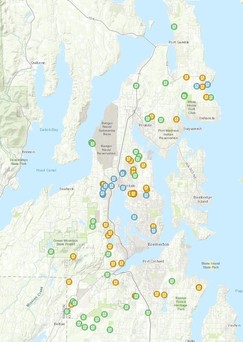
You can now view the reclassification requests submitted on the 2024 Comprehensive Plan page. We also have an Interactive Map to view the reclassification requests. All submissions will be reviewed holistically by the Board of County Commissioners and evaluated on their consistency with the final Kitsap County Comprehensive Plan goals and policies. Those requests that move forward will be included in the preliminary alternatives in 2023 for Environmental Review. For more information about the reclassification request process, including the next steps and opportunities for public input, please view this document and follow the website for upcoming dates.
If you have any questions or need additional information, please visit the 2024 Comprehensive Plan Update webpage or contact Colin Poff at (360) 337-7181.
KITSAP COUNTY Kitsap County government exists to protect and promote the safety, health and welfare of our citizens in an efficient, accessible and effective manner.
DEPARTMENT OF COMMUNITY DEVELOPMENT The mission of the Department of Community Development is to foster the development of quality, affordable, structurally safe and environmentally sound communities.