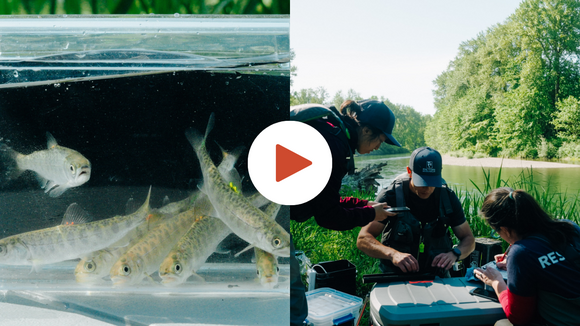
 Young Chinook salmon are growing considerably well in the restored habitats of King County’s largest-ever floodplain restoration project along the Snoqualmie River, validating the project’s design and establishing a clear direction for future fish habitat improvements elsewhere.
Ecologists at the King County Water and Land Resources Division studying the effectiveness of the 145-acre Fall City Floodplain Restoration Project site determined that the restored habitats promote the growth of young salmon and provide distinct, abundant food resources. Those benefits increase the chances that the salmon will survive their journey to the Pacific Ocean and return home to spawn the next generation.
The restoration project simultaneously improved habitat and strengthened flood protections for nearby farms, homes, and roads. It was one of the first projects led by King County that applied the principles of Snoqualmie Fish, Farm, and Flood, an agreement created to achieve multiple benefits for restoration projects in the county’s largest river system.
"This study confirms the effectiveness of King County’s largest-ever floodplain project to restore the natural environment for people, fish, and wildlife," said King County Executive Shannon Braddock. “Through strong partnerships, our work along the Snoqualmie, Cedar, Green, and Duwamish rivers is simultaneously improving habitat and reducing flood risks, inspiring hope for a more resilient future.”
|