|
|
March 2026 Issue:
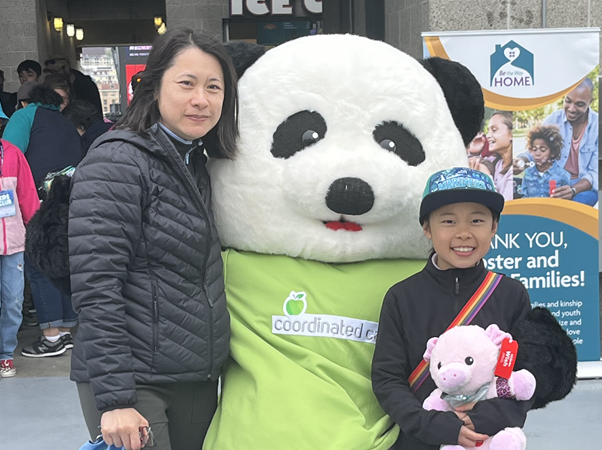 Since 2008, DCYF and the Seattle Mariners have hosted We Are Family Day, an annual celebration of foster parents, kinship caregivers, and permanent families.
The Seattle Mariners provide discounted tickets, venue space, and a first pitch experience for a young person in foster care and a giveaway to everyone with an event ticket.
Join us on May 3 for a vendor fair, short program, and the opportunity to celebrate the important work you do as a caregiver with others in the community.
The Mariners will be playing the Kansas City Royals. Buy your tickets now.
We’re making it easier to access our services. Starting March 25, 2026, if you use Secure Access Washington (SAW) to log in to OurKids and/or FamLink, you will be prompted to create a WA.gov account.
All information and data in OurKids and FamLink will stay the same. To find out more and get ready, watch this video that explains the change.
|
|
|
To make messaging more accessible for all, DCYF sends all caregiver related communications in Spanish.
If you would like to be removed from the Spanish distribution list, please respond to this email.
DCYF and Washington State University Vancouver (WSUV) are partnering to host a “STEM Day for Youth in Care” event on the WSU Vancouver campus Friday, March 27, 2026 from 9 a.m. to 2 p.m. This is an opportunity for any high school-aged (or beyond) youth in care who would like to learn more about attending WSUV.
This event will include hands-on science activities, a campus tour, lunch, and a resource fair that will help students learn about how to pay for college, major options, housing options, and more. Supportive adults are also welcome to attend along with youth. View flyer for information on how to RSVP.
The draft WAC Chapter 110-148 will be ready for public feedback in the coming months! The review period will last for one month. Keep your eyes on the Caregiver Connection for the link.
SUD Family Education Sessions
The Alliance
Alliance CaRes Newsletter
Coordinated Care
DCYF Supports and Resources
|
|
|

Did you know that there are more benefits and services available to Coordinated Care Apple Health Core Connections (AHCC) members than just paying medical, behavioral, and pharmaceutical bills?
Here are just a few of the added benefits available to AHCC members:
-
Coordinated Care Harvest Bucks: Get up to $100 per year, per member for fresh, frozen, or canned fruits and vegetables at any Safeway in Washington state. To request a voucher, complete the form online, email AHCCTeam@CoordinatedCareHealth.com, or call 1-844-354-9876.
-
My Health Pays: Earn up to $200 in rewards per year by completing healthy activities like getting a flu shot or completing an annual wellness visit. Rewards are automatically loaded onto a Visa Prepaid card. Never received or can’t find a My Health Pays Rewards card? Contact AHCCTeam@CoordinatedCareHealth.com or call 1-844-354-9876 to request your rewards.
-
Foster Care Centers of Excellence: AHCC members can quickly get in for medical appointments at Foster Care Centers of Excellence available in every DCYF region. These medical centers provide expert, high-quality, trauma-informed care for child welfare-involved families.
-
Boys & Girls Club Membership: Members 6 to 18 years old get a no-cost basic membership. To get started, show your Coordinated Care member ID to your local Boys & Girls Club.
-
Care Management: Coordinated Care has a dedicated care management team that is trauma-informed and helps coordinate care, connect families to providers and community resources, and provide ongoing support as needs change. Request support by emailing AHCCTeam@CoordinatedCareHealth.com or calling 1-844-354-9876.
Together, these services are designed to support every youth’s health and wellbeing — while giving caregivers trusted partners to turn to along the way. View more benefits online.
|

Caregivers who don’t use direct deposit must complete and submit a provider registration form by May 1, 2026.
You have two options for submitting the forms:
E-sign forms using Docusign (fastest method)
Or manually complete the forms, print, sign with a blue or black pen, scan to a PDF, and submit to: supplierforms@ofm.wa.gov.
Note: Forms with a stamped, inserted, or electronic signature, and/or information crossed out or in white-out will not be accepted.
|

The WA Cares Fund helps Washington workers earn long-term care benefits. Benefits can be used for services like in-home care, a paid family caregiver, home modifications, home-delivered meals and transportation.
Anyone who meets contribution and care needs requirements can access benefits starting in July 2026.
If you live in Lewis, Mason, Spokane or Thurston counties, you may be able to get early access to benefits through the pilot program. Applications are open for pilot participants, and you can get started now by contacting the WA Cares team at 844-CARE4WA (844-227-3492) or by email.
|

The Alliance for Professional Development, Training, and Caregiver Excellence
-
Attention Deficit and Hyperactivity Disorder (ADHD) — March 17, 9 a.m. to 4 p.m. This training helps you develop an understanding of Attention Deficit Hyperactivity Disorder (ADHD) as well as the common developmental course of ADHD and a 7-step intervention pathway for home and school success. Register Here
-
Parenting in Racially and Culturally Diverse Families — March. 23, 1 to 3 p.m. This course helps you understand the impact of parenting children from different racial/ethnic/cultural backgrounds and to know how to honor and incorporate child’s race/ethnicity/culture into their existing family system. Strategies are identified to help children develop positive and proud identities and to help children and families prepare for and handle racism in all forms. Register Here
Learn about all the upcoming classes.
Sign up to get these notices sent right to your inbox or explore the training calendar.
Dealing with Effects of Secondary Trauma
When: March 16, 6:30 to 8:30 p.m.
Speaker: Sally Carman
This training is designed to equip foster families and foster care staff with an understanding of secondary trauma—also known as compassion fatigue—which can arise from supporting children who have experienced abuse, neglect, or other challenges. Participants will learn to recognize the signs and symptoms of secondary trauma and blocked care, while exploring its impact on personal well-being and professional effectiveness. Practical evidence-based tools will be suggested to encourage caregivers and staff as they consider how to recharge and strengthen their capacity to provide compassionate, sustainable care. Register Here
Check out the Alliance CaRes website and sign up for the monthly newsletter that includes regional and local activities.
|
|
|
|
|
|