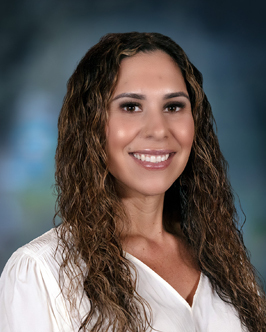
I am grateful for this time and excited to share that I will be transitioning to a new role as Director of CIRCLE—the Center for Indigenous Research, Collaboration, Learning, & Excellence—at the Healing Lodge of the Seven Nations.
I want to reflect on the incredible work of the OTR team in 2025 and share a few highlights from the past year:
- Our team has grown to 24 members increasing our capacity to better support the agency and serve Tribal children and families across Washington.
- We established a training process to support DCYF staff and Tribal partners, ensuring consistency, accessibility, and culturally grounded learning statewide. We also created several new trainings focused on ICWA, sovereignty, tribal engagement, and culturally responsive practice.
- We prioritized strengthening Local Indian Child Welfare Advisory Committees (LICWACs) to support the preservation of Indian families, Tribal connections, and cultural identity. With 12 active LICWACs statewide, 237 cases have been reviewed over the past year.
- OTR completed its first year managing the Qualified Expert Witness program, fulfilling over 550 requests and onboarded 19 contractors.
- OTR completed Indian Child Welfare (ICW) case reviews statewide, with a final report scheduled for February.
- OTR hosted three Active Efforts Virtual Resource Fairs to recruit culturally responsive service providers with experience in serving Tribal children and families.
- We launched the Active Efforts Community of Practice, creating space for peer-to-peer learning, knowledge sharing, problem solving, and professional growth.
- OTR partnered with the Caregiver Supports Project to launch the Caregiver Supports Agreement for Tribes, which provides payments to Tribes for supporting unlicensed caregivers of Tribal youth. The agreement is rolling out in phases, with 16 Tribes currently eligible to participate and the remaining 13 Tribes becoming eligible in 2026.
- We achieved a record number of Tribal Nations engaging in Community Justice Accountability Act and Residential Custody Service agreements, demonstrating strengthened relationships in Juvenile Rehabilitation.
- OTR awarded over $7.5 million in Tribal Early Learning funds to Tribal Nations to expand early learning opportunities and strengthen supports for young children and families.
In addition to OTR’s work, DCYF achieved several meaningful agency-wide accomplishments in 2025. Secretary Tana Senn shared some of these in a recent What’s New blog post. I encourage you to take a moment to read it.
None of this work would be possible without the continued partnership, collaboration, and trust of Tribes, Recognized American Indian Organizations, and Tribal serving organizations across the state. Thank you to everyone who engaged with our staff, shared your perspectives, and offered guidance and feedback throughout the year. Your partnership is deeply valued.
It has been an honor to serve as OTR Director and to work alongside such dedicated Tribal partners and colleagues. I will carry these relationships and shared commitments with me as I move into my next chapter. While we work to fill the Director position, please continue to reach out to the OTR team with any questions or concerns. A list of staff is available on the Meet Our Team webpage.
|
Foster Care Negotiated Rule Making (FC NRM) Updates
The draft Washington Administrative Code (WAC) Chapter 110-148 was recently available for review by DCYF staff, NRM participants, and external partners for a second time. Community members and caregivers will be able to review the WAC during the public comment period this March.
This will be a big year for foster care. Workgroups will wrap up their work on policy, procedure, the home study and guide, WA CAP (Binti), forms, and more. Pre-training and training will occur for Licensing staff, CPA/Tribal CPA partners, and caregivers. DCYF has partnered with Bloom Works, who will complete updates on our external website for prospective and current foster parents. Finally, the revised WAC Chapter 110-148 will launch this summer!
Tribal Engagement sessions on the new foster parent training requirements will be held:
- Jan. 21 from 2 to 3:30 p.m.
- Jan. 27 from 10 to 11:30 a.m.
If you did not receive an invitation for the January Tribal Engagement Sessions, please contact Natalie Adams, Tribal Foster Care Licensing Consultant, at natalie.adams@dcyf.wa.gov.
If you have general questions, contact the Foster Care NRM team at dcyf.fostercarenrm@dcyf.wa.gov or you can check out the website for the latest project updates.
2025-26 Child Care Complex Needs Fund
DCYF is pleased to announce that the 2025-26 Child Care Complex Needs Fund application is now available. The application period will close at 5 p.m. PST on Jan. 20 , 2026.
Eligible licensed, certified, and certified-for-payment-only child care providers and eligible license-exempt Family, Friend and Neighbor (FFN) providers can apply in the WA Compass Provider Portal.
The Child Care Complex Needs Fund may be used toward:
- Adding staff members to support children with complex needs, increasing staff hours to support children with complex needs, and up to a $5,000 hiring bonus for new staff that support children with complex needs.
- Facility improvements to comply with ADA accessibility requirements.
- Therapeutic services. Therapeutic services means services offered by skilled professionals, that focus on curative, rehabilitative, preventative or healing practices.
- Supportive and adaptive materials and equipment.
For technical assistance contact information, visit the Child Care Complex Needs Fund webpage. For all other questions, email dcyf.childcaregrants@dcyf.wa.gov.
Positive Indian Parenting Funding
DCYF is excited to announce a funding opportunity to provide Positive Indian Parenting (PIP) services. This opportunity aims to honor and uplift the strengths, cultural traditions, and parenting practices of American Indian and Alaska Native families by expanding access to culturally responsive parenting supports.
The Request for Qualifications and Quotations will be open until Wednesday, Jan. 21, 2026, at 2 p.m. Pacific Time. View a copy of the RFQQ.
To apply, please visit the Washington’s Electronic Business Solution website.
For more information about Positive Indian Parenting, view the PIP Flyer from the National Indian Child Welfare Association.
Former Spokane Foster Youth Pursues Career in Social Work
The Education and Training Voucher (ETV) is a national program available to support foster youth in continuing their education. With assistance from this program, Aubrey Shuman graduated from Eastern Washington University with her social work degree.
“It’s very easy to feel alone when you are in foster care,” Shuman said. “It feels like you are the only one going through what you're going through and it’s hard to ask for help. It makes it easier when programs like ETV are offering and providing help. It’s essential for foster youth to have at least one pillar of support.”
Read Aubrey’s full story and learn more about the program.
Applications for 2026-2027 are open. To learn more about the program, eligibility, and to apply, please visit the ETV webpage or feel free to email ETVWash@dcyf.wa.gov.
To meet the priority deadline, you must apply by April 30, 2026. Applications received after April 30 will be added to a wait list and awarded as funds are available.
Former Spokane Foster Youth Pursues Career in Social Work
The Education and Training Voucher (ETV) is a national program available to support foster youth in continuing their education. With assistance from this program, Aubrey Shuman graduated from Eastern Washington University with her social work degree.
“It’s very easy to feel alone when you are in foster care,” Shuman said. “It feels like you are the only one going through what you're going through and it’s hard to ask for help. It makes it easier when programs like ETV are offering and providing help. It’s essential for foster youth to have at least one pillar of support.”
Read Aubrey’s full story and learn more about the program.
Applications for 2026-2027 are open. To learn more about the program, eligibility, and to apply, please visit the ETV webpage or feel free to email ETVWash@dcyf.wa.gov.
To meet the priority deadline, you must apply by April 30, 2026. Applications received after April 30 will be added to a wait list and awarded as funds are available.
2026-2027 American Indian Endowed Scholarship
The American Indian Endowed Scholarship helps students with financial need who have close social and cultural ties to an American Indian community in Washington state. Students can use the scholarship at public colleges and many independent colleges in Washington. The program prioritizes upper-division and graduate-level students, but all applicants are considered.
Award amounts range from around $500 to $3,000. Ten to 15 students are selected each year to receive the awards. Students may get AIES funding for up to five years but must reapply each year.
All applications must be submitted by March 2, 2026. For information and to apply, visit American Indian Endowed Scholarship | WSAC.
Tribal Relations Strategist (MA 5)/WA Department of Commerce
Position closes: Jan. 18, 2026 at 11:59 p.m.
Apply online: Tribal Relations Strategist | Career Pages
Positive Indian Parenting | Train-the-Trainer Courses
DCYF is offering Positive Indian Parenting (PIP) Train-the-Trainer courses at no cost. These courses prepare facilitators to educate and support Native parents using a culturally specific approach. Trainings provide participants with a manual that contains instructional materials for eight PIP sessions, each grounded in traditional Native teachings about child rearing.
Organizations interested in providing PIP to their community are encouraged to register. Registration preference will be given to Tribes, Native Serving Organizations, and Recognized American Indian Organizations in Washington state.
Please complete the Registration Form to sign up for a course listed below:
- In-Person: March 3-5, 2026 | Port Angeles, WA
-
In-Person: May 2026 (location and date to be announced)
For questions, please contact Shannel.Squally-Janzen@dcyf.wa.gov.
|
2026 Children’s Justice Conference | Call for Proposals
We invite you to join us in shaping the premier child welfare and justice conference in the Pacific Northwest by sharing your expertise, best practices, and innovative research with a dedicated audience of professionals and advocates. We are seeking submissions for workshops on topics related to the identification, investigation, prosecution, and prevention of child maltreatment.
Call for proposal submissions close on Feb. 1, 2026.
Visit Children's Justice Conference for information and to submit your proposal.
Introduction to the FBI Laboratory for Indian Country
Jan. 28, 2026 | 2 to 4 p.m. EST
Registration Link
This webinar is restricted to federal, state, and Tribal prosecutors, law enforcement and intelligence analysts employed by a law enforcement agency.
Led by the FBI Laboratory’s Evidence Management Unit, the presentation will cover the Unit’s laboratory discipline availability, laboratory and discipline acceptance policies, submission of evidence and laboratory procedures, and supervision of the Indian country evidence program. Finally, the presenter will address what is needed from investigators to conduct forensic testing in Indian Country cases.
Tilikum Summer Health Experience
Hosted at Portland State University, the Tilikum Summer Health Experience is a free 5-week hybrid summer enrichment program specifically designed for American Indian/Alaska Native undergraduate college students (primarily freshman and sophomores). Through a combination of virtual learning and in-person experiences, students will receive academic training, mentorship, and hands-on exposure to the health professions, all while staying connected to their cultural identity.
Applications are due by Feb. 5, 2026. Visit Northwest Native American Center of Excellence website for program information and to learn how to apply.

Winter Solstice
By Antonia Bancroft (Dine), Active Efforts Navigator
Yá’át’ééh shik’éí dóó shidine’é, Shí éí Antonia Bancroft yinishyé. Tódích’íí’nii nishłį́ , Naasht'ézhí Tábąąhá bashishchiin, Deeshchii’nii dashicheii, Ta’neeszahnii dashinalí. Ákót’éego diné asdzáán nishłį́. Vancouver, Washington kééhasht’į́ ndi Tó Naneesdizí déé’ naashá .
Greetings to my relatives and friends. I am Bitter Water, born for Zuni Edgewater. My maternal grandfathers are of the Start of the Red Streak People clan, and my paternal grandfathers are of the Tangle clan. In this way, I am Dine, a Navajo woman. I currently reside in Vancouver, WA but I am originally from Tuba City, AZ.
On Dec. 21, the sun began its journey back to summer. In Navajo, we call this “Jóhonaa’éí t’á̜á̜’ ńdeesdzá (the Sun is starting to go back)”. This is a sacred time among the Navajo people and among other Indigenous tribes and communities around the world. The Winter solstice is observed as a rebirth of the sun and marks the start of winter. Among the Navajo people, it is encouraged that this sacred time be used for self-reflection, healing, connection, celebration, and teaching and learning through storytelling. It allows for certain healing ceremonies, songs, and chants that can only be performed during this time in respect to our ancestral ways.
|
It is also a time for connection as the sun slowly makes its way back and the days become colder. We are inside more often connecting with relatives, friends, and the community. It is a time for self-reflection, to remind us of our strength, resilience, and compassion, so we can carry that positive thinking into the year ahead. These ancestral ways are continually practiced among the Navajo people, keeping us connected to the creator. We give offerings to the creator of corn pollen back to our mother earth through our prayers and chants.
This is my storytelling, to share my culture as a Navajo person. I recently had the opportunity to visit home (Arizona), and I was reminded of these practices. I share my culture and this story in light of the upcoming new year as people begin working on their resolution goals, or if you are facing challenging times, or preparing for upcoming changes/celebrations. I would like to wish you all a Nizhoniye Hái iiłníí" (Happy Winter Solstice) and remind you of your strength and resilience.
Ahéhee’ (Thank you)
Navigating the Opioid Epidemic in Child Welfare
On Dec. 17, 2025, DCYF child welfare staff and leadership from across Washington state gathered to discuss the impact High Potency Synthetic Opioids (HPSO) are having on families and the child welfare system. Topics ranged from harm reduction strategies to available community resources and misconceptions to the agency’s dedication to the safety of children, youth, and families.
Watch the full discussion.
Healer Highlight | Northwest Native American Center of Excellence
Michelle Strickler (Siletz – Rogue River Shasta & Applegate) grew up seeing the impacts of alcoholism and addiction in her family. When she became a mom at 18, she knew she wanted to create something different for her children. Starting in entry-level roles at her tribal health organization, Michelle worked her way to becoming a licensed pharmacy technician at the Siletz Tribal Pharmacy—helping her community heal and thrive.
Watch the video on YouTube.
|